Ultione / Journal
Compressed Sofa Guides
Compressed Sofa vs Traditional Sofa: Which Should You Buy?
Compare compressed and traditional sofas by delivery access, expanded room size, sitting habits, future moves and care before choosing the right model.
A compressed sofa deserves a place on your shortlist when compact first-delivery packaging solves a real access problem and the expanded seat fits how you relax. A conventional raised-frame sofa deserves equal consideration when a higher seat, shallower upright sitting position or a particular repairable construction matters more to you. Compare actual models through those needs, rather than declaring one category the winner.
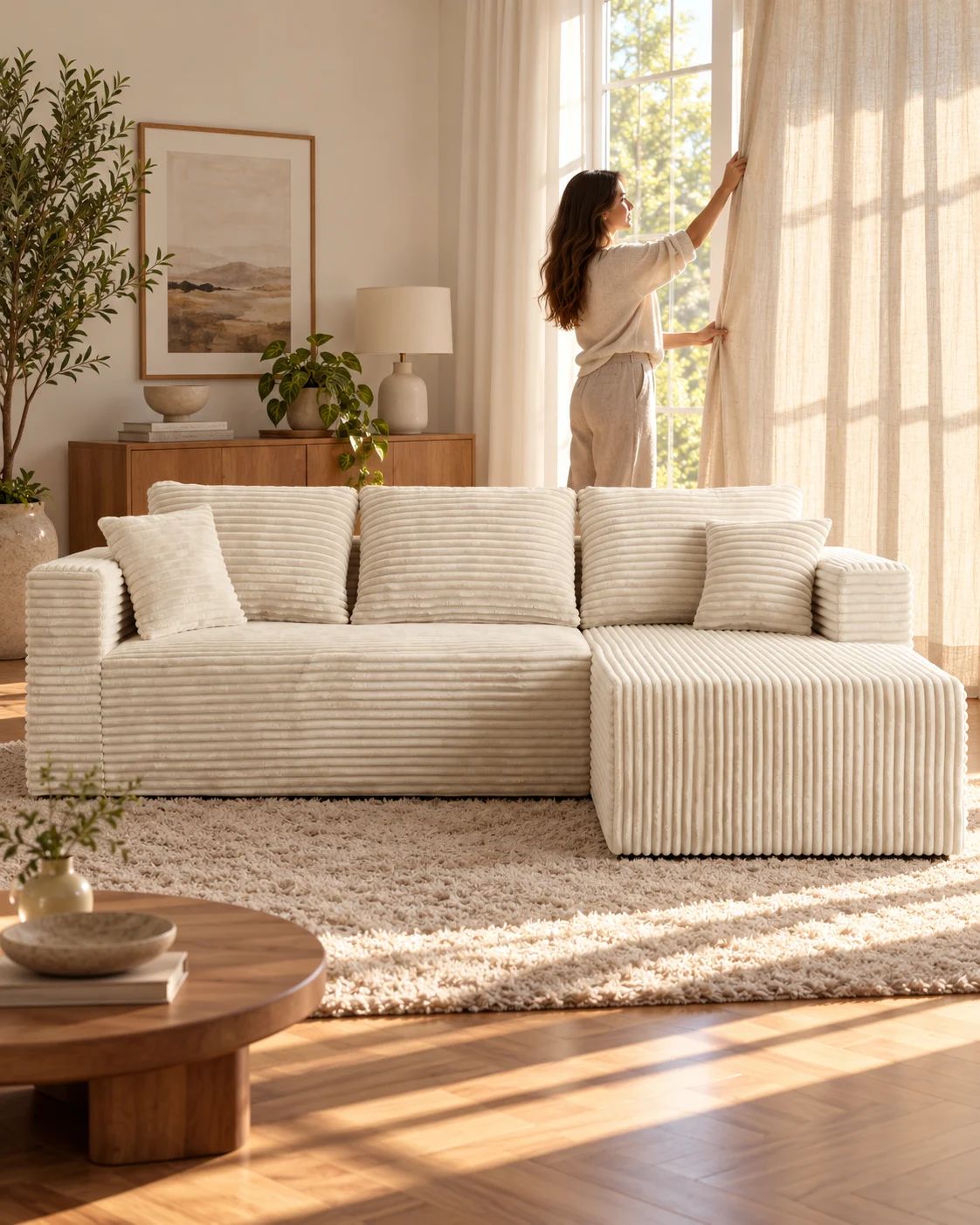
For the concrete compressed option here, use the ULTI ONE compressed sofa range: low, coarse-corduroy models with 30D foam. The comparisons below tell you what to verify on a conventional alternative, too.
 ULTI ONE compressed sofa range
First delivery favors the package that fits your route

A compressed model can present a smaller package than its finished sofa footprint. That is useful when the route includes a narrow entrance or a small elevator. It still leaves the turns, landing space and package weight to check. A short carton can be awkward to handle, and a door width alone cannot prove it will negotiate the whole route.
The L currently lists a carton about 42.13 by 24.41 by 12 inches (107 by 62 by 30.5 cm), weighing about 102.4 lb (46.4 kg). Use those package figures for its first delivery. For a conventional sofa, ask for the packaged dimensions or the dimensions of the largest part that the delivery team is permitted to move separately.
Compact packaging also matters because carriers can price the space a parcel occupies. FedEx Canada's Express guidance calculates dimensional weight for intra-Canada and international packages as length × width × height in inches ÷ 139, rounded up to a whole pound. A hypothetical 40 × 24 × 12-inch carton gives 11,520 ÷ 139 = 82.88, rounded to 83 lb; if it weighs 45 lb, the larger 83-lb figure is used for rating. This explains why carton volume matters. For your purchase, compare the quoted delivery total and included service for the exact model and destination.
Apartment and condo buyers in the US and Canada should also confirm permitted drop-off locations and elevator bookings with the building. Check the shipping service details for your destination. Doorstep delivery and carrying a heavy carton into the room are different jobs to arrange.
After expansion, both choices need normal sofa space
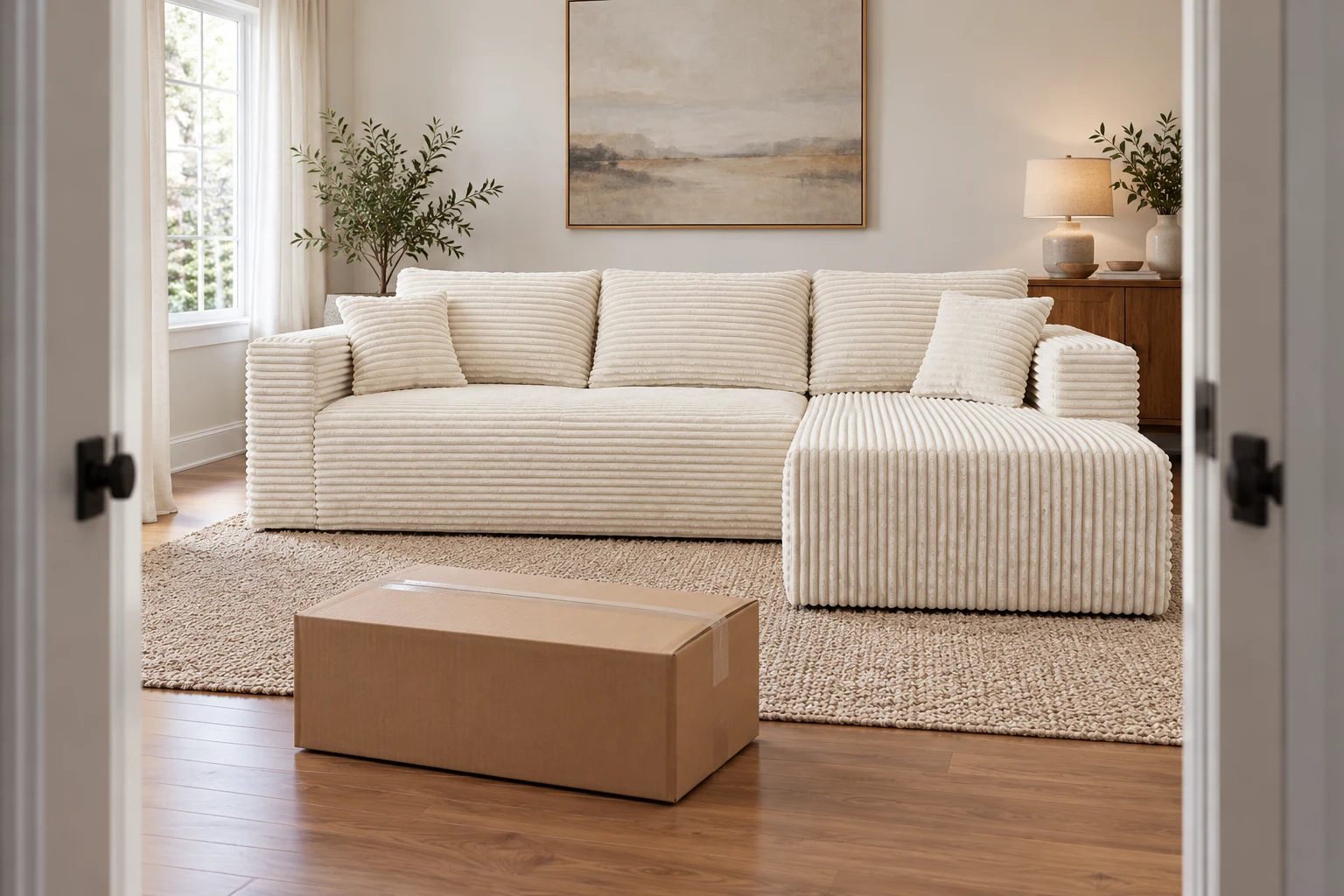
The L expands into a footprint approximately 92.5 by 61 inches (235 by 155 cm). Compare that with the finished footprint of the conventional model, including its chaise, arms and any moving recliner parts. A small shipping box provides no extra walking space after unpacking.
Mark each outline on the floor with tape, then open the furniture around it. Pull out a dining chair, open the console drawer and walk to the window. In a room used as a passage, a slightly shorter straight sofa may work better than either large sectional. In a dedicated lounge, a chaise may earn its space because you use it every evening.
Sitting height and depth can outweigh the category

A low seat can suit somebody who likes stretching out or sitting with legs tucked up. A higher seat may deserve priority for somebody who wants their feet down and finds low furniture difficult to rise from. The seat you already use is a useful baseline: measure it, sit normally and write down what you like or keep adjusting.
The L lists about 16 inches (41 cm) of seat height and 25.6 inches (65 cm) of seat depth. Compare those figures with the actual conventional model, rather than assuming that every framed sofa sits higher or feels firmer. Back cushions also change the space your body uses, so inspect them along with the dimension diagram.
If the low chaise layout matches your use, The L product dimensions give you a concrete candidate. If you want a higher, shallower seat, use that requirement to filter conventional models before looking at fabric colors.
Foam density doesn't decide the winner
Both a frame-free compressed seat and a framed conventional sofa can use foam. Compare the stated material and the whole sitting structure separately. ULTI ONE's designation is 30D.
In a spring-supported sofa, the metal suspension flexes beneath the cushion and pushes back as you settle. Foam over that suspension supplies the surface feel. In a frameless compressed sofa, the shaped foam body supplies both cushioning and support. You are comparing two ways of carrying your weight, not simply a soft seat against a hard one.
Try the same movement on each candidate: sit normally, lean back, then shift toward the front to stand. Notice the initial give, deeper resistance and how stable the edge feels. A low, deep foam lounge suits feet-up use; a conventional model is worth choosing when its actual height and support make your usual upright position easier.
The Polyurethane Foam Association explains density, firmness and support factor as separate properties. That gives you a more useful comparison than choosing whichever listing prints the larger number. Keep the units and test method beside any performance result, and check that it applies to the seat you intend to buy.
The finish is part of the construction
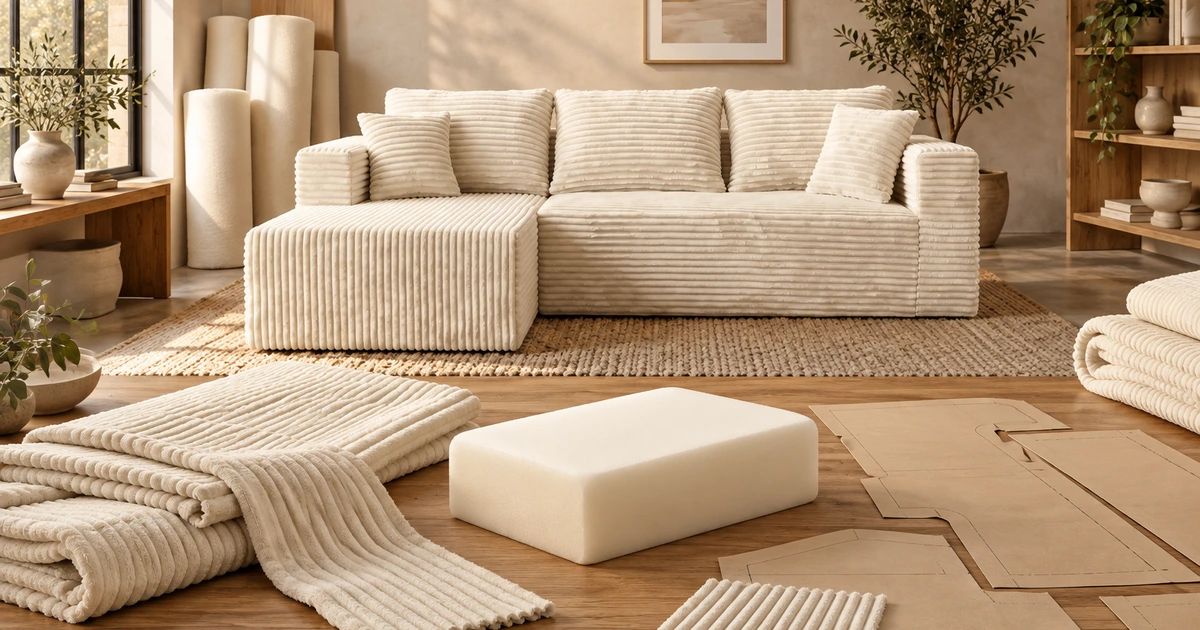
Precise cutting is useful on either kind of sofa, but a frameless compressed body depends especially on foam and cover fitting one another. Production targets of about ±0.04 inch for foam cutting and 0.20 inch for fabric-panel cutting help matching contours line up. Reinforcement at zipper ends and stressed seams supports the cover during fitting and packing.
For a buyer, this translates into recognizable details: even seat fronts, arms with a consistent contour and seams that follow the body without pulling a corner out of shape. Choose the compressed option for its delivery format and lounging geometry; choose the conventional option when its particular seat height, suspension or firmer upright posture better suits your routine. A frame alone and a small box alone are not complete comfort descriptions.
Plan the second move with expanded measurements
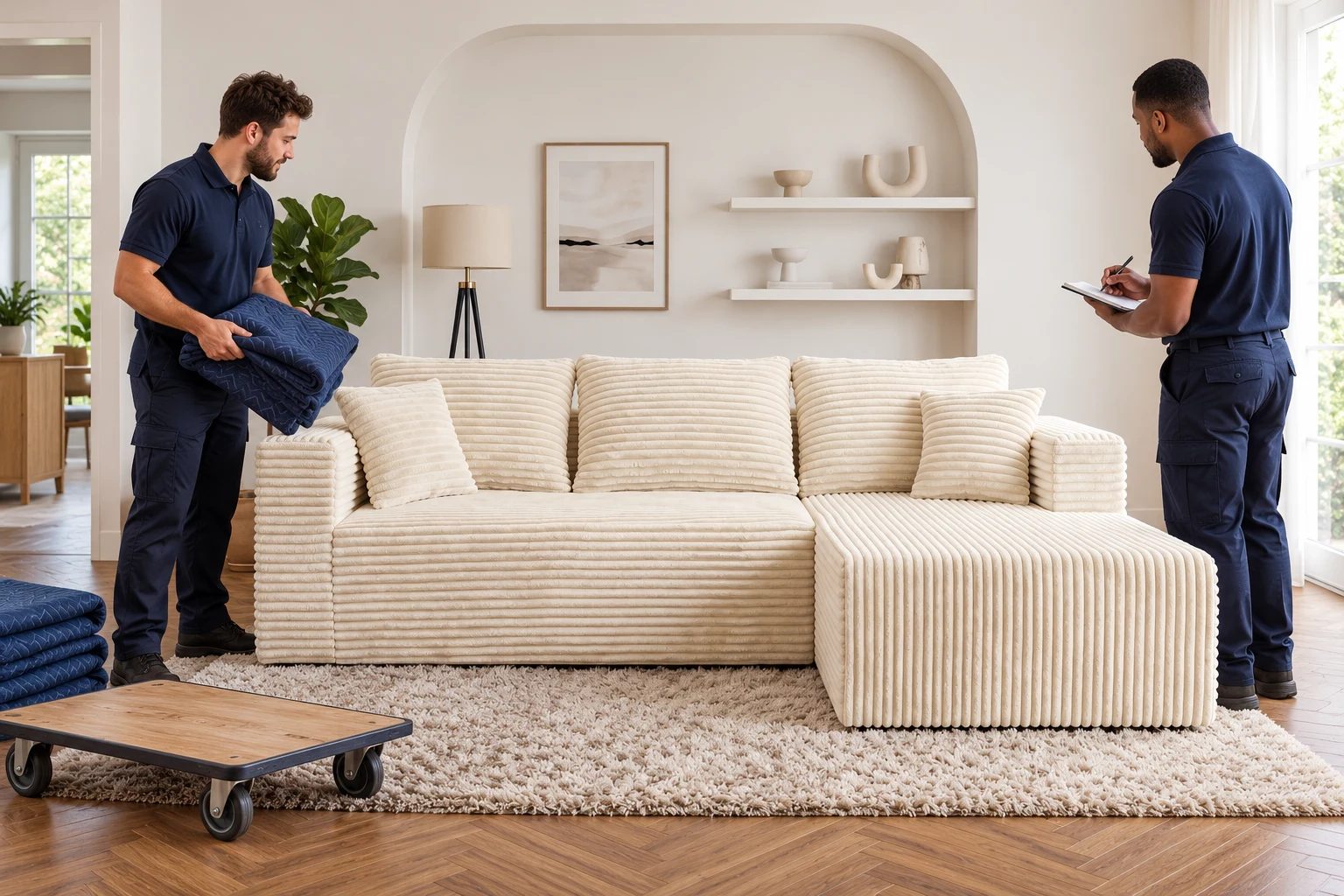
First-delivery packaging solves the first trip. If you expect another apartment move, ask how the expanded sofa will leave your current home and enter the next one. Treat the factory carton size as historical information unless the manufacturer provides an approved repacking method.
Care follows the textile and label
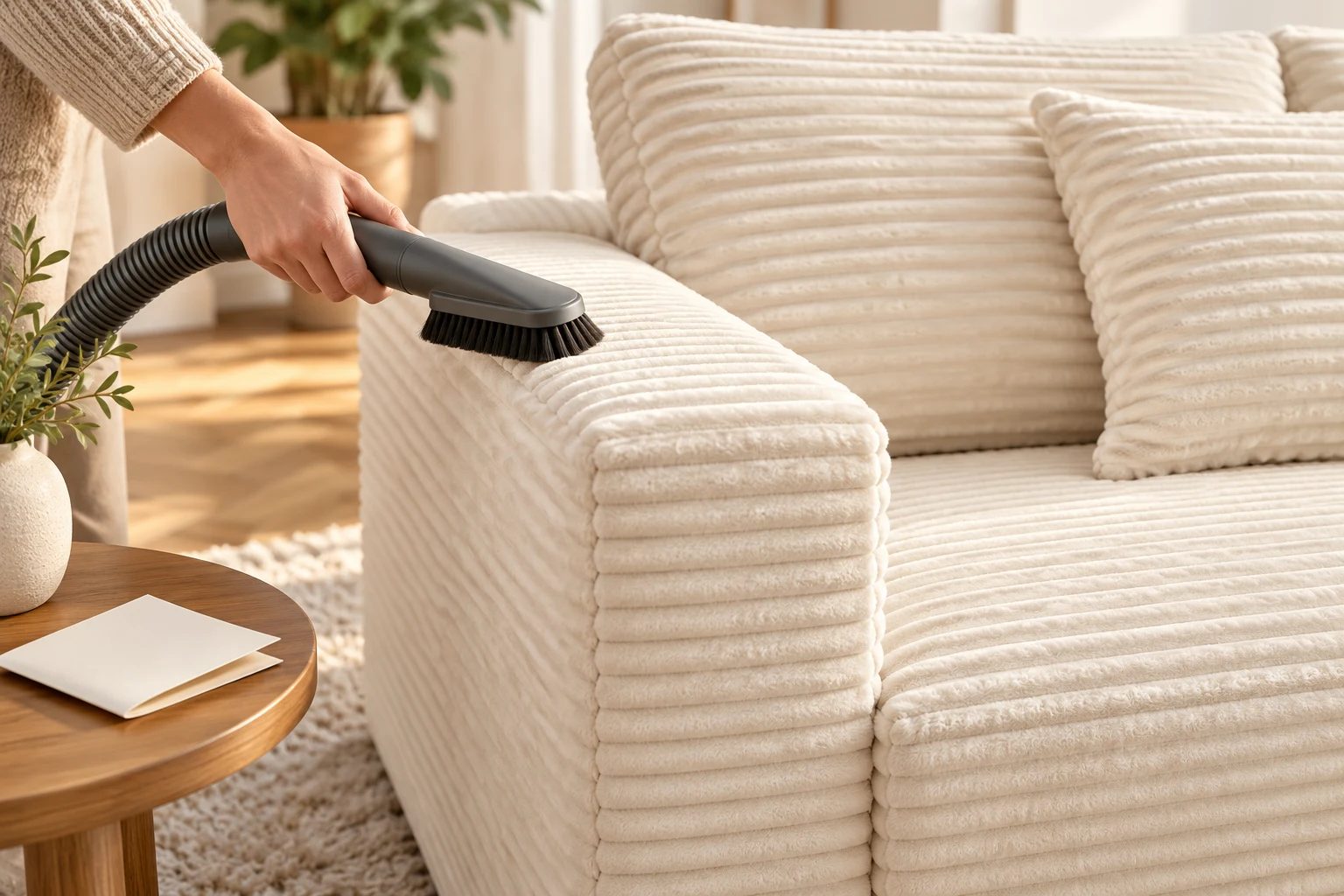
Frame type doesn't tell you whether the cover is washable, how to treat a spill or how a pile fabric should be brushed. Those decisions belong to the upholstery and its approved care instructions. Compare the routines you can keep up with, particularly in a family room that sees food, pets or frequent visitors.
ULTI ONE's wide-wale corduroy has pronounced channels and visible pile direction. For loose debris, begin with a clean upholstery attachment and gentle suction along each panel's ribs. Absorb fresh liquid with a dry white cloth without scrubbing. Choose later spot treatment from the cleaning code. On the conventional alternative, do the same care check for its actual textile: a smooth surface or a rigid frame doesn't authorize wet cleaning or machine washing.
Make a shortlist you can act on
Choose the compressed option when its carton makes the first route workable, its finished seat suits your habits and you have a sensible expanded-size moving plan. Choose a conventional alternative when its specific sitting geometry, service arrangement or documented construction better meets your priorities. A category advantage is useful only if it solves your problem.
Compare the total order cost, current delivery scope and return conditions before paying. If the low corduroy layout fits your room, use the compressed sofa collection to compare exact configurations. Keep your preferred seat height, finished-room sketch and access notes beside the product page so the final choice follows how you will use it.