 Ultione / Journal
Compressed Sofa Guides
Corduroy vs Velvet Sofa: Texture, Style and Comfort
Choose between broad corduroy ribs and a smooth velvet pile by the surface you enjoy touching and seeing, then connect that choice to your everyday lounge.
The short answer
What you need to know
Choose wide-wale corduroy when you want plush, raised ribs to be part of both the feel and the look of your sofa. Choose smooth-pile velvet when you prefer a more continuous plush surface. ULTI ONE's corduroy compressed sofas combine the broad-rib texture with soft cushioning and layouts for feet-up lounging.
Choose corduroy when you want a soft sofa with raised ribs that become part of the room's design. Choose smooth-pile velvet when you prefer a plush surface with an uninterrupted appearance. For a relaxed, feet-up home, ULTI ONE's wide-wale corduroy compressed sofas are an appealing choice: soft fabric to settle against, visible texture, and a chaise that gives your legs somewhere to go.
Both options can look inviting in a photograph. The useful difference becomes clearer when you imagine the whole sofa: what your arm rests on, how the surface looks across the back cushions, and whether you want visible lines or a smoother sweep of fabric. Start with that preference, then choose the seat you want to spend time in.
Key takeaways
- Corduroy gives you soft raised ribs, with channels you can see across the seat and feel under your hand.
- Smooth-pile velvet gives you a more continuous surface, with its pile contributing to the fabric's appearance.
- Choose the texture you enjoy touching and seeing. For broad-rib comfort and feet-up lounging, consider ULTI ONE's corduroy compressed sofas.
Corduroy vs velvet at a glance
| What you want to compare | Wide-wale corduroy | Smooth-pile velvet |
|---|---|---|
| Surface shape | Raised parallel ribs separated by channels | An even field of cut pile |
| What your hand encounters | The plush ribs and the spaces between them | A more continuous plush surface |
| Visible detail | Repeated lines across each upholstered panel | Broad areas of fabric with less visible ribbing |
| A reason to choose it | You want the sofa's texture to be a feature | You prefer the shape and fabric surface to read more continuously |
This is a choice between two enjoyable surfaces. Picture the texture on the arm where you rest your hand and across the seat where you stretch out. That gives the comparison a more useful starting point than assigning a style label to every sofa made from either fabric.
Two ways to create a soft pile surface
Corduroy's texture comes from rows of raised pile. In woven corduroy, long floats of filling yarn are cut after weaving to form ribs, also called wales. These raised rows give the fabric its distinctive three-dimensional surface.
Velvet spreads its pile evenly across the fabric's surface. It is a woven warp-pile fabric with the pile cut to a uniform height. Put simply, closely packed fibers rise softly above the base cloth. This comparison focuses on smooth-pile velvet.
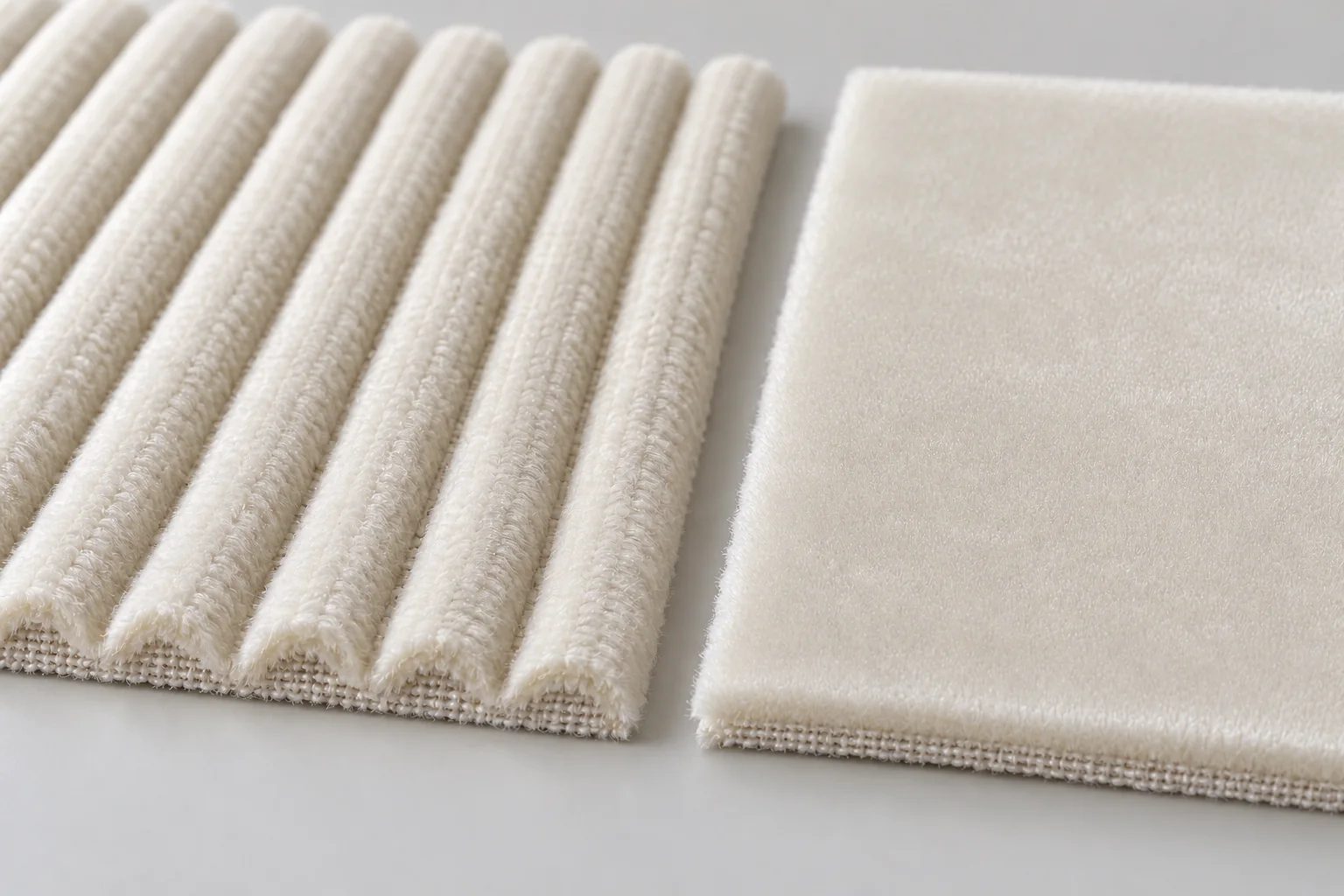
That construction explains why two pale fabrics can give quite different impressions on a sofa. On corduroy, your eye follows the ridges and the lower channels. On velvet, your eye takes in a broader area of pile before reaching an edge or seam. The difference is visible even when both fabrics are a similar color.
Rib size also changes the corduroy look. Fine-wale corduroy has 16 or more wales per inch. Broad ribs create a more pronounced pattern than those closely spaced fine lines. ULTI ONE uses wide-wale corduroy, so its product close-ups show the larger, sculpted texture you are choosing for your room.
How do you want the sofa to feel against you?
Choose broad-rib corduroy if you enjoy feeling the texture as well as the softness. Your hand rests on the raised pile, then travels over the changing surface as it crosses the ribs. On a generous sofa arm or a back pillow, that tactile detail can be part of what makes the seat inviting.
Choose smooth-pile velvet if you prefer a more continuous feel under your palm and forearm. Its closely spaced pile gives you a plush surface without the same pronounced channels. Someone who enjoys the texture of a ribbed throw can have a different preference from someone who always reaches for a smooth cushion.
If you have samples to hand, compare them where you will actually touch the sofa. Rest your bare forearm on each piece, then move your palm across it. On corduroy, try both along and across the ribs: along follows the channels, while across passes over their raised edges. On smooth velvet, pay attention to the close, continuous nap beneath your arm.
Use that preference to choose the part of the sofa you will enjoy most. Readers who rest an arm along a wide armrest can make that contact surface their priority. If you curl up in the corner, the back pillow matters too. Check those areas in the product close-ups, including the rib direction on each panel. A fabric you enjoy under your hand should also be inviting where you lean and stretch out.
Visible ribs or a continuous sweep of fabric?
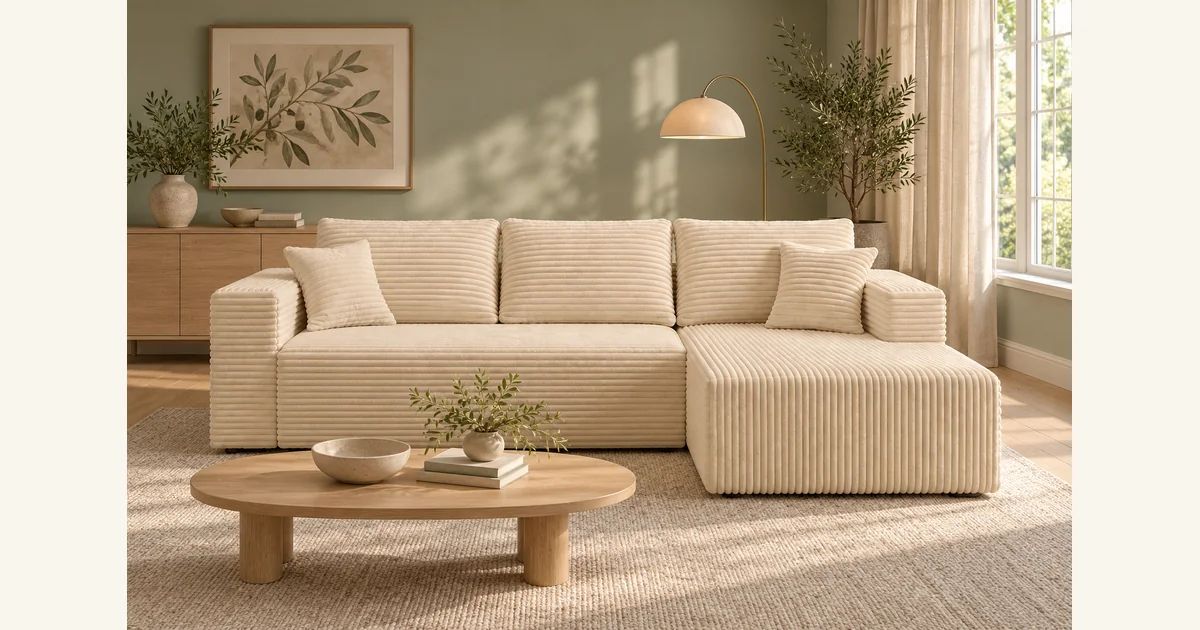
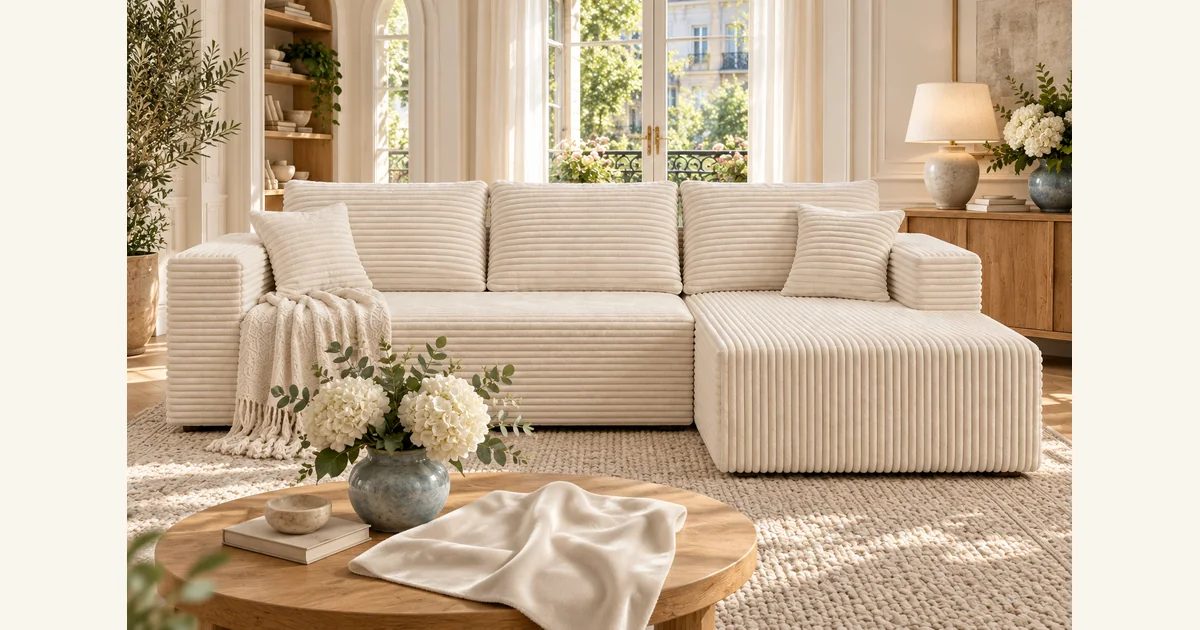
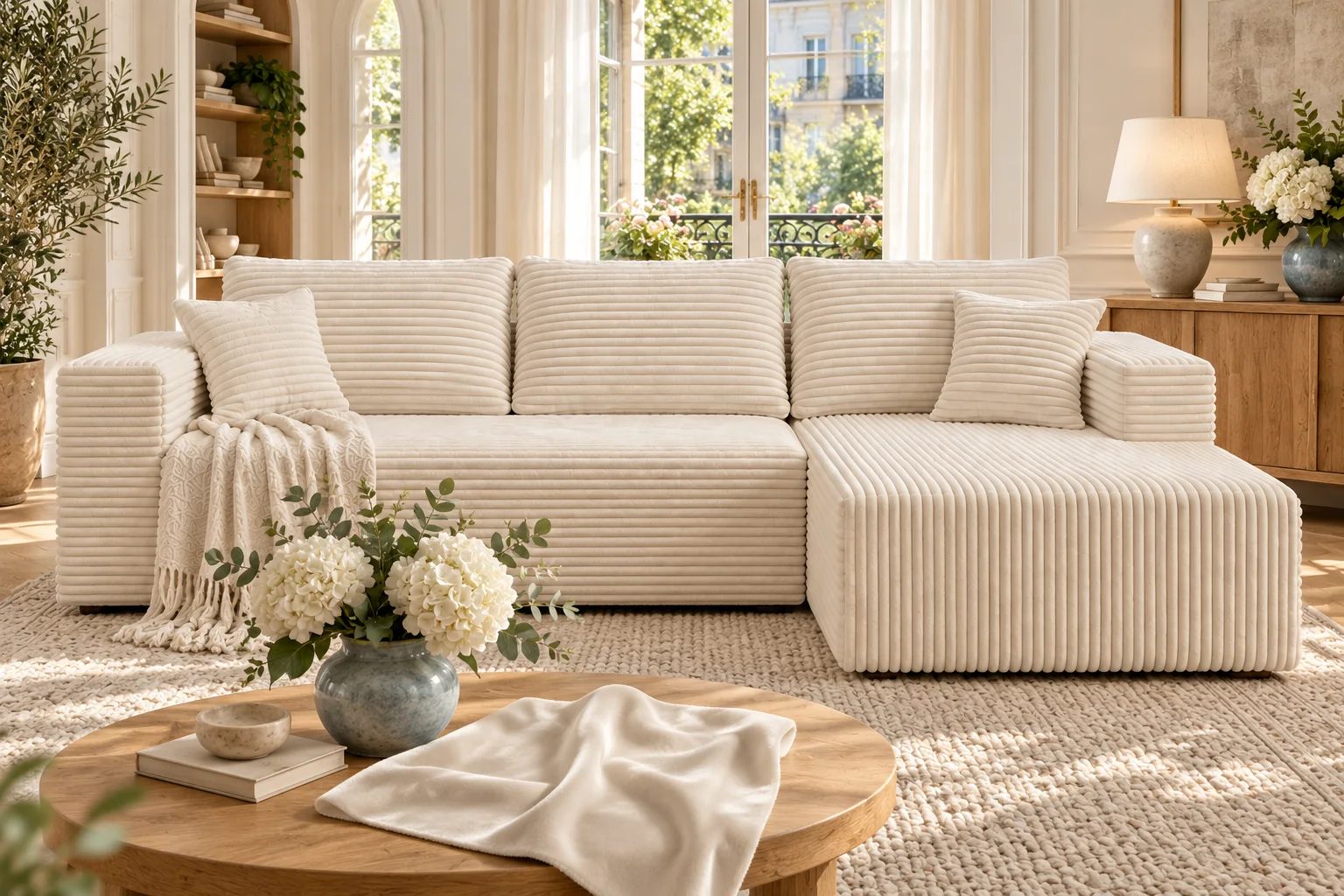
Wide-wale corduroy makes texture easy to see across a full-size sofa. The repeated ribs give the seat, arms and pillows their own visual rhythm. A plain color still has detail, so the fabric can supply much of the interest in the seating area.
Smooth-pile velvet lets larger upholstered shapes read more continuously. A rounded arm or broad back presents an expanse of pile, with the form of the sofa guiding your eye. This can be appealing when you want to emphasize a curved silhouette or a strong block of color.
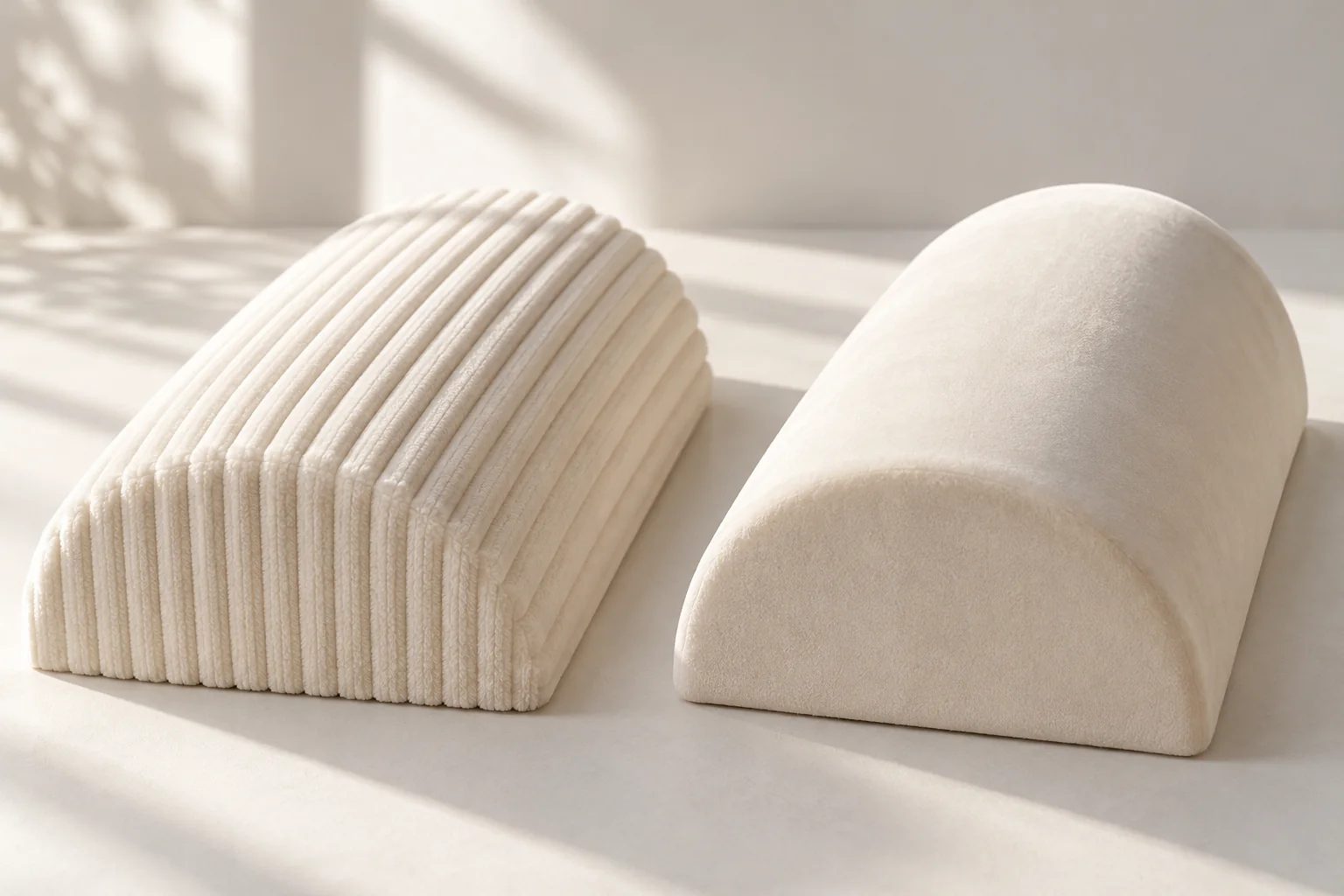
Raised pile contributes to the fabric's visible surface, so a change in how the pile lies can be noticeable. Include that surface character in the look you choose for your sofa.
On corduroy, follow the lines over a seat and around an arm. On velvet, look at the larger areas of pile and the transitions around the sofa's contours. Let the product gallery show you the texture at furniture scale, including the back pillows. A close-up tells you what is under your hand; the complete view shows the character that fabric gives the room.
Choose the texture that gives your room what it needs
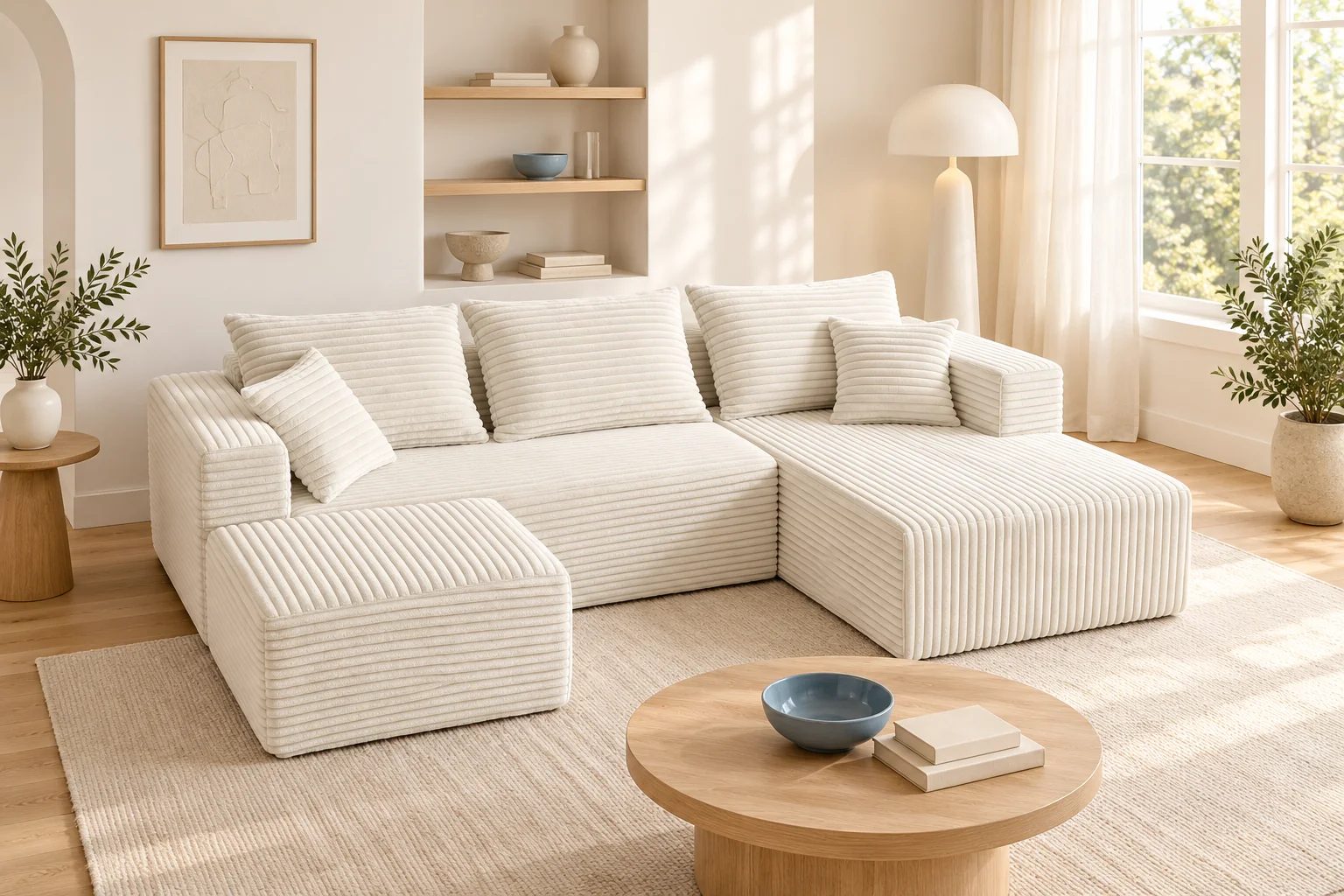
A room with a plain rug, simple walls and wooden furniture is a natural place to enjoy wide-wale corduroy. The ribs add detail to the largest upholstered piece. Cream White makes that detail feel light and soft, while a deeper color makes the sofa a stronger visual presence.
For this kind of room, begin with the sofa as the main textured surface. Add the other pieces because you use them: a table for a drink, a lamp for a book, and a cushion where you like extra back contact. The ribbed upholstery can do the decorative work without needing a collection of patterned accessories.
In a room where you want a smoother upholstered shape, velvet offers a different route. You might prefer the continuous surface on a curved sofa, or want the fabric to create a quieter background for patterned cushions. Choose the combination that lets the features you love remain visible.
Judge texture at two distances. From the entrance to the room, notice whether the sofa reads as a textured centerpiece or a smoother upholstered shape. From beside it, look at the arms and pillows. This keeps the choice tied to both the room you see and the seat you use.
If color is the final decision after texture, our online sofa-color guide walks through the room-light and screen comparison. Here, the decision is the surface you want that color to have.
Bring the fabric choice into a seat you will love using
For a soft, visibly ribbed lounge, THE L compressed sectional is worth putting on your shortlist. Its wide-wale corduroy gives you the raised texture discussed here, while the ordinary seats and chaise let you sit with company or stretch out with a book.
 THE L compressed sectional
THE L pairs 30D foam cushioning with that plush cover. Its listed seat height is about 16 inches and its ordinary seat depth about 25.6 inches. That low, deep arrangement suits a relaxed feet-up position: there is room to tuck your legs onto the seat or extend them along the chaise.
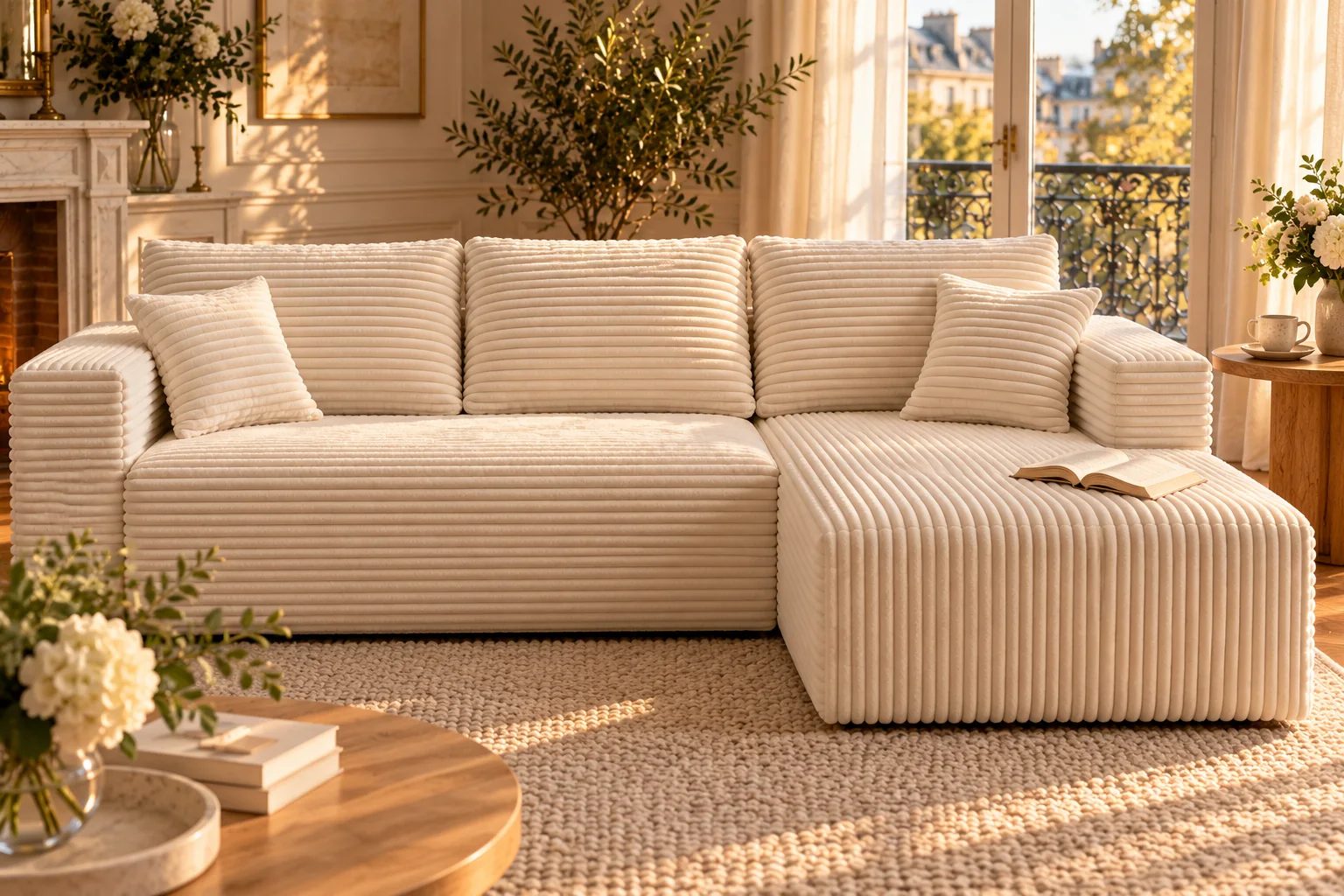
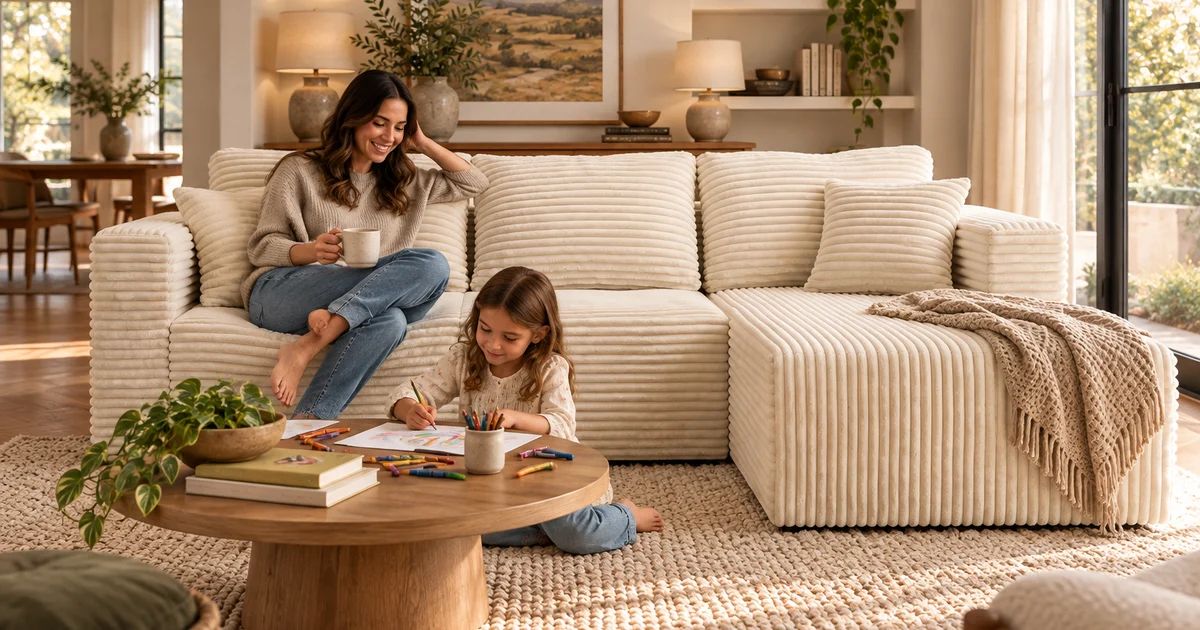
For reading, the back pillows let you settle against the same ribbed fabric while the chaise supports a feet-up position. For an evening with company, use the ordinary seats together and keep the chaise as a stretch-out spot. The fabric choice carries through both uses, so you get the surface you like in a layout you will use every day.
For two people who both like putting their feet up, THE U's separate ottoman gives a second resting place beside its chaise. The fabric preference stays the same while the arrangement changes around the people using it. Choose the version that gives your household the relaxation positions it will actually use.
For a North American apartment or family room, the compressed format adds a separate everyday convenience: the sofa arrives packed down and needs no frame assembly. Once inside, the wide-rib upholstery and full seating shape provide the soft, substantial lounge you chose for your home.
Make the choice around the surface you want to come home to
Keep your favorite surface in view as you compare the rest of the sofa. For broad-rib corduroy, leave enough of the upholstery uncovered to enjoy the texture you chose. For velvet, give the smooth pile room to show across the arms and back instead of filling every seat with decorative cushions.
For either fabric, keep wear and care information alongside your preferred texture. Our fabric rub-count guide explains material reports, and the corduroy-care guide covers everyday upkeep. Those details help you live with the surface you already want.
If the soft, wide-rib look is the one you keep coming back to, browse ULTI ONE's compressed sofa collection. Find the shape for your reading spot, your shared movie nights, or a very good evening with no plans at all.