Ultione / Journal
Compressed Sofa Guides
Corduroy vs Chenille for a Compressed Sofa: Texture, Care and Use
Choosing compressed sofa upholstery? Compare corduroy and chenille by texture, care instructions and household needs, then check the actual fabric specification.
For a compressed sofa, choose corduroy when you want pronounced ribs and a textured look; choose a particular chenille when you prefer its fuzzy yarn surface and less visibly ribbed appearance. Compare touch, room lighting and daily maintenance before letting the fabric name choose the whole seat.
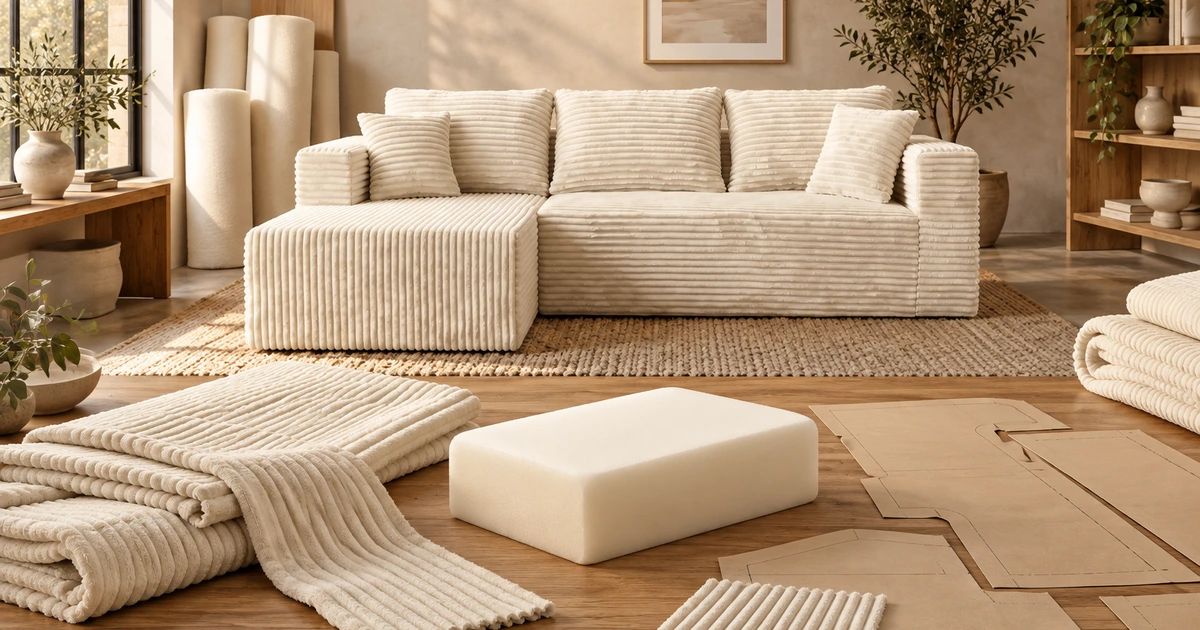
The broad ribs on ULTI ONE compressed sofas are part of their character. For a U.S. or Canadian living room, look at that texture beside your rug and under the evening light you actually use.
 ULTI ONE compressed sofas
Understand the surface you are choosing
Corduroy is a cut-pile fabric with raised ribs called wales. Broad wales create visible channels and a plush, repeated texture. Chenille describes fuzzy pile yarn used to make fabric; the finished upholstery can look mottled, woven or more uniform. Both can use different fibers and blends.
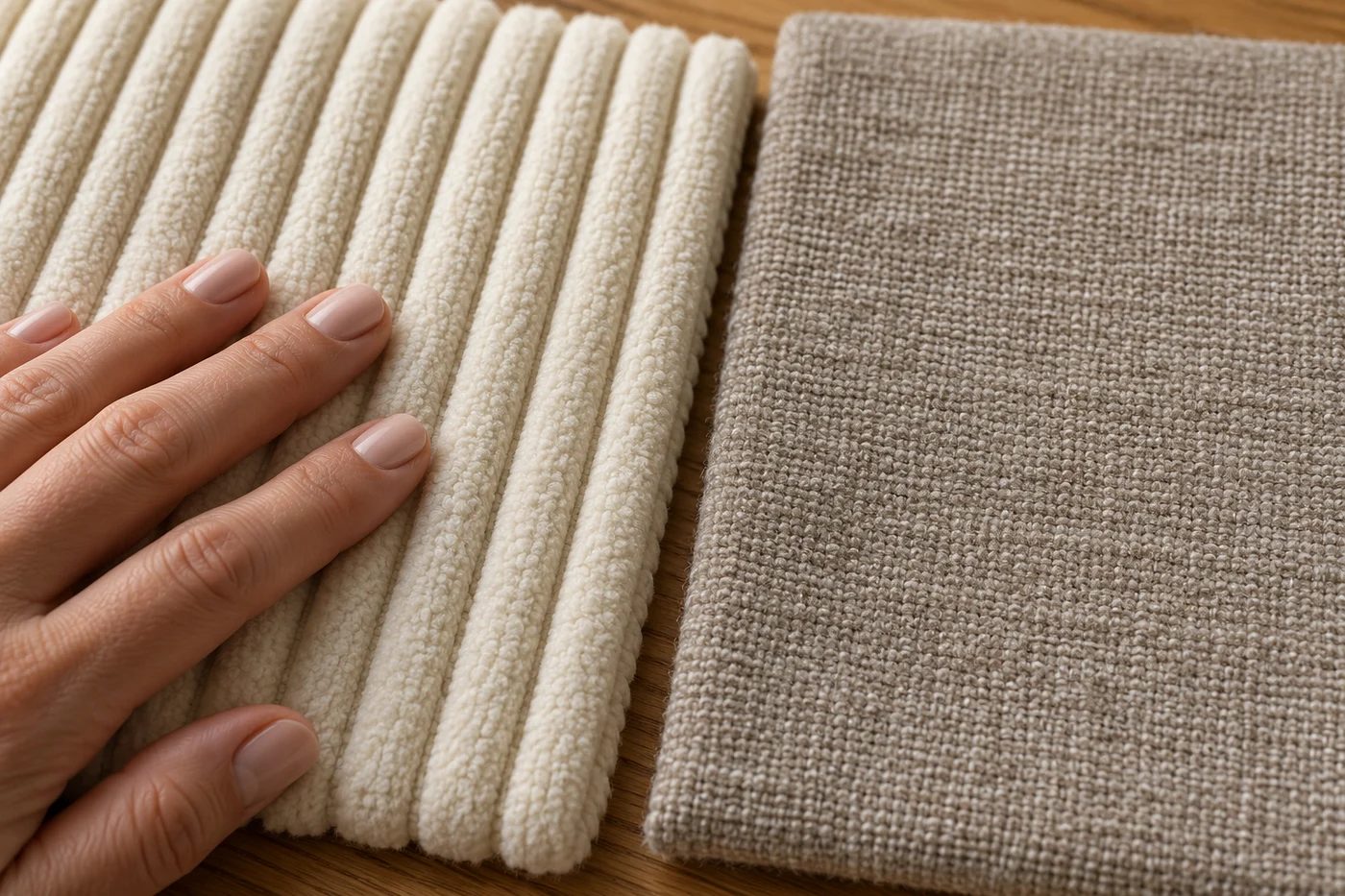
Run your hand gently with and across the corduroy ribs, then over the chenille sample. Rest your forearm on each to judge the contact you will feel while reading. Step back to see the repeated texture at room scale. Strong ribbing becomes a design feature across an entire sectional.
Keep fiber content separate from surface structure. Corduroy describes raised cut-pile ribs; chenille describes a pile yarn. The actual upholstery label tells you the fibers and blend. Two covers with the same broad name can differ in weave, pile scale and care method. Compare the material on the exact sofa rather than borrowing a care routine from a corduroy jacket or another brand’s chenille chair.
Check daylight, lamplight and pile direction
Place samples beside the floor and wall colors in daylight, then under your normal lamps. Turn each sample and watch the surface change. Raised pile catches light differently as its direction changes. A close-up and a full-room view together help you choose a color that works beyond the listing photo.
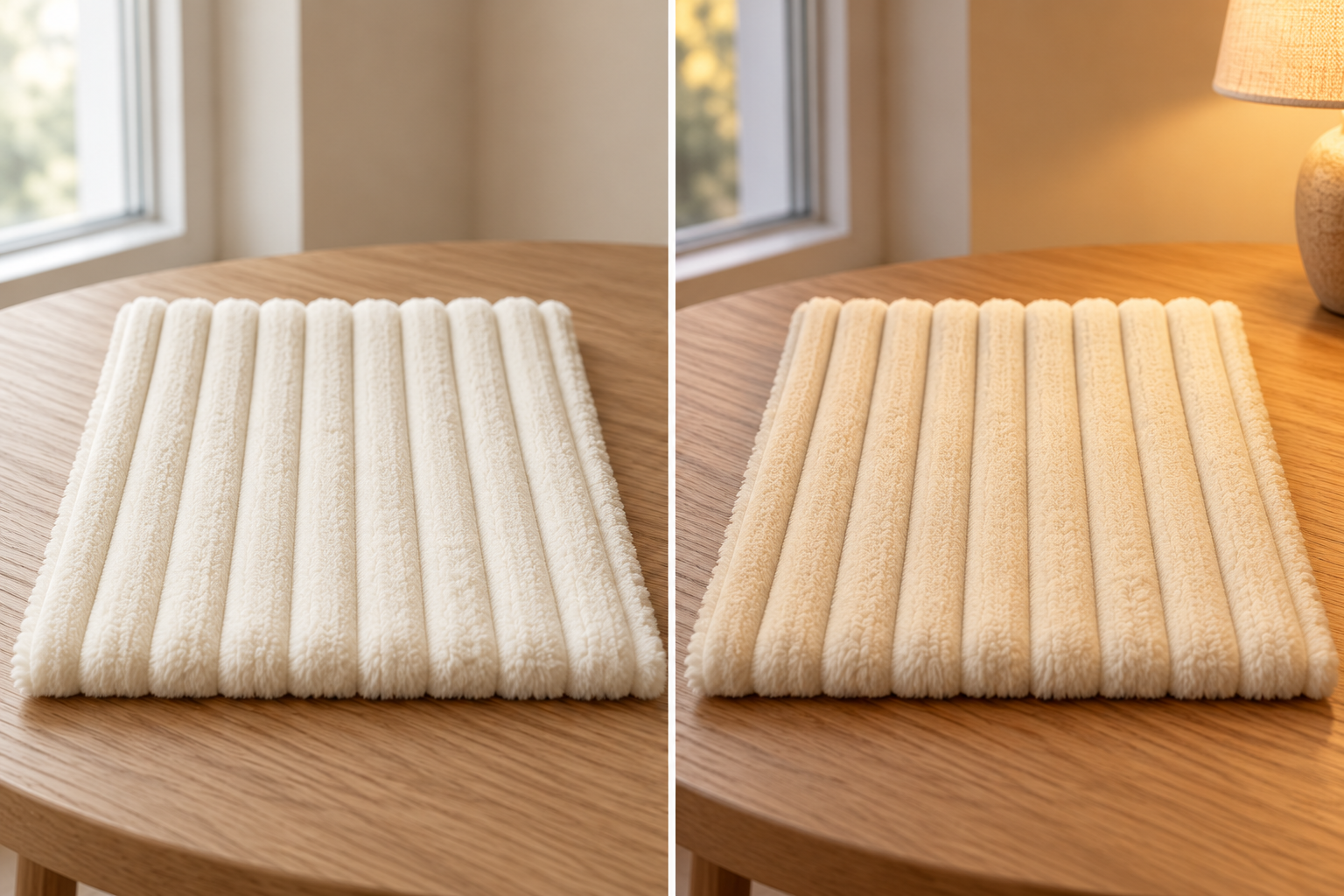
If the rug already has a busy pattern, decide whether you want the sofa to add another repeated texture. Broad corduroy works well as the room’s main tactile surface. For a quieter-looking cover, compare the actual chenille weave. Choose the sample you like in the room’s ordinary light, not only in a bright studio image.
Compare at both arm’s length and across the room. At close range, you notice the ribs, softness and seams. Across the room, you see whether the whole sofa competes with the rug or curtains. Hold a sample upright as well as flat: a back cushion and a seat receive light from different angles. Keep those positions the same for both candidates so the texture comparison stays useful.
Make everyday care part of the decision
Corduroy channels give crumbs and loose hair places to collect. Use a clean upholstery attachment with gentle suction, follow the channels within each panel and spend extra time at seams. Chenille’s fuzzy surface needs a gentle tool that lifts loose debris without pulling yarn. For a fresh spill, blot with a dry white cloth instead of scrubbing.
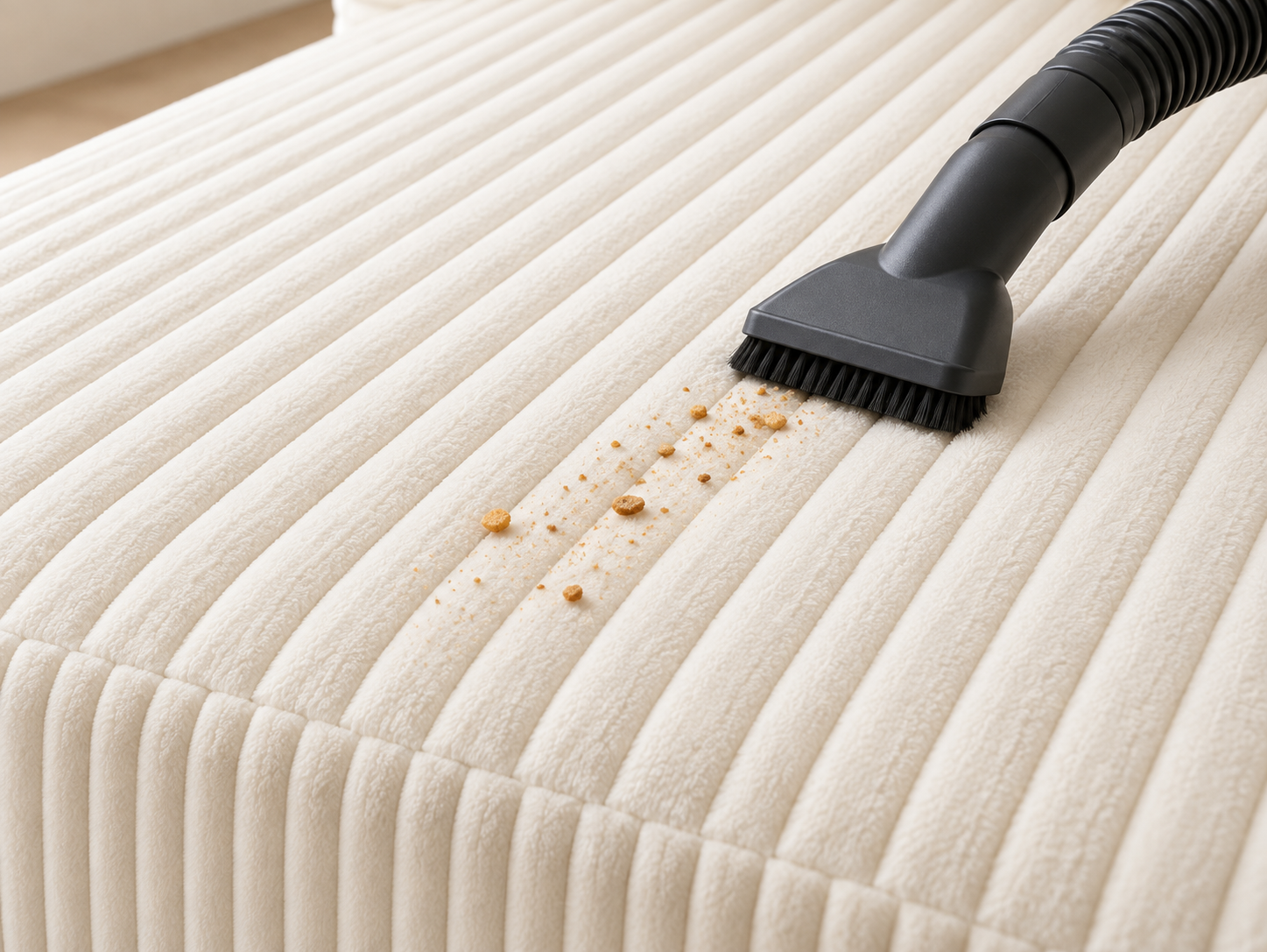
For spot cleaning, use the exact upholstery instructions. Cleaning codes separate water-based methods, solvent methods and vacuum-only care. A zipper tells you how a cover is fitted; the cleaning instructions tell you whether it can be removed or washed. Keep liquid out of the foam core during routine cleaning.
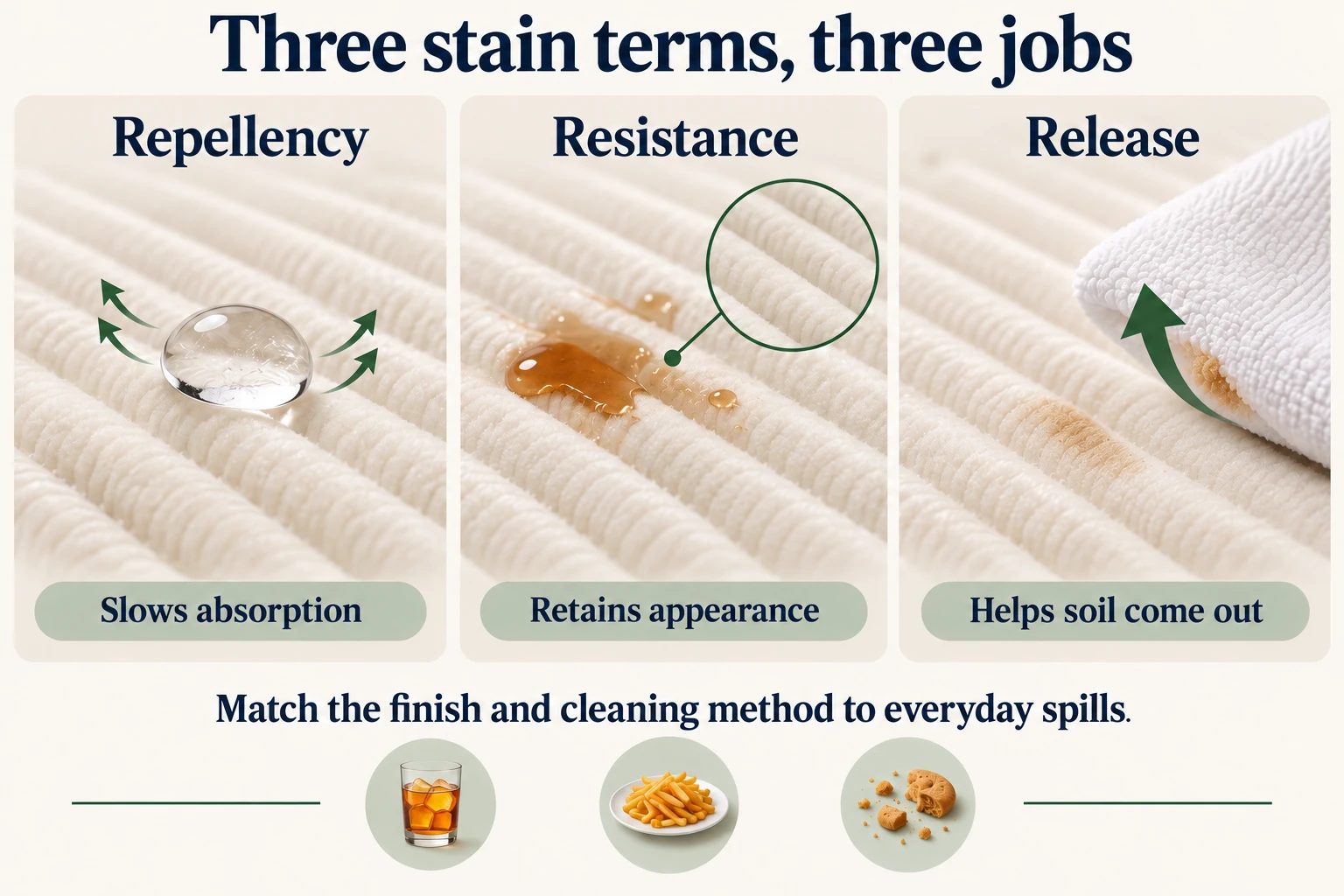
For a dining-adjacent sofa, separate the feel of the fabric from three stain terms. ACT's finish guidance distinguishes repellency, which slows absorption; resistance, which concerns retaining appearance after contact; and release, which concerns removing soil during cleaning. Think about the spill your household actually has: a water-based drink, oily food or loose crumbs. Compare the specified finish and permitted cleaning method for that task. On wide-wale corduroy, the channels and seam joins also shape the daily crumb-removal routine, regardless of the finish name.
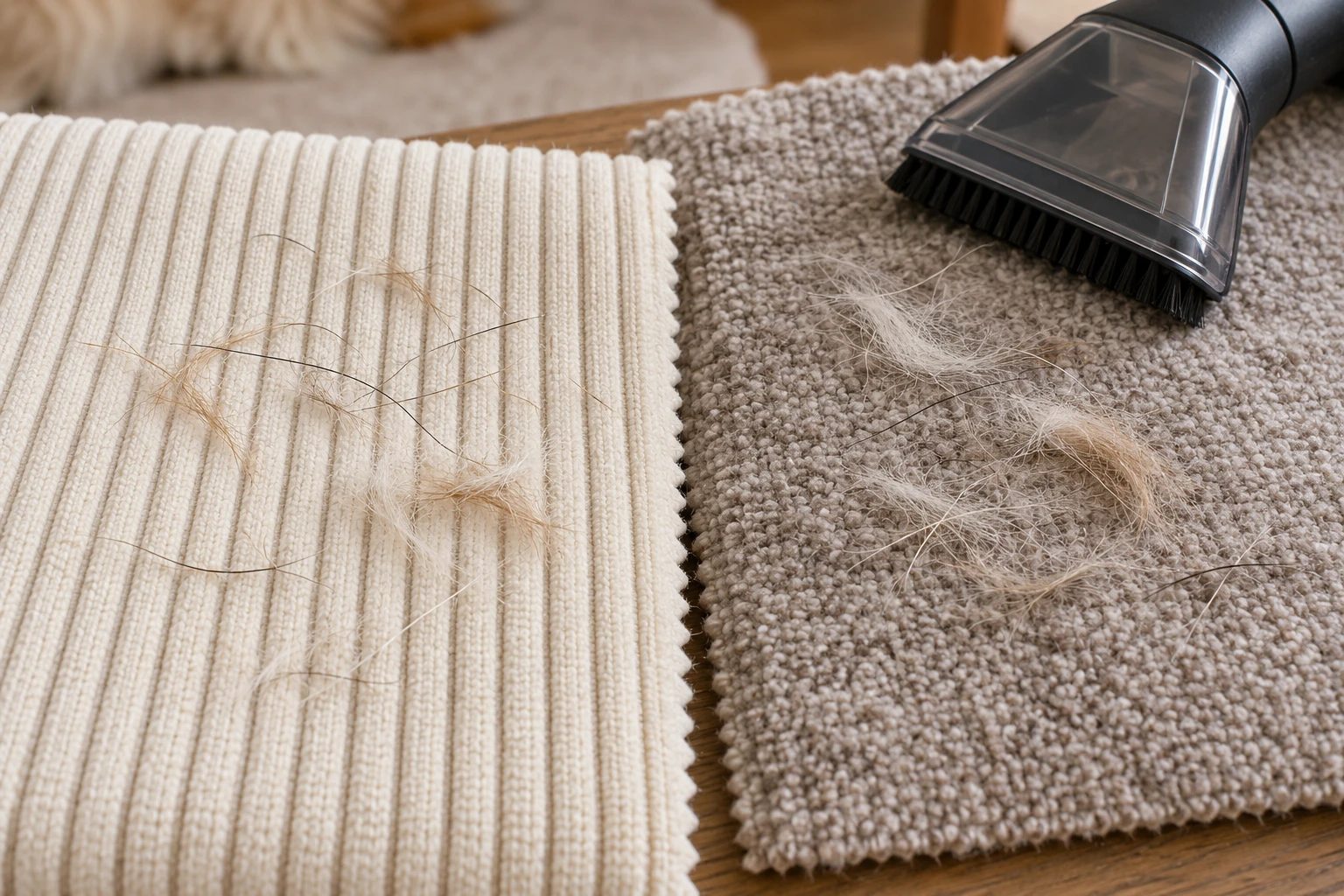
For a shedding pet, lay a few loose hairs on a fabric sample and inspect it in ordinary light. Compare visibility and removal separately using the permitted dry method. Cream can show dark hair clearly; a darker cover can show pale hair. Make the maintenance routine suit your household.
A pet household has two separate tasks: removing loose hair and avoiding catches in the surface. Inspect the actual weave and use the allowed attachment to try removing a few loose hairs from a sample. Keep claw protection and snagging as their own questions. A surface that hides hair well can still take time to clean; a pale surface that shows it clearly can make the cleaning spots easy to find.
Use the right evidence for the concern
Abrasion tests concern rubbing wear. Pilling tests concern attached fiber balls. Lightfastness concerns color change under light exposure. The ACT physical-property guidance separates these properties. Pick the result relevant to your main concern: everyday rubbing, surface appearance or a bright window-side location.
If you pair darker upholstery with pale throws or clothing, look for color-transfer information too. The test name is crocking: rubbing color from a fabric onto a test cloth. ACT's woven-upholstery reference uses a minimum Grade 4 for dry crocking and Grade 3 for wet crocking under AATCC 8. The dry and wet readings answer different everyday contact questions. Keep them beside the abrasion result when comparing fabrics; one describes transferred dye, the other describes rubbing wear.
A compressed-sofa cover has to accommodate the body while it packs down and takes shape again. Patterns can include about 0.4–0.8 inch of expansion allowance for that movement. On the settled sofa, inspect whether the panel lies evenly and the seam follows the contour. Broad corduroy channels can change direction at a join; a pulled-open seam is a different detail from that normal change in rib direction.
For a family movie room, choose the texture you enjoy resting against and a dry-cleaning routine you can maintain after snacks. For a quiet reading corner, compare forearm contact and appearance under the reading lamp. For a sunny shared lounge, include placement and lightfastness. The fabric choice gets clearer when you describe the room’s main use rather than ranking corduroy and chenille as universally first and second.
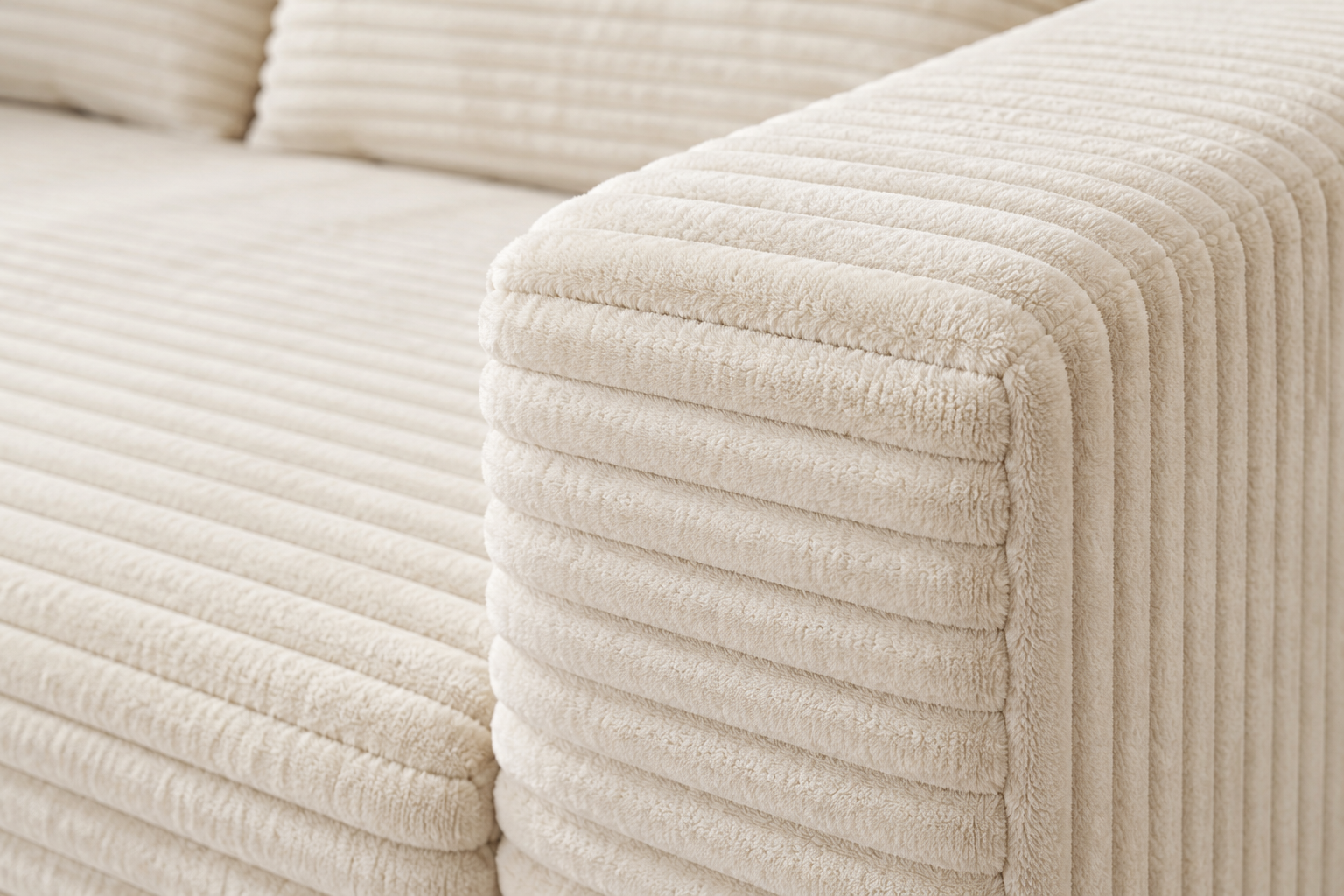
For sitting comfort, compare seat height, usable depth and support separately from the cover’s softness. The L product gallery shows broad ribs, block arms and the chaise shape. If those suit your room and your preferred position, compare configurations in the ULTI ONE compressed sofa range.
What performance adds to the texture choice
The production upholstery data records more than 40,000 Martindale cycles under ISO 12947-2. Pilling is assessed separately: Grade 4 after 3,000 and 5,000 cycles, and Grade 3–4 after 7,000. That gives you two different pieces of information—resistance to rubbing and the appearance of small fiber pills—rather than one vague durability score.
Use these results alongside the surface you want to live with. Wide-wale corduroy gives visible raised ribs and a directional hand; chenille describes a different yarn-based texture. ULTI ONE's corduroy compressed sectionals suit a shopper who wants that broad-rib look and is happy to remove crumbs along the channels. Choose the actual texture, color and care routine you prefer, rather than treating the two fabric names as a ranking.