Ultione / Journal
Compressed Sofa Guides
How to Clean a Corduroy Compressed Sofa Without Flattening the Pile
Care for a corduroy compressed sofa: vacuum between the ribs, blot fresh spills and follow the care label when choosing a cleaner.
A compressed sofa upholstered in wide-wale corduroy is easiest to care for when you identify what is on the surface before reaching for cleaner. Crumbs need lifting. A fresh spill needs absorbing. A patch that changes shade as you walk past needs a closer look at the pile.
The L, The U and The Big U in the ULTI ONE compressed sofa collection have broad corduroy ribs. Those channels make the texture appealing, but they also give loose dirt places to collect. Start with the problem in front of you, then use the fabric's care instructions to choose any stain treatment.
 ULTI ONE compressed sofa collection
For a US or Canadian household comparing cleaners, the upholstery code matters more than a bottle described simply as a general fabric cleaner.
Just spilled something? Absorb it first
Use a clean, dry white cloth to absorb a fresh liquid spill. Place it gently against the area, lift it, and move to a dry part of the cloth as it picks up moisture. Avoid scrubbing back and forth. Keep the cloth close enough to the spill that you are not spreading liquid across a clean section.
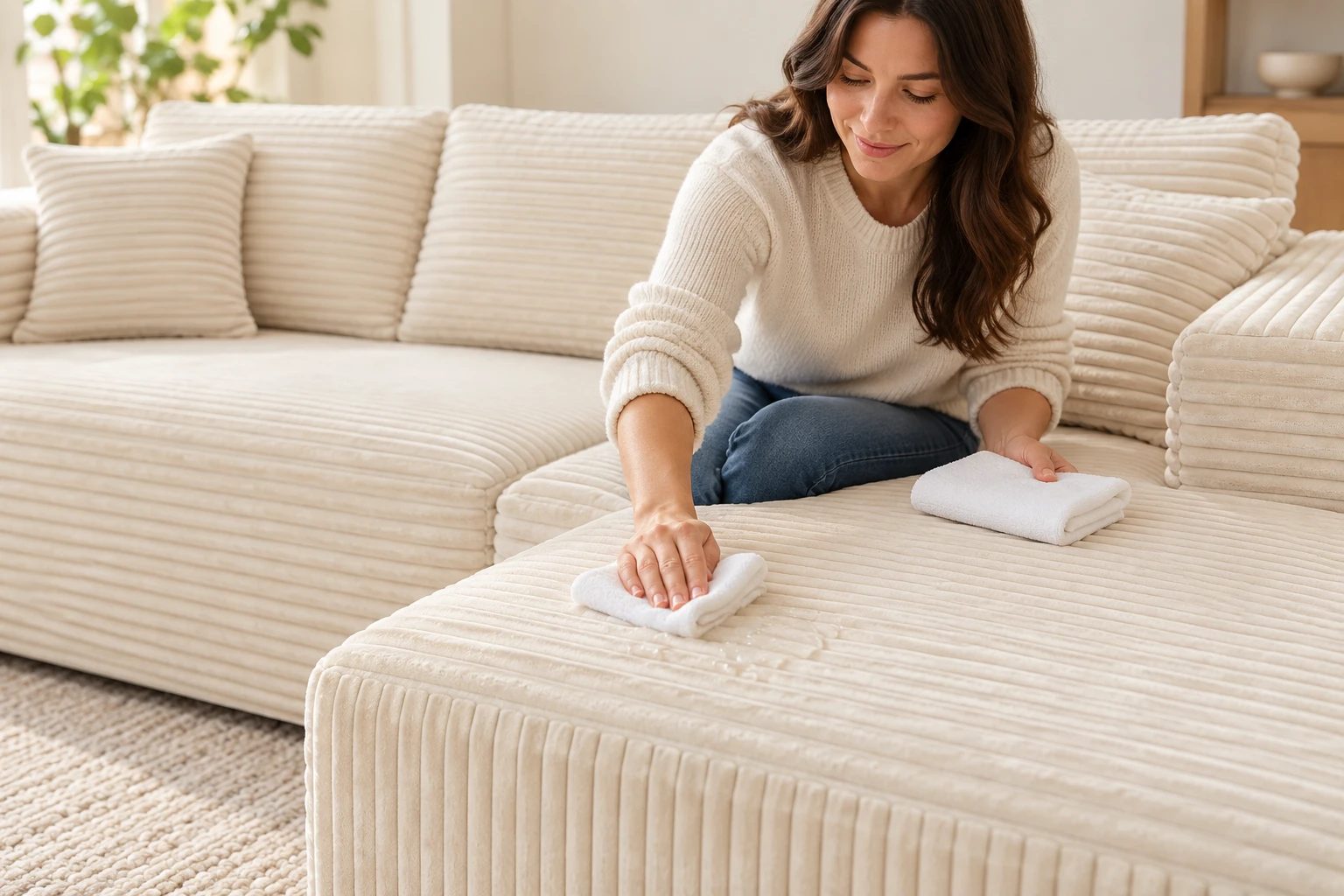
If crumbs or other loose solids are involved, lift those away separately. Adding water to dry debris creates another cleaning job. With sticky, greasy or dried residue, the next step is the treatment approved for your upholstery—not a stronger version of the same rubbing motion.
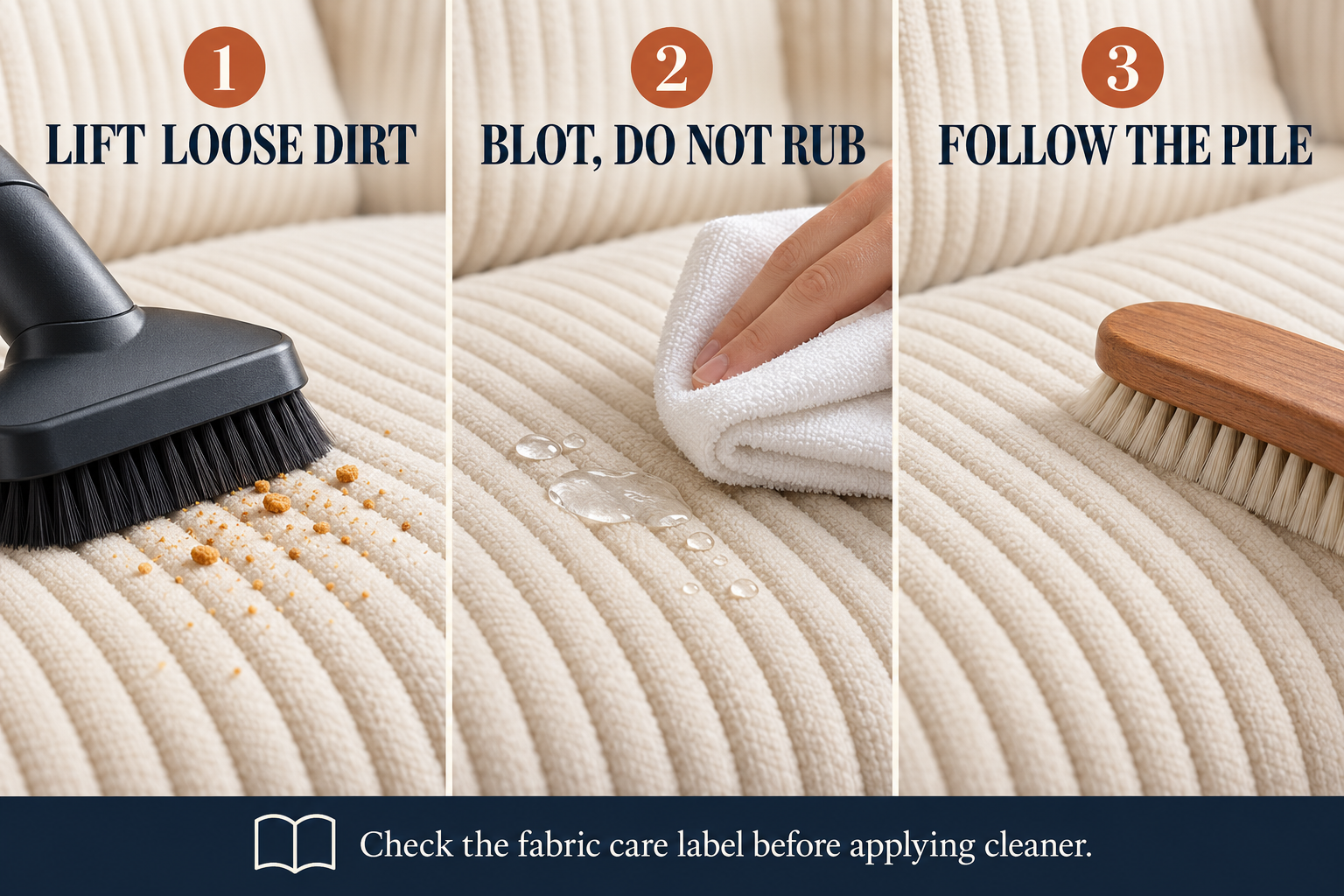
Work from the edge of the fresh spill inward so you don't spread it across more channels. After each gentle press, lift the cloth and use a dry fold. Once free liquid has been absorbed, inspect rather than repeatedly wetting the same area. Coffee residue and a wet fabric shadow are different next steps: residue may need the permitted spot method, while extra moisture needs to dry. Don't judge the final color while the area is still damp.
For crumbs and dust, follow each panel's ribs
Check that your upholstery attachment is clean and has no sharp edges. Begin with gentle suction on a less visible area. If the fabric pulls into the nozzle, reduce suction or change the attachment before continuing.
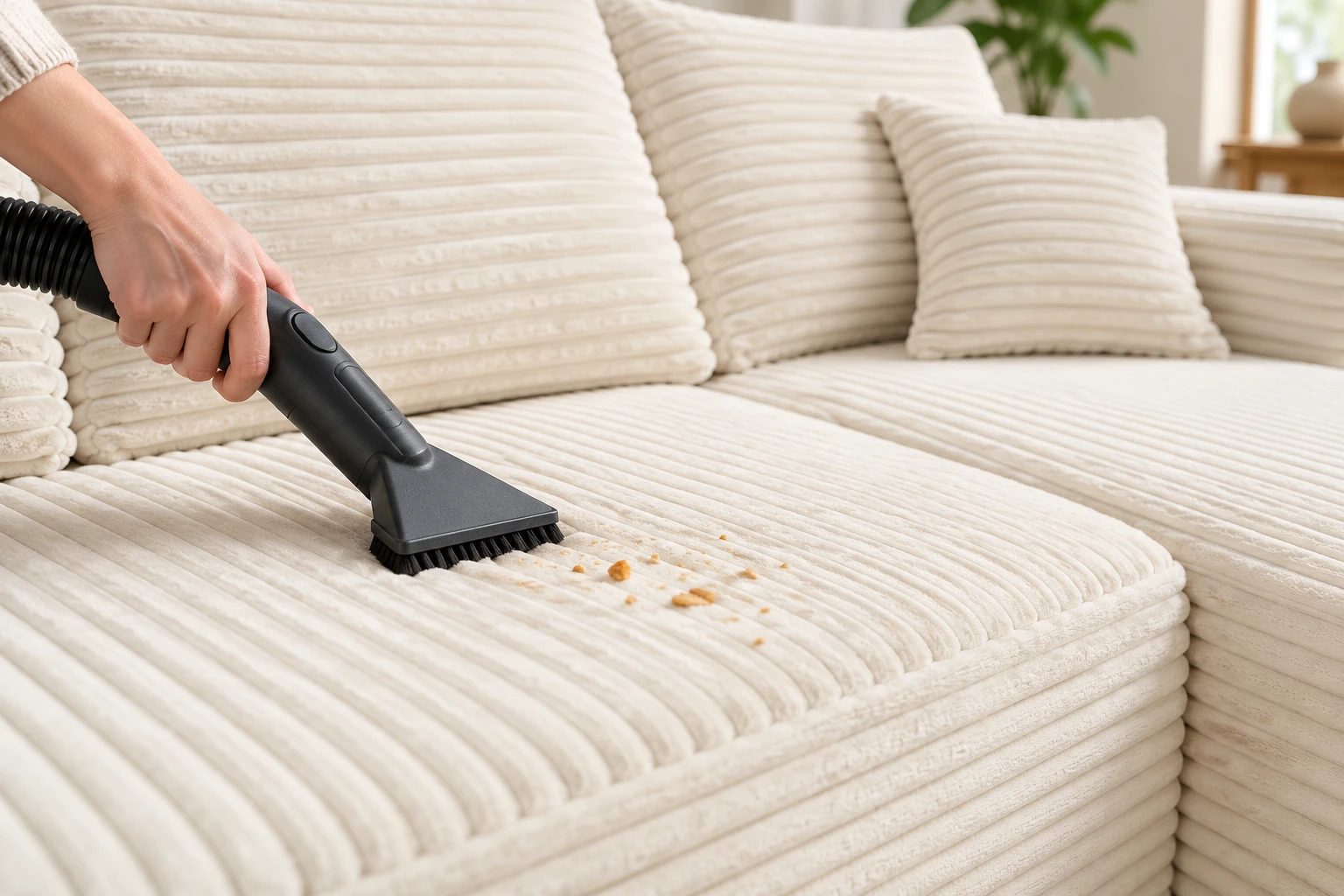
Make short, light passes along the channels. On the backrest, the direction can differ from the seat or chaise, so look at each panel as you reach it. Then give the seams, arm gaps and favorite sitting spot their own pass. A hard crevice tool belongs in a gap where it can reach without scraping the raised ribs.
Work from the backrest down to the seat and lower front. That way, debris from above does not land on a seat you have already finished. You do not need to press harder because the cloth is pale: check whether the dirt is lifting, rather than judging cleaning progress by how firmly you can push the tool.
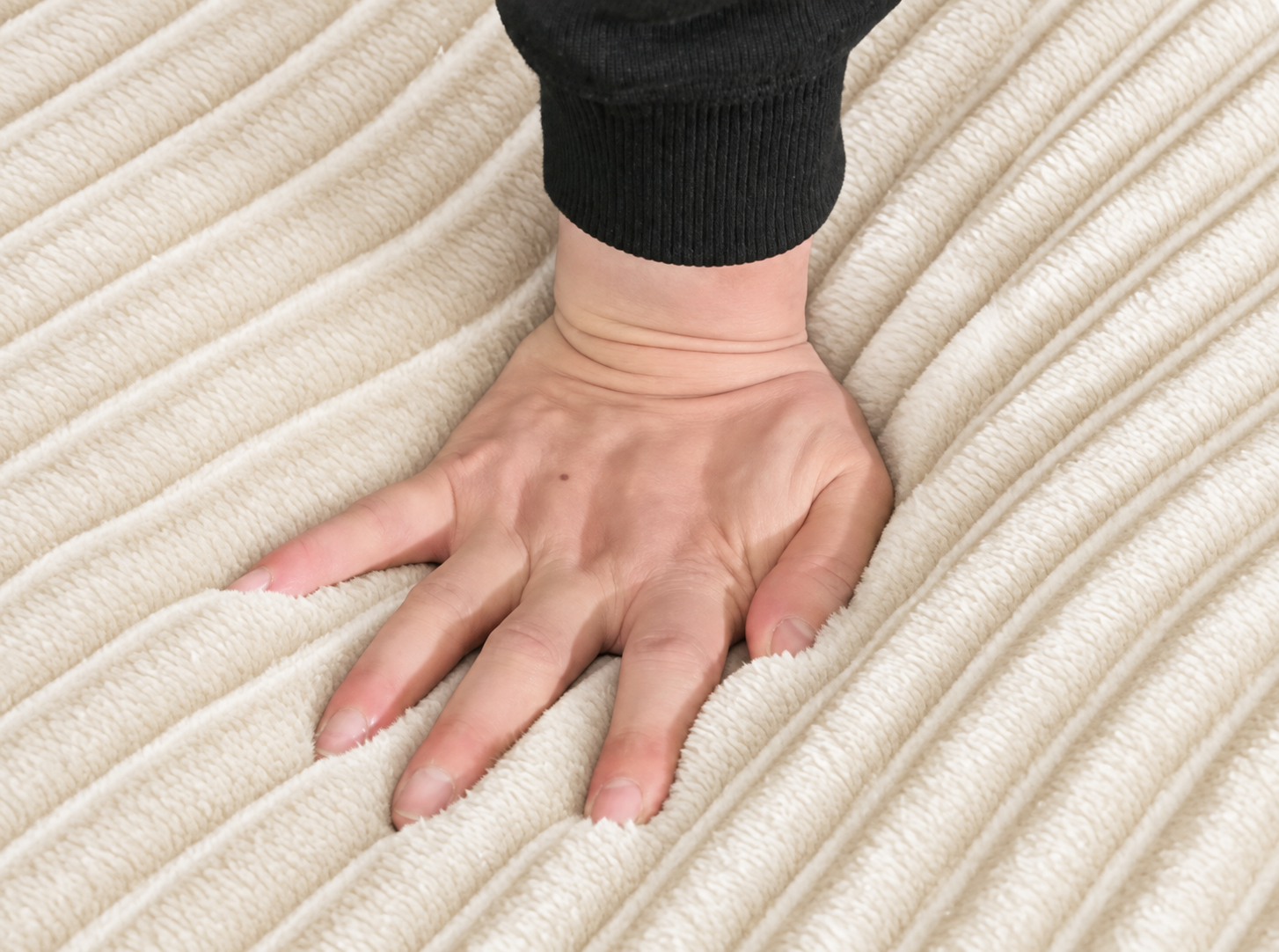
A pale patch is not automatically a stain
Before treating a mark, look from the opposite side of the sofa. Does the patch become darker, lighter or less obvious as the angle changes? That observation helps distinguish a change in pile appearance from a mark that stays visible in the same place.
If there is visible residue, a spill outline or a ring left by earlier treatment, record that instead. Keep the cleaning-product name if one was used. “Coffee with milk, absorbed with a dry cloth” gives customer support or a cleaner a useful starting point; “the fabric looks wrong” does not tell them what happened.
Read the code when you reach the cleaner decision
The care code narrows the cleaning method; it does not select a household recipe for you. Mayer Fabrics' cleaning-code reference distinguishes W for water-based methods, S for solvent-based methods, WS for either approved category, and X for vacuuming or light brushing only.
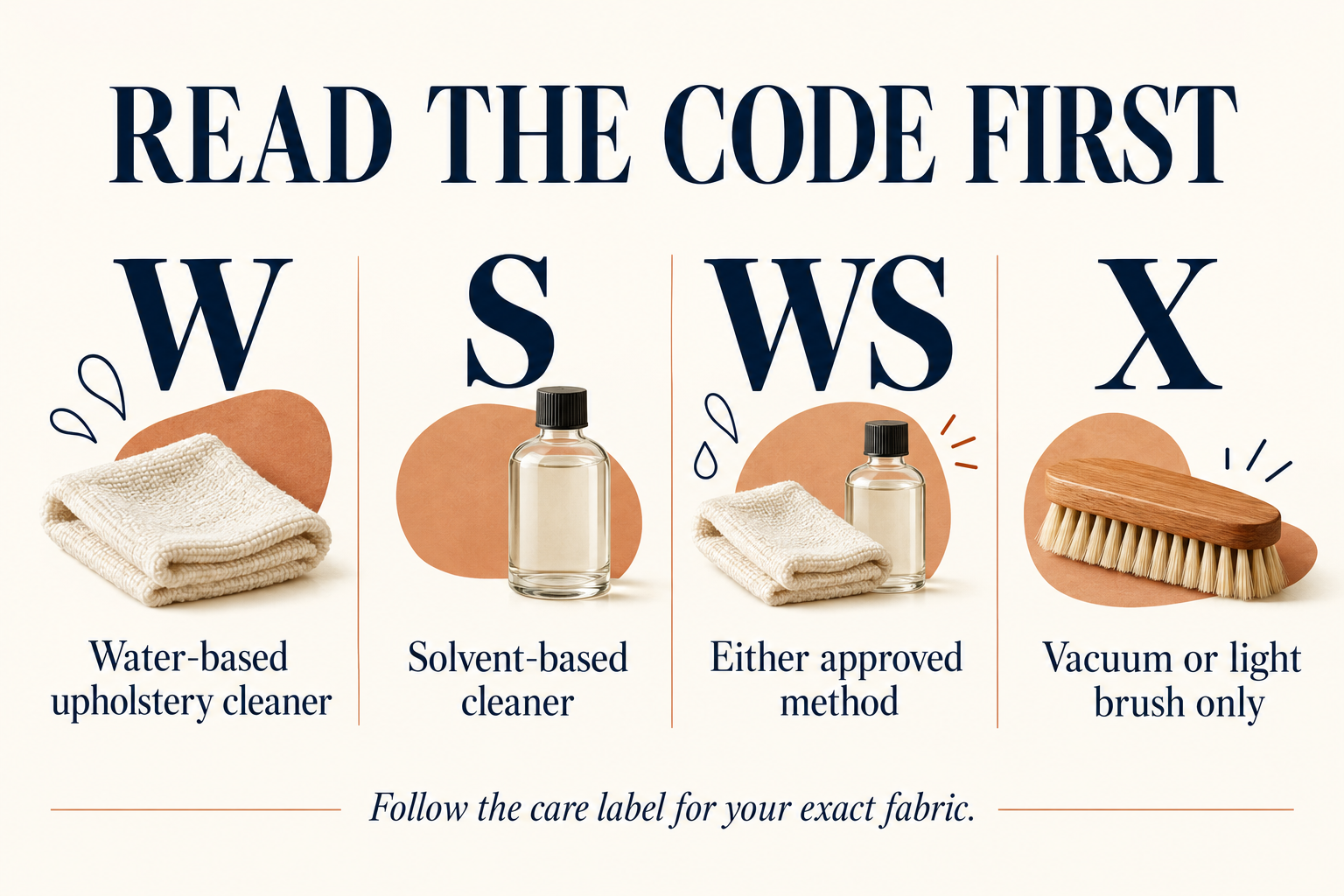
For water-cleanable upholstery marked W or WS, start with a spot test of a compatible upholstery cleaner, using the amount and application on its label. Let the test dry fully. Check it in daylight for color transfer, a ring or a change in texture before treating the visible mark. Use the approved foam or spot method rather than pouring cleaning solution through the ribs into the cushioning.
An S code calls for a compatible water-free cleaning method; keep the room ventilated and follow the cleaner's safety directions. X means dry vacuuming or light brushing only. If no cleaning code is available, continue with dry maintenance and fresh-spill absorption until the liquid method is established. Corduroy describes a ribbed surface, so it cannot tell you which of these methods fits a particular upholstery.
Keep the treated area unoccupied while it dries, with ordinary room airflow. Before using a brush to align the pile, make sure both the fabric instructions and the test patch allow it. Stop if fibers pull out or the surface changes. A steam cleaner, hair dryer and washing machine are different treatments; approval for spot cleaning doesn't approve them.
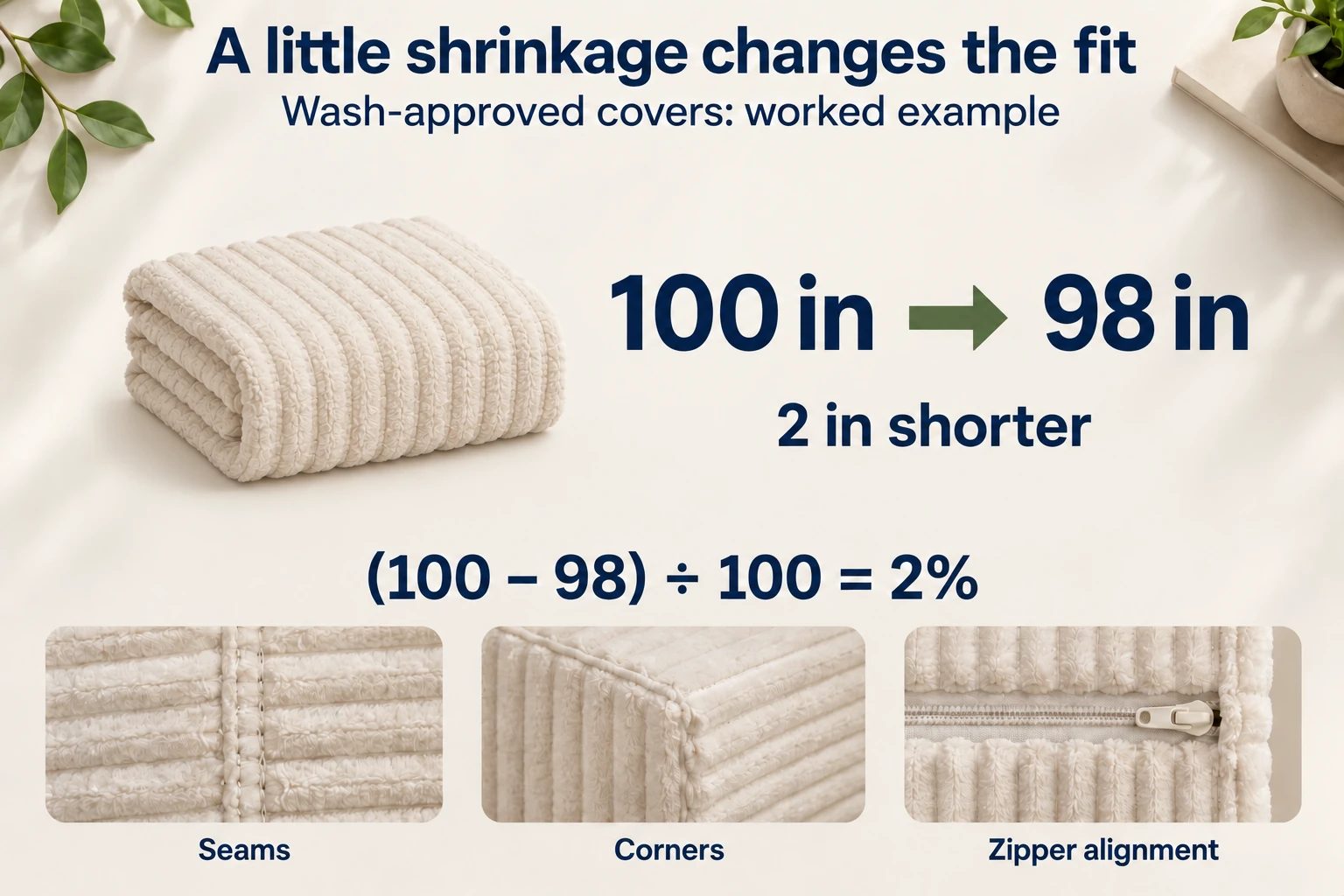
For a cover approved for home washing, size retention matters as much as removing the mark. AATCC TM135 measures length and width changes after laundering. In a worked example, a 100-inch panel that finishes at 98 inches has shortened by 2%, leaving two inches less fabric to wrap around the cushion. On a fitted cover, that change affects corners, seams and zipper alignment. Follow its approved wash and drying instructions, and check both directions when reading a shrinkage result.
Make the routine fit how you use the sofa
Check the places that actually collect debris: the reading seat, the chaise, the seam beside an arm. A light dry pass there is more useful than repeatedly wet-cleaning the entire sofa. Deal with fresh spills promptly and keep a photograph of the care label with your order record.
If a large area is soiled or previous treatments are unknown, ask an upholstery professional to assess it. Send the fabric instructions and the products already used. That saves them from guessing at the surface in front of them.
For a household deciding whether corduroy fits its routine, look at the seats that will get the most use. Broad channels deserve a light dry pass where crumbs collect; spills deserve prompt absorption and the correct spot method. That is a workable routine for a textured sofa without treating the whole seat as washable. Compare the actual fabric on ULTI ONE compressed sofas in close-up and in a full-room view before choosing a layout.
Clean one panel, not one imagined grain direction
Trace the ribs on the seat, then on the back and arm. They can run in different directions, so turn the upholstery tool for each panel rather than sweeping across the whole sofa in one direction. Work gently through the channels and lift the tool at seams. That removes loose grit before it is worked into the pile.
After spot treatment permitted by the cleaning code, a stiff patch can be dried residue rather than damaged fabric. Let the area dry fully, check it in ordinary light and avoid adding another layer of cleaner by default. A repeated wet outline suggests moisture or cleaner spreading beyond the original mark. Deal with the residue using the permitted method, keeping liquid away from deep seams and filling. The goal is an even, dry panel with clean ribs, not the strongest possible cleaning mixture.