Ultione / Journal
Media Room
A Compressed Sofa Layout for a Media Room
Plan a compressed sofa in a media room around your preferred viewing seat, window reflections and an exit route that stays usable during a film.
The short answer
What you need to know
Plan a media-room sofa from the seats you watch from most, then check screen distance, height, glare and a clear way out. ULTIONE's THE BIG U provides a broad lounge, but its center and end seats have different screen angles. Test the low seated eye position before fixing a wall bracket, and keep the room useful for conversation with the screen off.
A compressed sofa can make a media room comfortable without turning it into a miniature cinema. Good sightlines, low glare, and a room that still works when the screen is off matter more than rows of powered seats.
Set the viewing distance first
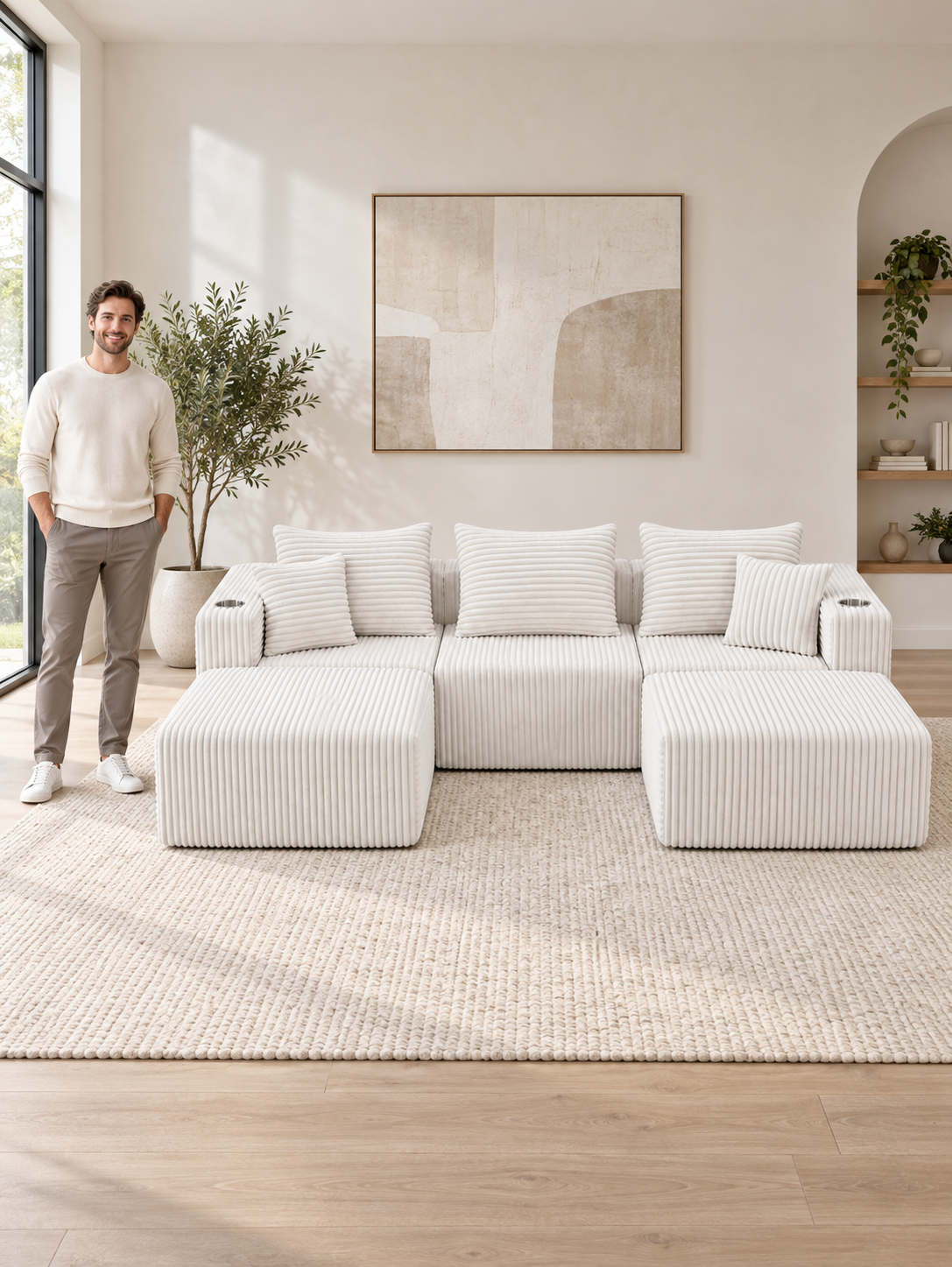
The Big U measures 118.5 inches wide and 61 inches deep. Mark its full outline and the planned screen wall, then sit at the center and at both ends. If someone has to twist to see the screen or step over a front extension to leave, change the layout before buying.
 The Big U
 arrives in two compressed boxes. Check both packages against the delivery route, then use the expanded outline for the viewing plan. Compact arrival helps you get the pieces into the room; the two front extensions still need their full floor space during a film.
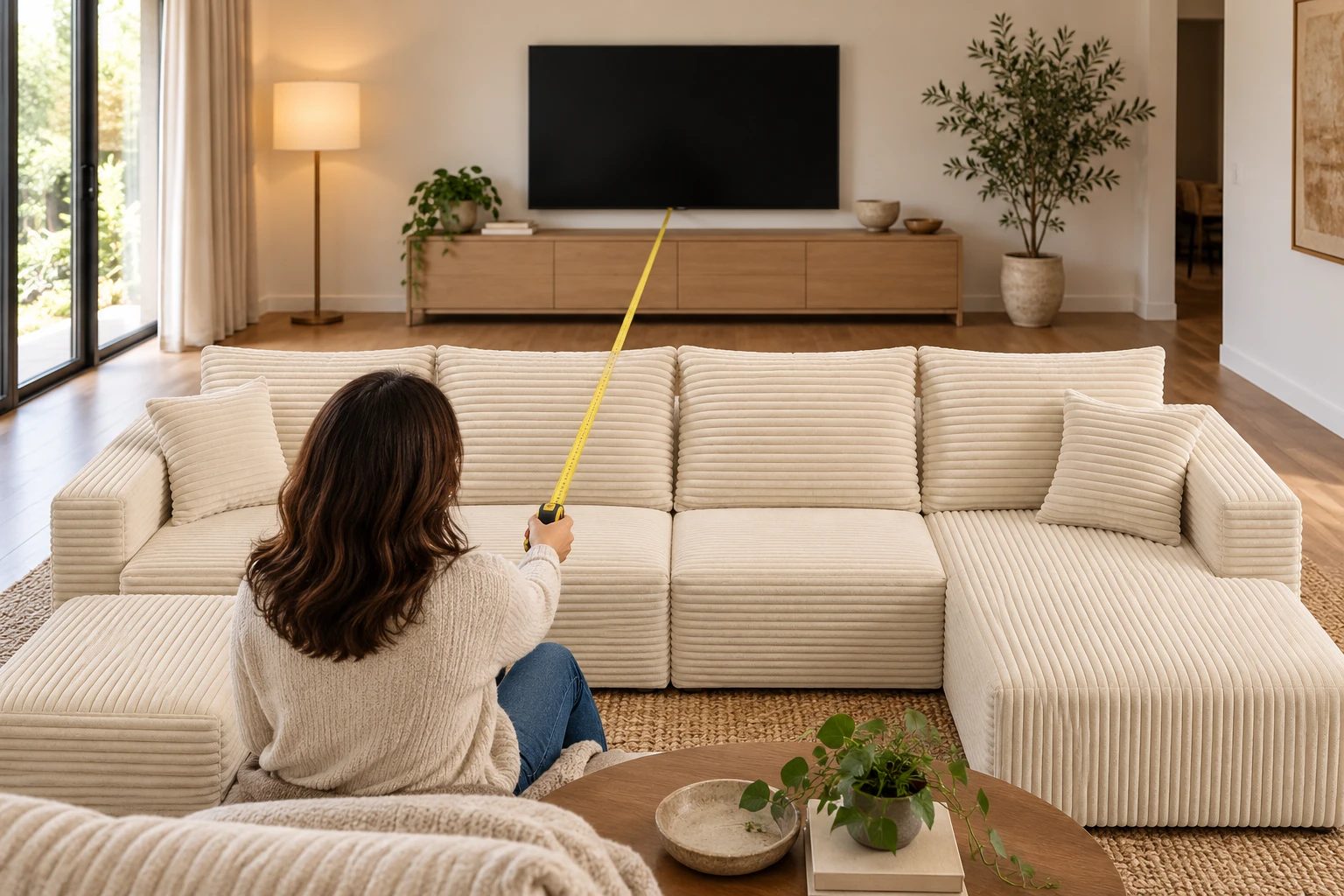
The RTINGS size-to-distance guide gives a roughly 30-degree mixed-use starting point: viewing distance in inches divided by 1.6 estimates the screen diagonal. Reversing that rule puts a 55-inch screen at about 88 inches, or 7 feet 4 inches, and a 65-inch screen at about 104 inches, or 8 feet 8 inches. Use those distances as a starting point, then test the view from your usual seat.
Measure from your eye position to the screen, rather than from the sofa front to the console. Mark the proposed screen on the wall and try the center and the preferred chaise position. If you enjoy a more immersive view, trial a nearer seat; if that view feels tiring or requires head movement you dislike, move back. The full sofa footprint still has to preserve the exit route.
When comparing the ULTI ONE compressed sofas, choose a layout around the seats your household will watch from most.
Choose the seats you will watch from most
A broad sectional gives each seat a different screen angle. From the center and your preferred chaise, check whether you can watch without holding your shoulders or head turned throughout a film. Set the screen around those regular viewers, including an off-center favorite seat.
Keep a route for someone leaving during a film. A person should not have to climb over an extension or squeeze between knees and a table to reach the door. Test that trip with a seated household member, not just an empty sofa outline.
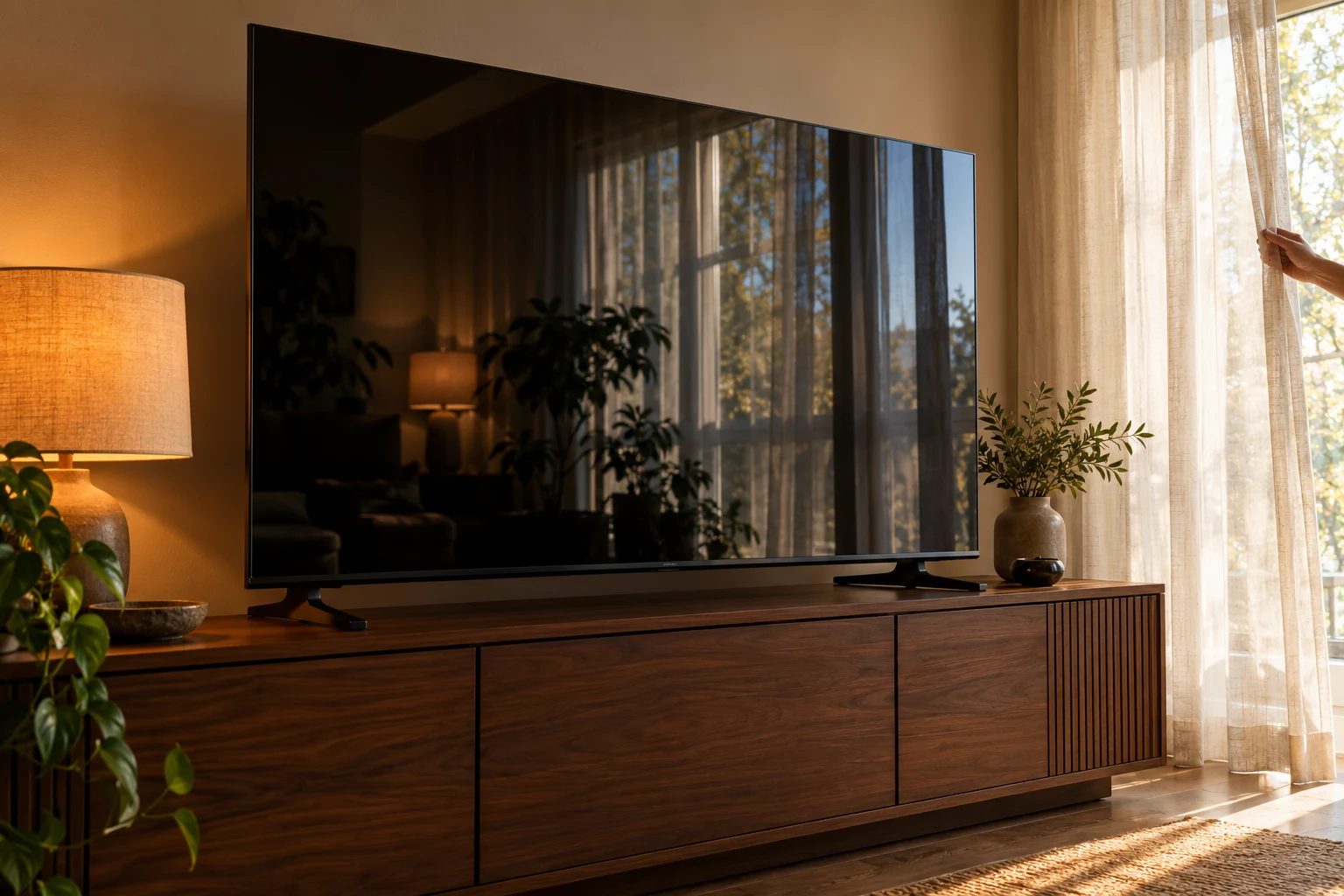
Check reflection with the screen dark first. Sit at each main viewing position and note whether a window or lamp is reflected where the picture will be. Close the available shade or move the light and check again. Then view ordinary bright and dark content at the time of day you use the room. A seating plan that works at night may need shade control in the afternoon, not a larger television.
Check screen height from the low seat
Your eye position changes between upright sitting and reclining. Try both before fixing a wall bracket. Mark the screen's edges with removable tape and watch from the seats the household uses most; raising the screen to look balanced above a tall console can create an uncomfortable viewing angle from a low lounge. A temporary screen position is easier to change than a bracket after drilling.
The Big U's listed seat height is about 16 inches. Its wide seating run can suit a household that wants several positions, but the preferred chaise and center seat should both have a usable screen view. Give each regular viewer a reachable cup surface, and leave one path outside the extensions for someone coming back from the kitchen.
In a shared US or Canadian living room, match each activity to its light: shades for a daylight game, low exit lighting during a film and a separate lamp for reading.
Give black fabric some contrast
Jet-black wide-wale corduroy absorbs light, but the ribs still show through highlights and shadow. Warm timber, pale plaster, and a lighter rug keep the sofa visible and stop the room from feeling flat.
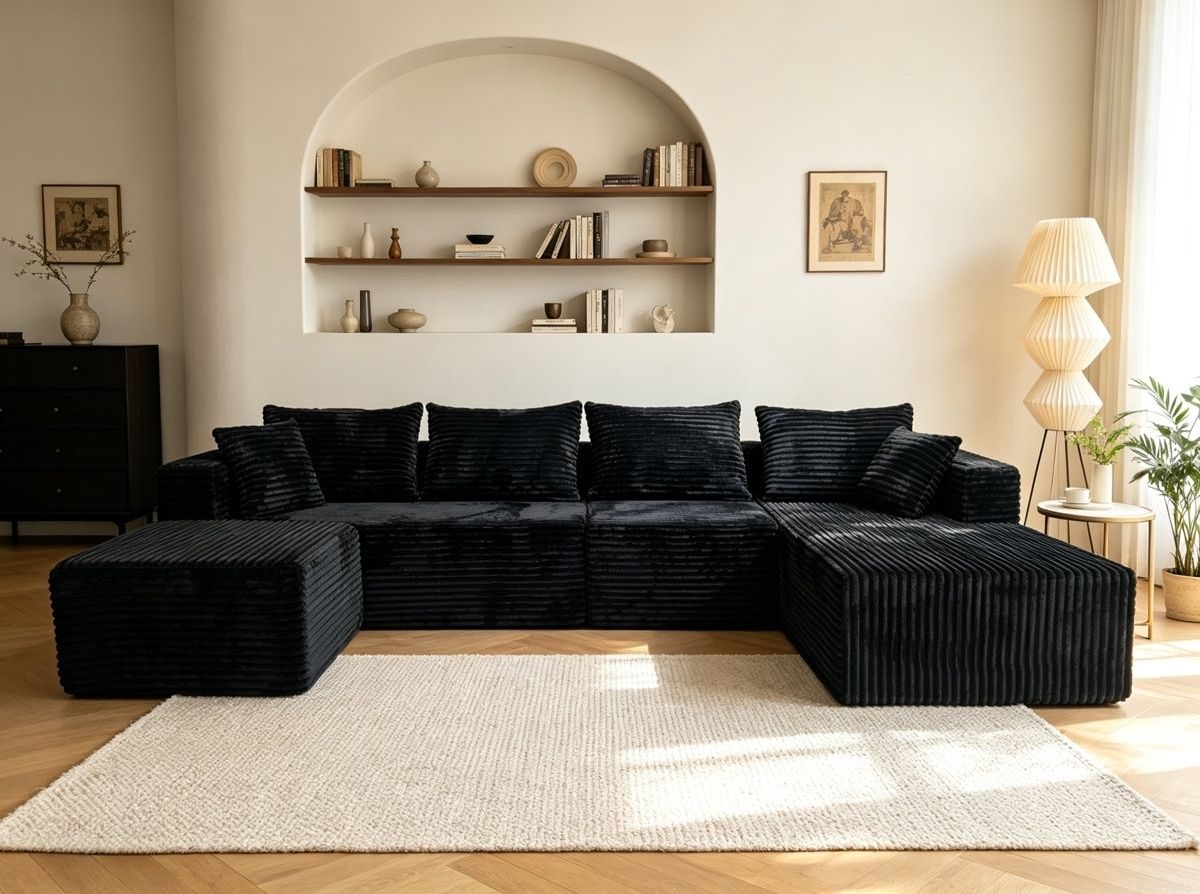
Deep comfort without mechanical seats
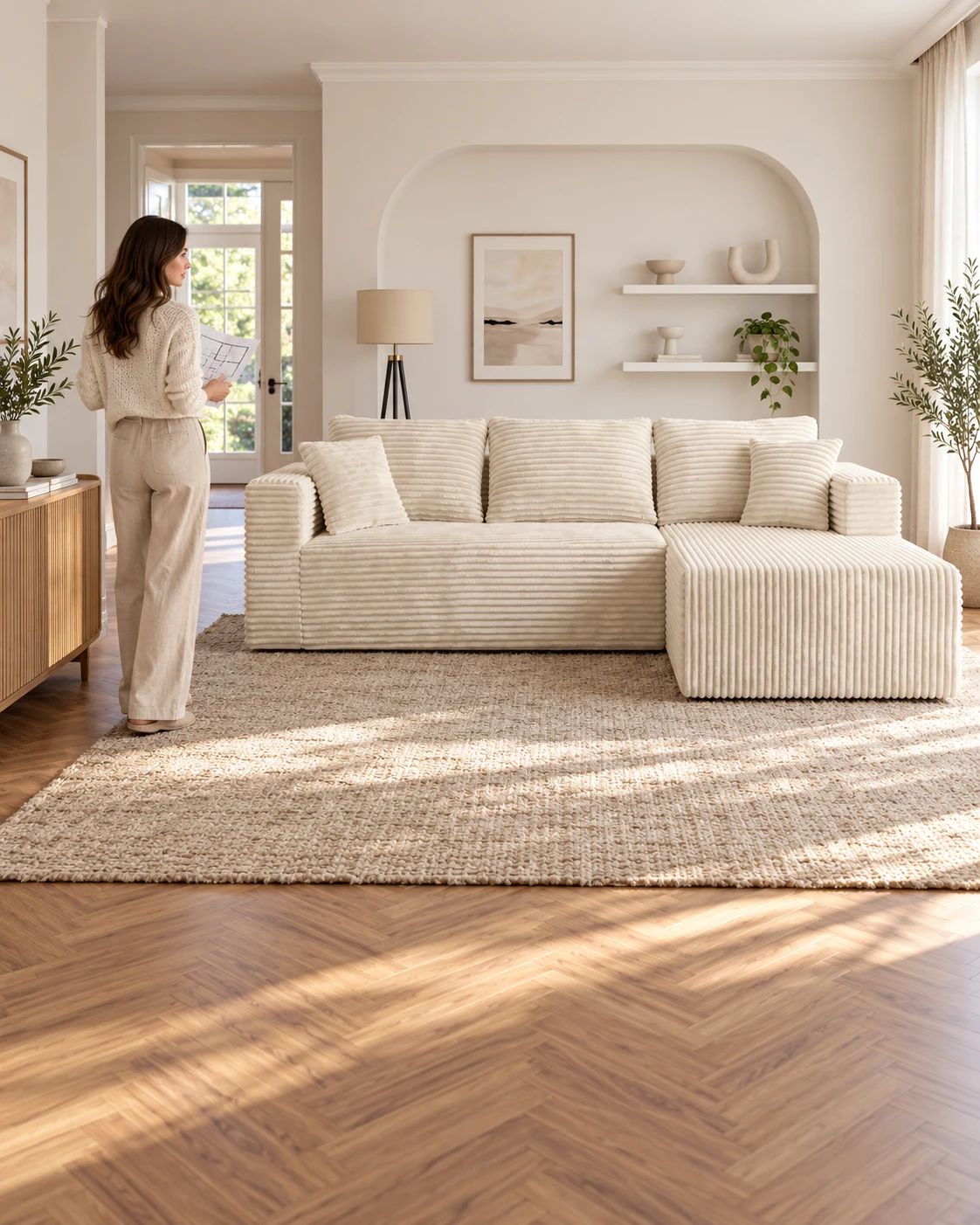
The Big U’s front extensions give viewers places to stretch their legs while the straight seats remain available for upright watching. Try both positions with the back cushions in place: your hips need a supported resting position, and your head should face the screen without a sustained turn. Leave an approach at the side so someone can leave without crossing the screen. If 118.5 inches is too wide, compare The Big UX at 100.4 inches; its symmetric layout gives you a different set of viewing positions.
Make the same room work with the screen off
Switch the screen off and try an ordinary conversation. From the straight seats, check that you can see another person without leaning around an extension. From the chaise, try reading with a reachable lamp and surface rather than relying on the television's light. Leave access to shades and keep these activities usable between films.
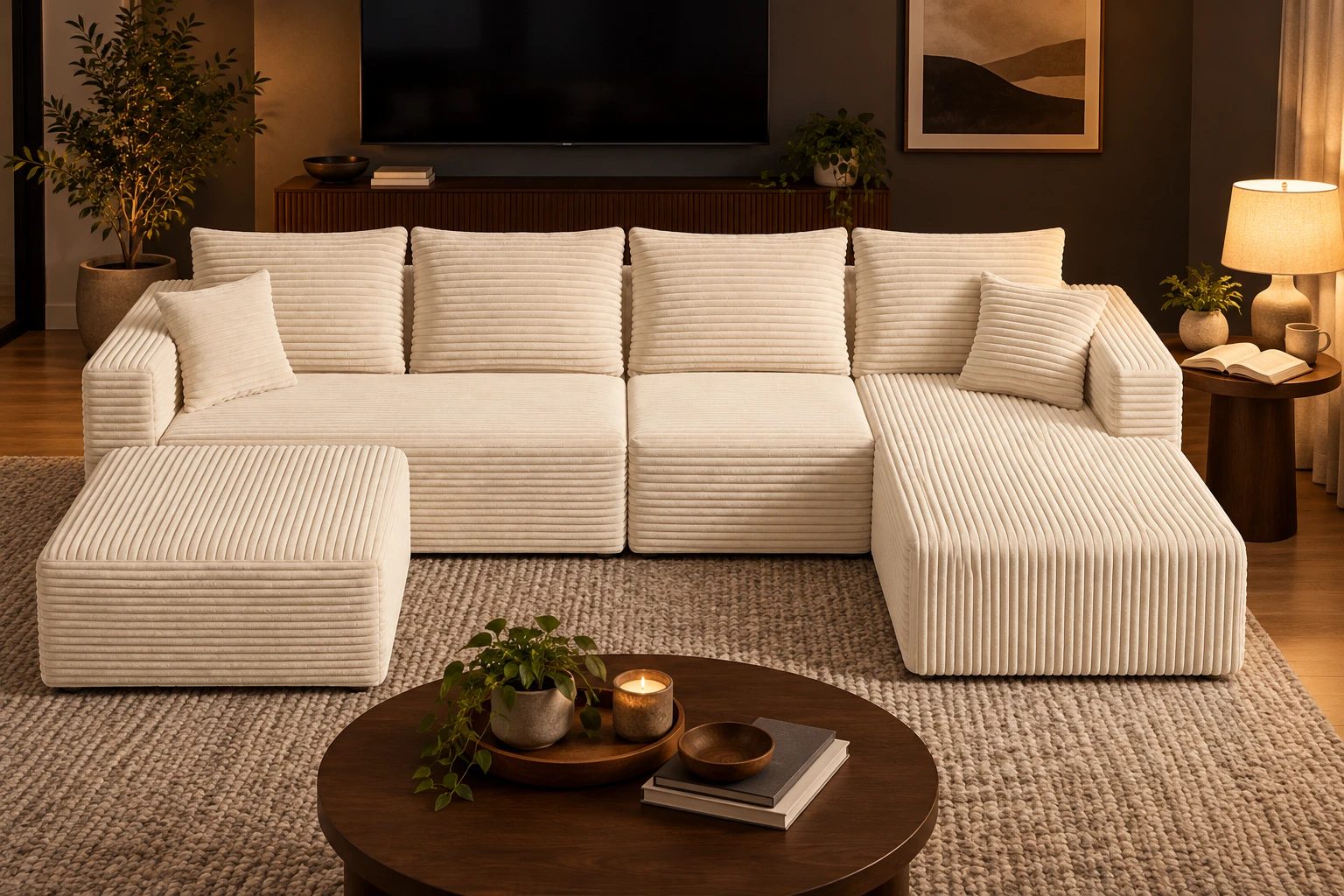
Plan lighting for watching and talking
Use indirect wall or shelf lighting when people arrive, then dim the room below eye level for viewing. The space should still feel welcoming when the screen is dark.
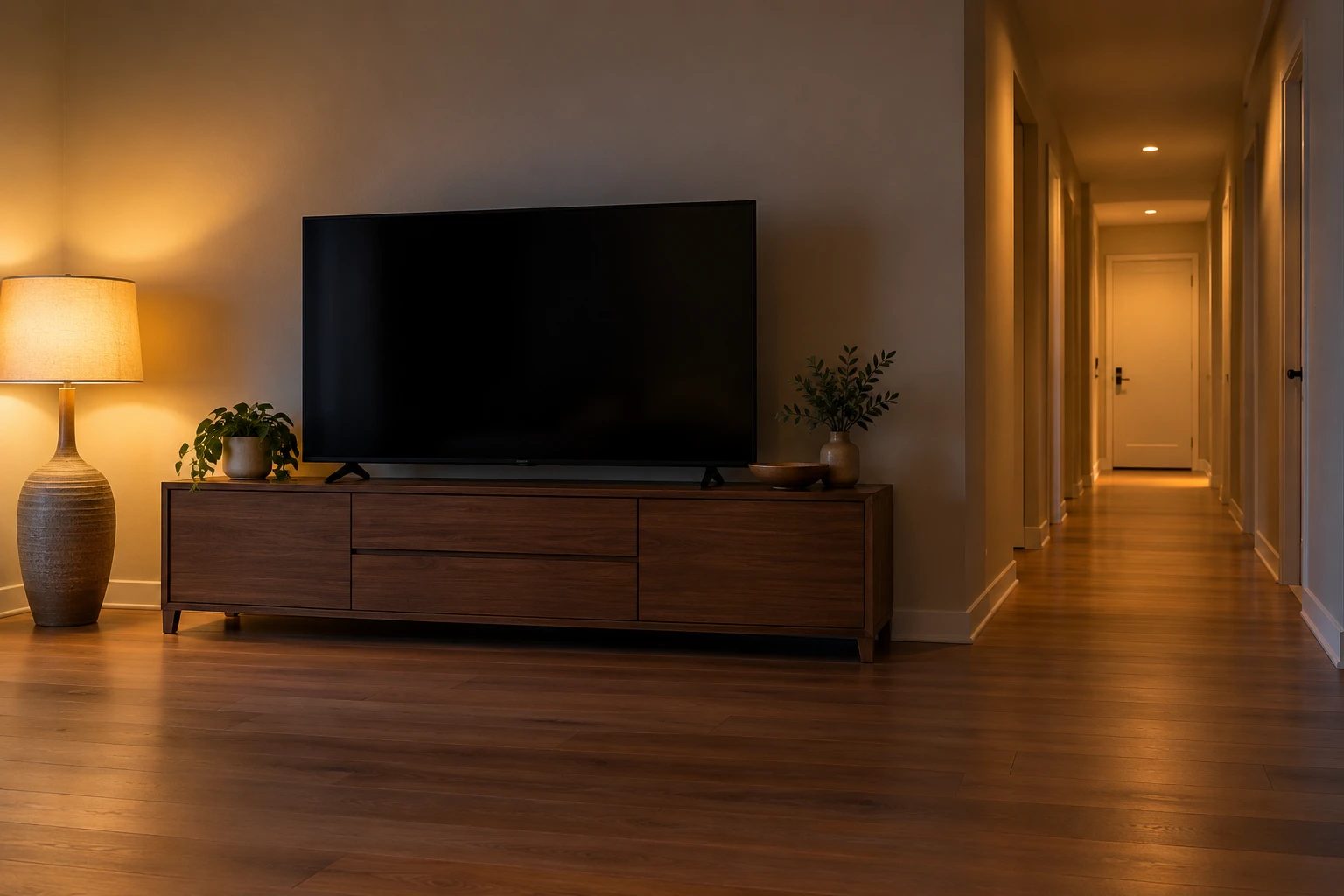
With the viewing lights dimmed, keep the shades and equipment behind the console accessible. Check the exit under that lighting too, so the daytime arrangement still works during a film.
Compare the Ultione compressed sofa collection using the seats you will watch from most. Review the dimensions of THE BIG UX frameless compressed sofa, the 100.4-inch-wide symmetric option, if The Big U’s 118.5-inch width exceeds your plan. Match its center and footrest positions to your screen before choosing.
From the compressed sofa collection
Keep every seat in the viewing arc
Start with The Big U and its 118.5-inch width, then compare the smaller, symmetric Big UX if the side route or screen angle does not work.