Ultione / Journal
Compressed Sofa Guides
Compressed Sofa-in-a-Box Packaging: Protection and Delivery Checks
Understand compressed sofa packaging: separate carton ratings from complete-package testing and record package labels, damage and affected items on arrival.
A compressed sofa arrives in a compact shipping format, but packaging protection involves more than the size of the box. The outer container, the way the contents are held, the inner barrier and the closures each do a different job. Understanding those jobs helps you read a packaging claim and make a useful record when the delivery arrives.
Begin with your model in the ULTI ONE compressed sofa collection, then prepare for the actual arrival. The L uses one carton; The U, The Big U and The Big UX use two. Match tracking to the configuration, plan handling to the final room and keep each label with its contents as you open. The checks below explain both the packaging claims and what to do on delivery day.
 ULTI ONE compressed sofa collection
For an apartment or condo in the US or Canada, reserve any required delivery slot and elevator access before the cartons arrive.
Read packaging as a complete system
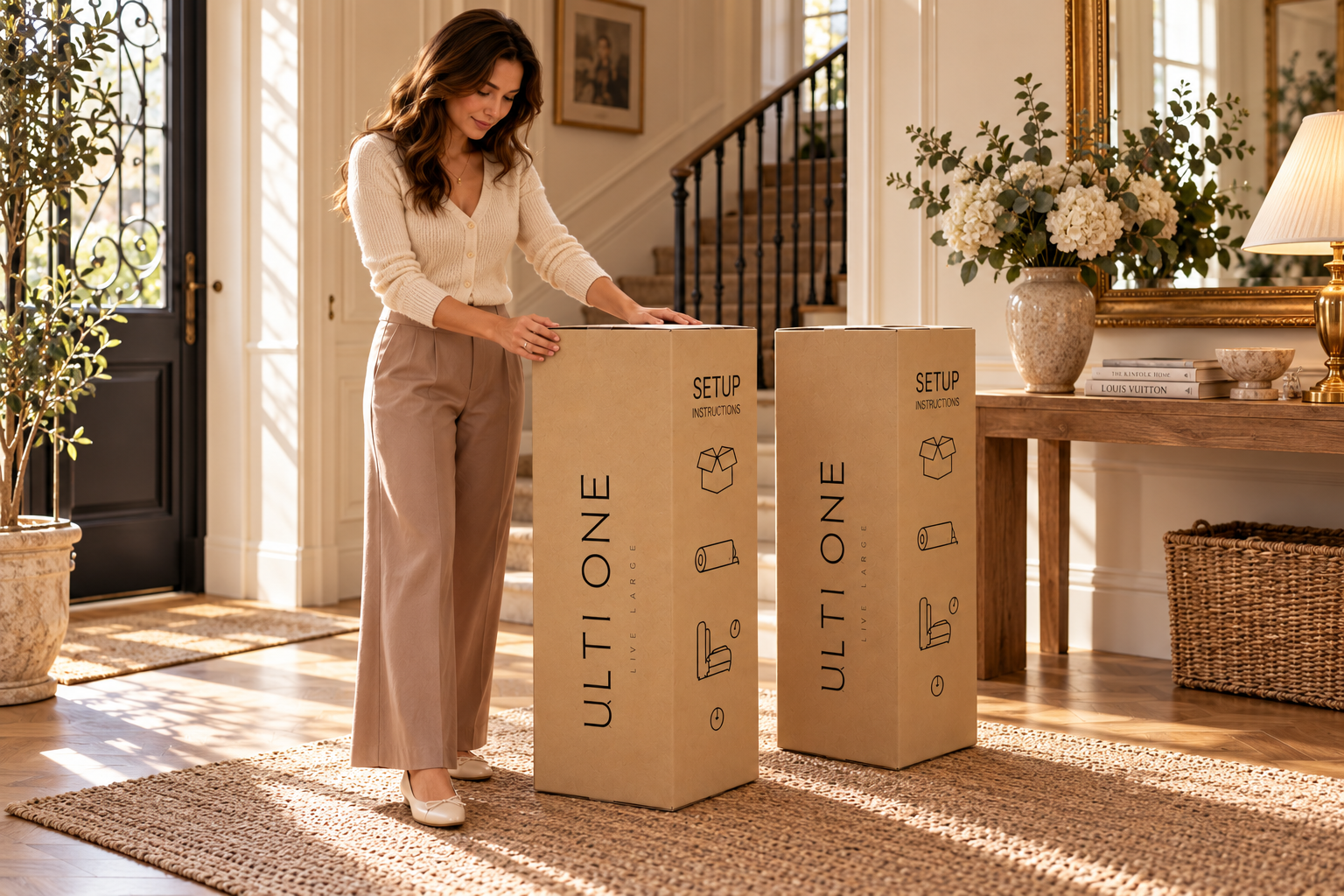
The outer carton carries and contains the shipment. The packed arrangement controls movement inside it. An inner barrier separates the product surface from its surroundings. The closures keep that arrangement together through handling. The exact materials and design depend on the product and shipment.
Compression packaging proceeds from reducing the finished body’s volume to holding it under sealed film, then supporting that package in a reinforced carton. Each layer has a practical purpose. The film maintains the packed state; the outer board contains and protects the shipment; labeling connects the parcel to its model and packing record. Keep these functions in mind when opening and documenting what arrived.
A 5:1 volume example means 5 cubic feet reduced to 1 cubic foot, or 80% less volume. A 4:1 example leaves one-quarter of the volume, or 75% less. Neither means every side becomes four or five times shorter, and the foam's mass stays in the package. For delivery, compare all three carton dimensions with the route and its weight with your handling plan.
Separate board strength from packed-product testing
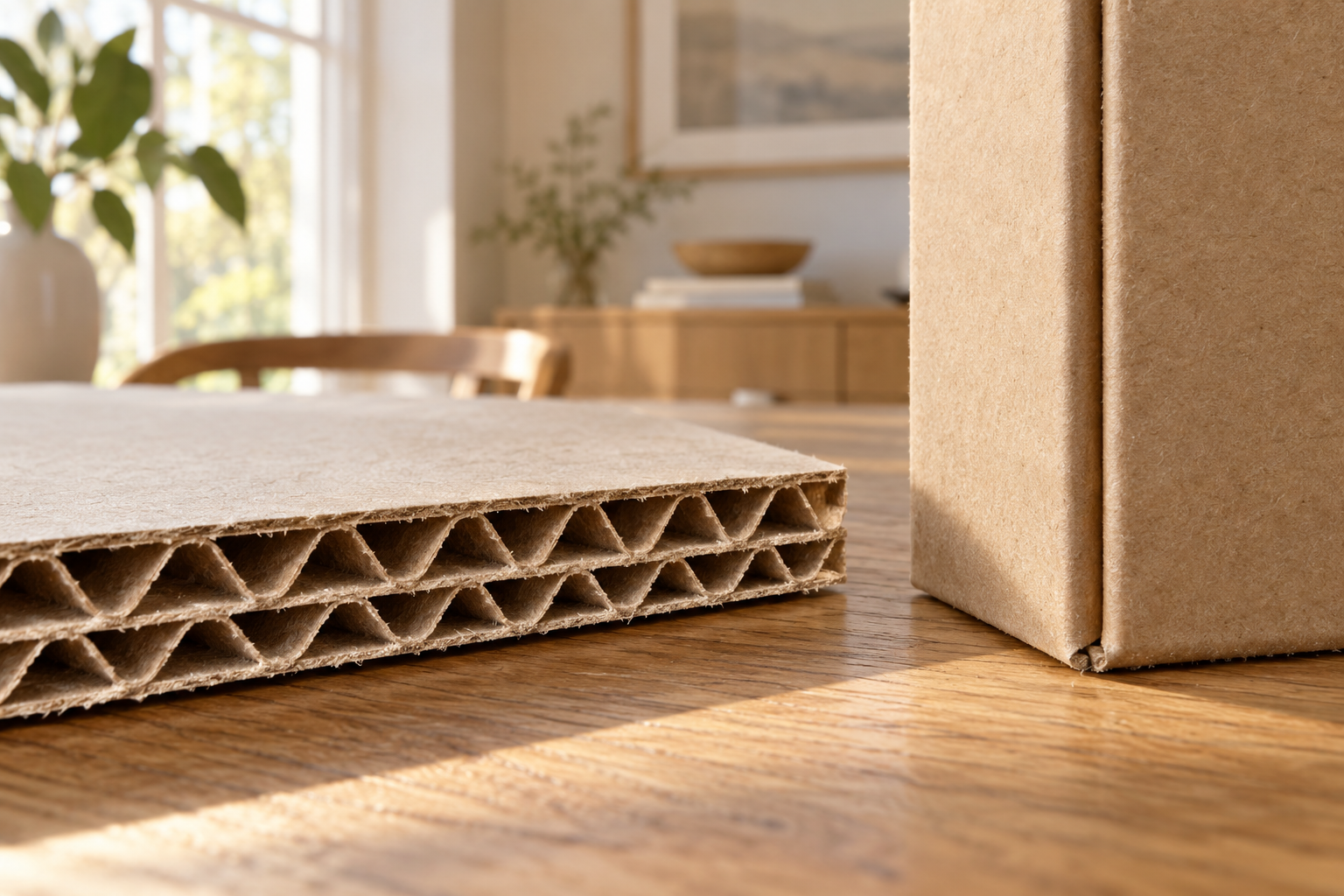
Look at the flutes between the liners: they create depth without making the board solid. Corners, closures and packing fit then influence how the completed carton works. A reinforced board cannot compensate for an open closure or contents moving freely inside; the package needs those parts to work together.
A cardboard specification describes a property of the board. A completed-box measurement describes the container. A packaged-product test evaluates a particular product together with its packaging. Keeping those levels separate prevents a material rating from being read as a complete delivery outcome.
ECT measures how much force the corrugated board resists along its edge, which is relevant when boxes carry stacking pressure. Mullen testing measures resistance to bursting through the board. They answer different questions: a higher board rating helps describe the material, while a transport test checks the packed product through a sequence of handling hazards.
Match the test to the journey
ISTA's procedure catalogue distinguishes basic screening procedures from transport simulations. Its 1-series tests are screening tools; its 3-series procedures simulate damage-producing hazards associated with specified distribution environments.
The procedure name matters because shipping routes differ. ISTA 3A concerns individual parcel-delivery packages within its stated scope. ISTA 3B concerns less-than-truckload distribution. ISTA 3L addresses retailer fulfillment environments and the relevant outbound delivery paths. They are not interchangeable steps on a simple “good, better, best” ladder.
The public ISTA 3A 2018 overview shows how a standard parcel test combines stresses: nine drops, vibration with and without a top load, then eight further drops, with drop heights tied to package weight. The sequence is useful because the carton carries the product through several kinds of handling, rather than one isolated impact. In a packaging report, look for the complete procedure and the final condition of both the package and contents. On arrival, record the closed carton and inner arrangement before clearing the protection.
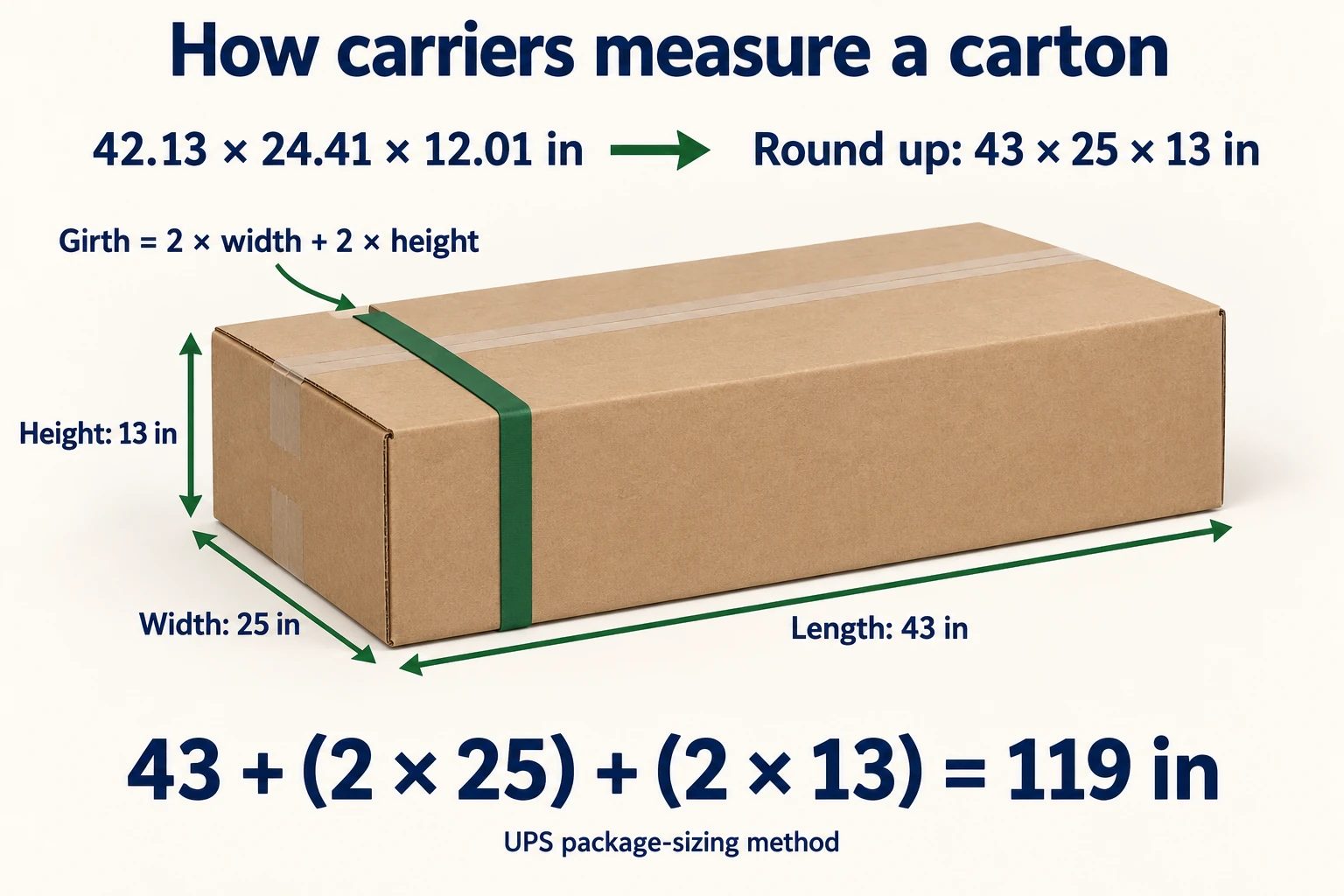
Carrier size language has its own calculation. UPS's package-sizing guide defines girth as twice the width plus twice the height, then adds the longest side. Using its whole-inch round-up rule, The L's recorded 42.13 × 24.41 × 12.01-inch carton becomes 43 × 25 × 13 inches. Length plus girth is therefore 43 + 50 + 26 = 119 inches. Keep this carrier measurement beside the actual carton weight and the booked delivery service when planning arrival.
Make a useful arrival record
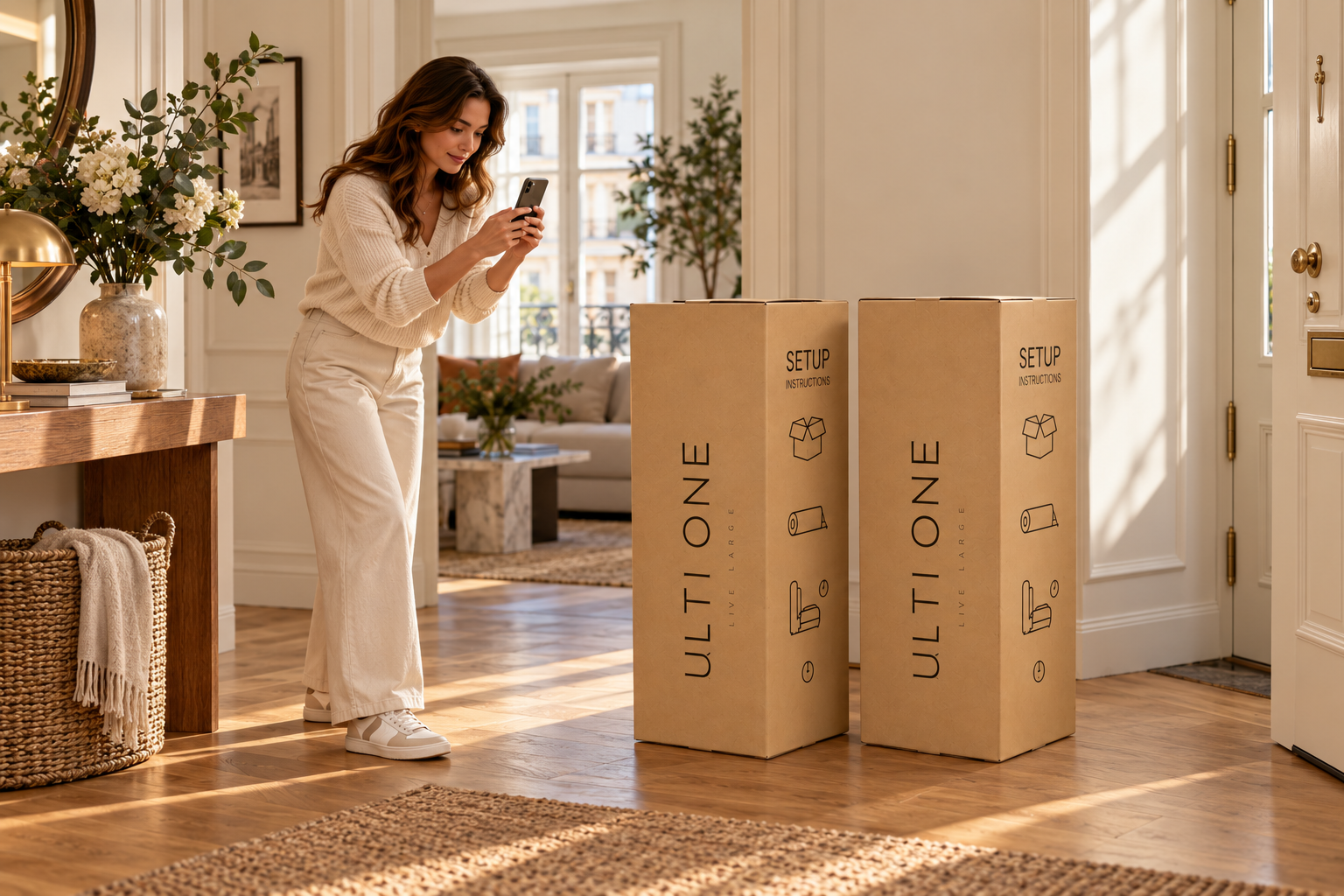
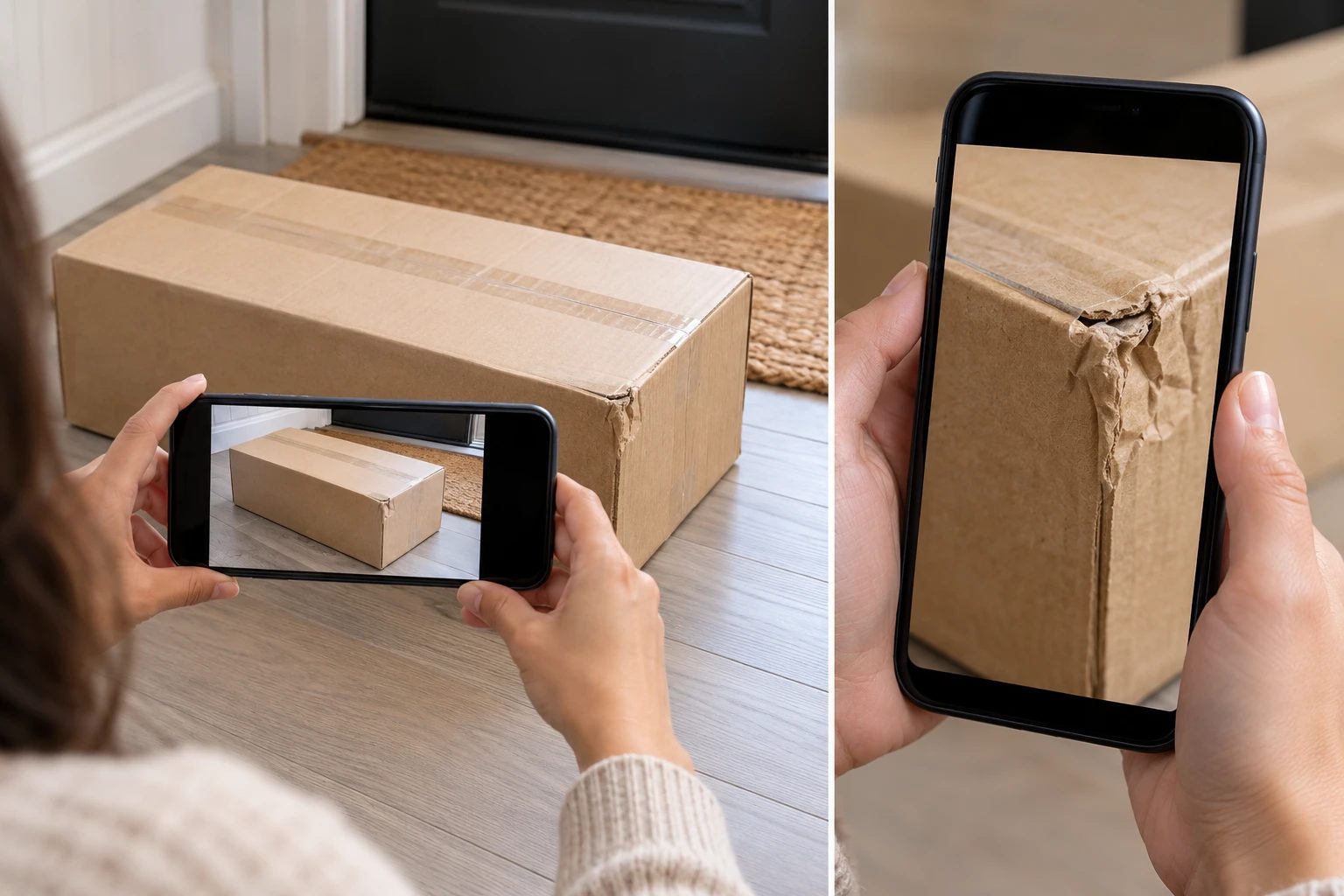
Use a safe, dry area and follow the supplied opening instructions. A practical photo sequence is:
- Exterior: photograph the carton from useful sides, including any visible crushing, tearing or wet area.
- Label: keep a readable private photo of the tracking label so you can identify the parcel.
- Opening: record the inner-packed arrangement before moving everything away.
- Product: photograph the item overall and take a close view of any suspected damage.
- Context: note the delivery date, when you opened the parcel and which item or module is affected.
Keep labels containing addresses or contact details private. Send them through the support route requested by the seller, rather than posting the full label publicly.
Send support a record it can act on

The product page for The L compressed sectional identifies the model you are comparing. Save the order's exact model and variant with your delivery photos. A support message is easier to investigate when it connects the purchase, parcel and affected item.
If damage is suspected, preserve the relevant carton and protection and contact the seller before arranging transport. For opening, first clear the full finished footprint, identify the instructed protective layers and cut only clearly loose packaging away from fabric. Position released pieces on a clean, level surface with edges free. ULTI ONE's setup guidance allows up to 72 hours for expansion and settling; visible tears or wet damage should be reported when found rather than attributed to normal recovery.
Five checks to make before delivery day
1. Save the package count and tracking for the chosen configuration. The L uses one carton; The U, The Big U and The Big UX use two. Match each received label to the order before treating a separately delivered parcel as missing.
2. Compare each carton with the entire route. The L's base carton is about 42.13 × 24.41 × 12.01 inches. The U adds a carton about 34.25 × 9.45 × 9.45 inches; The Big U adds one about 35.43 × 12.01 × 12.01 inches. The Big UX uses a different pair: about 42.91 × 30.71 × 10.63 and 42.52 × 12.01 × 12.01 inches. Check hardware, landings, elevator interiors and the turn after every tight opening.
3. Arrange handling from the stated delivery point. The L's listed carton weight is about 102.4 pounds; The Big UX cartons are approximately 92.0 and 49.8 pounds. A compact box is not necessarily a light box. Confirm the booked service, available helpers or handling equipment and any building or elevator reservation before arrival.
4. Clear the final setup area and locate the supplied opening instructions. Leave the full expanded footprint free before releasing the protective wrap. Plan where loose plastic will go so it cannot become a walking hazard while the sections are positioned.
5. Prepare the receipt record and support contact. Photograph the closed carton, private label, inner arrangement and each suspected damaged area before clearing packaging. Retain relevant protection while an issue is resolved. Describe the observed panel and delivery time.