Ultione / Journal
Compressed Sofa Guides
Can You Repack a Compressed Sofa? Moving It After It Expands
Moving an expanded compressed sofa? Measure its separate pieces, check both access routes and protect the corduroy before asking movers for a quote.
You can protectively pack a compressed sofa for a later move. Plan around its expanded pieces: cover them, check the route and reserve enough vehicle space. The original small delivery box is a record of the first journey, not a container you should expect to reuse for the full-size sofa. Before attempting recompression, obtain written instructions for your exact model from ULTI ONE.
If you're choosing ULTI ONE compressed sofas for an apartment, consider the next move alongside the first delivery. A compact package helps at move-in. Later, the dimensions of the expanded pieces determine what can leave the room and enter the next home.
 ULTI ONE compressed sofas
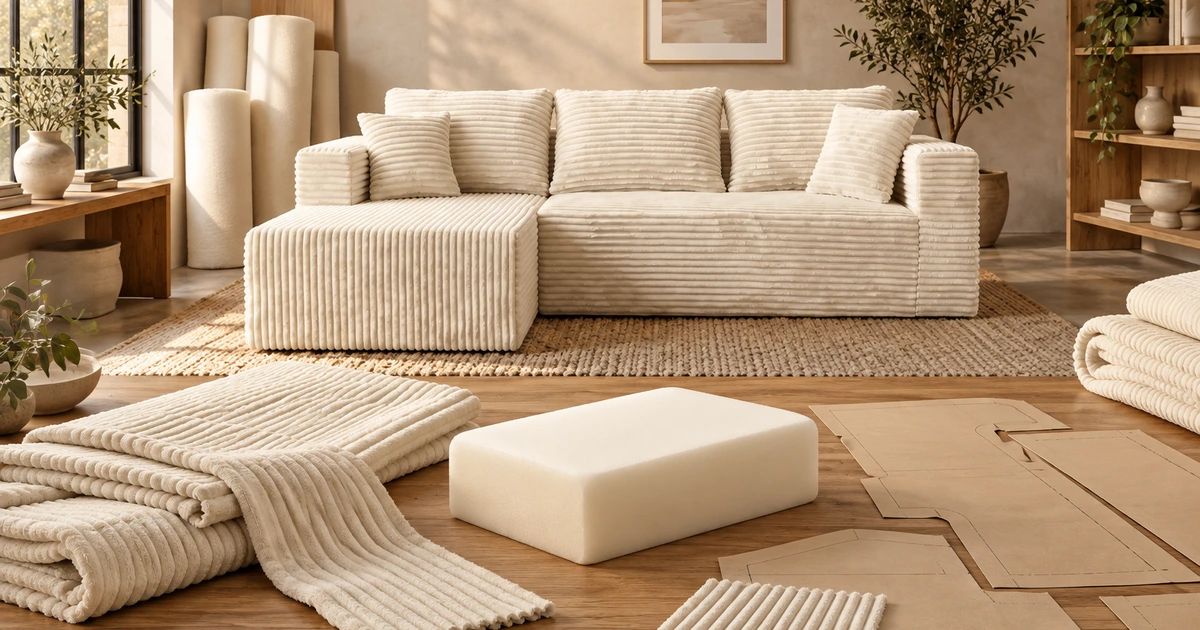
Factory compression combines controlled pressure, a vacuum-sealed protective film and a supporting outer carton. The foam, cover and packing arrangement are designed to recover after that sequence. Household moving protection has a different job: shielding expanded upholstery and keeping it stable during handling. Clean blankets and an appropriate load plan work with the furniture you now own.
The original carton is most useful as a record of the delivered parcel and for the initial inspection. Once the sofa is expanded, choose protection to fit each intended moving piece. Preserve its rounded corners and broad corduroy pile rather than tightening straps until the shape changes. Secure the load through the mover’s suitable protection and handling arrangement.
Start with the furniture you will actually carry
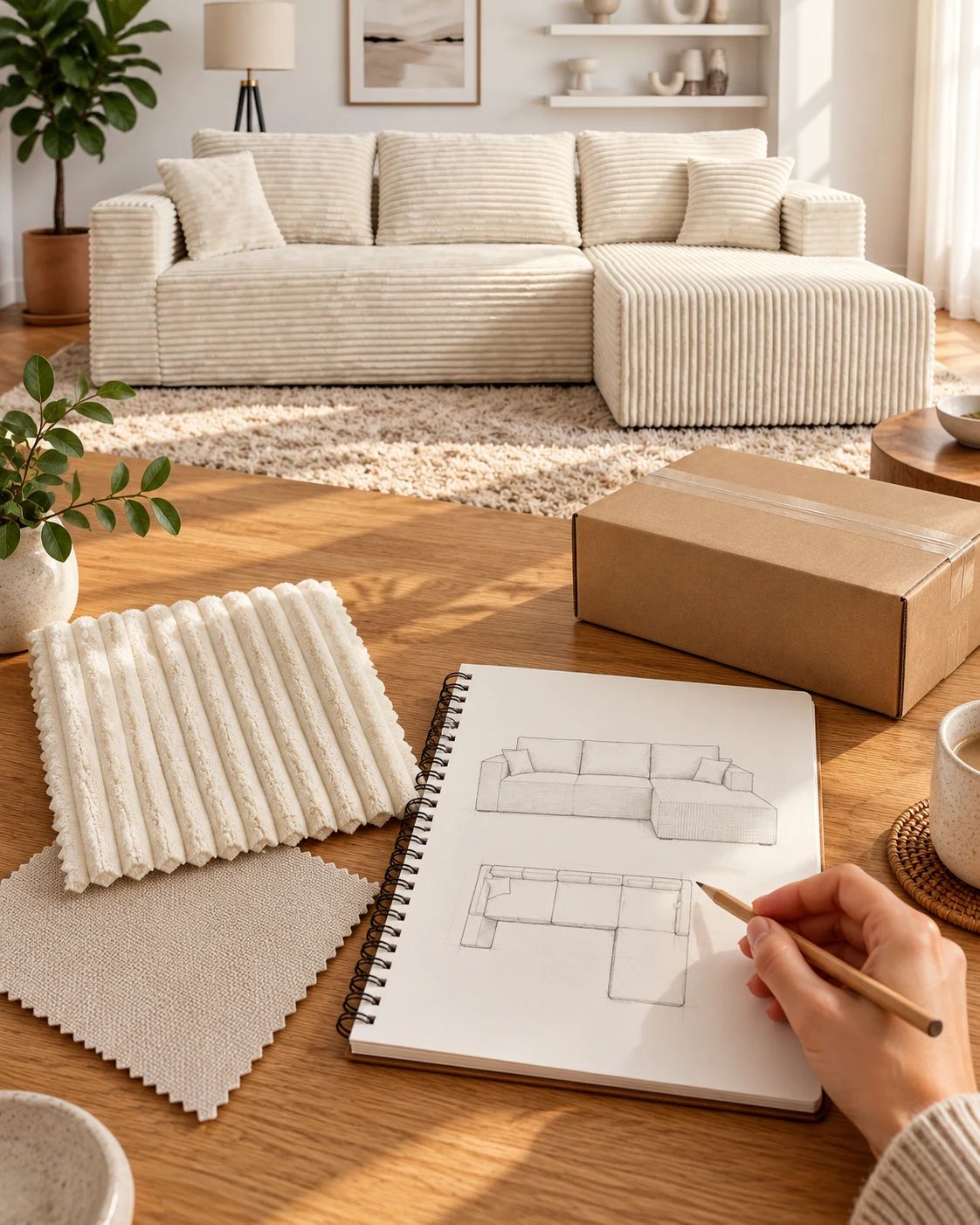
Photograph the current layout before separating anything. Identify the pieces designed to move separately and follow the model's instructions for releasing any connections. Keep loose cushions and intended accessories together, with labels attached to their bags or outer wrapping.

The L product page lists an assembled footprint of about 92.5 by 61 inches. That describes the sofa in your room. To book a move, measure the expanded sections themselves, including any arm or back that projects beyond the seat.
Measure once, then give the mover a clear record
For each intended piece, record its widest span, deepest projection and height in inches. Name the piece in the photo so the mover can match your measurements to it. Include the protection you plan to add when assessing clearances.

Measure each expanded moving piece as a three-dimensional object. Width alone is not enough: an arm or back can project beyond the seat, and a blanket adds to that outside span. Label the piece in a photograph so the dimensions and object stay connected when the mover plans the load.
Protection changes the outside dimensions. For example, adding half an inch of padding to each opposite side adds one inch to that span, not half an inch. Measure the wrapped piece rather than subtracting a guessed blanket thickness from your clearance. Write the dimensions beside the same named piece in the photograph. Keep orientation with the record, since the width presented to a door changes when a piece is turned.
Check the exit and the new entrance
Walk from the sofa to the vehicle at your current home, then map the route at the new address. Pay particular attention to the turn immediately behind a doorway. Clearing the opening is only one part of passing through it.
At stairs, record landing width and depth, rail restrictions and overhead clearance. For an elevator, record the door opening and cabin dimensions. If your move involves an apartment or condo in the U.S. or Canada, ask both buildings about elevator bookings, service entrances and the route from parking to the elevator. Repeat the access check at the destination, even if getting out of your current home is straightforward.
Wrap the corduroy for handling, without flattening the sofa
Set out clean, dry protection before moving day. Check the blankets for grit that could rub against the fabric. Cover the raised corduroy ribs and edges, then secure the covering so it stays in place during the carry. Keep adhesive tape off the upholstery.

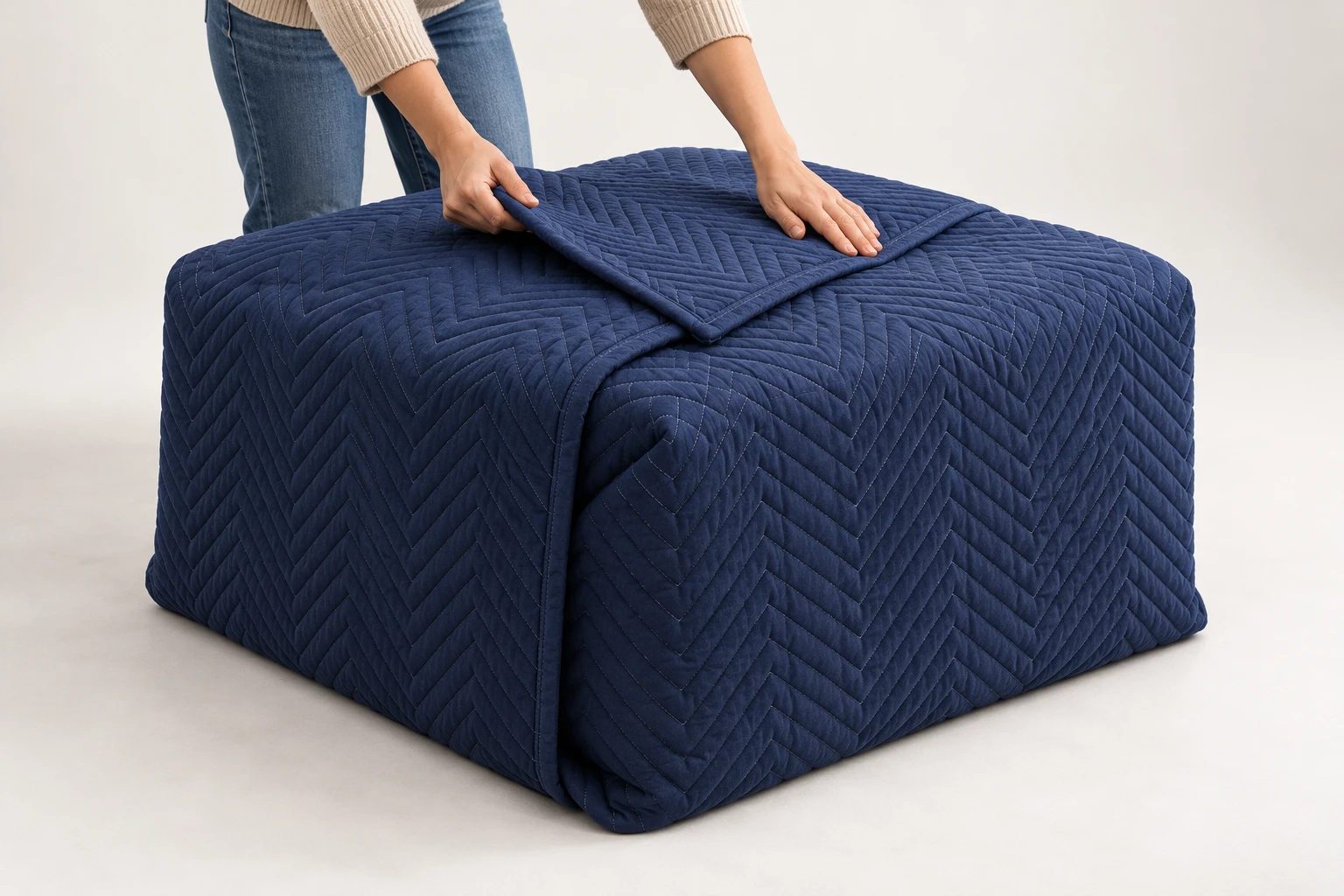
Put the label on the outer cover, not on the corduroy. A blanket folded around an arm should protect the raised ribs without being pulled so tightly that it reshapes the arm. Before the carry, check that a covered corner isn't exposed when the piece is lifted and that loose wrapping cannot catch underfoot. Ask the mover to use the model's intended handling points rather than pulling a cushion, cover or arm to move the whole section.
Reserve full-size space in the vehicle
As a planning example, an expanded piece measuring 60 × 36 × 24 inches occupies a 30-cubic-foot enclosing box: multiply the three dimensions and divide by 1,728. That is a transport-planning envelope, not 30 cubic feet of solid material. Compare its three spans with the vehicle opening and interior, then allow for protective wrapping and the mover's loading arrangement.
If that 30-cubic-foot example were reduced to 6 cubic feet, it would be a 5:1 packing ratio. Once it is expanded, your vehicle plan needs the 30-cubic-foot envelope again, plus protection. Factory packing controls the pressure and seals the reduced shape; moving blankets protect the full-size shape. Book the space for what you will carry now, rather than using the old carton as your load estimate.
Send this before accepting the quote

Moving brief
Sofa model/orientation and photos: [ ]
Each intended piece, expanded dimensions in inches and known weight source: [ ]
Current address: floor, stairs/elevator, tightest turn and parking access: [ ]
Destination: the same access details and photographs: [ ]
Packing: materials, who wraps, and any model-specific handling instructions: [ ]
Compare quotes for the same job. Specify stairs at both ends, elevator bookings, distance from parking, who wraps the furniture and who supplies the equipment. If a quote assumes a clear elevator but the destination uses stairs, the difference can change both handling and cost. Get the treatment of an inaccessible destination in writing before moving day, rather than discovering it with furniture on the vehicle.
Keep the original carton through your initial delivery inspection and support process. For a future move, choose protection for the expanded furniture. For a return, use the current return instructions before arranging transport. When comparing your next layout, browse the compressed sofa collection with the expanded-piece route record beside you.