Ultione / Journal
Compressed Sofa Guides
Compressed Modular Sofa Repairability: Parts, Access and Compatibility
Assess a compressed modular sofa repair by identifying the part, confirming compatibility, checking access and comparing the complete replacement quote.
A compressed modular sofa's layout tells you how its sections shape a room. Its repair route answers a different ownership question: which affected part can be accessed, sourced and replaced on that exact model? Keeping those questions separate helps you plan beyond the first arrangement.
For a US or Canadian repair quote, compare local labor and transport with the delivered replacement-part cost. Keep the quote in one currency before comparing totals.
Distinguish rearranging, removing and replacing

Rearranging changes a layout. Removing separates an item through its intended access route. Replacing puts a compatible item into service. A description of one capability does not establish the other two.
A movable ottoman demonstrates layout flexibility. A replaceable cover needs a pattern that fits the right component, while new filling needs compatible dimensions and properties. Check which of those jobs you are actually considering before pricing it. A model can solve the first task while requiring professional work for the second.
Identify the component before asking for a repair
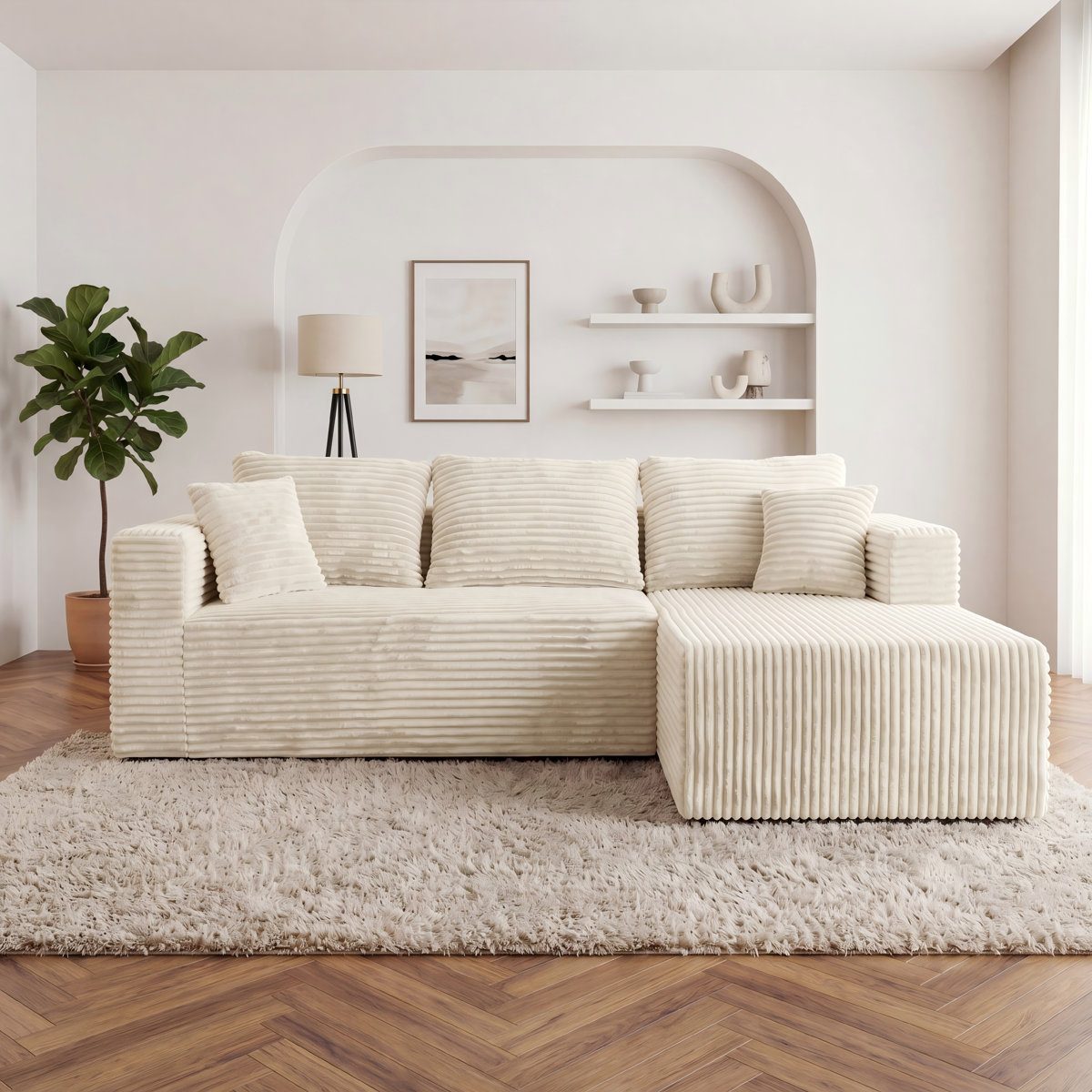
Use the product page, invoice and supplied instructions to name the item. For The L compressed sectional, an overview photo and a close view of the affected area can help the support team understand the question. Ask about that component on that model, rather than a generic sofa repair.
 The L compressed sectional
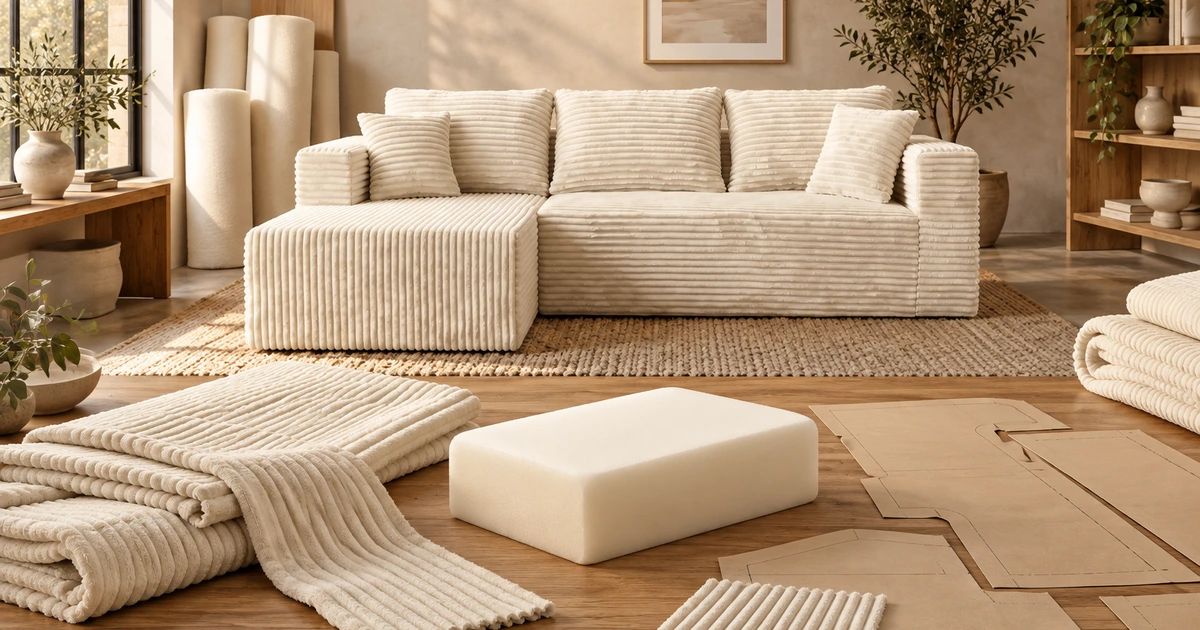
An upholstery panel, cushion, filling and entire module may require different service routes. A traditional framed sofa and a frame-free compressed sofa can also present different access questions. Start with the actual construction instead of applying a wooden-frame reupholstery diagram to every product.
For a filling replacement, match more than density. Shape and thickness determine whether it fits the cover; firmness and the surrounding construction affect the finished seat. A higher density by itself doesn't establish an equivalent feel. ULTI ONE's confirmed 30D designation is a material identifier, not a full replacement specification. Use the documented component details and service route rather than selecting an online foam block by that number alone.
Put compatibility into writing

Compatibility is a practical match between the original item and the proposed replacement. Record enough detail for the seller or service provider to confirm that match.
Foam-cutting targets of about ±0.04 inch and fabric-panel tolerances of about 0.20 inch serve different jobs: reproducing the body contour and matching its cover. Repeatable cutting helps only when the correct pattern is selected. A left arm, right arm and chaise need their own contours and fitting points. Give support the component, orientation and model version so a replacement follows the shape you own.
Cutting tolerance and expansion allowance serve different purposes. A tolerance controls how closely a part follows its drawing; a cover pattern can deliberately allow about 0.4–0.8 inch (1–2 cm) for recovery. That extra room is built into the pattern, not a cutting mistake. When requesting a replacement, distinguish the finished component dimensions from the cloth cutting dimensions, and ask for the matching contour and panel direction—not simply a rectangle with the same overall width.
Material and fabric batches can be traced through production records. Keep the order identifier with any label or component code when requesting service. For foam, specify contour, thickness and indentation behavior alongside density. For upholstery, keep the exact fabric and color reference. This turns a general request for “some cream corduroy” into a question about the part that fits your sofa.
- Model and version: save the product name, order identifier and any model or revision code supplied.
- Part identity: use the part number or a clear component description with photographs.
- Geometry: confirm the relevant dimensions and shape. Record side or orientation where the model has that distinction.
- Interface: identify any documented connection or fitting involved in the replacement, if the construction uses one.
- Upholstery: keep the fabric and color identifiers with the order.
- Service route: save the written instructions and the support or supplier reference for the proposed part.
Color deserves its own question. Ask how a replacement would match the existing upholstery, especially if the fabric has been discontinued or the sofa has been in use for some time. A familiar color name does not, by itself, document the proposed match.
Check the whole repair route
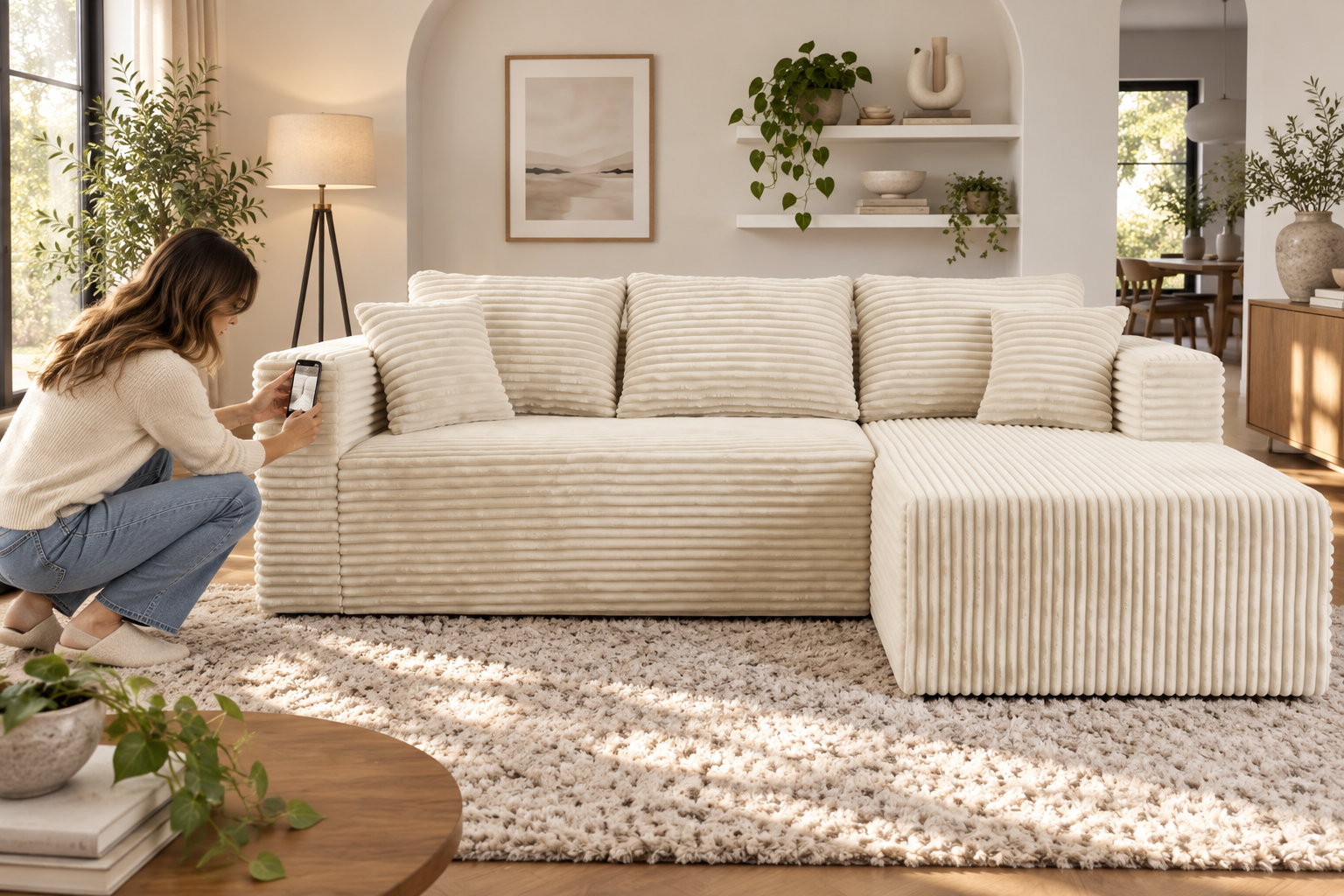
A repair plan has several connected steps: identify the affected item, access it through an appropriate method, obtain a compatible replacement, complete the work at an acceptable cost, and return the sofa to useful service.
Compare the full job, not only the part

Suppose one damaged upholstery panel is the concern. A quote for a whole replacement module and a quote for panel work describe different jobs. Ask what each restores, who completes it, how the appearance will match and what transport is required. Then compare each complete cost with the condition of the rest of the sofa.
Choose repair when the affected component has a confirmed fit and a workable installation route, and the rest of the sofa remains useful for your needs. Reconsider the job when the quote doesn't resolve the original problem or requires replacing more than you expected. Keep the scope and complete cost in writing before ordering parts.
Match the repair to the damage
Loose surface lint calls for gentle cleaning; a pulled thread calls for a careful upholstery assessment; a split seam calls for restoring the seam and checking the cloth around it. Replacing the foam does not repair a torn cover. Replacing an entire module for a small damaged panel may restore more than you need, so compare the proposed job with the actual affected area.
Corduroy matching includes rib width and direction as well as color. A replacement cut with the pile running differently can appear lighter or darker beside the original even under the same lamp. Compare the panels in their installed orientation, and consider replacing a complete visual panel rather than adding an obvious patch across several ribs.
Here is an illustrative quote comparison: a $90 part plus $35 shipping and $120 labor totals $245. A $200 replacement module plus $80 transport totals $280. The $90 headline is not the whole repair price. Choose the job that restores the affected area and fits the rest of the sofa's condition; the difference in scope matters as much as the $35 difference in total.
Keep a small ownership file
Save the invoice, model and upholstery identifiers, instructions, relevant photos, written support answers and any completed service record. A short file is easier to use than a collection of screenshots with no connection to the order.
With those questions saved, explore ULTI ONE compressed sofas and choose the shape that fits your current room. Keep its model and care information from the start, so future support questions can be answered against the correct purchase.