Ultione / Journal
Compressed Sofa Guides
Do Compressed Sofas Sag? How to Judge Support Before You Buy
Assess compressed sofa support by separating unpacking changes, seat softness and persistent low spots. Learn what to check and record if a concern develops.
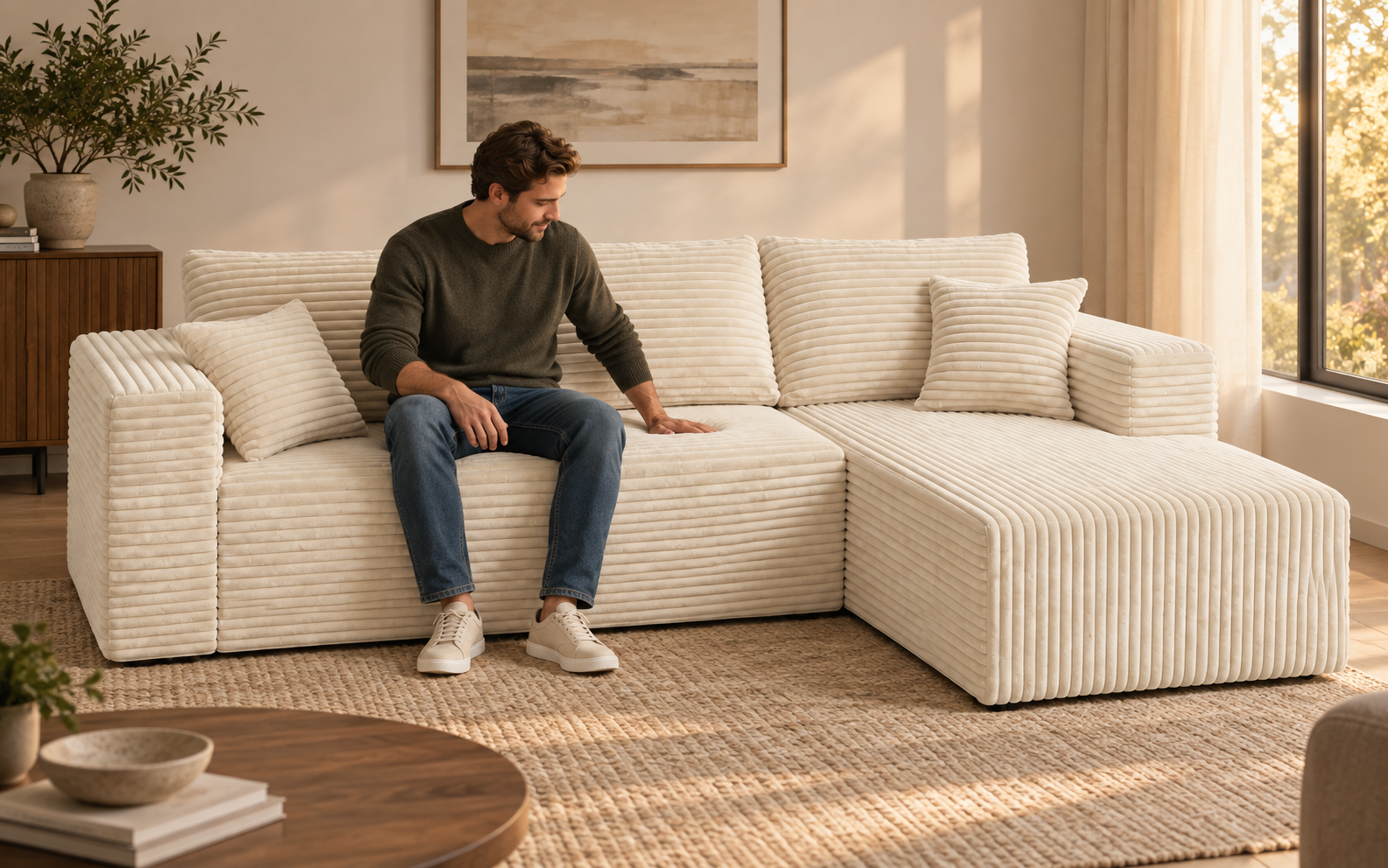
A compressed sofa keeps its seating shape through the combined work of its foam, thickness, contour and upholstery fit. When choosing one, examine those parts together. When you already own one, distinguish a soft seat under your weight from a depression that stays visible after everyone gets up.
Use the same checks across the ULTI ONE compressed sofa collection. The aim is a seat that supports the position you use, with an even unloaded outline after setup.
 ULTI ONE compressed sofa collection
What gives a frameless seat its support
In a frame-free construction, shaped foam carries the sitting load. Material formulation influences how the foam compresses and rebounds; its thickness and contour influence how far you settle. The foam profile and fitted cover also determine whether the corners and front edge look even. These are linked parts of the finished seat.
A continuous foam section has fewer junctions. Where a back or arm needs joining, a broad horizontal bond helps the parts stay together through compression and recovery. Reinforced zipper ends and evenly finished seams support the fitted cover at tension points. During inspection, compare the unloaded edge, the seam and the arm outline to see which part has changed.
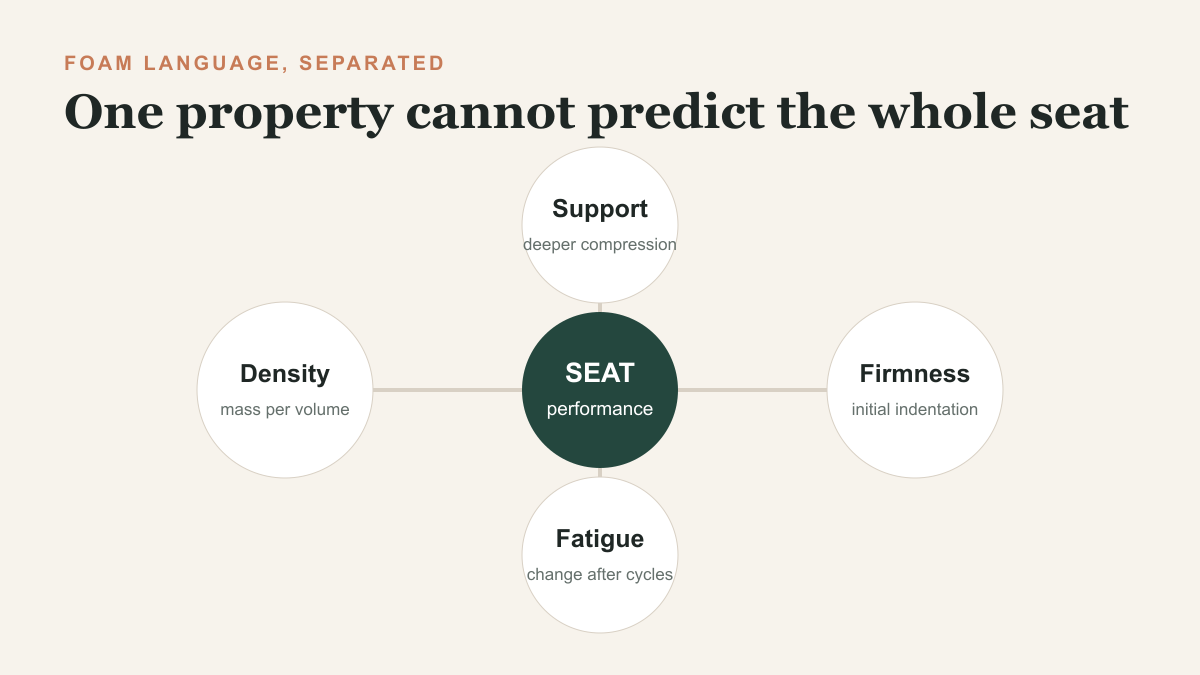
ULTI ONE uses 30D foam. Density describes mass per volume; firmness describes compression resistance. The Polyurethane Foam Association also describes fatigue testing, which compares height and firmness after repeated loading. For support questions, those changes are more informative than choosing the largest density number.
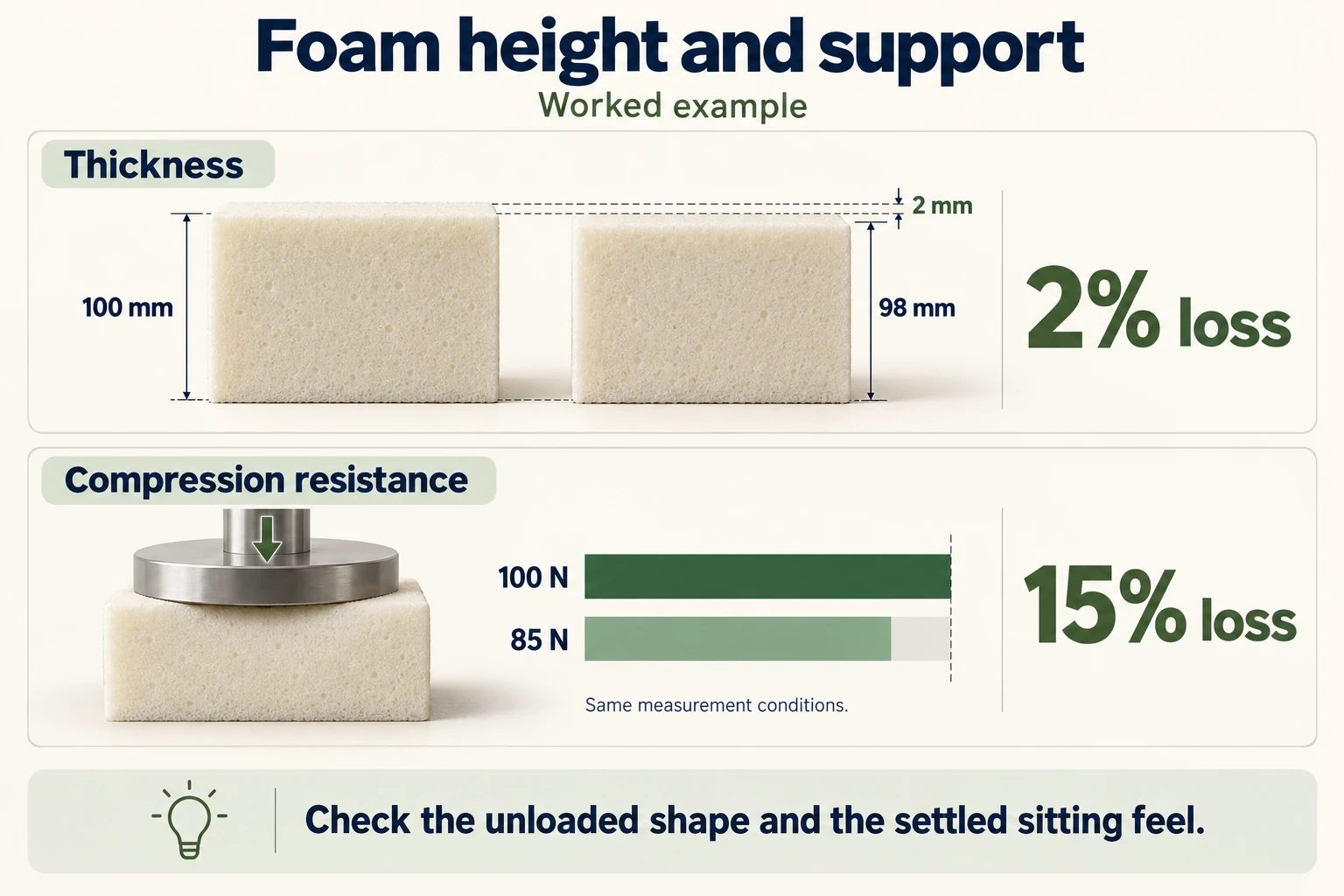
ISO 3385 evaluates changes in both thickness and hardness after repeated loading. To read those two results, consider a worked example: a sample changes from 100 mm to 98 mm thick, a 2% loss, while its compression-force reading changes from 100 N to 85 N, a 15% loss under the same measurement conditions. Its outline can remain close to the starting shape while its resistance changes more noticeably. That is why an unloaded side view and your settled sitting feel are both useful when investigating a support concern.
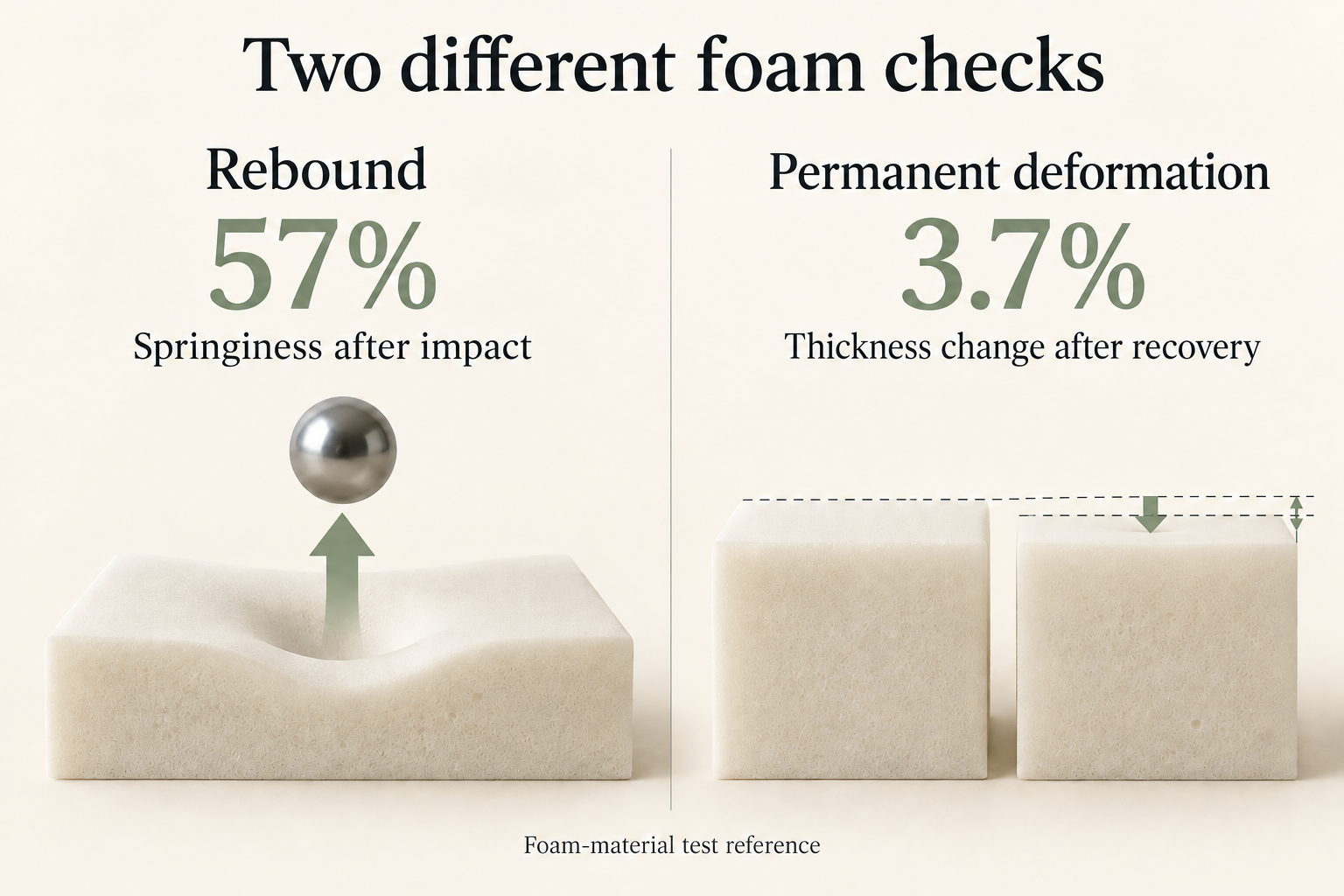
A factory-tested foam material sample recorded about 57% rebound and 3.7% permanent deformation under its specified tests. The two figures answer different questions: rebound describes springiness; permanent deformation describes a remaining change after compression and recovery. Read them as material-test results with their method, separate from the amount your finished sofa settles under your body.
For scale, a 3.7% remaining thickness change on a hypothetical 4-inch sample equals about 0.15 inch. That calculation explains the percentage; the original sample and test conditions determine its result. This is useful when reading a material specification because “springs back” and “retains its thickness” describe two properties that should be considered together.
Here is an illustrative ball-rebound calculation: a ball dropped from 500 mm that bounces back 285 mm has 57% rebound. The percentage describes the bounce height, while a compression-set result describes the thickness left after a different test. For a buyer, they separate two useful qualities: springiness when you shift position and shape retention after pressure. Keep each number with its own test rather than treating either as a sofa expansion percentage.
Make a shape check you can repeat
During initial setup, leave the edges free and allow the stated settling window of up to 72 hours. Arrange the back cushions normally. Once settled, remove loose blankets, check the floor and inspect the unoccupied sofa at seat height. Follow the front edge across the section, then compare matching corners.
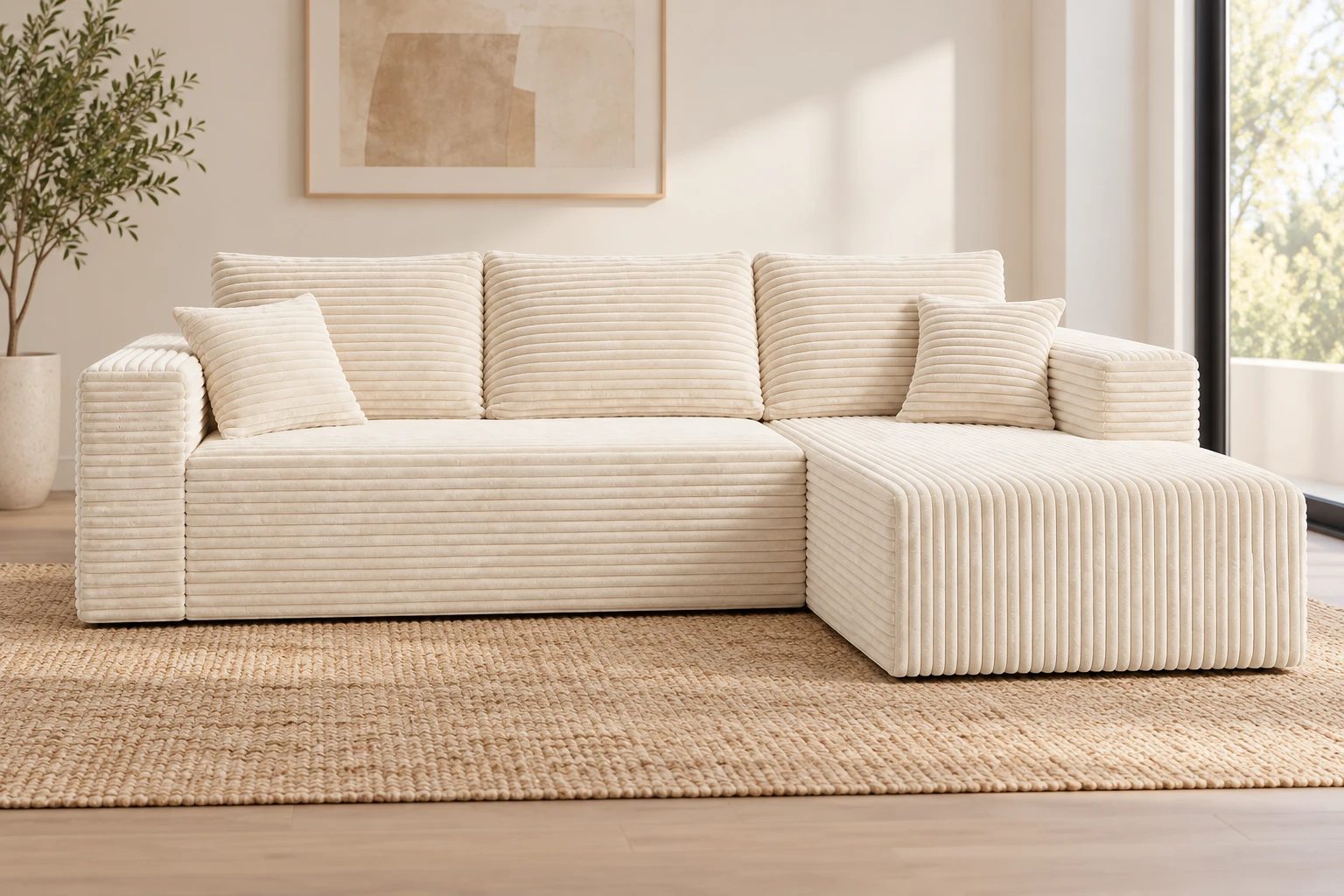
If one area looks low, look from the side and from the opposite lighting direction. A corduroy shadow changes with the pile and viewing angle; a physical low spot changes the outline. Check whether a separate section has shifted or a back cushion is leaning before deciding which area needs attention.
Separate three observations. A soft seat that returns to an even unloaded outline concerns sitting feel. A repeated low area in the unloaded profile concerns shape. A gap between sections concerns their position or connection. Start with the relevant part: comfort comparison, side-view record or the supplied layout instructions. That stops a shifted section from being treated as damaged foam, and stops a persistent depression from being dismissed as softness.
Match the seat to the way you sit
For feet-down conversation, rest your back naturally against the cushion and notice whether you keep sliding forward. Then stand up and assess the effort. For feet-up lounging, notice support under your hips and shoulders in that position. A sofa can work well for lounging while feeling too low or deep for someone’s upright preference.

The L compressed sofa has a listed seat height around 16 inches and ordinary seat depth around 25.6 inches. Compare those figures with a familiar seat. Adding a back pillow brings support forward for upright sitting; choose the actual seating geometry when seat height is the deciding factor.
Look at the cover and edges as well
Check matching front corners, the arm outline and seams joining adjoining panels. Consistent cutting helps neighboring pieces meet evenly; a fitted cover keeps that outline readable. At seams and corners, look for an even join and fabric lying smoothly without a pulled-open gap. Follow corduroy ribs within each panel. Gentle dry maintenance keeps crumbs out of the channels and seams.
Inspect the places that carry different kinds of stress. The broad sitting area carries your weight; an arm corner shapes the fitted cover; a seam joins two panels. If the seat outline is even but a seam opens, describe the seam location. If the cover is intact but the front edge remains low, show the unloaded edge. Keep the surface and underlying profile visible in the same set of pictures.

For an unresolved low area, send ULTI ONE support a full view and unloaded side view, the affected section, when you first noticed it and your order number. Report visible damage promptly. For an online purchase in the U.S. or Canada, read the return terms with the model details before ordering.
For a buying comparison, ask yourself what would make you reject the seat. If you need frequent, easy standing, prioritize the height and settled position. If your evenings are mostly feet-up, prioritize stable hip support and useful chaise space. A low lounge design is a purposeful choice when that position fits your household; the material details explain how to assess it.
If you are still shopping, compare the ULTI ONE layouts around the sitting position you enjoy and the dimensions of a seat that already works for you.
Match the symptom to the cause
A dip that appears only while you sit is cushioning doing its job. A depression that remains after the seat is unloaded needs a different check. Remove loose pillows, leave the seat clear and compare the actual front edge rather than the shadow between corduroy ribs. If the body is level but you feel pulled forward, compare seat depth and back-pillow position; that can be a fit problem rather than a collapsed cushion.
The edge deserves its own look. Repeatedly perching on an arm concentrates pressure in a smaller area than sitting across the seat. Keep ordinary seating on the intended sitting surface. After unpacking, also clear tight plastic or a carton pressing against the side: a restricted edge can look underfilled while it is still settling. These checks help separate the seat's response, your sitting position and an obstruction.
For choosing a sofa, favor the complete combination: a foam specification, a contour that supports your usual position and a cover that fits the recovered body. ULTI ONE's low, deep seat is most appealing for feet-up use; people who want a taller upright perch should make seat height the deciding factor, not a dramatic rebound clip.