Ultione / Journal
Compressed Sofa Guides
Compressed Sofa Foam Density vs Firmness: What You’ll Feel
Compare compressed sofa foam density and firmness. Read ULTI ONE’s confirmed 30D designation alongside seat fit and finished-seat information.
Foam density describes how much material occupies a given volume. Firmness describes resistance when that foam is compressed. In a compressed sofa, both matter, along with cushion thickness and the shape of the finished seat. A comfortable purchase starts with the position you want: upright conversation, curled-up reading or feet-up lounging.
The ULTI ONE compressed sofa collection uses 30D foam. Read that material detail alongside the seating dimensions, then compare the feel in the steps below.
 ULTI ONE compressed sofa collection
Put density and firmness in separate boxes
For U.S. and Canadian listings, density appears in pounds per cubic foot or kilograms per cubic meter. A stated density of 30 kg/m³ converts to approximately 1.87 lb/ft³. Two equally sized samples at different densities contain different amounts of material. Their resistance to a press is a separate property.
For comparison, 35 kg/m³ is about 2.18 lb/ft³, and 40 kg/m³ is about 2.50 lb/ft³. Put equal one-cubic-foot samples on a scale and those are their approximate weights. Going from 30 to 40 kg/m³ adds one-third more mass to the same volume. It does not add one-third more firmness. To compare the push-back you will feel, read the indentation measurement next.
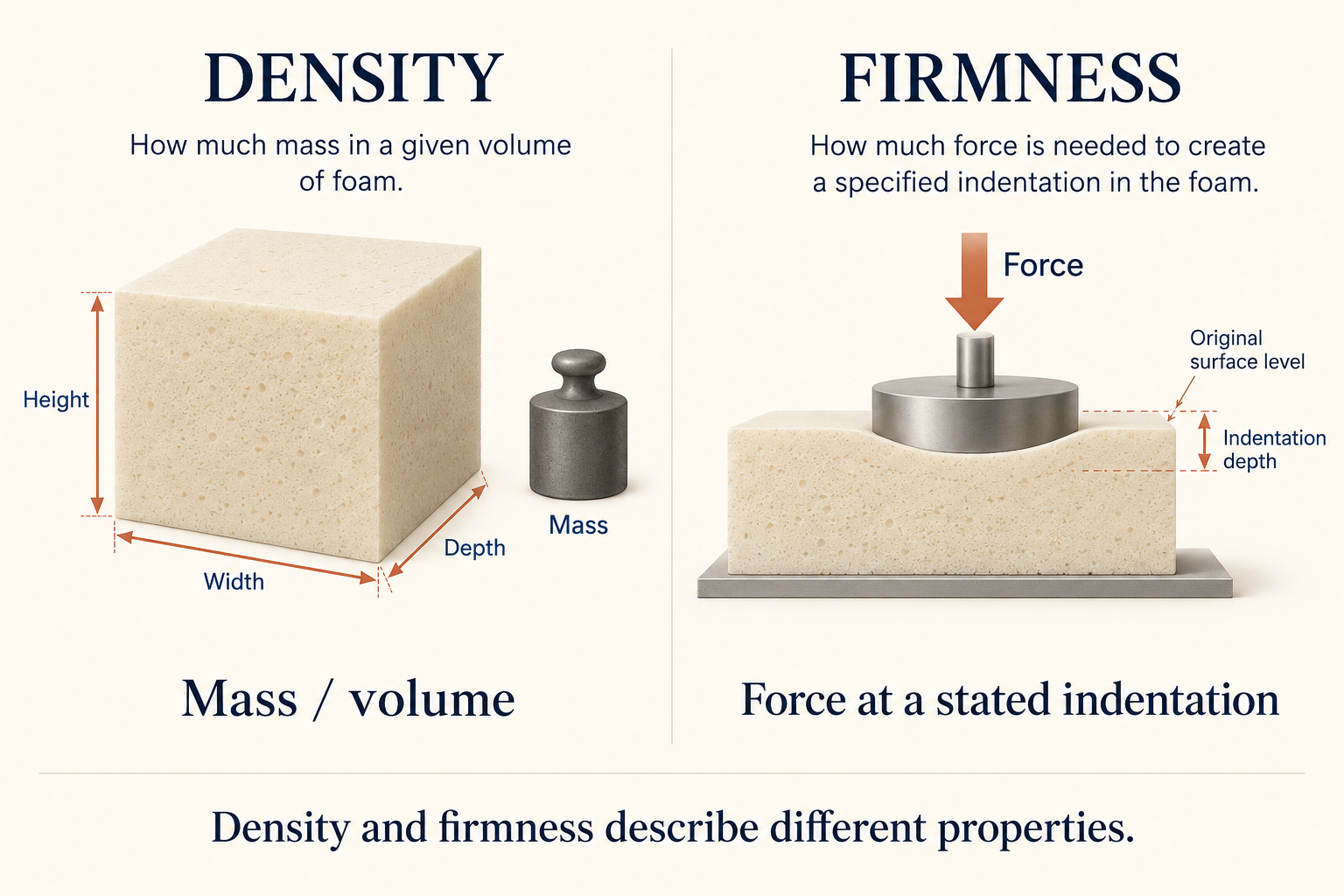
The Polyurethane Foam Association distinguishes density, firmness, resilience and support. Higher density alone does not choose the harder seat. Foam formulation and structure influence how it responds under load, while thickness and upholstery change the experience of the complete cushion.
PFA's density guide makes one further distinction: overall density includes the foam polymer and any additives, while polymer density describes the foam without those additions. Extra mass can therefore come from different parts of a formulation. When comparing materials, put the density beside the foam type and indentation readings. This gives you a clearer picture of the cushioning than choosing the heaviest sample alone.
The 30D designation sits within the 28D to 32D production range used for this foam approach. It identifies the material grade; the seat's indentation response tells you how that foam resists your weight.
Notice the first give and the deeper resistance
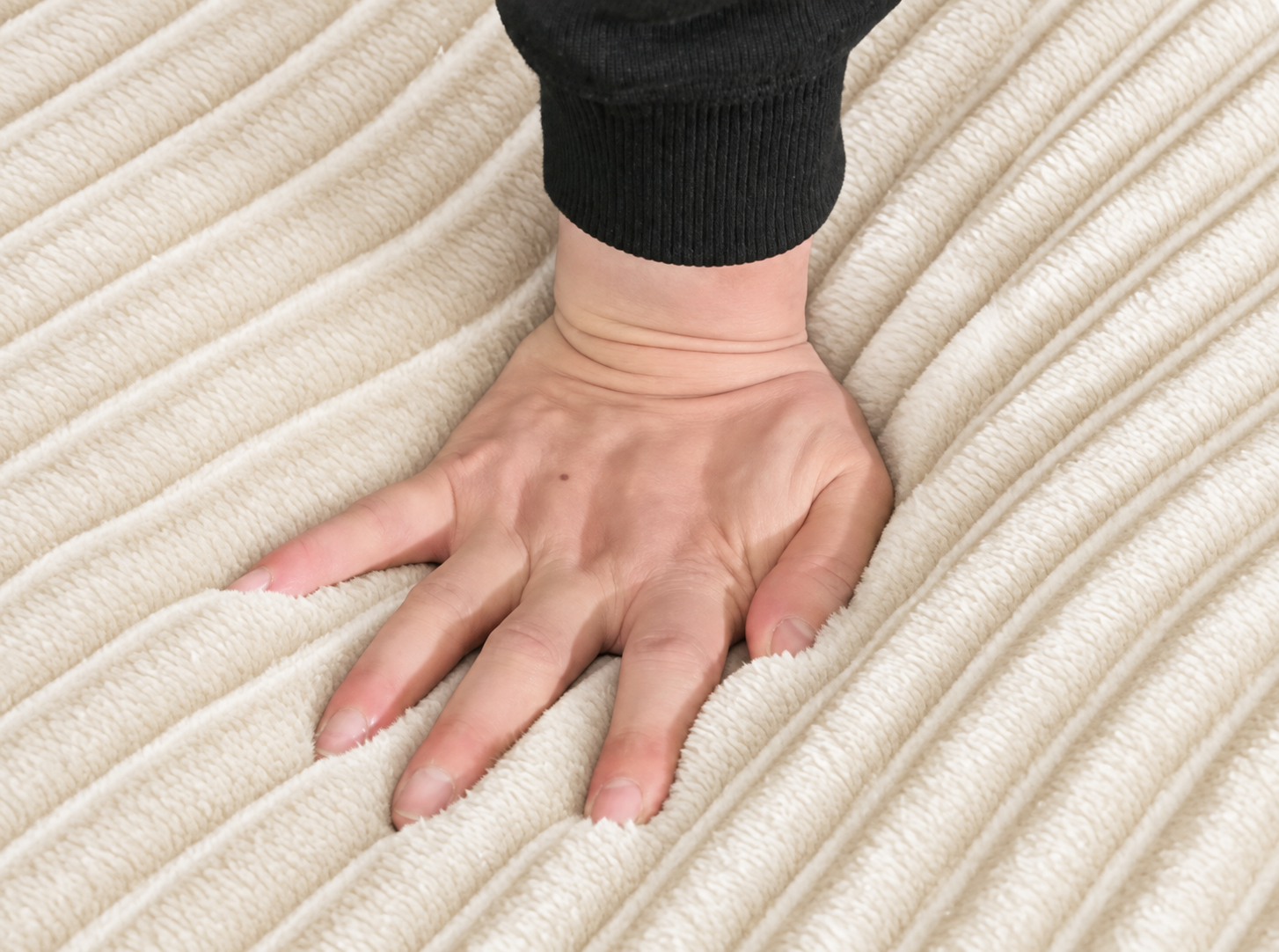
Surface firmness describes the initial give. Deeper support describes what happens as you settle farther into the foam. A useful seat can feel welcoming at the surface and offer increasing resistance underneath. Sit normally with the back cushions in place, settle into your usual posture, then stand up. Notice both the resting position and the effort of rising.
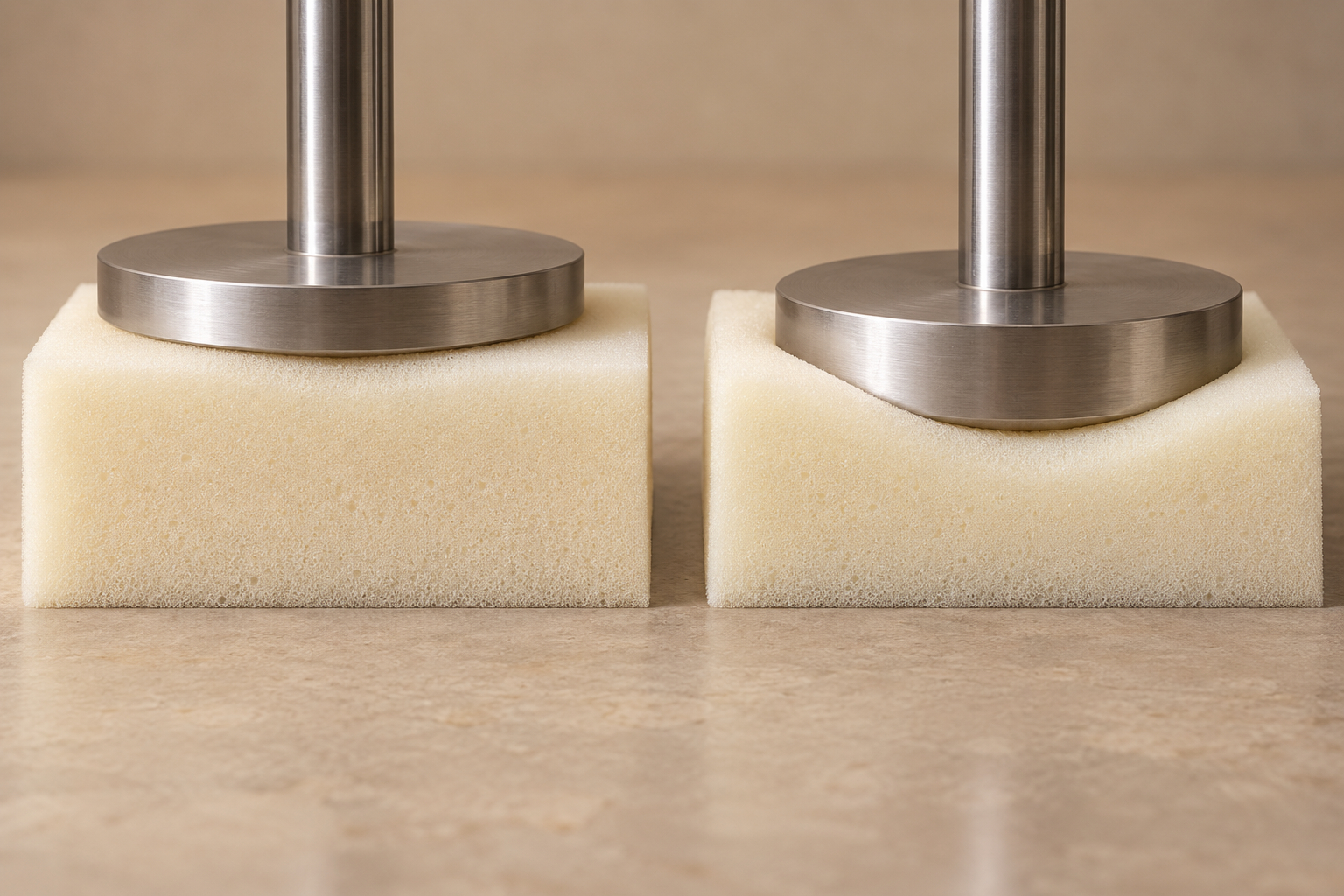
A simple test example makes the distinction clear. With a 4-inch foam sample, 25% indentation means pressing it down 1 inch; 65% means 2.6 inches. If those readings require 20 and 50 pounds-force, the support factor is 50 divided by 20, or 2.5. These illustrative readings show increasing resistance with deeper compression.
In a common IFD test, a round loading foot covers 50 square inches—about 8 inches across. In the example above, 20 pounds-force spread over that foot equals 0.4 pound per square inch. That reading describes the foam under a defined press, not the weight of a person it can support. Compare reports with the same sample thickness, loading area and indentation depth before deciding which material feels firmer.
Read density and indentation together. If two samples have the same density but different indentation-force readings under the same test, the one requiring more force resists that press more strongly. If their indentation readings match but their densities differ, they can have similar initial resistance while containing different amounts of material. That is why a soft-feeling seat can still use substantial foam, and why a firm hand press alone tells you little about density.
Thickness changes the space available for that movement. If two hypothetical cushions use the same foam, a thicker cushion gives a different amount of compression travel before reaching its base. The fitted cover and back pillows change the complete experience too. Judge the finished seat with its normal upholstery and cushions in place; a bare sample is most useful for understanding the material.
Seat dimensions turn the specification into a choice
The L compressed sectional lists approximately 16 inches of seat height and 25.6 inches of ordinary seat depth. Compared with an example familiar seat at 18 inches high and 22 inches deep, it is 2 inches lower and 3.6 inches deeper. Measure your own seat to make that comparison personal.
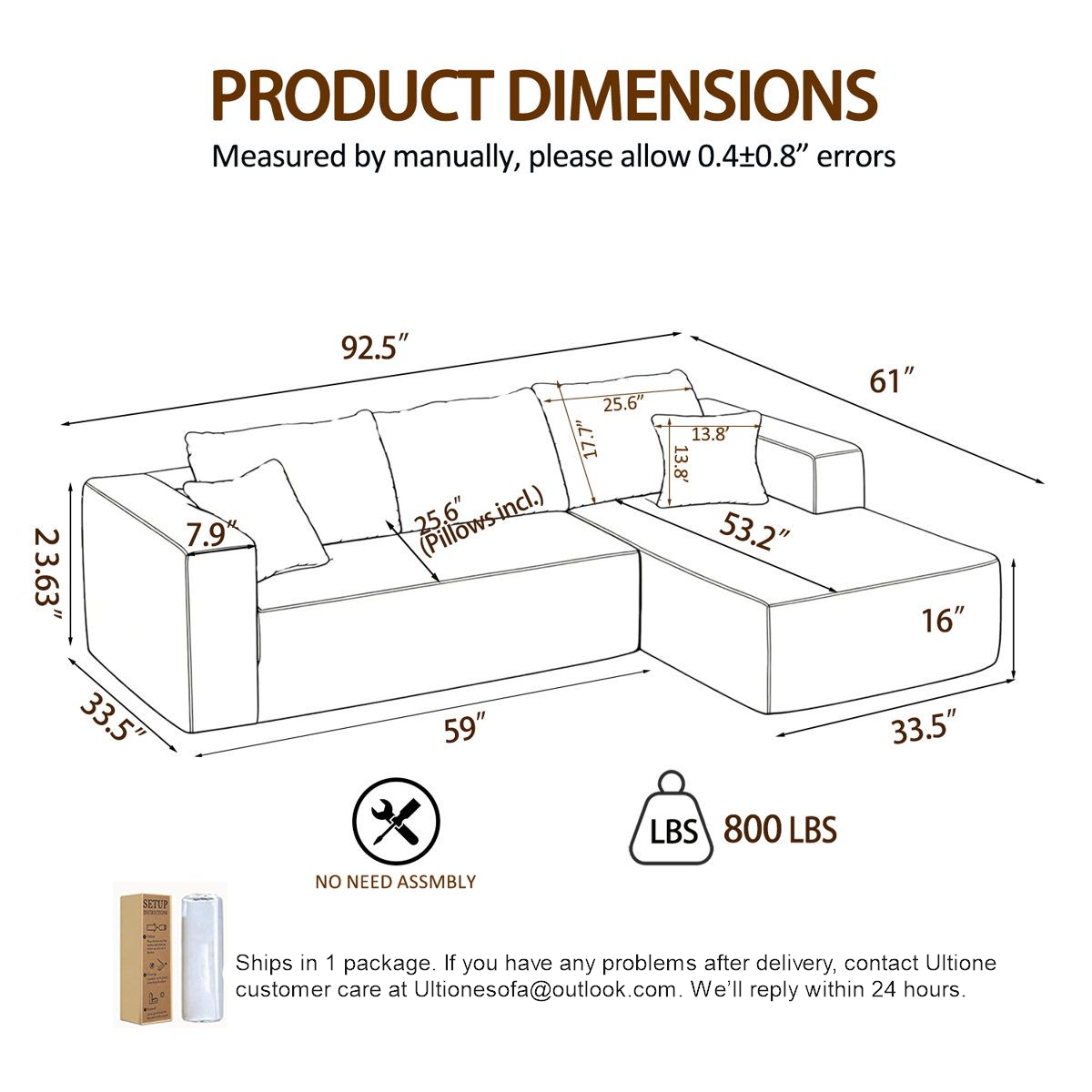
For upright sitting, check whether your feet rest comfortably while your back reaches the cushion. If you keep moving forward, you need less usable depth or a back pillow. For lounging, extra depth gives you room to tuck your legs in. A back pillow changes usable depth; the seat height stays the same.
Make a useful comfort comparison
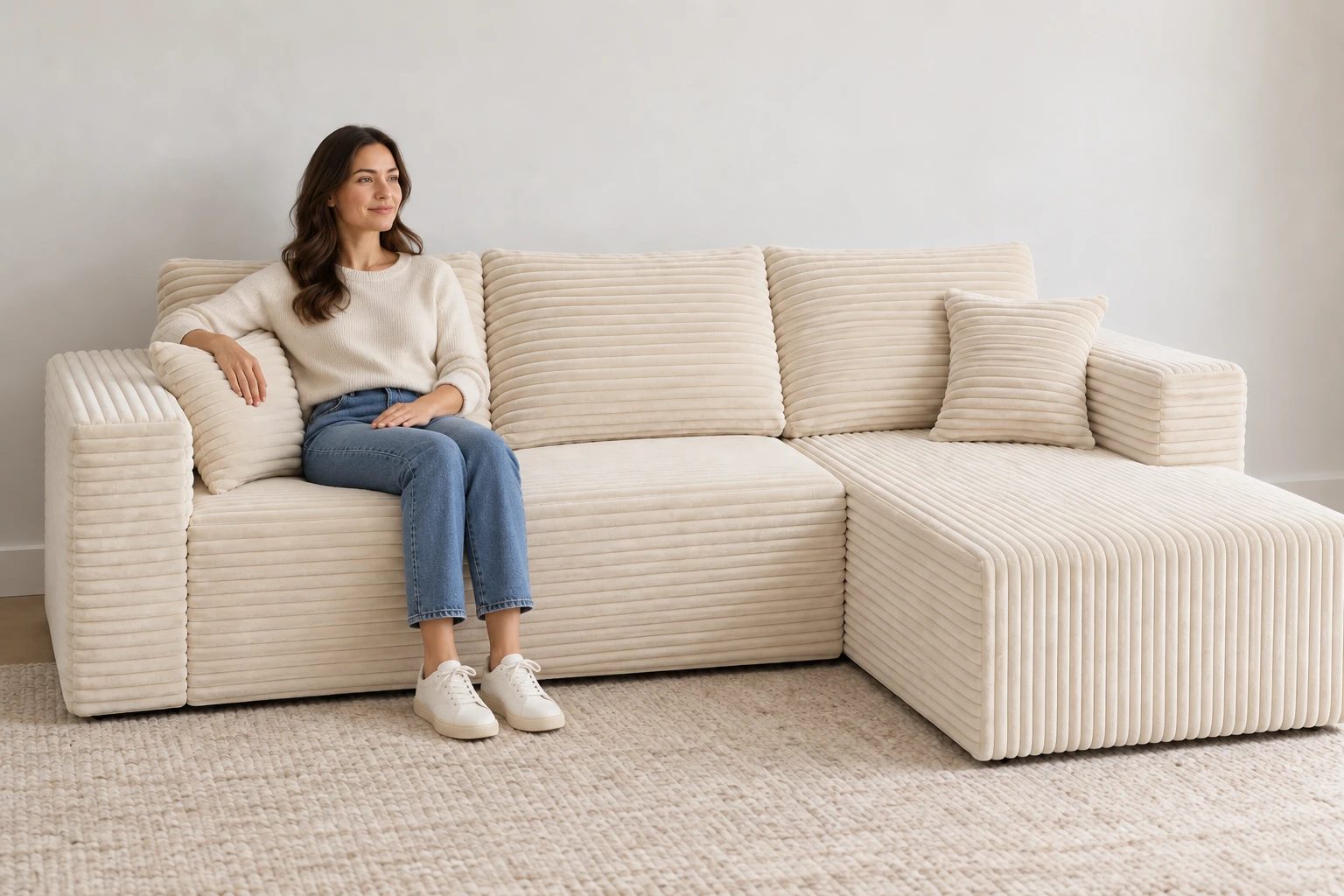
Use the same two positions on each sofa: feet-down with your back supported, then your usual feet-up posture. Note pressure under your hips, where your shoulders rest and whether you feel stable after settling. A hand press is useful for seeing surface give; sitting puts weight across a much larger area.
Use plain descriptions in your comparison notes. “Soft at first, then stable under my hips” describes a different result from “I keep sinking after I settle.” “Good for curled-up reading, but I move forward for conversation” points to usable depth. “Comfortable once seated, harder to rise from” points you back to height and the loaded position. Each note leads to a different buying decision.
Give the household’s main activity priority. For frequent upright conversation, check back contact, feet and standing up first. For evening lounging, check leg room and support through the hips and shoulders. When those needs differ between two people, a straight seat beside a chaise can provide two positions in one layout. Select the arrangement around those habits, then compare colors.
For continued support, repeated-loading tests compare changes in foam height and firmness. When a report is available, look at what changed after loading, alongside the sample and test conditions. For your immediate purchase, choose the ULTI ONE layout whose height, depth and sitting position match the way you relax.
Turn the specification into a shortlist
In production, density samples are taken from the top, middle and bottom of a foam block. Firmness and recovery are checked separately. That helps catch a block whose average grade looks right but whose behavior varies within it. A material change moves through a trial and a small batch before full production, keeping the intended seat response more consistent.
For your shortlist, put the numbers in this order: density tells you about the material, indentation resistance describes the initial push-back, and deeper compression shows how support builds as you settle. Then compare the finished seat's height and depth. If you want a soft first touch without sinking too far, look for that combination instead of automatically buying the highest density printed on a listing. The L pairs its 30D cushioning with a low, deep lounging geometry; those are separate reasons to consider it.