Ultione / Journal
Compressed Sofa Guides
Compressed Sectional Sofa Buying Guide: Size, Shape and Delivery
Choose a compressed sectional sofa by checking the delivery route, everyday room access, sitting position and material details before relying on product photos.
A compressed sectional sofa needs to work twice: its packages must reach the room, and its full-size layout must work once you're living with it. Start with those two checks. Then compare how you sit, what the upholstery needs and the details behind the product description.
Use the ULTI ONE compressed sofa collection to shortlist shapes, but keep the floor plan nearby. The right sectional leaves you a clear route to the seat you use, the storage you open and the door you walk through every day.
 ULTI ONE compressed sofa collection
In a US apartment or Canadian condo, include the building's elevator booking and actual drop-off point in that delivery plan.
Make sure the packages can reach the room
Measure the route from the delivery point to the opening location. Include the building entrance, hallway turns, stairs and elevator. Compare it with every package listed for the exact model and orientation you're ordering.
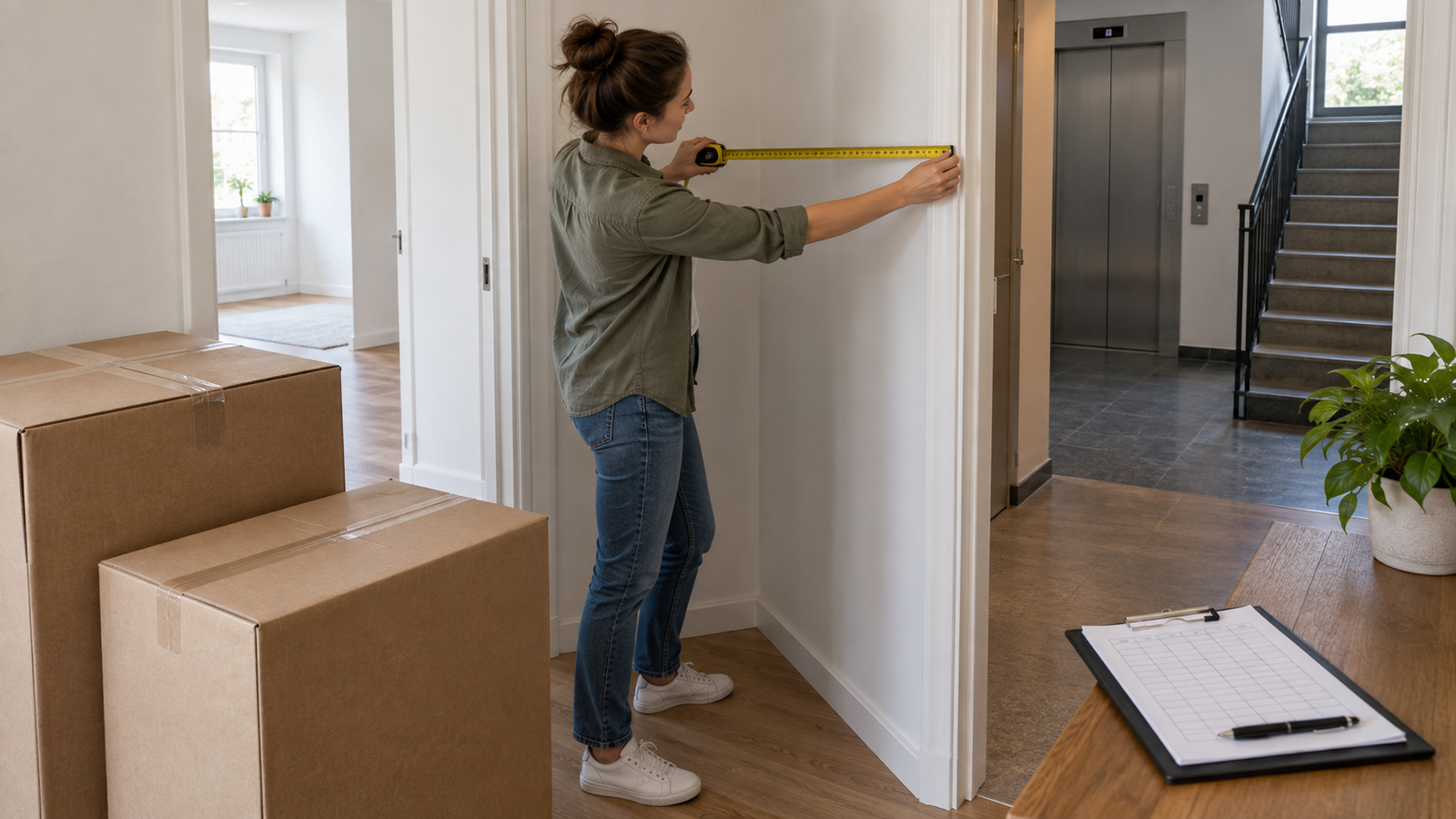
Start the delivery check with the largest carton. The L's listed base carton is approximately 42.13 × 24.41 × 12.01 inches. The U adds a separate ottoman carton of about 34.25 × 9.45 × 9.45 inches; The Big U adds a second carton of about 35.43 × 12.01 × 12.01 inches. The Big UX has its own two-carton arrangement: about 42.91 × 30.71 × 10.63 inches and 42.52 × 12.01 × 12.01 inches. These are delivery measurements, not the finished sofa sizes.
The base L carton is approximately 102 pounds, so compact delivery still needs a handling plan. Confirm the carrier's drop-off point, arrange suitable help and equipment for the route, and check building delivery bookings. Resolve a close turn with the carrier before ordering; don't count on squeezing the package or removing a building fixture without permission.
Test the shape against everyday movement
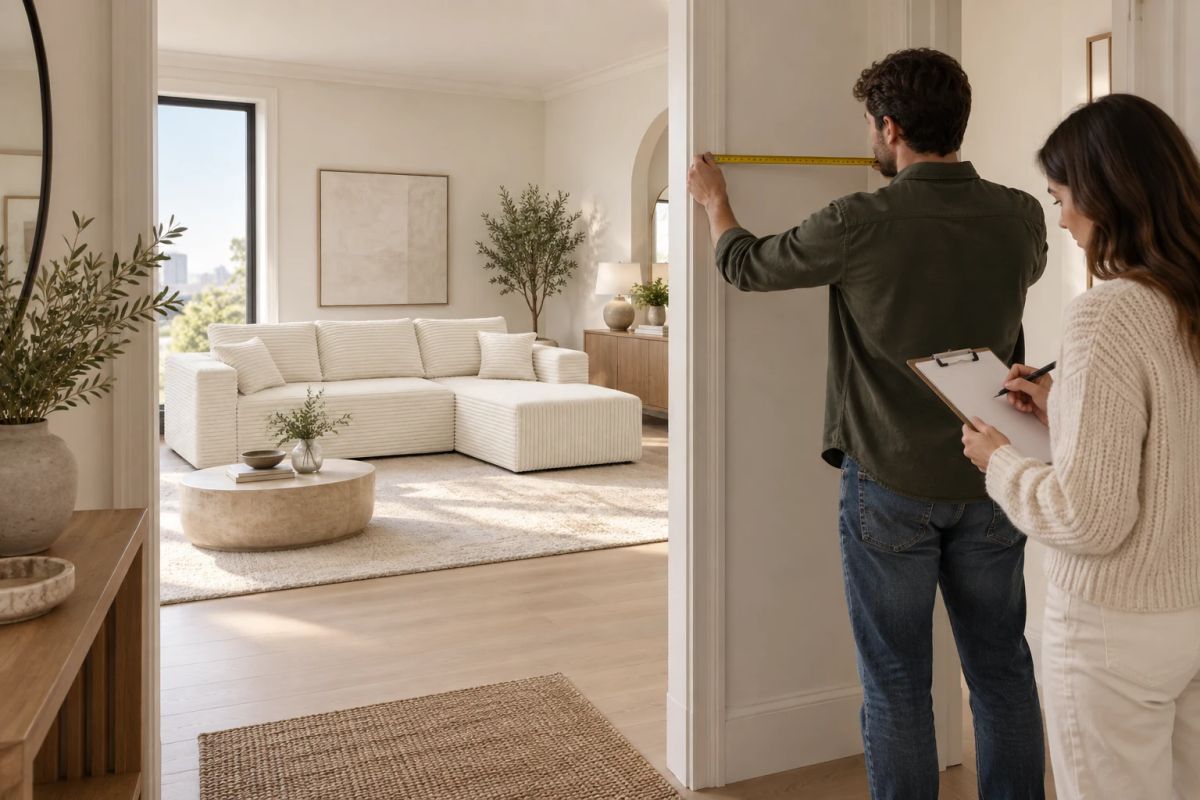
Mark the exact assembled footprint on the floor using the model's dimension diagram. Include the chaise and any separate ottoman. Then walk through the room as if the furniture were already there.
Can you approach the seat from the usual doorway? Open the media cabinet? Reach the curtains? Pull out a dining chair in an open-plan space? A layout can fit between two walls and still make those ordinary actions awkward.
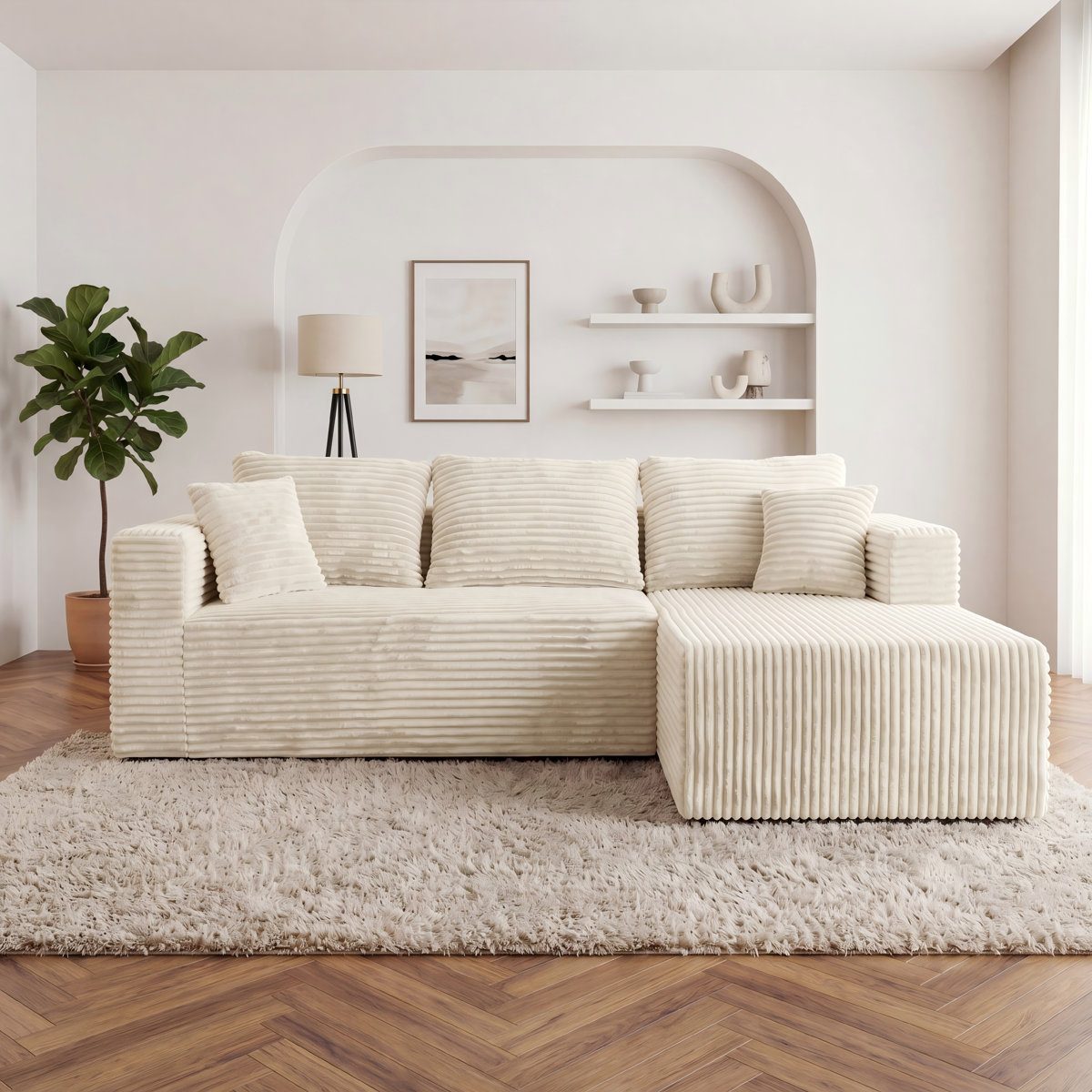
The current The U product details list an approximately 93 by 63-inch overall footprint. The L is about 92.5 by 61 inches. Those bounding dimensions are close, yet the extra ottoman on The U changes how you enter and use the seating area. Compare the actual arrangement, not just the word “U-shaped.”
For TV viewing, consider which seats face the screen without a constant turn. For conversation, check whether the people using the chaise and main seat can face each other. An extra place to stretch out is valuable only if it doesn't occupy a route you need to keep using.
Try a complete room mockup rather than a sofa-only rectangle. A hypothetical 120-inch wall leaves 27.5 inches after The L's 92.5-inch width. Centering it leaves about 13.75 inches at either end, before a side table or curtain. That layout has no generous side approach just because the sofa fits the wall. Put the chaise on the side people don't cross on the way to the kitchen, then add the real table outline and open the nearest cabinet.
Walk to each intended seat while another person stands where the occupied chaise would be. If only the table blocks the approach, try a smaller or offset table. If the chaise cuts across the only through-route, change the orientation or the seating plan. Moving a table won't solve a blocked room exit. For The U, give its separate ottoman both an everyday position and a workable alternative; extra footrest space isn't another back-supported seat.
Compare the seat with one you already know
A product photo shows a pose, not how the seat will suit your body. Measure a chair or sofa you already use comfortably. Record seat height and the usable depth with its back cushion in place, then compare with the new model's stated measurement method.

Think about your usual position. Sitting upright with feet on the floor, curling up with a book and stretching out on a chaise create different requirements. If you share the sofa, consider each person's position rather than assuming one photographed lounging pose works for everyone.
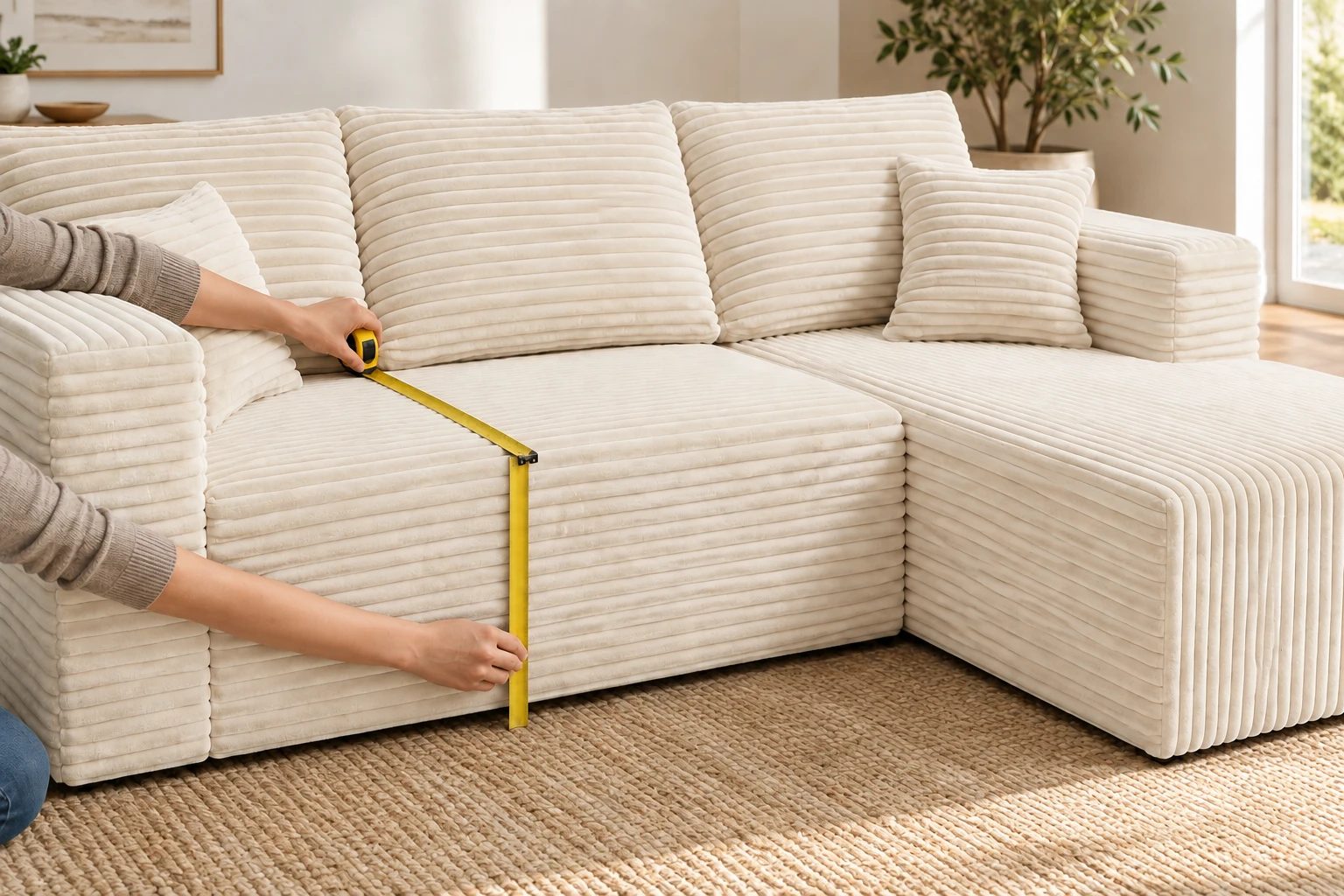
The L lists about 16 inches of seat height and 25.6 inches of ordinary seat depth. As a hypothetical comparison, if your familiar seat is 18 inches high and 22 inches deep, The L is roughly 2 inches lower and 3.6 inches deeper. If you already slide forward to put your feet down, more depth deserves a careful trial. If you usually curl up with your feet on the seat, the extra depth may suit that habit. A back pillow reduces usable depth but doesn't raise the seat.
Read foam and fabric details for the decision they actually answer
ULTI ONE's compressed sofas use 30D foam. Density is one material specification; it doesn't tell you how firm the finished sofa will feel. The Polyurethane Foam Association's performance reference explains density, firmness and support factor separately.
Manufacturing fit is visible in the finished shape. Foam cutting targets about ±0.04 inch, while fabric-panel cutting allows about 0.20 inch; the two patterns must still fit together. Reinforced seam and zipper areas help the cover handle fitting and compression. In close product views, look at the seat fronts, arm contours and where ribbed panels meet. Those details tell you more about the finish than another description of the sofa as plush.
The L, The U and The Big U use wide-wale corduroy. Look closely at the raised ribs, their scale and their direction across the cushions and front edge. A distant room photograph won't show all of that texture.
In ACT's 2020 commercial-textile durability survey, 52 companies answered the woven-fabric failure question; seam slippage, cleaning and pilling were the three most frequently reported issues. Bring those categories into your home-shopping check: zoom in on seat-front seams, read the cleaning method, and compare pilling grades at the same assessment stage. For ULTI ONE's broad-rib corduroy, also picture reaching the channels and joins with an upholstery attachment after movie-night snacks. This gives the abrasion number a useful place in the decision while keeping the actual cover and your routine in view.
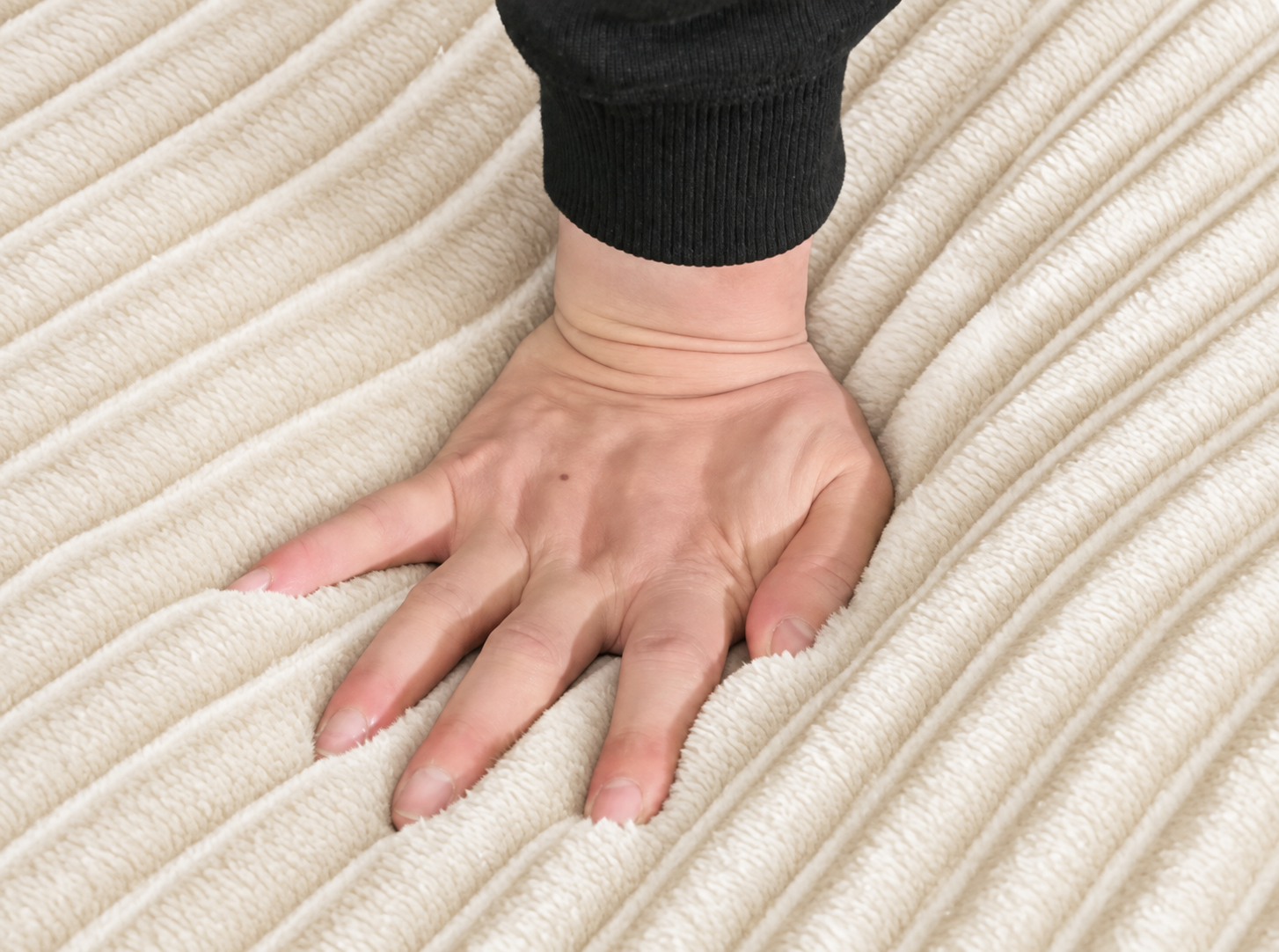
For everyday corduroy maintenance, remove loose crumbs before adding liquid. Use a clean upholstery attachment with gentle suction, moving lightly along each panel's ribs; the back and seat can run in different directions. For a fresh liquid spill, absorb it with a dry white cloth, lifting and moving to a clean part of the cloth rather than scrubbing. Check a pale patch from the opposite viewing direction before deciding it is a stain: pile and lighting can change the apparent shade.
Save the information you'll need after delivery
Before opening, read the setup, care and ownership instructions. Save the order record and photograph shipping labels and any visible package damage. If you need help later, those records identify the product and what arrived.
Check the current return terms before ordering: whether an opened compressed product qualifies, which conditions apply and who pays return shipping. Read the warranty coverage and ask about replacement-part availability if future repairs matter to your choice. Confirm those details for the exact model rather than treating “modular” as a parts-availability promise.
With those decisions made, compare the available colors and orientations in the ULTI ONE compressed sofa collection. Keep the exact model's dimension diagram with your shortlist, so the configuration you order matches the layout you checked.