Ultione / Journal
Compressed Sofa Guides
Are Low-Seat Compressed Sofas Comfortable? Seat Height and Depth
Compare low-seat compressed sofa comfort for sitting upright, lounging and getting up. Check seat height and usable depth separately from the overall footprint.
A low-seat compressed sofa can suit feet-up lounging, reading or sitting cross-legged, depending on the person and the seat. For upright sitting, compare how its height and usable depth let you rest your feet, contact the back cushion and stand up. A plush photograph cannot answer those questions on its own.
When comparing ULTI ONE compressed sofas, start with a seat you already know. Its measurements and the way you use it give you a more useful reference than a universal “ideal sofa height.” Then compare the exact model's listed seat dimensions, keeping firmness and room size as separate questions.
 ULTI ONE compressed sofas
For US and Canadian online shoppers, use the same inch-based measurement endpoints on your familiar seat and the product diagram; overall depth and sitting depth are different spans.
Read seat height and depth before judging the silhouette
Seat height is the vertical distance from the floor to the seat surface. Overall height reaches the top of the sofa, including the back where applicable. A low back in a photograph does not tell you the floor-to-seat measurement.
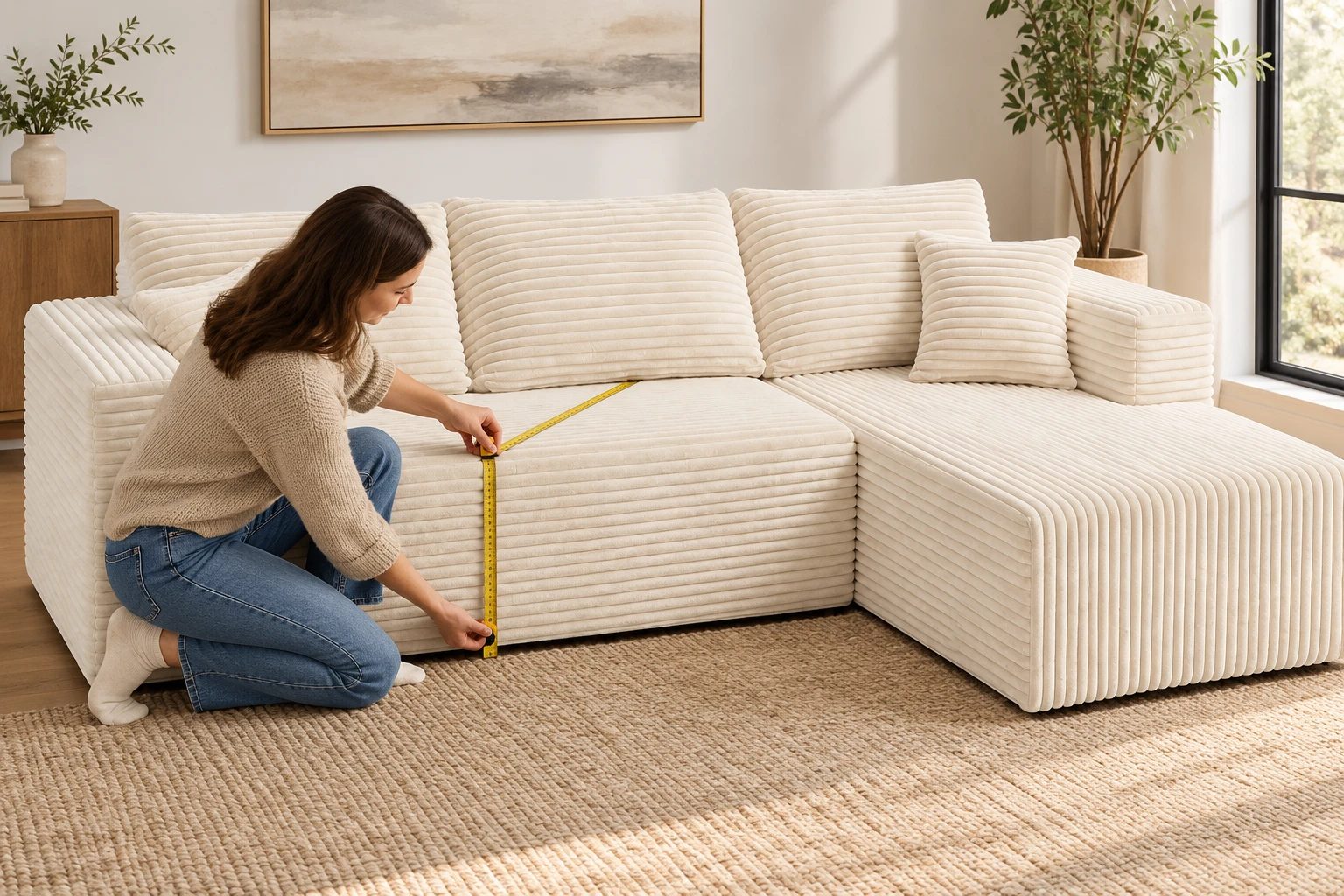
Seat depth describes the sitting space from the front of the seat towards its back. Check the diagram's measurement points: a figure that includes normally positioned back pillows describes a different span from a bare platform measured without them.
Overall depth describes the sofa's floor footprint. On an L-shaped sofa it can include the projecting chaise. That longer dimension tells you how much room the layout occupies, not how far an upright sitter must reach to contact the back cushion in an ordinary seat.
Upright comfort starts with your normal sitting position
Try the position you use for conversation or reading. Notice whether you can rest your feet as you prefer while keeping contact with the back cushion, and whether the front edge presses behind your knees.
If you slide forwards to put your feet down, notice what happens to your back contact. If you sit right back, notice where the front seat edge reaches on your legs. Record what you prefer rather than deciding from your standing height alone.
A loose back pillow can reduce the available depth during a trial. It does not change the published seat height. Keep that distinction in your notes so a pillow solution to one fit question does not become an assumed answer to every fit question.

Lounging uses the depth differently
Feet-up or cross-legged sitting uses the sofa in a different way from upright conversation. Try your usual position and notice where you want support, how much leg room you use and whether the neighbouring table remains within a comfortable reach.
A chaise can provide a place to extend your legs while the ordinary seat has a shorter front-to-back measurement. Treat those as two usable areas rather than assuming the longest product dimension describes every seat.
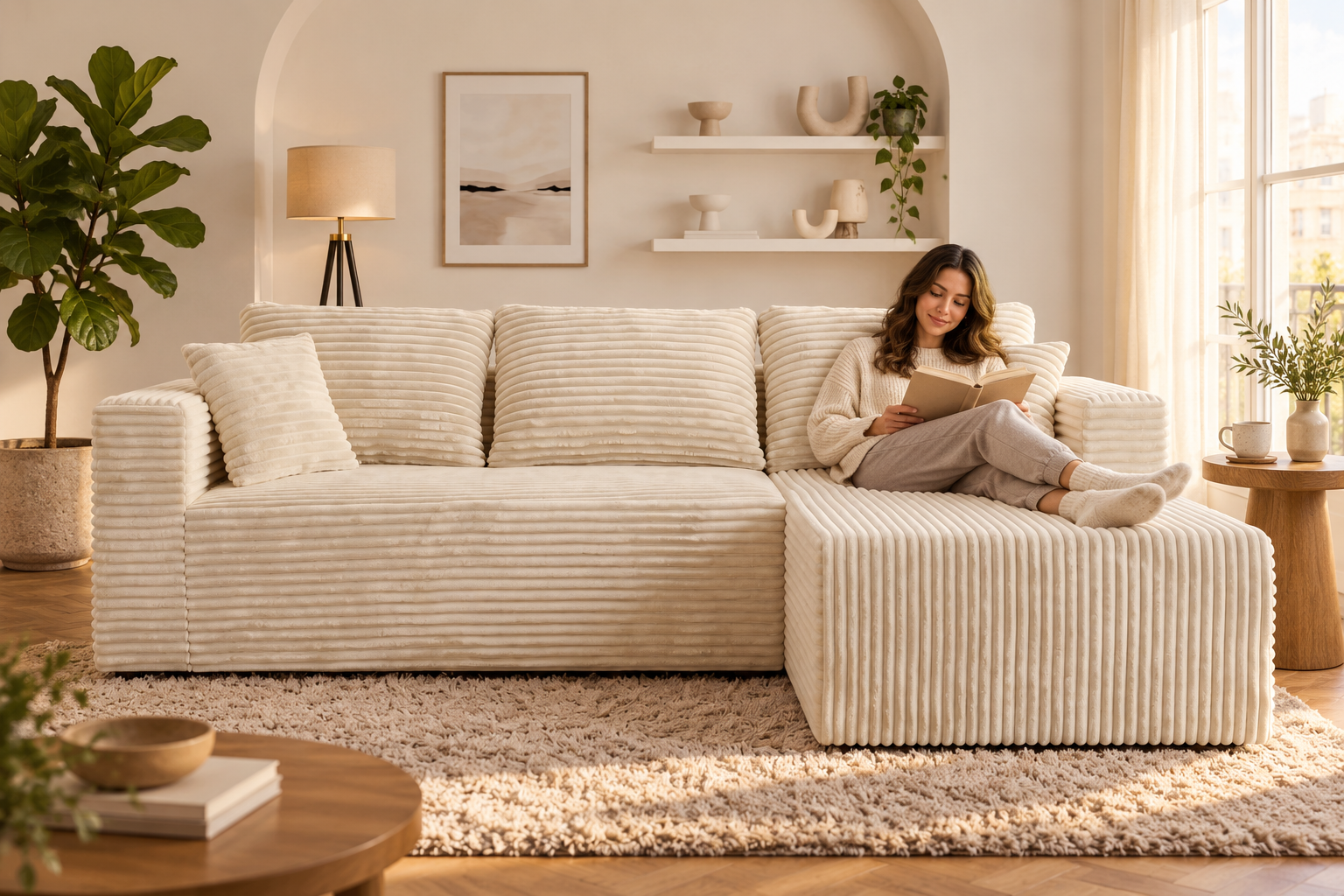
What the current ULTI ONE dimensions tell you
- The L: Listed seat height: 16 in; Listed ordinary seat depth: 25.6 in; Overall footprint, W × D: 92.5 × 61 in.
- The U: Listed seat height: 16 in; Listed ordinary seat depth: 27.6 in; Overall footprint, W × D: 93 × 63 in.
- The Big U: Listed seat height: 16 in; Listed ordinary seat depth: 25.6 in; Overall footprint, W × D: 118.5 × 61 in.
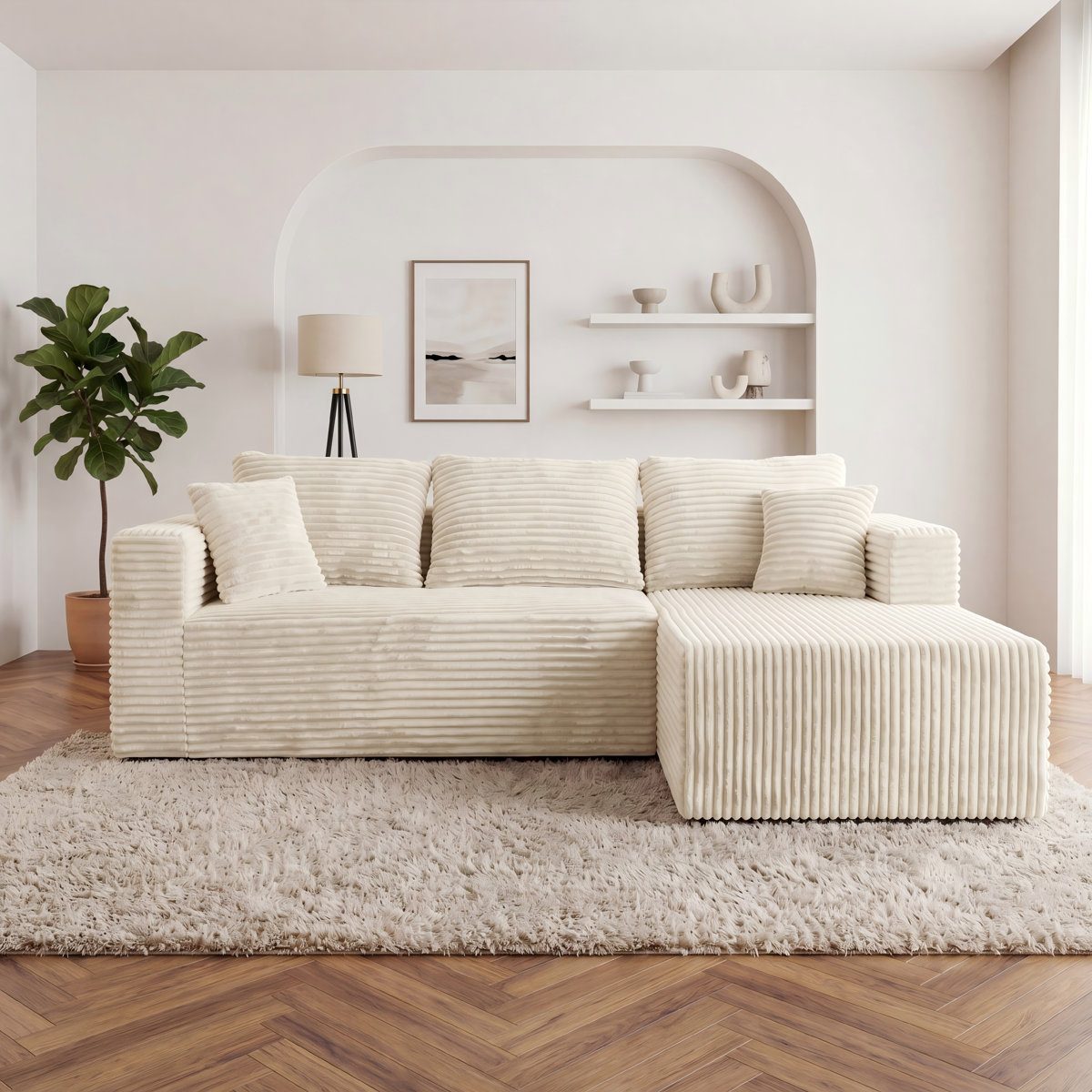
The L's dimensions diagram labels its ordinary seat depth as 25.6 inches with pillows included. Its 61-inch overall depth and longer chaise sitting span answer different questions from the ordinary seat depth.
Compare the current diagrams for The L, The U and The Big U beside your familiar-seat measurements. The L and Big U share a listed ordinary-seat depth, while The U lists a deeper ordinary seat. Choose the width and footrest arrangement separately from that seat-fit decision.
For scale, a seat-height reference of 40–45 cm is about 15.7–17.7 inches. The L's listed 16-inch height is toward the lower end. A 50–60 cm seat-depth reference is about 19.7–23.6 inches; The L's 25.6 inches is deeper. That combination explains its lounging geometry more clearly than calling it oversized. The resting height under your weight also depends on cushion response.
Make a comparison with a seat you already use
Choose a stable chair or sofa you already use comfortably. Measure its unoccupied floor-to-seat height and the depth from the front edge to the normal front face of the back cushion. Note how the cushions were positioned so the comparison is consistent.
Stand from the familiar seat in your normal way and notice whether it feels easy or awkward. Getting up is part of everyday sofa use, even when the photograph mainly shows lounging.
Use your familiar seat to narrow the choice
Use the measurements to make a concrete comparison. If your familiar seat is 18 inches high and 22 inches deep, The L's listed 16-inch height and 25.6-inch depth mean about 2 inches lower and 3.6 inches deeper. The U adds another 2 inches of listed seat depth. For somebody already reaching forward to put their feet down, that difference deserves more attention than the extra lounging space. For a feet-up reader, deeper space can be useful. Neither example predicts firmness.
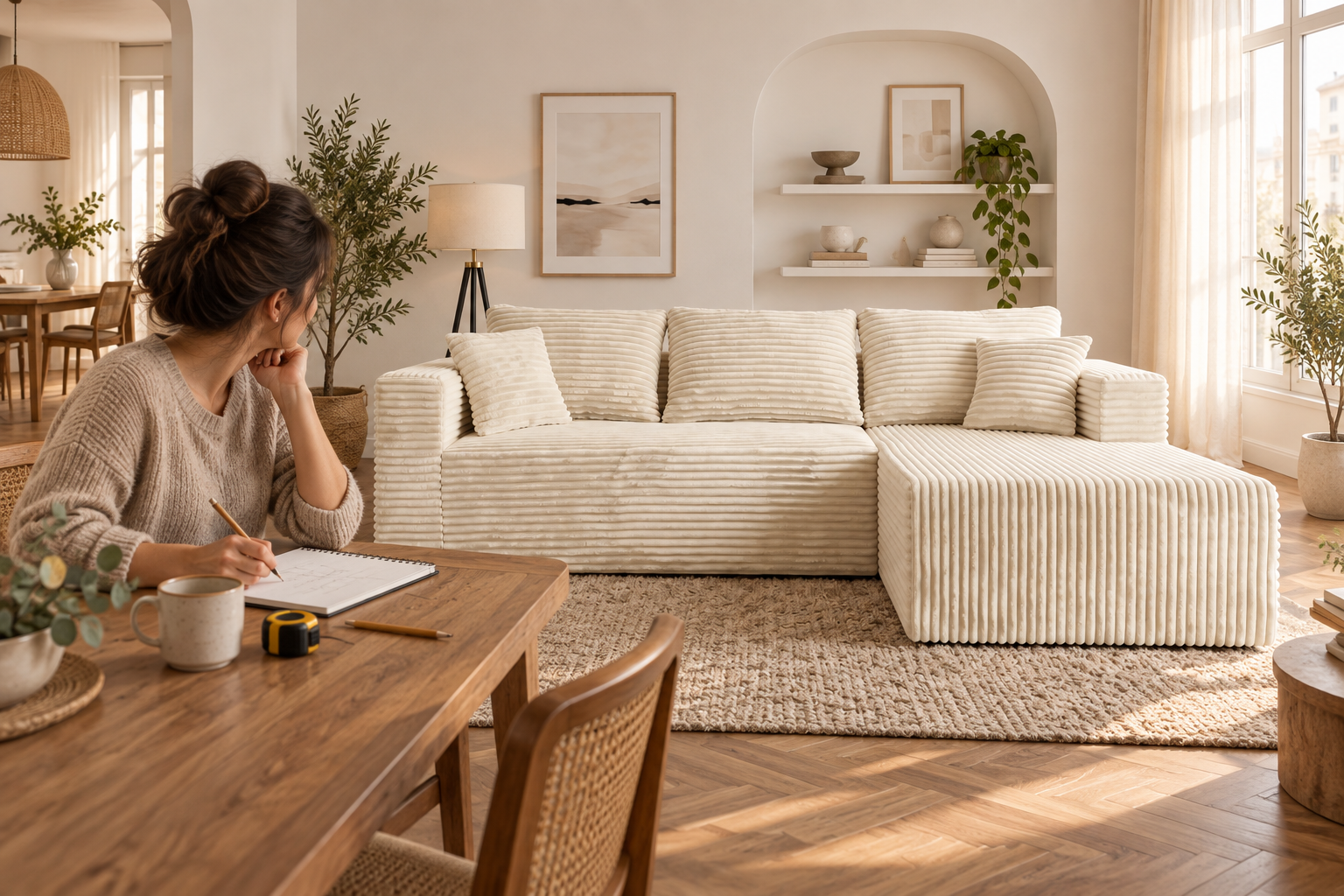
Our judgment: if upright back contact and getting up are the priorities, judge those before choosing extra lounging depth. If stretching out is the main use, check the chaise position and reachable table as carefully as the ordinary seat.
For two people with different habits, use the ordinary seat and chaise as different positions. The person reading upright can bring a back pillow forward; the person watching a film can extend their legs. If both need a high, feet-down perch for everyday use, that is a reason to choose a different seat geometry rather than try to solve it with more pillows.
Keep foam density separate from seat fit
ULTI ONE's current product information specifies 30D foam cushioning. Density describes the material; firmness describes the resistance you feel as you sit. A thicker, softer seat can settle farther under the same person than another seat with the same unloaded height. Compare the whole sitting position rather than using density to predict where your hips will rest.
In a frameless compressed sofa, foam thickness and contour join the material’s resistance in determining where you settle. Production checks separate density, indentation resistance and rebound. The finished cover and back pillows then define the seat your body uses. Compare that complete seat in an upright position and a feet-up position before deciding that a higher density or a deeper chaise solves your main need.
Use the loaded and unloaded heights for different questions. The published floor-to-seat figure describes the dimension diagram. Sitting compresses the cushioning, so your resting hips can be lower. When getting up is important, try rising from a similar low seat as well as measuring it. A back pillow brings support forward for reading; choosing a taller seat addresses a different preference.