Ultione / Journal
Compressed Sofa Guides
How to Keep a Boneless Couch From Sliding Apart
Find out whether the floor, sofa modules or back pillows are moving, then choose the right fix for your boneless compressed couch.
A boneless compressed couch can move out of place at the floor, between its modules or at a loose back pillow. Watch where the movement starts: the whole sofa may drift across the floor, one module may pull away from another, or a pillow may shift while the base stays in place. Each points to a different fix.
Start with the sofa's original arrangement and its intended connections. Clear the contact area, put the pieces on a consistent surface, and repeat the ordinary action that causes the movement. That sequence helps you choose a useful adjustment before buying an accessory.
The quick answer
- Whole sofa moving: examine the contact between its base, rug and floor.
- Gap opening between modules: examine their alignment and any original connection.
- Pillow moving on a stationary base: restore its intended position and fastening, where supplied.
- After an adjustment, repeat the same everyday sit or stand and watch the same reference points.
1. Find which part moves
Watch two things at once: the sofa's position against a fixed room reference and the position of one component against another. A floorboard line or the edge of a nearby cabinet helps you see whole-sofa drift. The join between modules shows whether those pieces are separating.
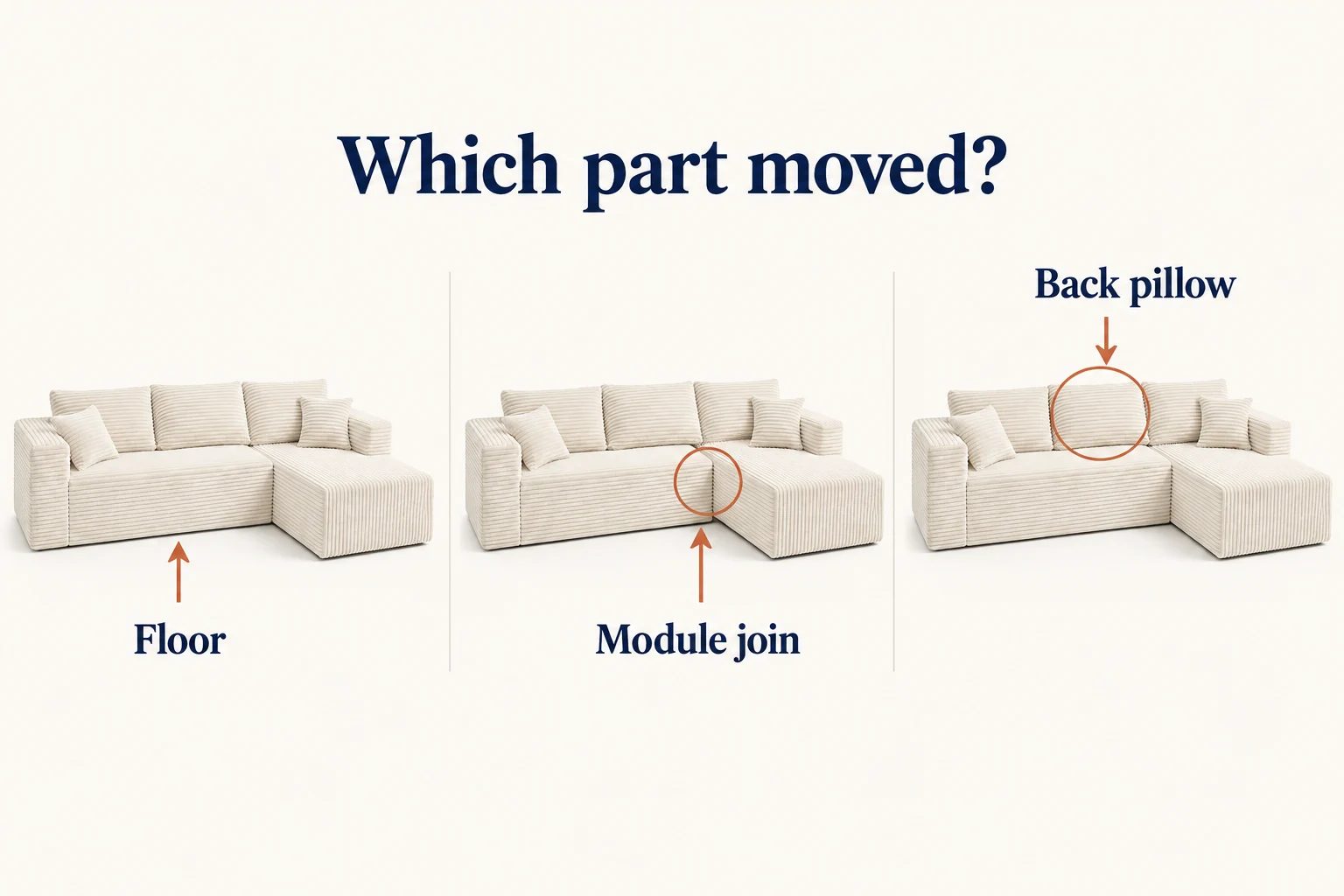
Place the sofa as you normally use it, with the same rug and cushions. Take a straight-on photograph, then sit down and stand up normally. A second person can watch the reference points, or you can compare a photograph afterward. Keep the action ordinary; forcing the sections apart tells you little about the movement you want to solve.
| What you observe | Where to look first | Useful next step |
|---|---|---|
| Both sections change position together | Base-to-floor or base-to-rug contact | Inspect the surface and rug underneath |
| One section moves away from another | Module alignment and intended join | Restore alignment and inspect the original connection |
| A loose pillow shifts while the base stays put | Pillow placement and any supplied fastening | Reposition that component |
2. Give the base consistent contact
Set adjacent modules on a consistent surface before assessing their connection. Look for a rug edge running beneath only part of a base, a folded rug, loose material caught underneath or a section resting differently from its neighbor.
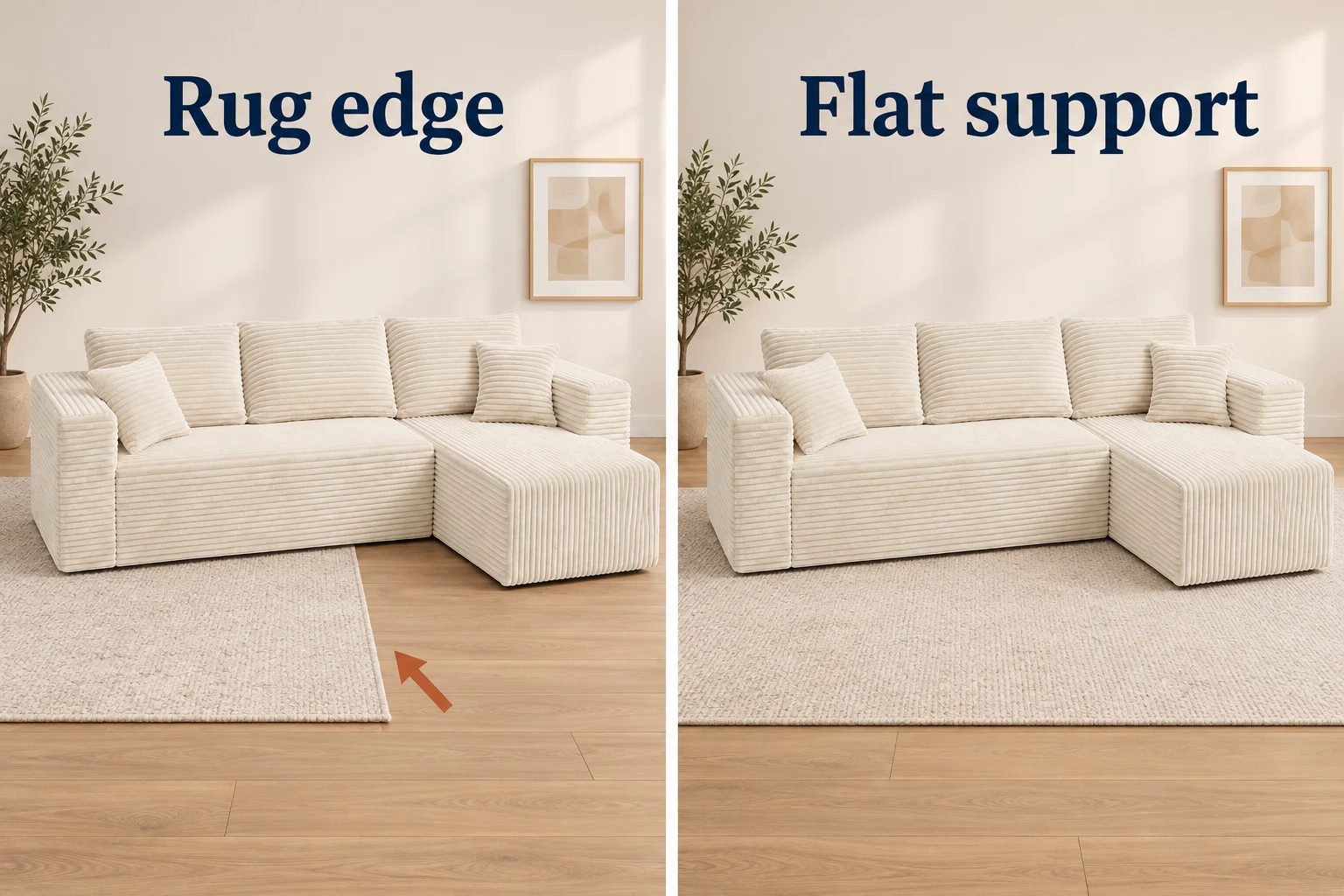
Clear loose debris with the method suitable for the floor and upholstery. When repositioning a section, use its intended handling method and enough help to lift it. Shaw's hardwood care instructions advise against dragging heavy furniture across the floor. Lift and place the section to correct its position without scraping it along the boards.
An area rug also has its own contact with the floor. Watch whether the sofa moves on the rug, the rug moves with the sofa, or a rug corner folds. The correct location for an adjustment follows that observation. Adding another layer on top of a moving rug leaves the lower interface unchanged.
For a rug that slides, choose a pad for grip as well as cushioning. Bona's guide to rug pads for wood floors describes felt as cushioned but sometimes short on grip, and natural rubber as a gripping material. Check the pad's compatibility with your specific floor finish, then fit it beneath the rug with both layers lying flat. This addresses the rug-to-floor movement you observed.
Use the same inspection in a U.S. apartment with hardwood or a Canadian living room with a large rug: locate the moving surface first. A broad upholstered base needs a different contact arrangement from a chair supported on four small feet.
3. Restore the intended module connection
Bring adjoining modules back into alignment, then check the connection shown in that model's setup instructions. Inspect both mating parts and the material they attach to. Clear the joining surfaces, line them up and engage the supplied connection as directed. For sections designed without a connector, concentrate on base contact and their original arrangement.
For a hook-and-loop connection, inspect the hooks and loops for lint and check that the matching surfaces meet across their intended area. VELCRO's fastener-care guidance explains cleaning debris from hooks and keeping them covered when disengaged. Keep exposed hooks away from the corduroy pile while arranging the pieces.
A damaged attachment needs a matching repair. Photograph both sides of the connection, the surrounding upholstery and the model identifier. Our modular-sofa parts and compatibility guide gives the information to keep with that enquiry.
Choose replacement hardware by its actual mounting surface. A bracket designed to screw into a solid frame needs that frame and its intended attachment points. A foam-led upholstered body calls for the service method designed for that body. Keep screws, staples and improvised holes out of an upholstered section while you establish the correct repair route.
Adhesive fasteners also come in different versions. VELCRO's general-purpose sticky-back tape is specified for flat, smooth surfaces such as glass, plastic and finished wood. Corduroy's raised fabric ribs call for a different application. Match any proposed fastening to its mounting surface and upholstery-care requirements; restore an existing supplied connection first.
4. Check a separate ottoman on its own
A footrest moved for a different sitting position can look like a sectional coming apart. Identify which pieces form the main sofa and which are intended to move independently.
THE U compressed sofa includes an arm module, chaise module and separate ottoman. Its product page describes moving the ottoman between lounging positions. Check the arm-to-chaise join and the ottoman's position as separate observations.
 THE U compressed sofa
For example, if the ottoman moves forward when someone extends their legs, watch its own floor contact and where that person places their feet. If a gap opens between the main sections, inspect their join. Keeping those two observations distinct prevents you from connecting a movable piece merely because it sits near the sofa in a photograph.
Give the ottoman a normal parking position outside the walking route. When it is returned after use, align it for the next sitter rather than pushing the main sofa out of position to meet it.
5. Reset a loose back pillow
A back pillow changes your usable sitting depth as it moves. Put it back in its intended position, then sit the way you normally read, game or watch television. Notice whether your usual movement pushes it upward, sideways or toward a neighboring seat.
Look for a throw folded between the pillow and its support, an unevenly placed loose cushion or a supplied fastening that has come apart. Restore one detail at a time. That makes it possible to tell which adjustment helped.
Keep the contact check gentle on wide-wale corduroy. Use the upholstery's permitted care method for crumbs or lint, and keep hook surfaces covered as you reposition the pillow. The corduroy sofa cleaning guide explains the surface-cleaning sequence.
If the support behind a pillow moves as a whole, follow the back-support enquiry rather than repeatedly adding more cushions. A close photograph of the pillow and a wider photograph of the part behind it help describe what changes during ordinary sitting.
6. Repeat the same action and keep a useful record
Change one thing, then repeat the action that first revealed the movement. Keep the same seat, floor, rug and ordinary sit-to-stand movement. Use the same camera position and room reference for the second photograph.
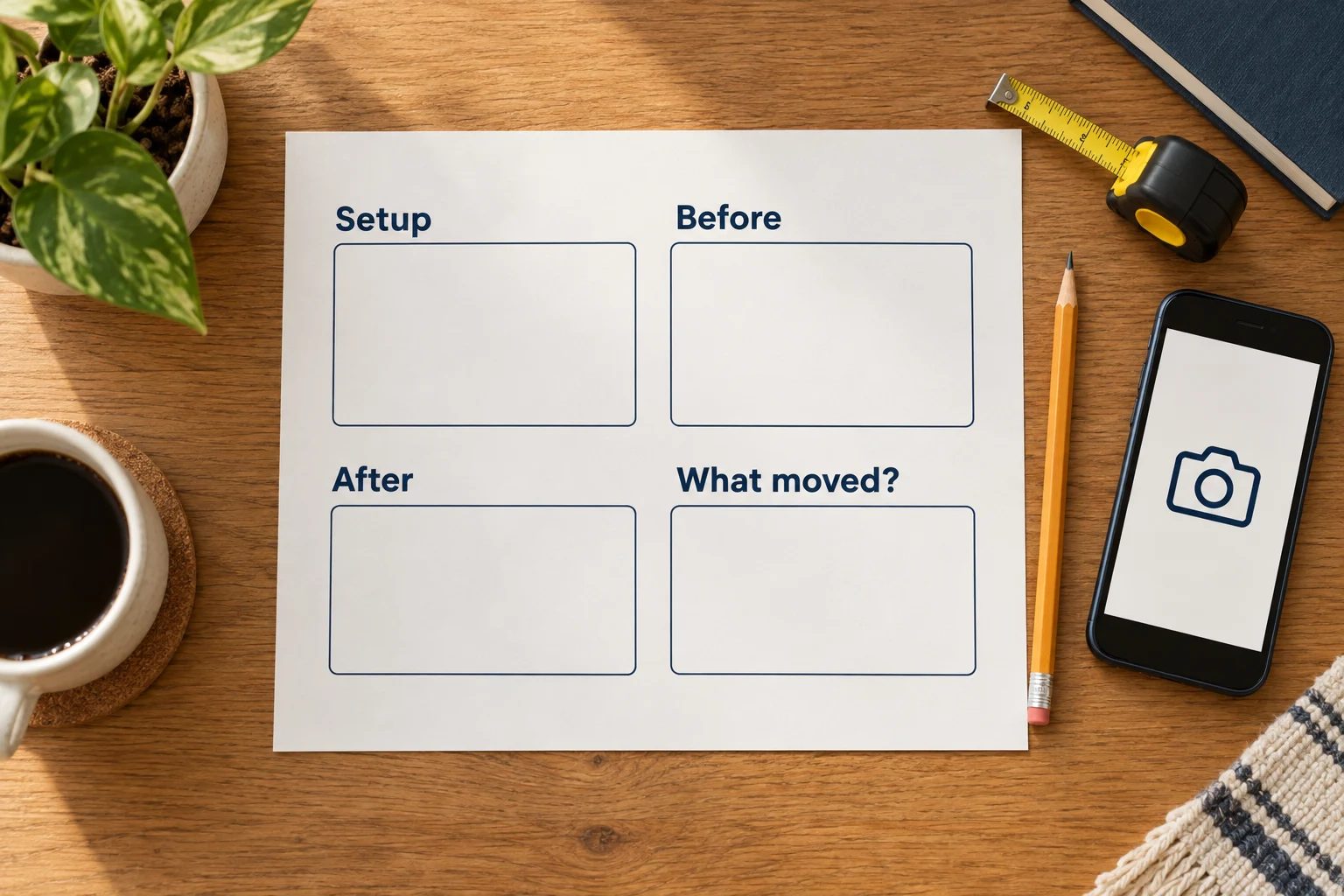
Write down what you changed: flattened the rug, realigned the modules, engaged the original fastening or repositioned a pillow. Then note whether the same part moved again. If another interface becomes the remaining issue, assess it separately.
For support, a short record can include:
- Model, orientation and the affected component.
- Floor type and whether a rug or pad is present.
- A full view and a close view of the join.
- The normal action that produces the movement.
- The adjustment tried and what happened afterward.
This gives the support team a specific starting point. An identifiable loose attachment, persistent separation at an engaged join or damaged mounting area can then be discussed as a component problem.
Before buying, look beyond the arranged room photo
Choose a compressed sectional around both its intended layout and the way its pieces work together. Ask which modules form the main seat, which pieces move independently, how the main sections connect and what contacts the floor.
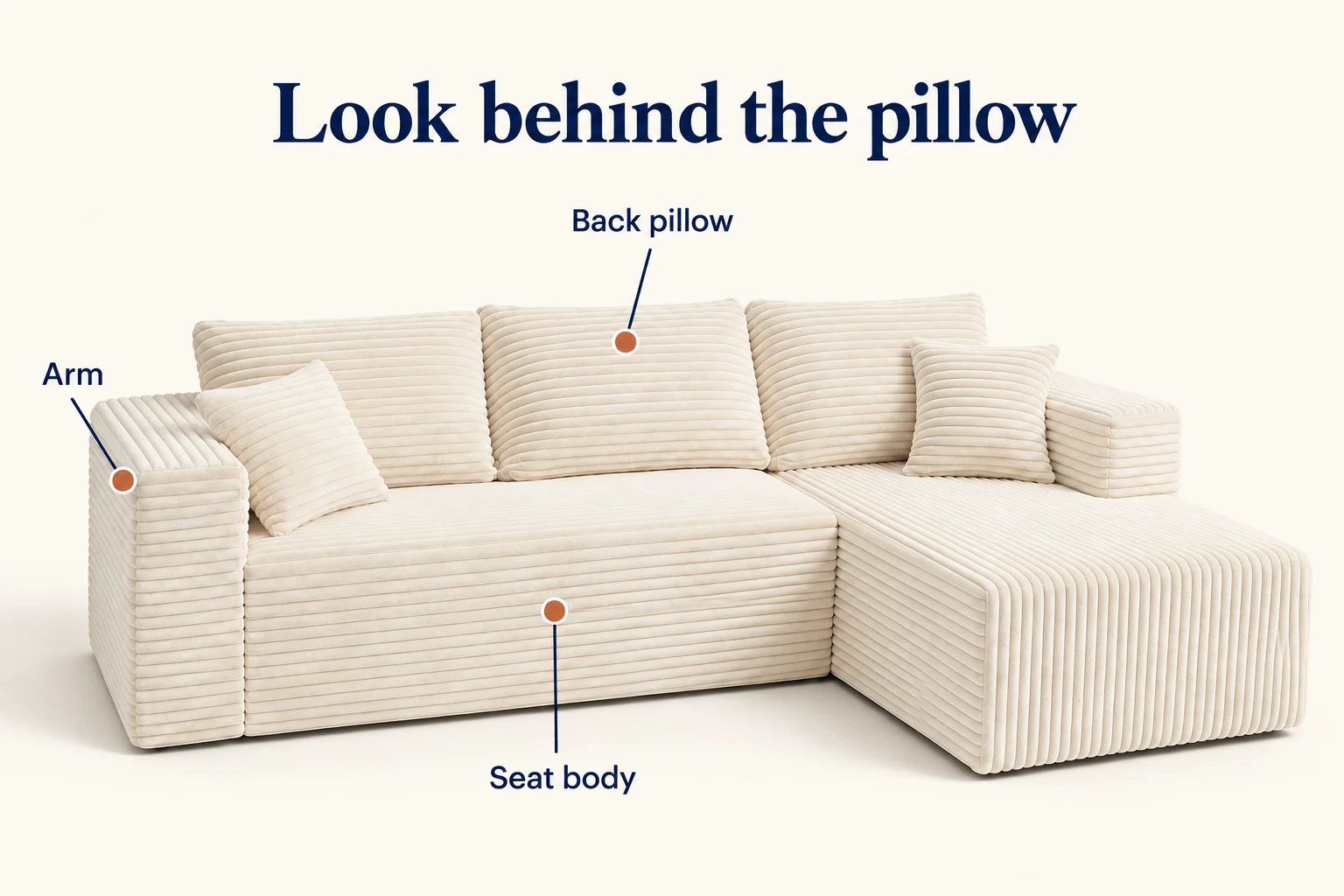
THE L corduroy compressed sofa uses an arm module and a chaise module. Its long ordinary seating run and single projecting chaise give you two distinct pieces to identify in the gallery. Keep that component view beside your room plan when choosing the orientation.
For your shortlist, save the component diagram and instructions alongside the color you prefer. You will know where the main join belongs, what can change position and which information to keep for a future parts question.
If broad corduroy ribs and a low, feet-up lounge suit your evenings, browse ULTI ONE's compressed sofas. Pick the layout that gives everyone a place to settle in, then let the remote be the only thing you have to hunt for.