Ultione / Journal
Compressed Sofa Guides
Compressed Sofa Certifications and Labels: What Each Claim Covers
Read compressed sofa certifications by their scope: foam, textiles, emissions or smolder resistance. Match each claim to its issuer and exact component.
A compressed sofa can have claims about foam, upholstery, chemical emissions and flammability. They answer different questions. Read a certification by its scope: what was assessed, which product or component it applies to, and who issued it. A material certificate is not automatically a certificate for the entire sofa.
Use the ULTI ONE compressed sofa collection to choose your preferred layout, then keep the exact model beside any material or certification information you review. The useful question is not “How many logos are there?” It is “What does this particular claim establish?”
 ULTI ONE compressed sofa collection
Start with the object being assessed
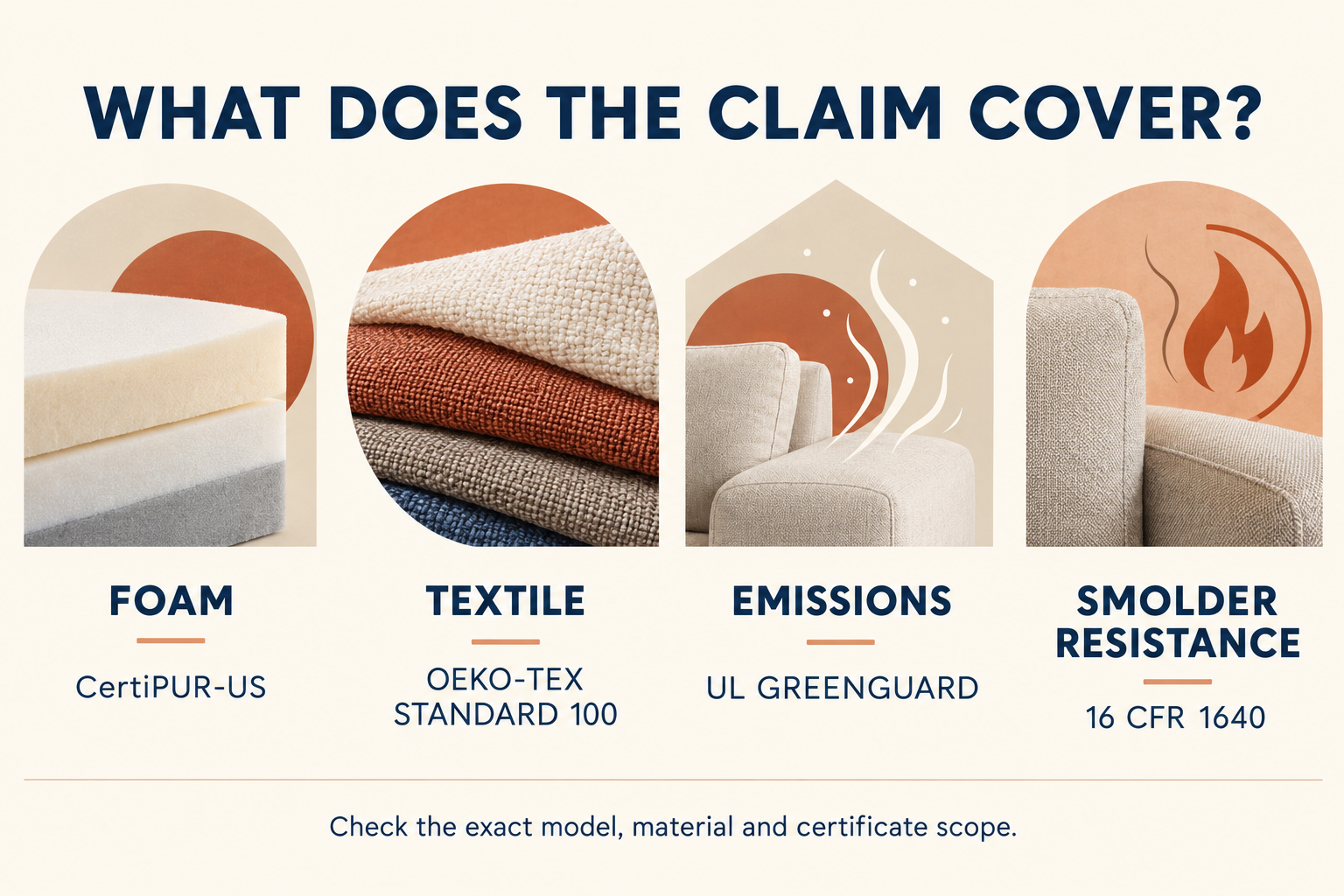
- Foam certification: identify the flexible foam covered by the program.
- Textile certification: identify the certified textile article and its intended-use scope.
- Emissions certification: identify the listed product or material and emissions program.
- Flammability labeling: identify the applicable furniture requirement and the meaning of its test.
CertiPUR-US: flexible polyurethane foam
CertiPUR-US explains in its FAQ that it certifies flexible polyurethane foam, not furniture, product lines or companies. Its program covers foam content, emissions and durability criteria. The distinction between certified foam and a “certified sofa” matters when interpreting a product page.
When a seller makes this claim, check the program's directory and request enough information to connect it to the foam used in your selected product. The program advises consumers to check participating companies rather than relying on a logo alone. It also distinguishes low emissions from zero emissions.
OEKO-TEX STANDARD 100: the certified textile article
OEKO-TEX STANDARD 100 is a label for textiles tested for harmful substances. The program uses requirements linked to intended use and provides a Label Check for the certificate number or QR code.
The practical step is to identify the article named in the certificate. Is the claim for a fabric supplied to the furniture maker, a cover or another specified article? Match that scope to the seller's wording. A certificate for one textile should not be silently extended to foam or other components outside its stated scope.
Substance testing and cleaning permission answer different household questions. A textile certificate cannot approve putting a fitted cover in the washing machine. For daily corduroy care, begin with gentle dry removal of loose dirt and absorption of fresh liquid without scrubbing. Use the exact cleaning code for later treatment. Keep that practical care decision beside, rather than inside, the certificate check.
UL GREENGUARD: chemical emissions
UL Solutions describes GREENGUARD as a chemical-emissions certification program. GREENGUARD Gold uses tighter emissions criteria than the standard program. The claim is about emissions under the program, not how soft the seat feels.
Check the exact listed product or material, the program name and the certification scope. A brand may sell several models, so an entry for one item should not become an assumption about its entire range. If the product name on the listing differs from the sales page, ask the seller to explain the connection.
US upholstery flammability labels: a different test
The US Consumer Product Safety Commission's upholstered-furniture FAQ explains the federal requirements in 16 CFR part 1640, which incorporate California TB 117-2013. The standard addresses resistance to smoldering ignition and includes a compliance label requirement.
That is not an all-purpose “fireproof” claim. A test addressing smolder resistance does not establish resistance to every possible flame or fire exposure. Nor is a compliance statement the same as a voluntary emissions certificate.
For a buyer, the useful action is to request a clear photograph of the actual furniture label and connect it with the selected model. Read the statement as the statement it is, rather than replacing it with broader marketing language. Keep flames and other ignition sources away from upholstered furniture regardless of its labels.
Start with the concern in your home
If chemical emissions are your concern, look at the relevant emissions program and exact listing. If the question is about the textile, examine the textile certificate. If it is about smolder resistance, read the furniture compliance label. These routes answer different questions; counting the logos does not bring them together.
Verify the claim in four steps

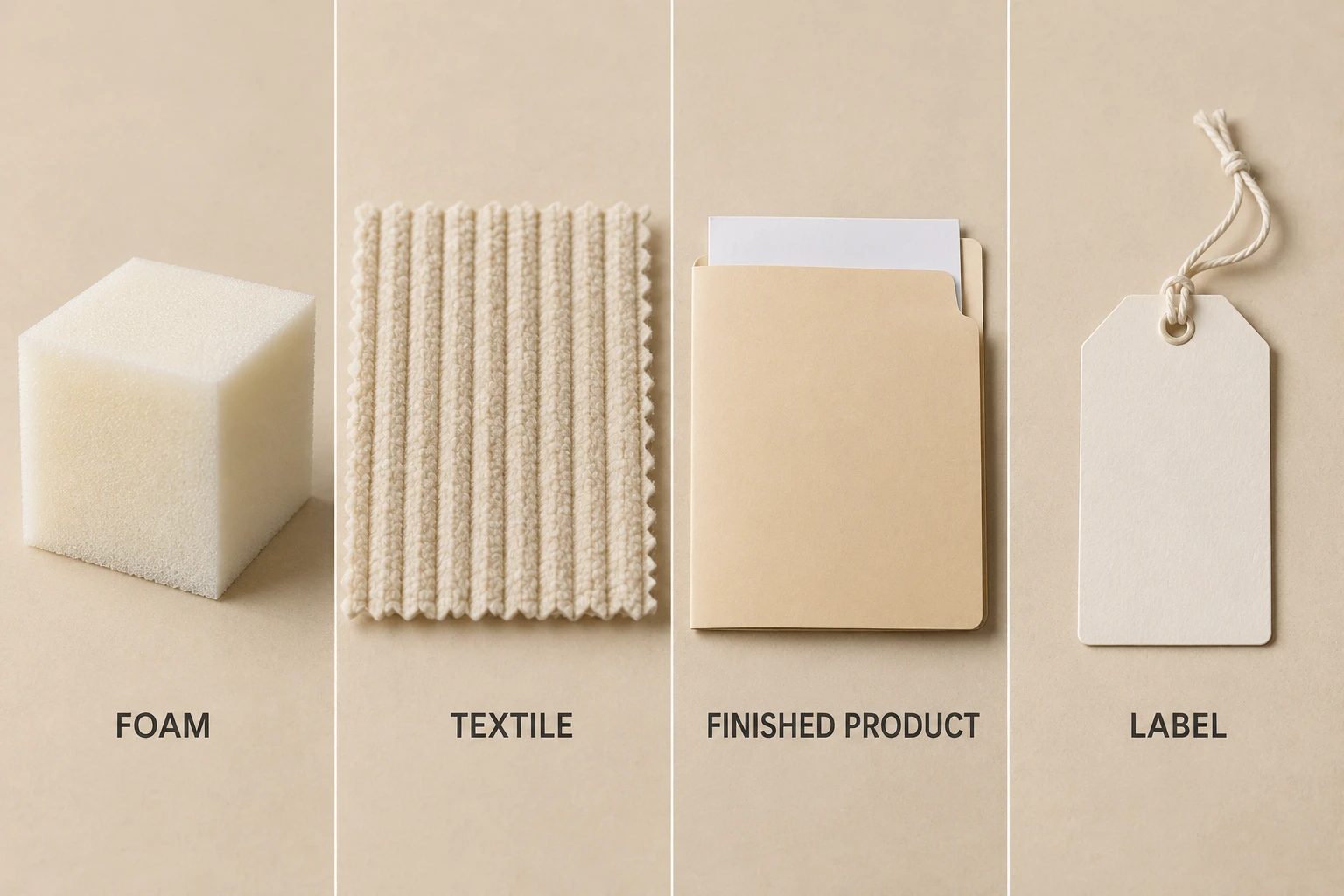
- Record the exact item. Save the model name, chosen configuration, color and product-page date. Separate a collection-wide description from an item-specific claim.
- Identify the issuer. Note the full program name and any certificate or listing number supplied. A testing laboratory and a certification program are not interchangeable labels.
- Read the scope. Compare the named product or component with what the retailer says is covered. Resolve different names or partial-component claims before treating them as equivalent.

- Check validity. Use the issuer's current verification route and review the listed status. A screenshot shows what appeared at one moment; it is not a replacement for the current record.
When requesting clarification, ask one precise question: “Can you show which listing or certificate connects this claim to this exact model and component?” That is easier to answer than “Is this sofa safe?” and produces a record you can actually compare.
Put the labels beside the everyday buying checks

After reading the material claims, return to the sofa you will use. The Big U compressed sectional is a different layout from a compact L-shaped model. Check its published dimensions and access route, not just a materials paragraph shared across a collection.
What a label leaves for the factory to control
A material program answers its named assessment. Consistent manufacture still requires density and firmness checks across a foam block, matched cutting patterns and inspection of the upholstered body after compression. These are the steps that connect the approved material with a sofa whose corners, seat profile and cover fit are repeatable.
ISO 7173:2023 addresses the strength and durability of seating structures across different materials and constructions. That is a different question from the rubbing wear or appearance of upholstery. When reading a structural report, match the tested model and configuration to the sofa you are considering, then look at the loading conditions and result. When reading a fabric report, match the textile and named method. Keeping the object being tested clear makes each report useful: whole-seat loading belongs beside material performance in your buying notes.
Packaging reports have a sample question too. The ISTA 3A overview requires one sample and encourages five or more complete runs with new samples to improve statistical significance. Its scope covers individual parcel shipments up to 150 lb (70 kg). Look for the procedure, package configuration, number of samples and recorded product condition after testing. A board-strength result answers a material question; a completed transport sequence follows the product and its protection together. Those details help you understand the evidence behind a delivery claim.
Keep two shopping questions separate: does the named certification address your concern, and does the finished sofa suit your home? For US shoppers, the actual upholstered-furniture compliance label belongs to the first check. For a US or Canadian room plan, dimensions, posture and care belong to the second. This way a relevant label adds confidence without becoming a substitute for choosing the right seat.
What to keep before placing an order
Save the product page, the seller's written answers and the applicable care and after-sales instructions. Where a certification is claimed, keep its exact identifier and scope beside the item. This avoids having to reconstruct which description applied to your purchase later.
Then compare the real shapes in the compressed sofas collection. A good purchase decision joins precise material information with the layout you want, the space you have and the terms that apply to your order. It does not require treating every industry label as if it answers the same question.