Ultione / Journal
Bedroom Lounge
How to Use a Compressed Sofa in a Bedroom
Plan a compressed sofa in a bedroom around the bed-to-closet route, open drawers, reading light and its full-size footprint.
A compressed sofa in a bedroom can make a separate place to read or get dressed. Start with the unglamorous question: can you still walk from the bed to the closet and bathroom without going around the chaise?
Compare layouts in the ULTI ONE compressed sofa collection against the bedroom’s usable floor space.
 ULTI ONE compressed sofa collection
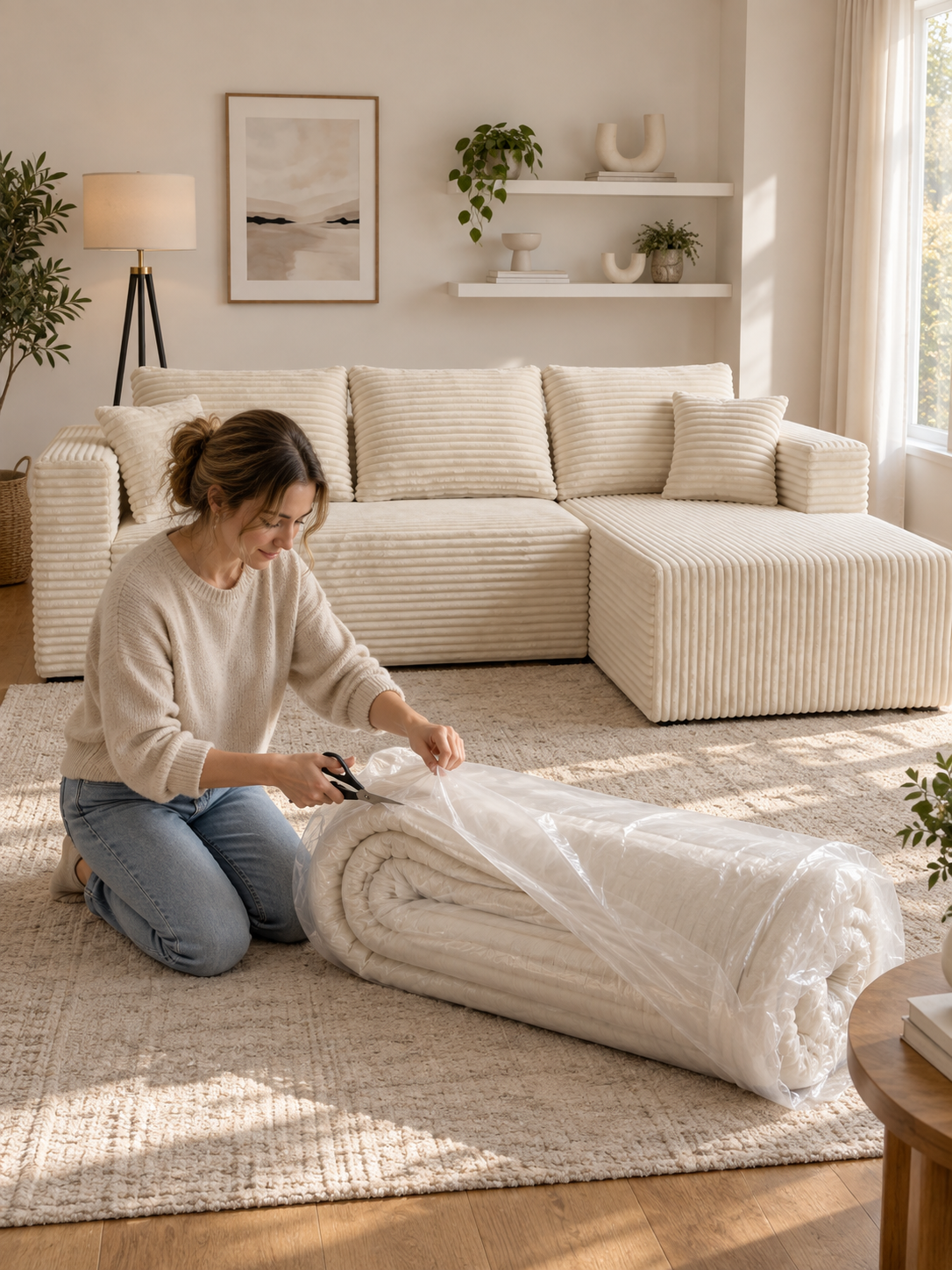
For an upstairs bedroom, compare the sealed carton with the open doorway, stair landing and final turn. The L's packed size is about 42.1 × 24.4 × 12 inches, while its expanded footprint is 92.5 × 61 inches. Take the compact carton to the final room before opening it; that preserves the delivery advantage through the last doorway.
In a US or Canadian upstairs bedroom, keep the delivery measurements with any building access arrangements. The final-room doorway belongs in that plan.
Map the route before the rug
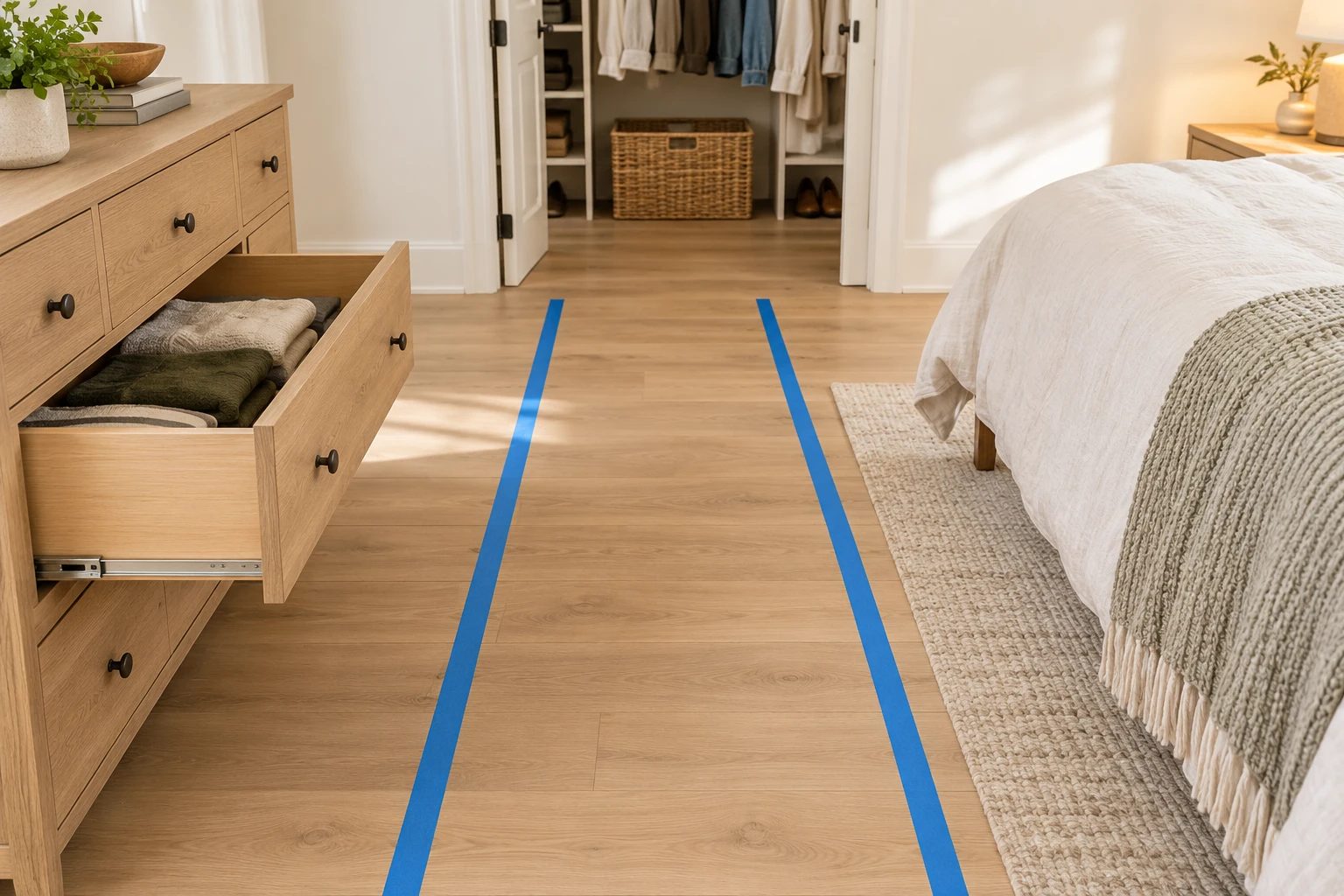
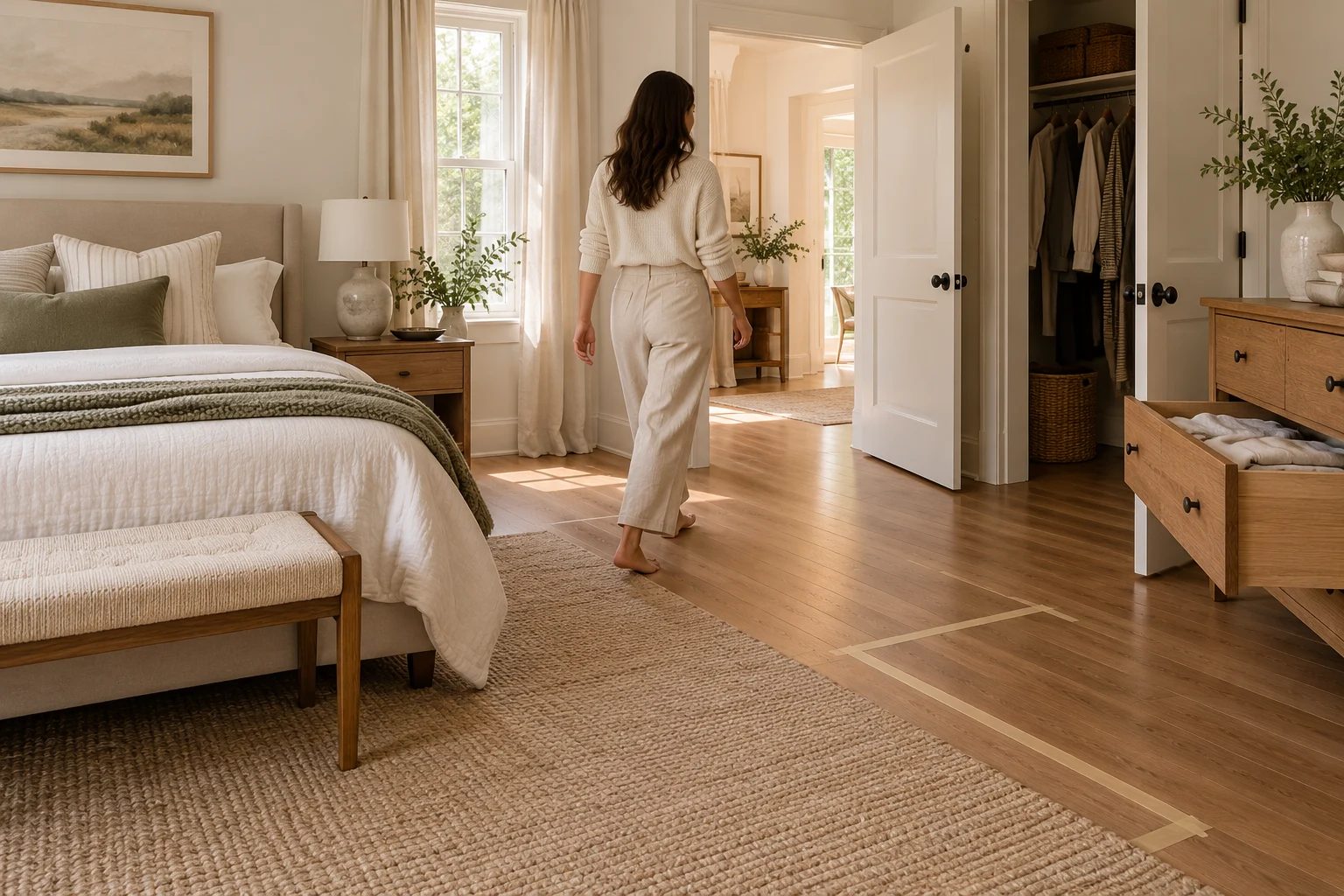
The L measures 92.5 inches across and 61 inches at its deepest point. Mark both edges on the floor with painter's tape, then open the closet and bathroom doors. Walk the route you take at night. If the chaise gets in the way, try the opposite orientation before choosing a different sofa.
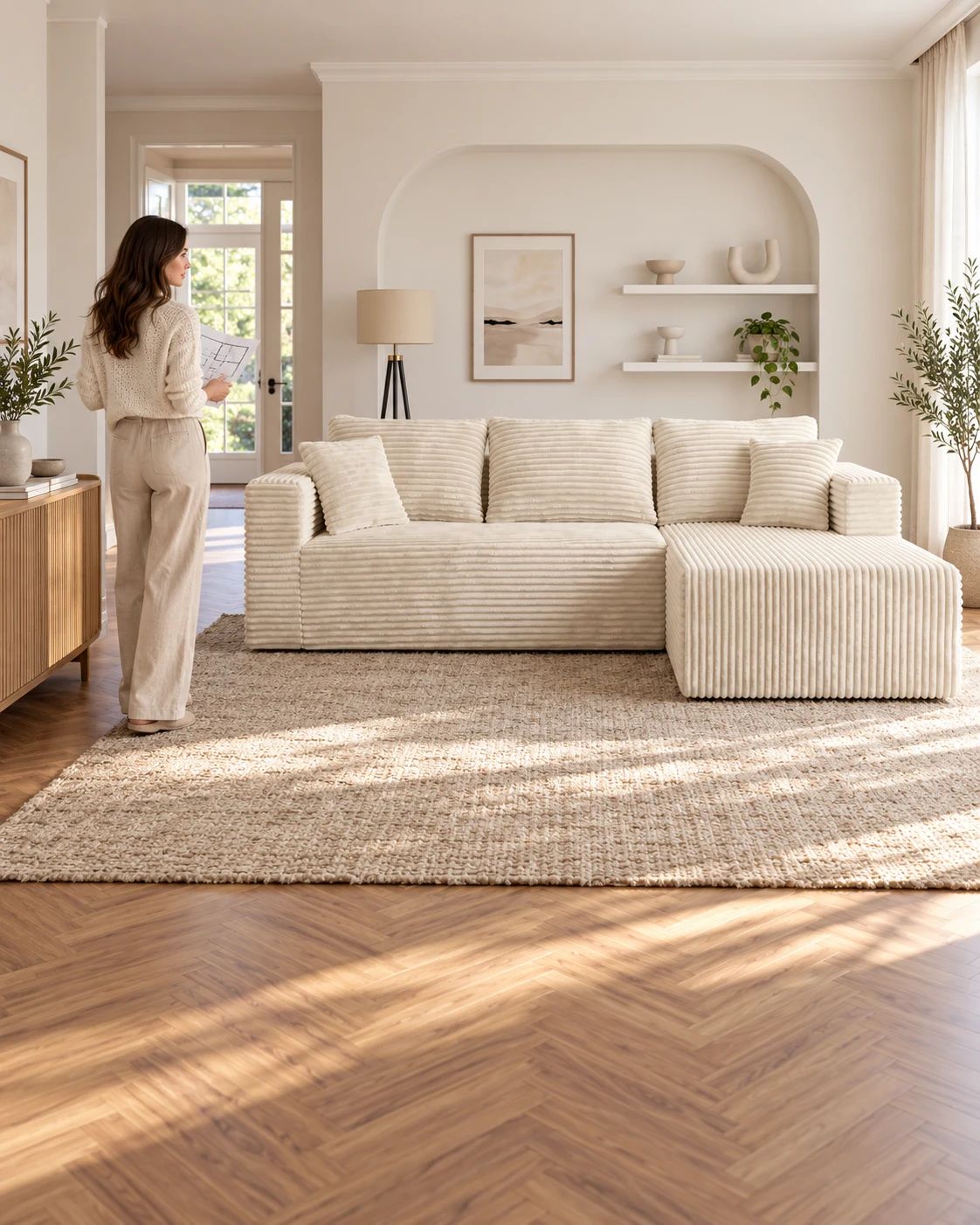
Compare the left and right configurations of The L compressed sofa against the room plan. Leave extra wall space if you want a side table; the 92.5-inch measurement covers the sofa, not its surroundings.
Tape a second line for the walking space beside the bed, then stand where you normally get up. Pull out a drawer, swing the bedroom door fully, and check whether someone can pass while another person is seated. A sofa that fits the empty floor can still make the room frustrating at night.
Shortlist an ULTI ONE compressed sofa after the bed-to-closet route works with the closet open. If changing the chaise direction still puts the lounge in that route, keep the bedroom seat smaller.
Choose a job for the extra seat
A bedroom sofa works best when it replaces a real habit: reading before bed, sitting to put on shoes, or sharing a quiet conversation away from the living room. Those uses need different positions. Try the seat facing into the room for conversation; for reading, test the lamp and book reach from the chaise.
Keep water on a reachable surface beside the reader, not on the floor by the night-time path. Put the lamp cord outside that path too. The two-person trial below checks whether reading and getting dressed can happen together.
For a get-dressed seat, compare The L's roughly 16-inch sitting height with the stable seat you use for shoes now. For reading, check its 25.6-inch ordinary seat depth with your back supported; a pillow may shorten usable depth. A bedroom lounge should solve the activity you chose. If you mostly need a brief upright perch, a smaller chair or bench can leave the room easier to use.
Try a simple two-person test before committing to the lounge: one person sits where the reader would sit while the other opens the closet and selects clothes. Repeat with the dresser drawer open. If the only way past requires the reader to move their legs each time, that chaise position is doing two incompatible jobs. Reverse it, change the wall or choose a smaller seat; removing the side table alone won't fix a blocked closet.
Work from the gap beside the bed
Suppose your measured room is 144 inches across. A 60-inch-wide queen mattress leaves 84 inches before the bed frame, side tables and walking space. The L's 61-inch chaise reach would consume much of that remainder if placed across it. The calculation is a warning to draw the actual bed frame and lounge together, not a reason to squeeze both against opposing walls.
A wider bedroom may support a separate lounge at the foot or along another wall. Keep the bed as the primary zone, then give the sofa a genuine reading or conversation role. If its straight seats merely become a place for clothes and the chaise interrupts the night route, a smaller upholstered chair is the stronger bedroom purchase. The full sofa earns its footprint when you actually use both the seating run and the feet-up area.
Keep the colors quiet, not flat
Cream corduroy works well with pale oak, warm white walls, and unbleached linen. The colors stay close, but the wide corduroy ribs stop the room from looking washed out.
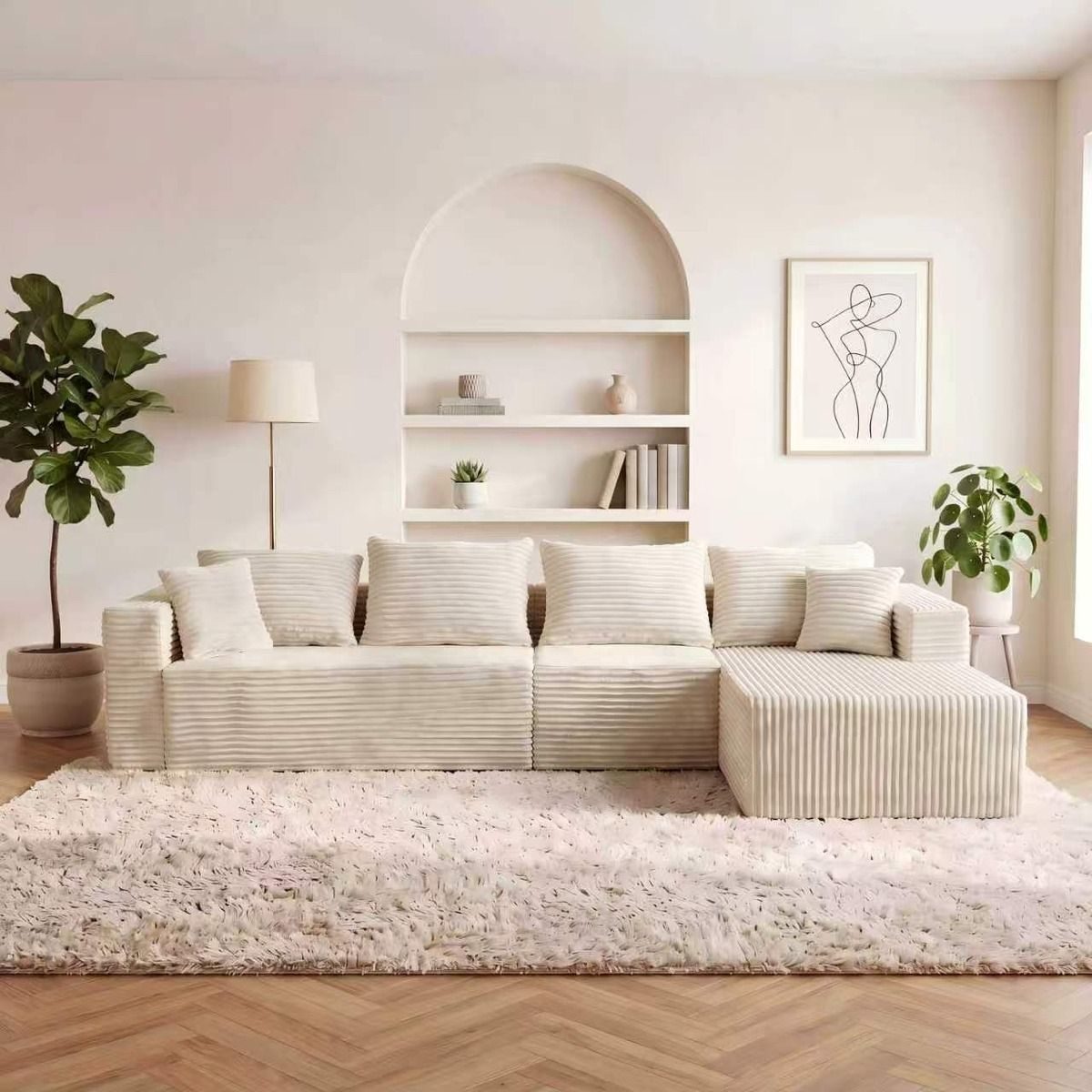
Separate a quiet color scheme from a room with no contrast. Against a cream sofa, a woven rug and a smooth wood surface give the eye different textures without adding more colors. Check the cream beside your actual bedding under the bedside lamp: two light neutrals that work in daylight can look mismatched at night. Keep the larger finish you won't change, and choose the upholstery around it.
Check the window line
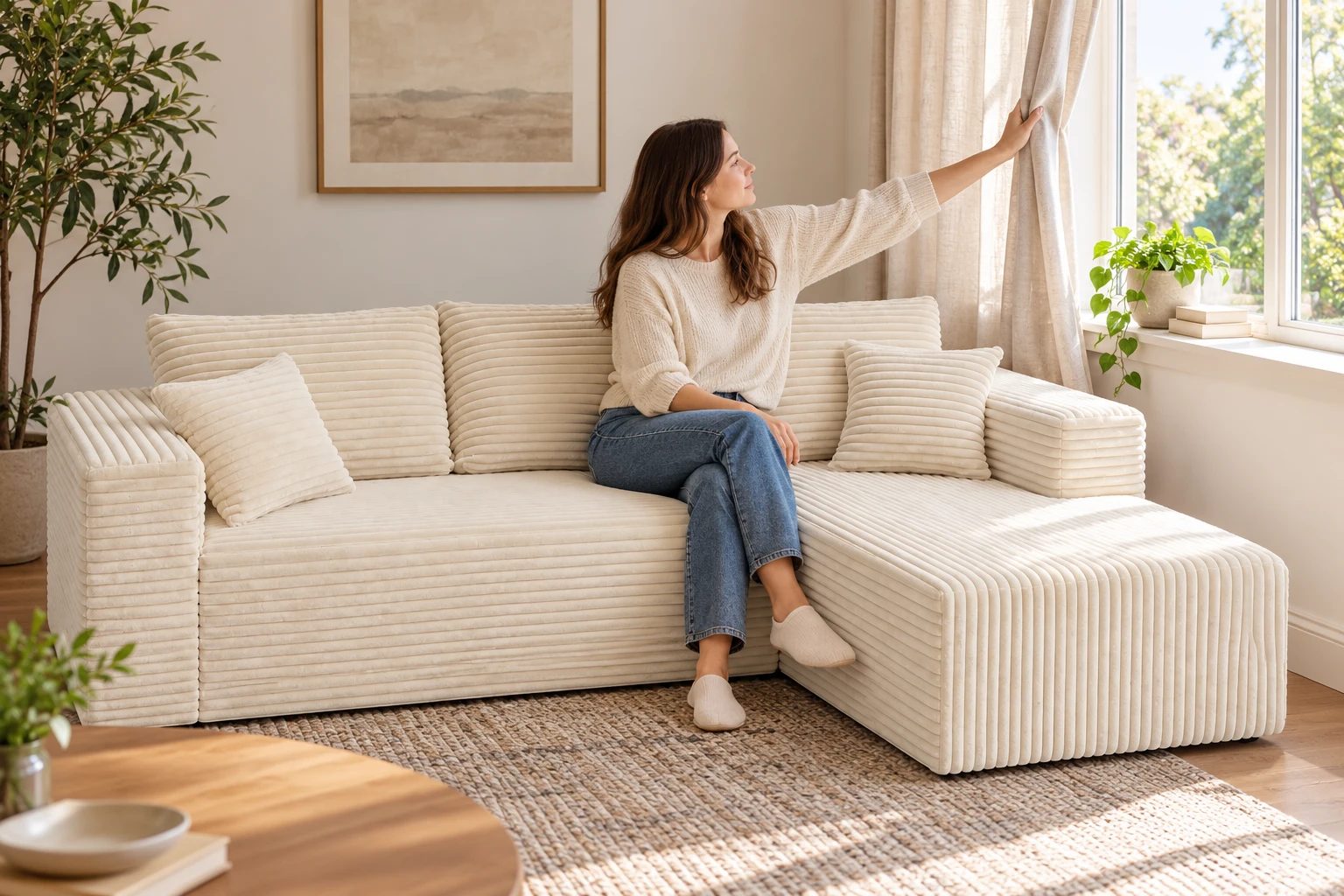
The L is 23.63 inches high after recovery. Compare that with the sill, then test the curtains' full travel and your reach to their controls with the proposed sofa position. Keep vents, heaters and outlets accessible. A back below the window can look quiet while the chaise still blocks access to a shade, so check both the height and the approach.
Move the box upstairs before opening it
The L ships in one compressed box, about 42.1 x 24.4 x 12 inches. Check the narrowest doorway, stair landing, elevator and final turn into the bedroom using the narrow-doorway guide. Open it in the intended room, where the recovered 92.5-inch sofa needs its full footprint.
Use light where you actually sit
For reading, place the lamp where your head and hand don't block light from the page. Sit in the intended position and check for a bright reflection on the book and glare visible from the bed. A shaded light aimed toward the reading area can keep the bed calmer than using one ceiling fixture for both activities. Put the switch within the reader's reach, but keep the base and cord outside the walk to the bathroom.
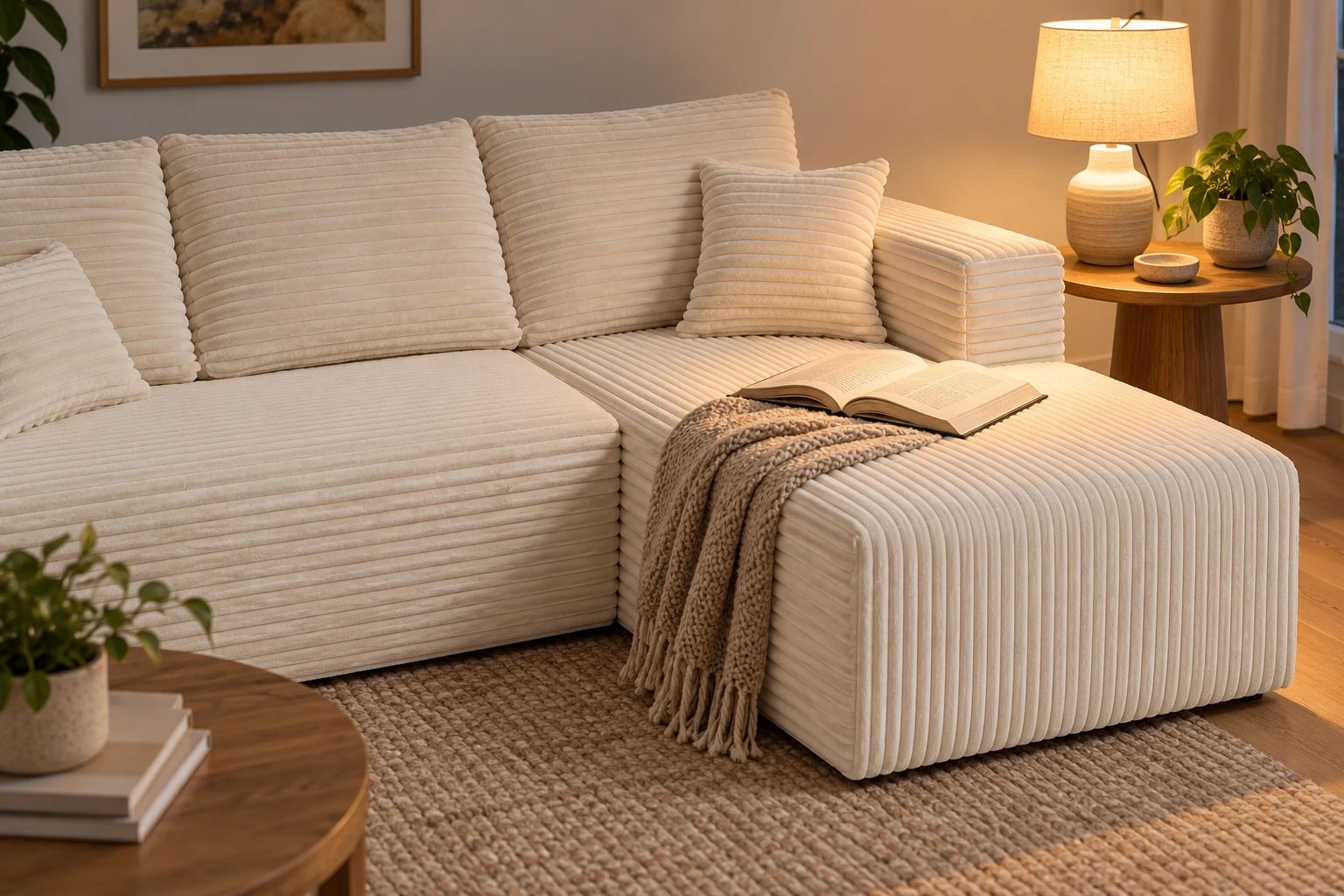
For other sizes and layouts, return to the Ultione compressed sofa collection and compare each recovered footprint with the bedroom route.
From the compressed sofa collection
A quieter sectional for the bedroom
For a separate lounge zone, compare two compressed sofa layouts: The L keeps the footprint compact, while The U adds a chaise and ottoman.