Ultione / Journal
Compressed Sofa Guides
What Is a Compressed Sofa? How Vacuum-Packed Delivery Works
See how a compressed sofa works, what its smaller delivery package solves, and how foam, corduroy and seat dimensions help you choose.
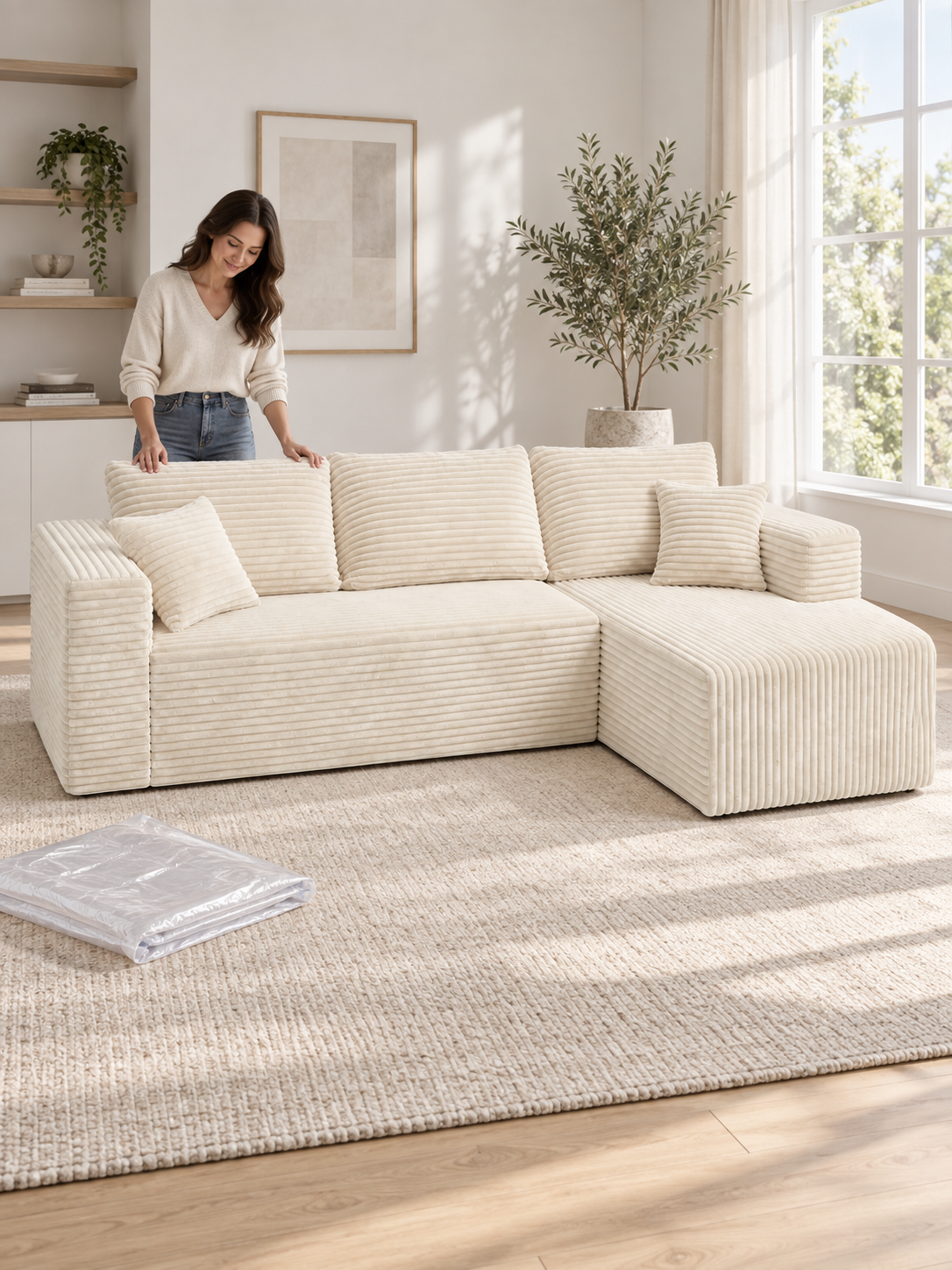
A compressed sofa is a full-size sofa shipped with its foam compressed and sealed in protective wrapping. Once you open the seal, the foam expands back toward its intended shape. You get proper upholstered seating from a much smaller delivery package, without moving a full-width couch through every doorway on the way in.
A 5:1 compression example turns 5 cubic feet into 1 cubic foot: 80% less shipping volume, not a sofa five times narrower. The benefit is a smaller object to bring through the building. Once opened, you get the full-size seat back. That makes compressed delivery worth considering for a tight entrance, provided the expanded layout gives you the place to stretch out you actually want.
How can a whole sofa fit in a box?
Flexible foam contains a network of tiny cells. Packing pressure squeezes the foam and pushes air out; the sealed wrap holds the smaller shape during shipping. Open the seal and release that pressure, and the foam can expand. This is recovery of the material, not an inflatable sofa that needs a pump.
In a frameless design, shaped foam forms the seat, back and arms instead of being a cushion placed over a wooden skeleton. That is why so much of the body can compress. The foam shapes and fitted upholstery are made before packing, so opening the box releases an already-upholstered sofa.
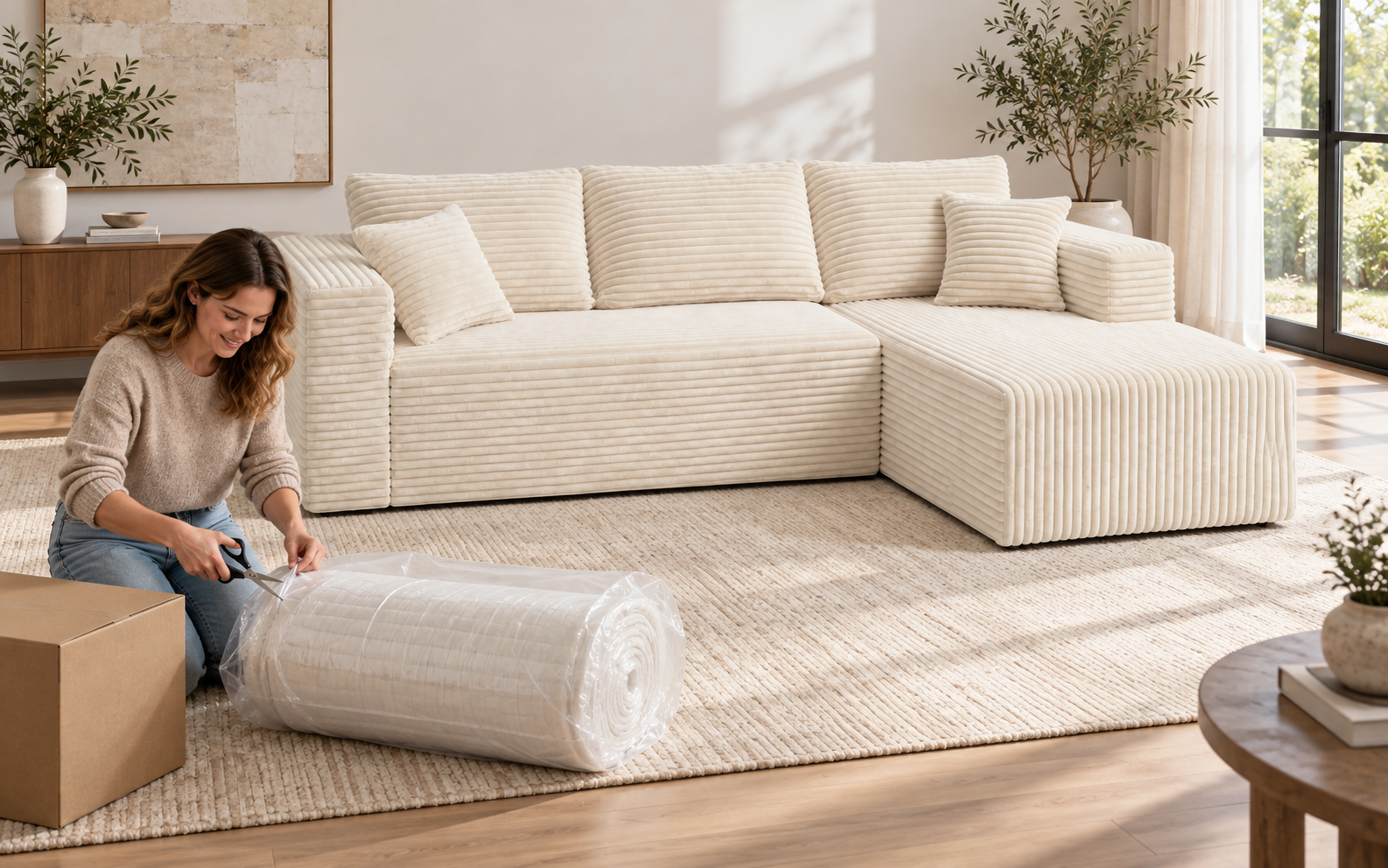
You will also see the names sofa in a box, modular sofa and boneless couch. They describe different things. A boxed sofa may arrive as rigid parts you bolt together. Modular means separate sections make up the layout. Boneless usually describes a frameless, foam-based seat. A compressed sofa describes reduced-volume shipping. When comparing listings, look for the construction and setup steps behind the name.
The delivery advantage, in real inches
The L ships in one carton measuring about 42.13 × 24.41 × 12 inches, weighing 102.4 pounds including packaging. Expanded, its footprint is 92.5 inches wide and 61 inches deep. You move the carton through the entrance, then let the full-size seating take shape inside the room.
The carton occupies about 7.14 cubic feet (0.202 cubic meter): 42.13 × 24.41 × 12 ÷ 1,728. This is its outside shipping volume, useful when planning storage or a vehicle load. Doorways still need all three dimensions and turning space. The sofa’s L-shaped room footprint measures floor space, so it answers a different question from carton volume.
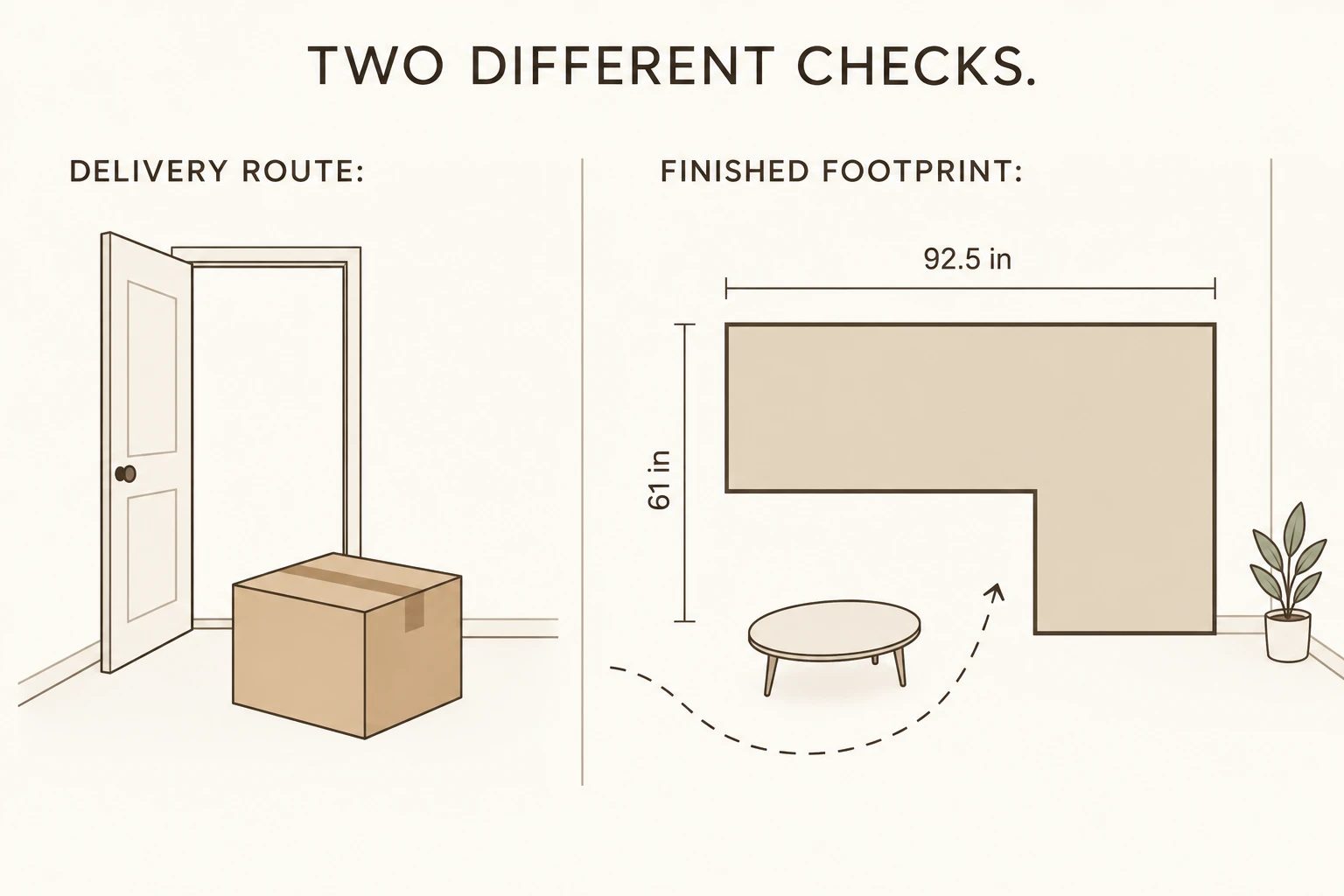
For a simple example, a doorway with 28 inches of usable width leaves about 3.6 inches beside the carton's 24.41-inch side. That is a promising straight passage. At the next corner, its 42.13-inch length still needs turning room. Measure the opening between the actual obstructions, then the landing or hallway beyond it. Arrange help for the 102.4-pound package before delivery day.
If you live in a U.S. apartment or Canadian condo, make the route one continuous check: entrance, elevator interior, landing, hallway and room door. Keep the carton sealed until it reaches the room. Expanding it in a narrow hallway would give up the very advantage you bought it for.
What makes the foam more than soft stuffing?
A frameless seat asks its foam to do structural work as well as feel comfortable. Density describes how much material is in a given volume. Firmness describes resistance when you press or sit on it. Rebound describes how readily it springs back. Those properties work together; a higher density number alone doesn't tell you whether a seat will feel harder.
The production process includes a 24-to-48-hour curing period before cutting. Foam is also checked at the top, middle and bottom of a block, with firmness and recovery checked separately. For the buyer, the point is consistency: the seat body should be made from foam that matches the intended specification, rather than relying on one appealingly soft sample.
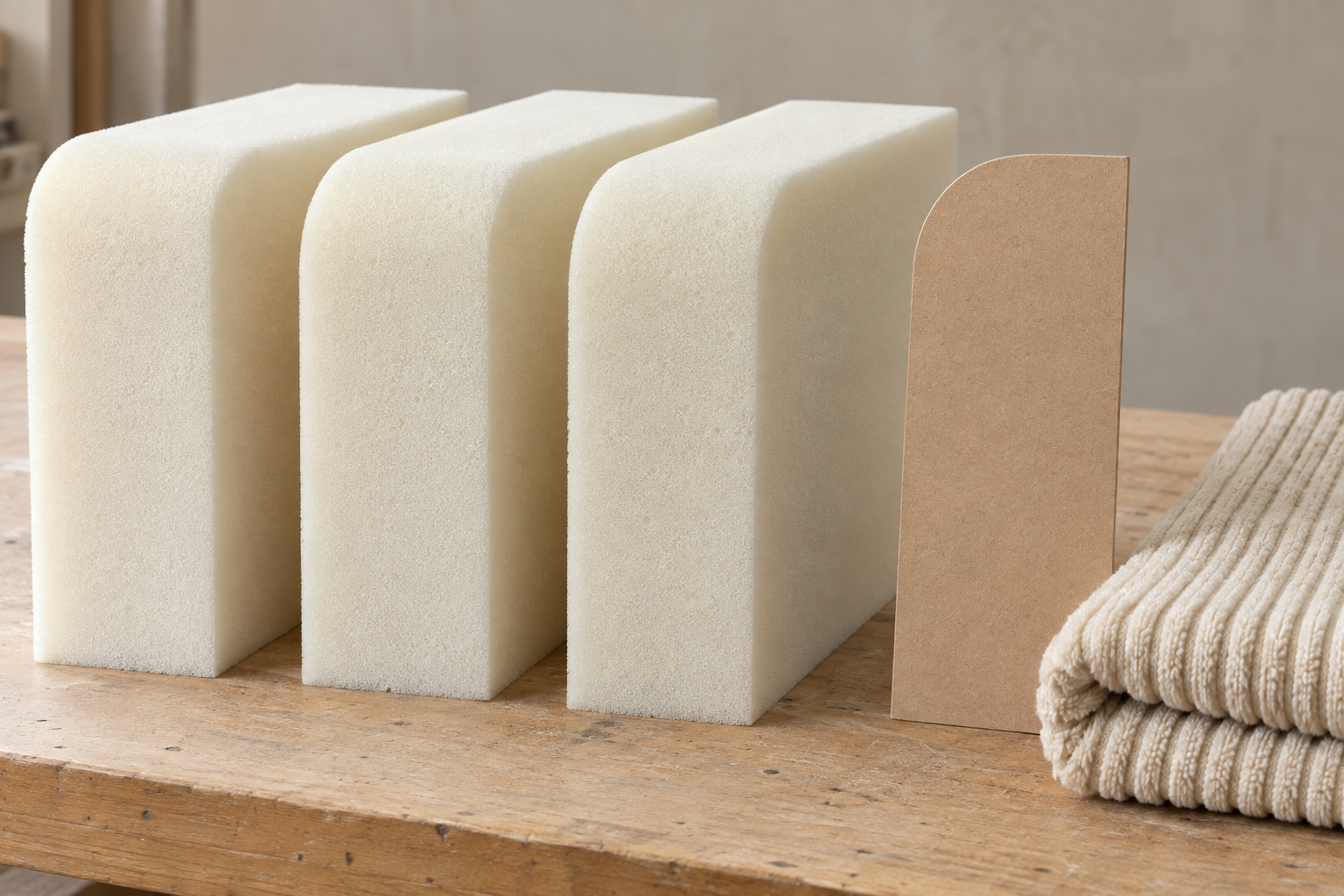
Precision shaping helps the cover fit that body. The foam-cutting target is ±1 mm, about ±0.04 inch; cover-panel cutting uses a separate tolerance of up to 5 mm, about 0.20 inch. Follow the front edge and rounded arm in a close product view. Even contours and neatly fitted seams show you how the foam shape and upholstery come together.
ULTI ONE uses 30D foam and wide-wale corduroy. The raised ribs give you a textured surface to rest against, while the shaped foam underneath does the supporting. A fabric close-up tells you about touch and appearance. The seat measurements tell you where your body will sit.
Who will enjoy this kind of seat?
The L has a seat height of about 16 inches and an ordinary seat depth of 25.6 inches. It is a low, deep lounge layout. If you usually curl your legs onto the sofa, read with your feet up or settle into a movie, that geometry is worth a closer look.
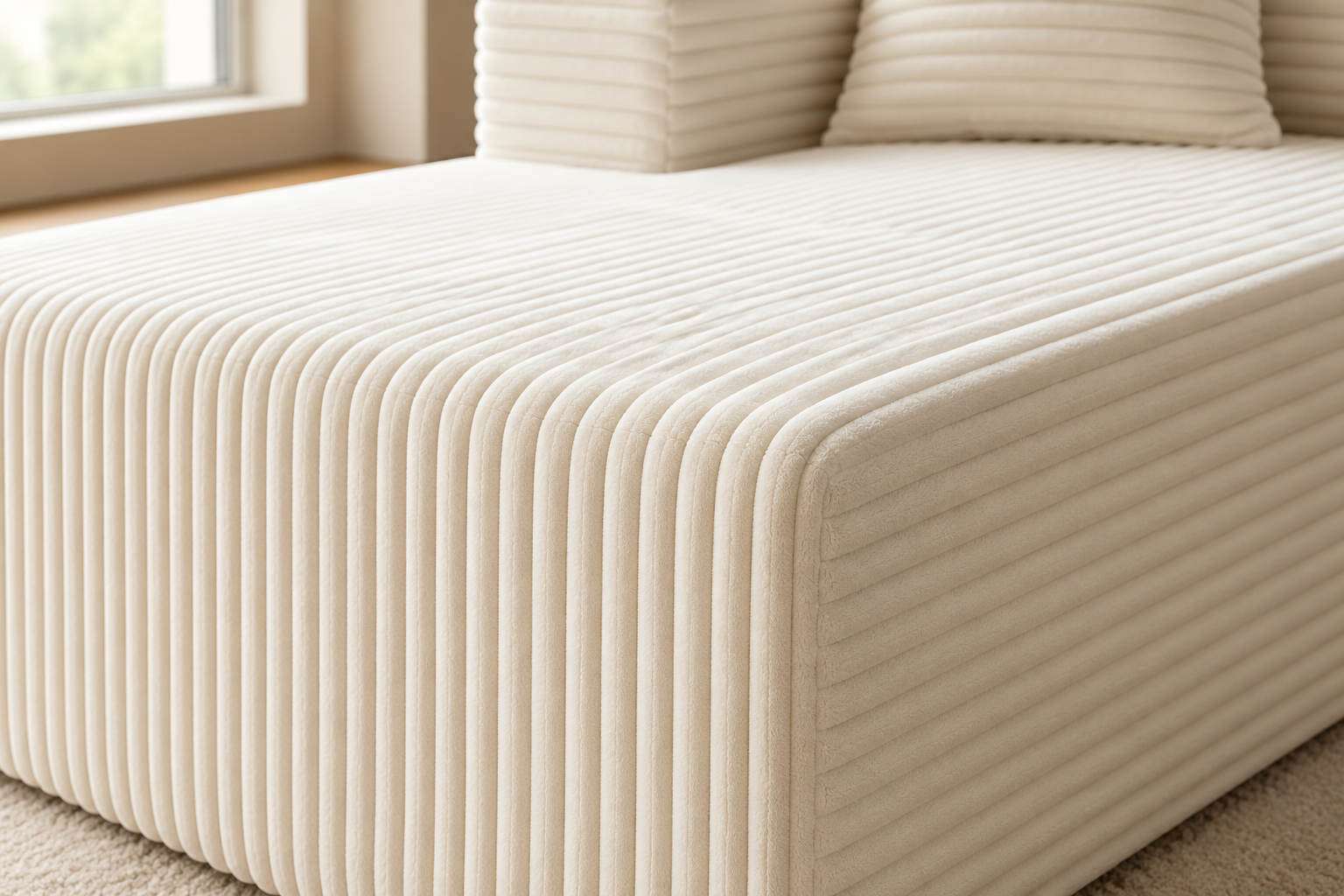
For upright sitting, compare it with a chair you already enjoy. Measure from the floor to the seat, then from the front edge to the back cushion. Sit with your feet on the floor and your back supported. If you need a cushion behind you on a similarly deep seat, plan for that support here too. If you prefer a taller seat for standing up, make height the deciding feature rather than buying on the unpacking video alone.
Shared use deserves the same attention. One person's favorite feet-up corner may be another person's usual conversation seat. Decide where each person will sit and whether the chaise gives you useful lounging space without blocking the approach to the ordinary seats.
Which layout should you look at first?
For one main chaise and an open front, start with The L compressed sectional. Tape its 92.5 × 61-inch outline on the floor, using the product diagram to place the shorter chaise projection correctly. Add your coffee table and open the nearest cabinet. Walk through with the table in place. You are testing a room you can use, not just a rectangle that fits against the wall.
 The L compressed sectional
The U adds a separate ottoman; The Big U adds a center module and an ottoman. Choose the extra footrest when a second person wants to put their feet up. Choose the wider seating run when backed seating is what your household needs. The ULTI ONE compressed sofa collection lets you compare those layouts after you have identified the space and sitting position you want.
What happens after delivery?
The L needs no furniture assembly. Bring the package into the cleared room, remove the protective wrapping safely and position the sections. Allow up to 72 hours for the full shape to settle. The earlier factory curing period happened before shipment; at home, you are letting finished foam recover from its packed state.
On a later move, measure the expanded modules. Home vacuum bags won't recreate industrial compression packing. Protect the corduroy from rubbing against rough door edges, move the separate pieces, and check the route at the new home. Our repacking guide goes further into moving options, but that basic plan starts with the sofa's expanded dimensions.
Choose a compressed sofa when compact arrival, a relaxed sitting position and a workable modular layout solve your actual needs. Start with the seat you will use every evening, then use the carton measurements to make getting it home straightforward.
From the compressed sofa collection
Compare the recovered Ultione layouts
Compression changes the delivery format, not the finished footprint. Start with the shape and dimensions that suit the room.