Ultione / Journal
Compressed Sofa Guides
How Long Does a Compressed Sofa Take to Expand?
Unpacking a compressed sofa? Follow ULTI ONE’s guidance of up to 72 hours, check its progress and learn when to contact support sooner.
A compressed sofa begins regaining its shape when the protective shipping restraint is released. ULTI ONE’s compressed-sofa setup guidance allows up to 72 hours for expansion and settling. Use that period to watch the outline become even and the upholstery folds relax, with the pieces positioned correctly from the start.
 compressed-sofa setup guidance
For a US apartment or Canadian condo, clear the final room before releasing the carton; compact delivery ends when the sofa starts expanding.
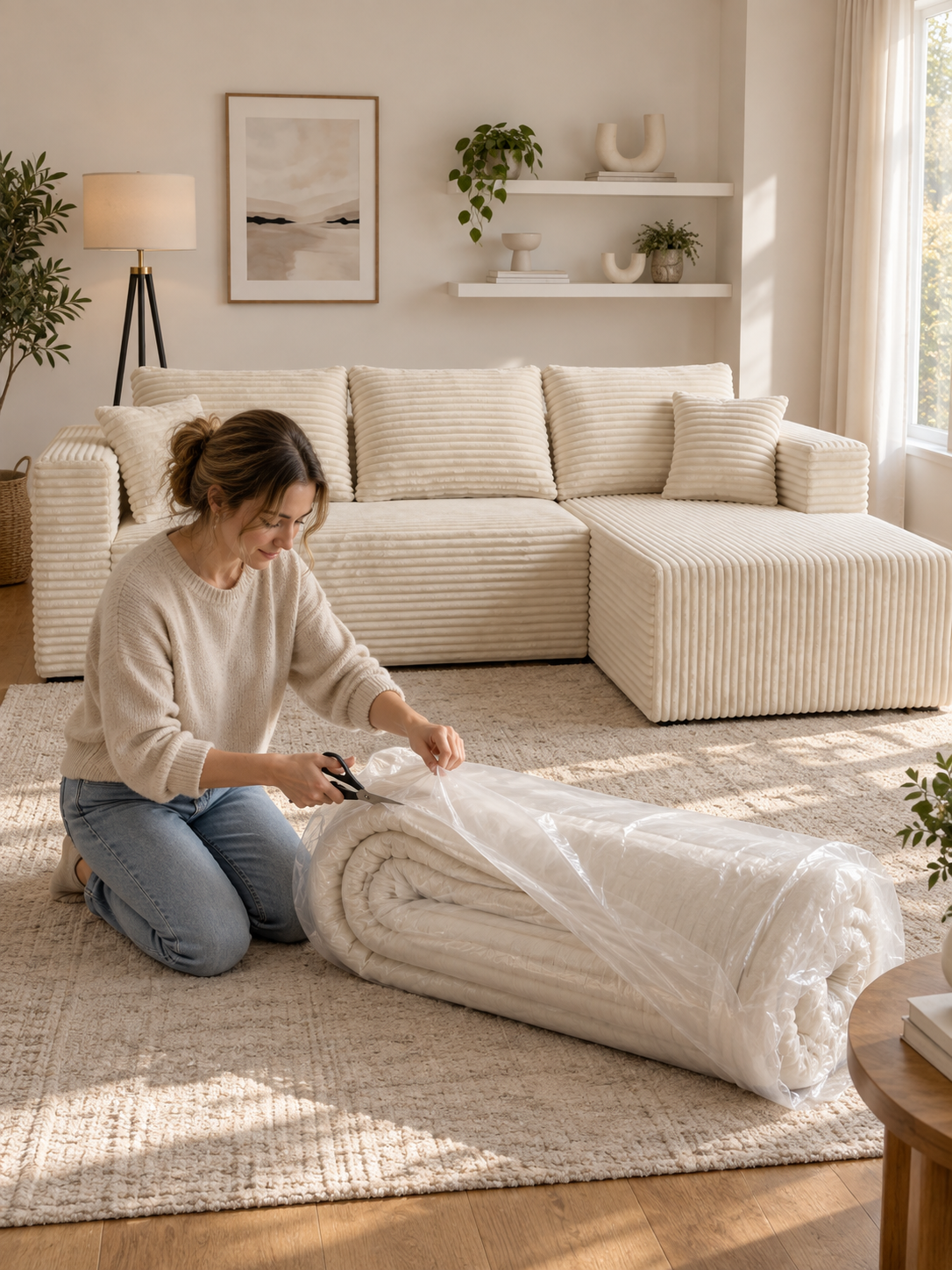
Give each section space before opening
Bring the sealed cartons into the final room. Check the labels and expected parcel count, clear the full finished footprint and identify the outer packaging before cutting. Keep the tool on loose protective material, away from upholstery. Position the released pieces on a clean, level surface, with cartons and stored items clear of the edges.
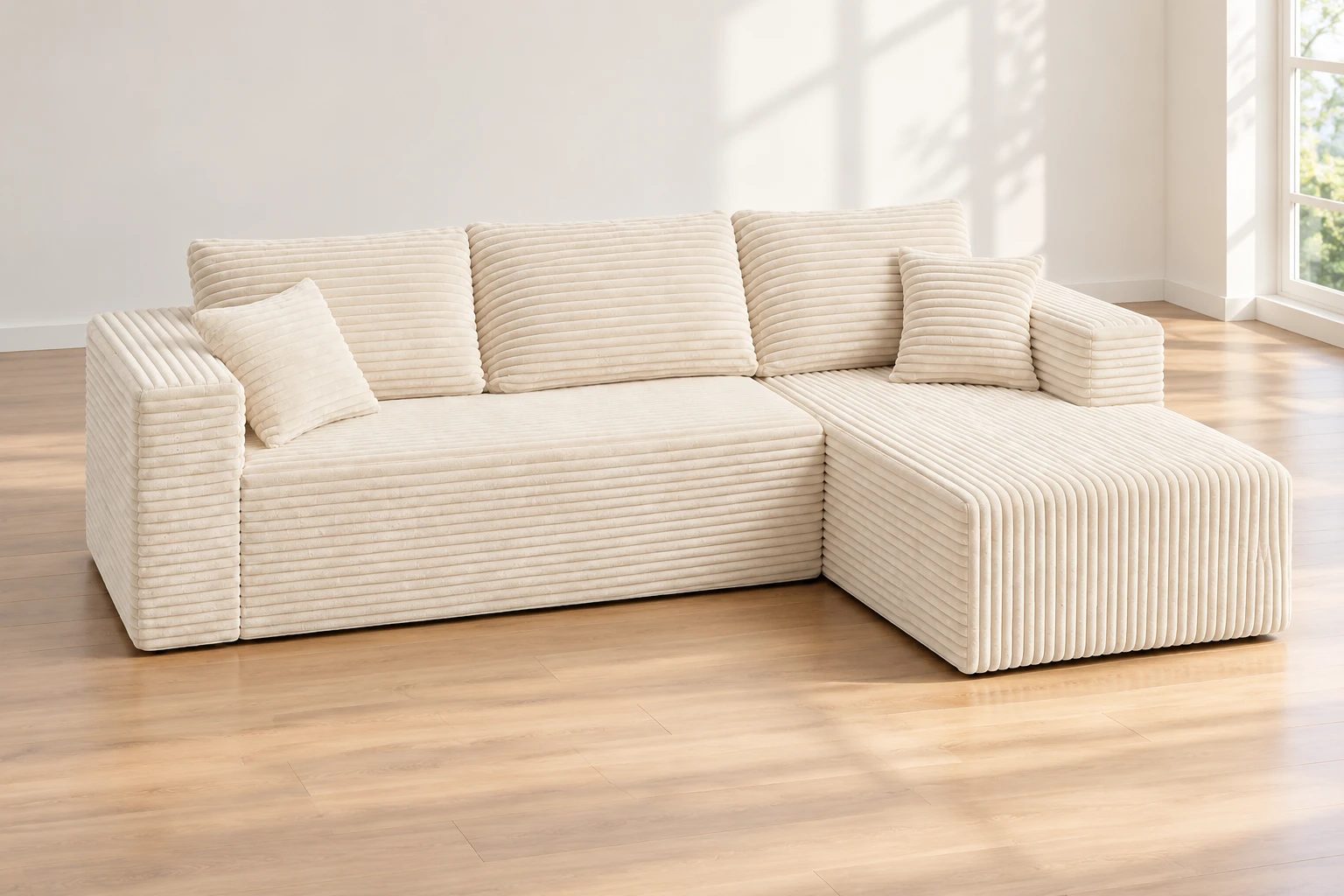
Flexible foam has a cellular structure that deforms under pressure and recovers after release. Cover patterns can include about 0.4 to 0.8 inch (1 to 2 cm) of expansion allowance to accommodate that movement. Watch the foam outline and fabric folds separately, with back cushions in their normal positions. The physical edge shows shape recovery; the cover shows surface settling.
The foam is formed and stabilized before it becomes a sofa. Production includes a 24–48-hour curing stage before later shaping and upholstery work. That is a manufacturing step, not a second countdown you need to add after delivery. Your at-home 72-hour window starts when the packed restraint is released.
Development also checks how a finished design behaves after time in its packed state. Some material-change trials hold samples compressed for about 30 days, then examine the recovered foam and fitted cover. That checks a different question from a quick unpacking video: whether the seating profile returns after being held small for transport. Your at-home task is simpler: release the restraint, position the sections and let the finished body settle.
Check the outline before the surface
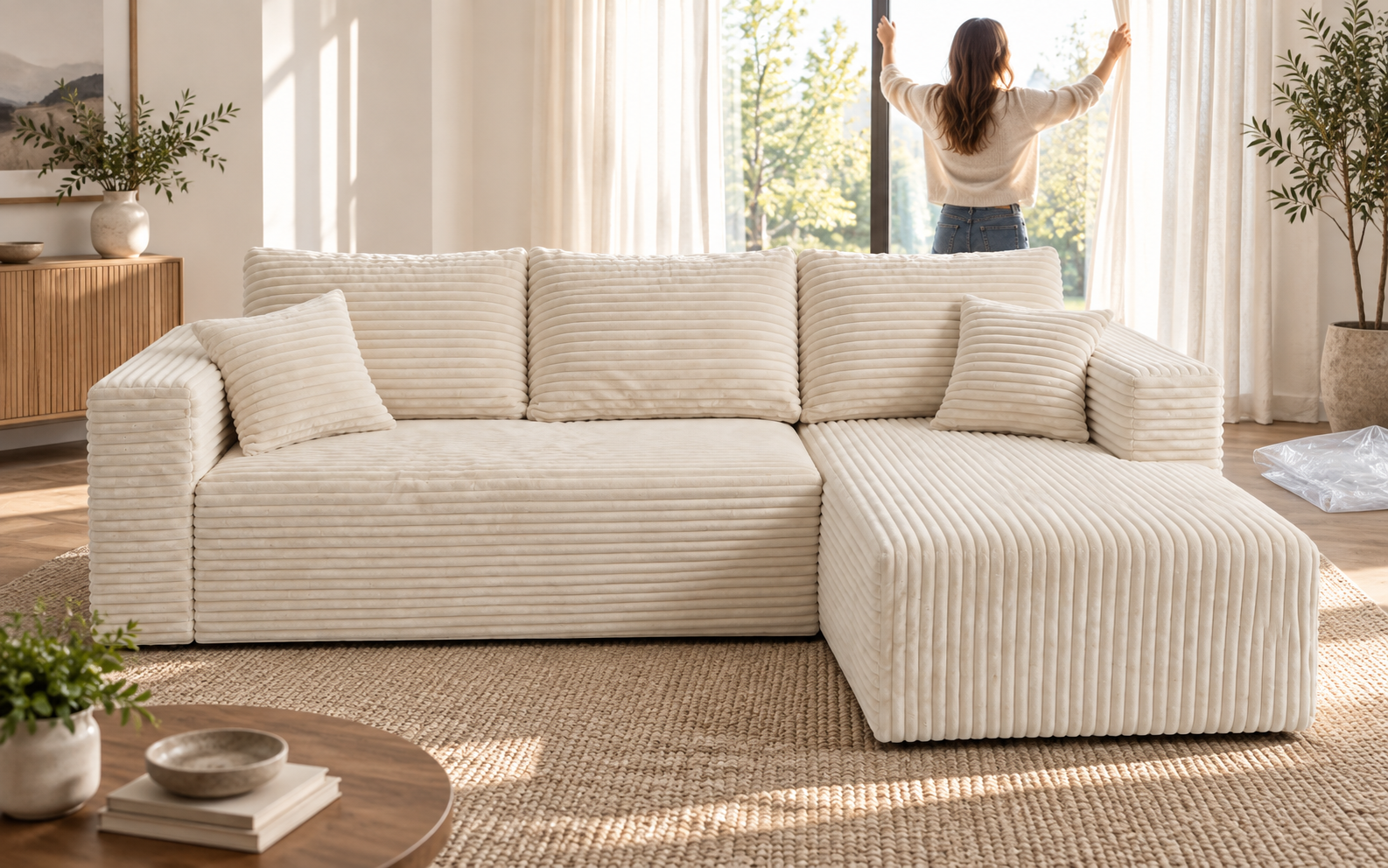
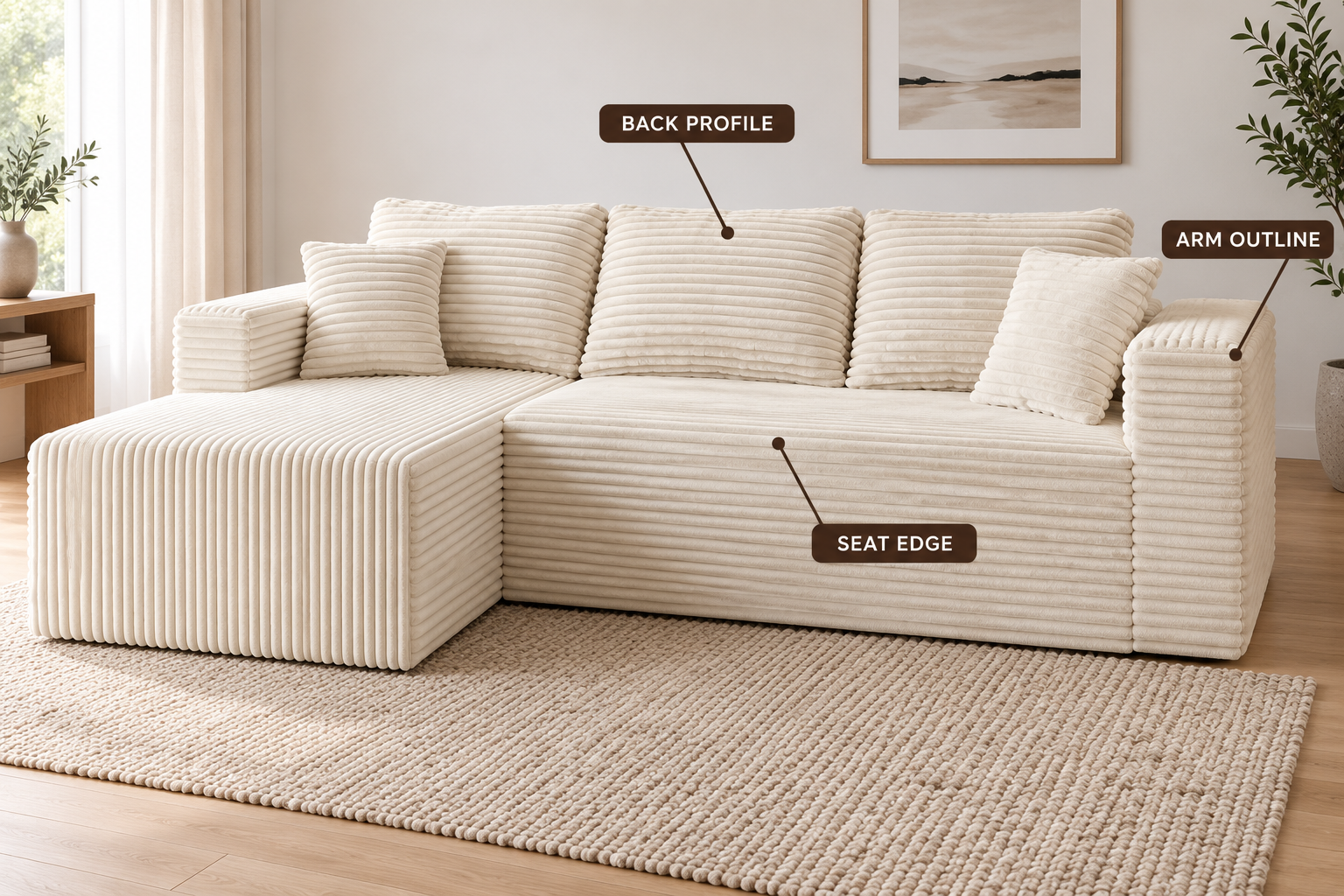
Look from seat height along the front edge. Compare matching corners of the same section while the sofa is unoccupied. A corner rising toward its matching corner shows a change in the cushioning outline. Then look closely at the cover: a fold becoming flatter shows a change in the upholstery.
For a quick progress check, choose one point on the unloaded front edge and measure from the floor to that point. Use the same level floor, cushion arrangement and measuring position at the next check. For example, comparing a 15.5-inch reading with a listed 16-inch seat height gives a half-inch difference to follow. Pair that number with the side view. It helps you describe the changing edge clearly while the arm outline and fabric folds get their own visual check.
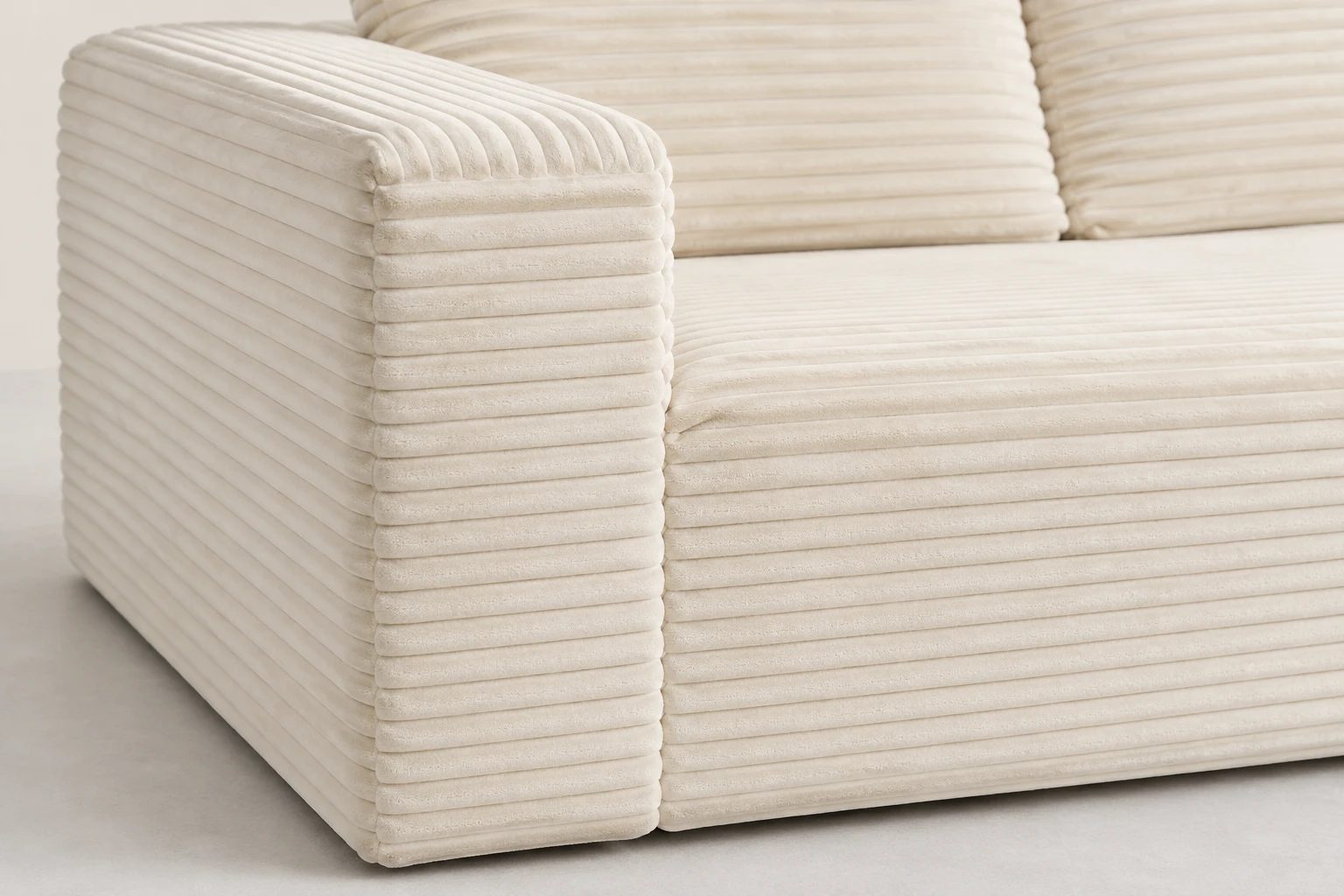
Broad corduroy ribs create light and shadow. Move to the opposite viewing direction and see whether a dark patch changes. Follow the seam or seat edge to judge the physical profile. Place a leaning back cushion normally before comparing it with its neighbor, and check whether an edge is trapped against a box or wall.
For example, one corner looks low immediately after opening. First remove a box pressing against that edge and arrange the back cushion. Photograph the seat unoccupied from the side. If the corner rises at the next check, record that progress. If only a dark strip changes when you walk around the sofa, look at the rib direction and light. Those observations tell you whether you are watching the shape or its appearance.
Compare like parts: the two front corners of the same ordinary seat, or the front edge of a chaise against its own dimension diagram. An ordinary seat and a projecting chaise have different geometry. A leaning loose pillow can also make one side look shorter. Establish the intended arrangement before turning every difference in the room photograph into an expansion problem.
What good recovery looks like
Look for three things together: the seat regains its intended outline, the back returns to its profile, and the cover sits evenly around both. A fast increase in volume is only part of that result. A thick seat, thinner back and rounded arm can settle at different rates, so judge matching parts rather than expecting every area to change at once.
Cover fit matters here. Too much tension can hold an edge back; excess cloth can leave a fold even when the foam below has recovered. This is why precise foam cutting and matched cover patterns belong to the same production process. For you, the useful distinction is simple: follow a seam or front edge to judge shape, and look along the ribs to judge fabric appearance.
A simple final check takes a few minutes. Put the back cushions in their normal positions, remove anything pressing against the sides, and look across the unloaded seat front. Compare its outline with the dimension diagram, then inspect the arms and seams. A remaining wrinkle on an otherwise even body is a surface issue; a persistently low corner is a shape issue. Describe the one you actually see.
Know which next step fits the problem
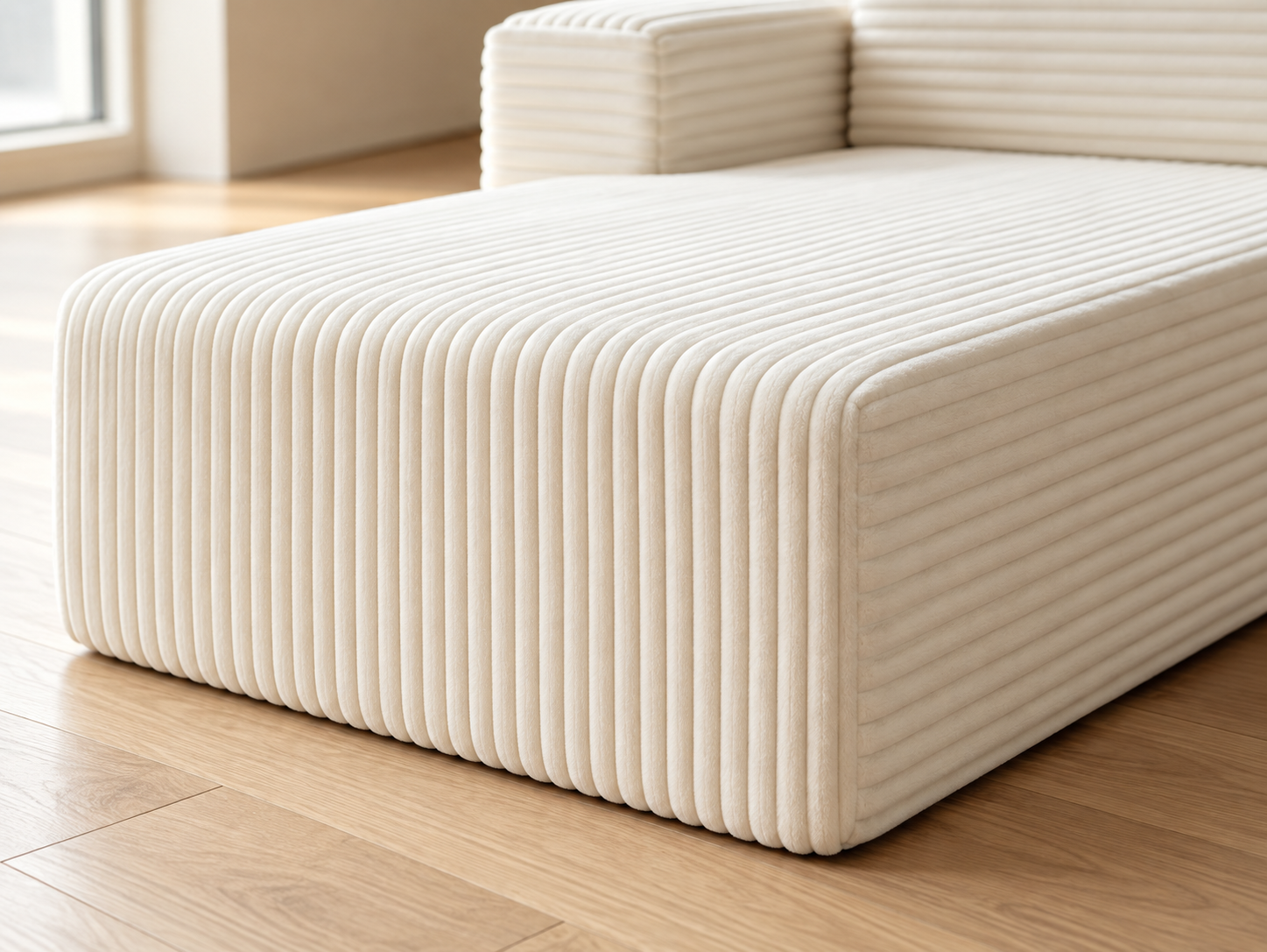
For a section still taking shape, clear trapped edges and continue observing within the stated setup window. For a fold with an even outline, watch the fabric appearance. Report a tear, puncture or wet delivery damage when you find it. Recovery uses released pressure and correct positioning; avoid applying heat, pulling the cover or trying to recompress a section.
If a section remains noticeably uneven at the end of the setup window, send one overall photograph and one side view of that section with your order and opening time. That identifies the problem without requiring a daily photo diary.
After recovery, The L dimensions describe full-size furniture: about 92.5 × 61 inches, with a seat height around 16 inches and ordinary depth around 25.6 inches. Place tables and open doors in that room plan when comparing ULTI ONE compressed sofas.
From the compressed sofa collection
Give the sofa room to expand
Ultione compressed sofas begin taking shape after opening. Allow each section space to settle.