Ultione / Journal
Compressed Sofa Guides
Is a Corduroy Sofa Hot to Sit On?
Understand what makes a corduroy sofa feel warm, how its upholstery layers affect airflow, and how to choose a comfortable seat for your room and routine.
The short answer
What you need to know
A corduroy compressed sofa offers a plush, raised surface. Whether it feels too warm during a long sit depends on the complete upholstery, your clothing, any throw between you and the seat, and the room around it. Judge the first-touch texture and the longer sitting experience separately.
A corduroy compressed sofa offers a plush, raised surface. Whether it feels too warm during a long sit depends on the complete upholstery, your clothing, any throw between you and the seat, and the room around it. Judge the first-touch texture and the longer sitting experience separately.
That is the practical answer to a common shopping dilemma: the ribs look inviting, but will you enjoy them during a summer movie or in a heated apartment? Start with what touches your body, then consider the layers underneath and the conditions in which you actually relax.
Compare soft contact, air passage and sitting support as separate properties. Each answers a different question when you are choosing a sofa for the way you relax.
First touch and a long sit are two different comparisons
The first thing you notice is contact: the pile against your forearm, the softness of the raised ribs and the way the cover feels through clothing. After sitting longer, you also notice the combined effect of the seat, your position and the surrounding room.
Keep both observations. Someone who likes a smooth, crisp surface may prefer a different first touch from someone who wants plush ribs for reading or watching television. Neither preference is answered by the word “polyester” alone, or by a photograph showing a deep channel in the fabric.
When comparing samples, rest the same part of your forearm on each under the same room conditions. When comparing complete seats, use similar clothing and give each a normal sit rather than a quick hand press. Note what you like immediately and what becomes noticeable over time.
| Question | What you are judging | Useful comparison |
|---|---|---|
| Does the surface feel pleasant? | Contact with pile and ribs | Same forearm, same room, actual fabric samples |
| Do I become uncomfortable during a sit? | Complete sitting experience | Similar clothing, posture, duration and room conditions |
| Does air pass through the textile? | Fabric air permeability | Results measured under the same laboratory method and conditions |
| Does the seat support my position? | Cushioning and geometry | Complete sofa with your usual sitting position |
Answer these in order. A soft surface can be appealing even when it is not your coolest-feeling option, and an open textile does not by itself establish the comfort of the whole sofa.
The visible ribs are only the top of the material
Corduroy describes the raised ribbed surface, not a single complete upholstery recipe. The cover also has a ground structure and may include a backing or other bonded layer. Air moving through the face still has to pass through the layers below it.
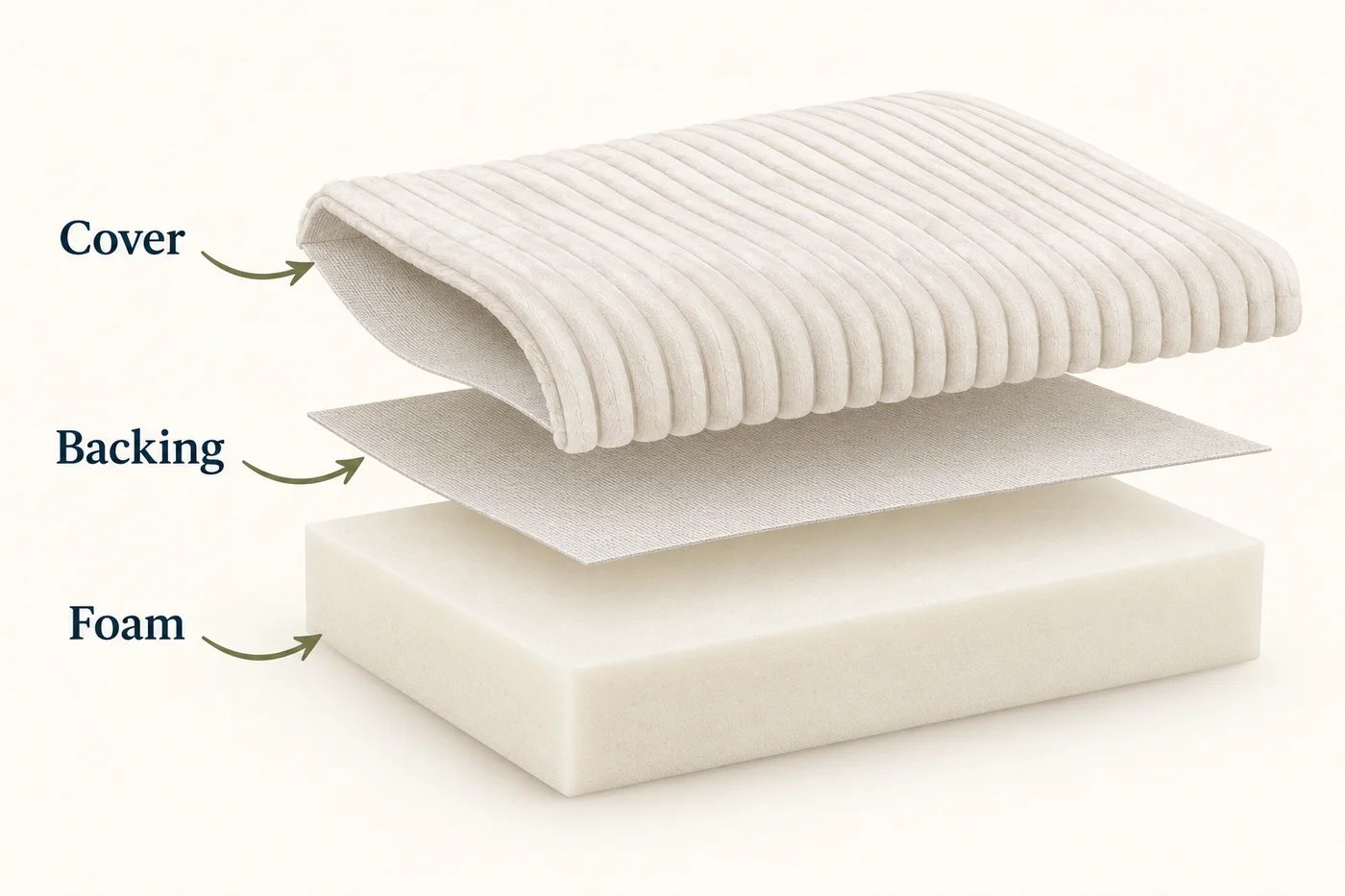
Think of a screen placed in front of another screen. A large opening in the first does not help much if the second blocks that path. In upholstery, the size, continuity and arrangement of spaces through the material matter alongside the visible rib shape.
Backing changes the air path beneath you. In a 2019 experiment on plain-woven polyester upholstery, increasing the acrylic coating from 30 to 90 g/m² reduced average air permeability from 1,699.66 to 1,390.22 mm/s in the coating-only groups, about 18% less air through the same area. The researchers used a 20 cm² test area at 200 Pa. When comparing upholstery for a warm room, include the backing in the construction and airflow information you compare.
This is why “the grooves let it breathe” is an incomplete buying answer. Grooves describe the face. To understand the whole material, look for the actual construction and, where available, an air-permeability result. Compare that result with another measured in the same way.
What a real upholstery study tells us
A 2025 study of four multilayer upholstery textiles reported air-permeability values of 97 and 115 L/m²/s for its two ribbed specimens and 201 L/m²/s for a knitted specimen. The researchers connected the differences to internal structure, particularly the less-open inner layers. For a buyer, the finding is practical: evaluate the complete layered cover, rather than judging airflow from the visible grooves.
The unit means liters of air passing through one square meter per second under the test conditions. The figures describe airflow through each sample at the laboratory's set pressure. Comparing results measured at the same pressure difference, test area and preparation conditions gives you a useful material-to-material comparison.
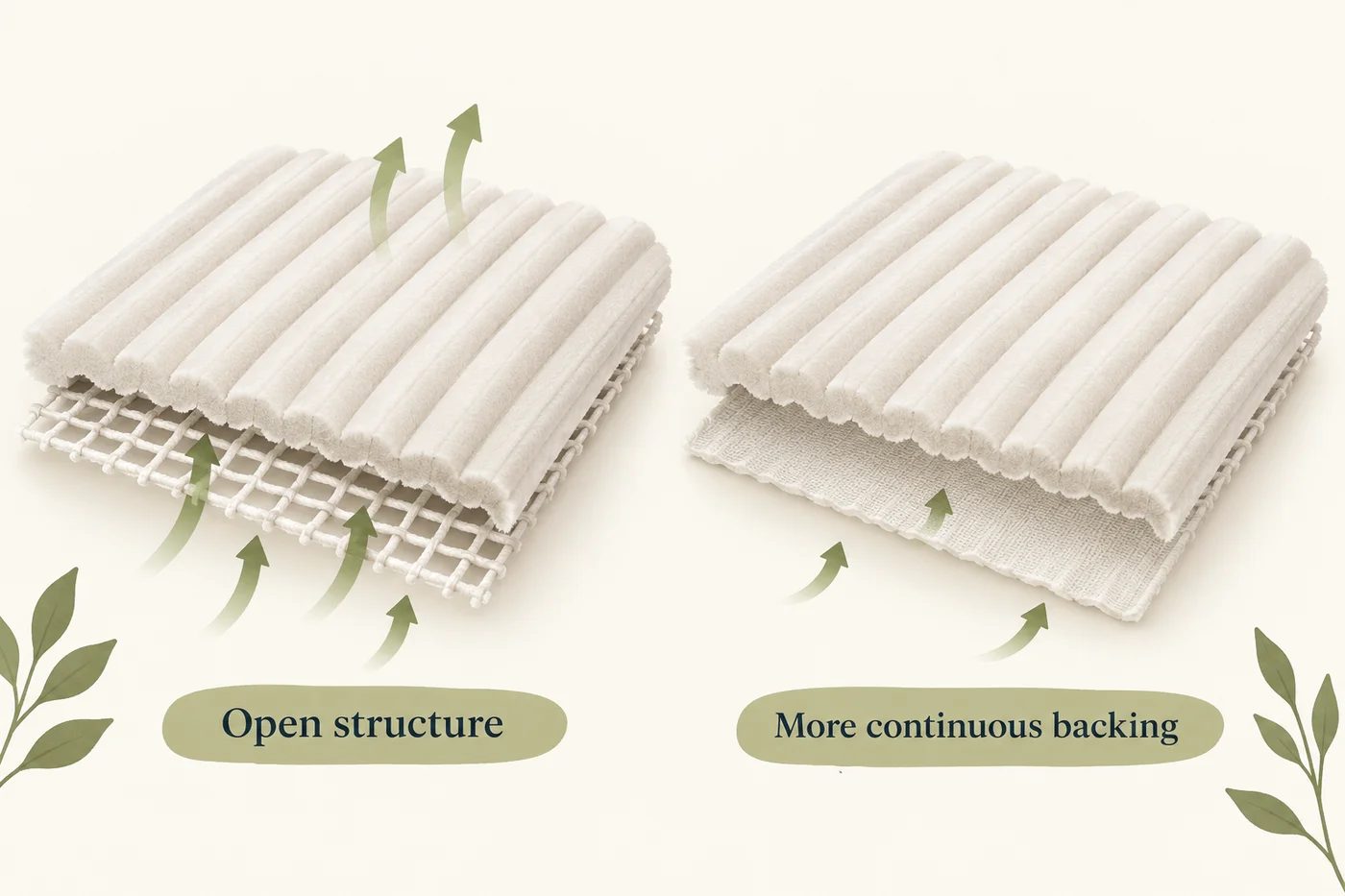
When comparing upholstery, look for information about the complete cover, including its backing. An air-permeability value is useful when the same test method is used for both samples. That gives you a like-for-like comparison of how the two textiles let air pass.
How the cushion and your sitting position affect comfort
Air passes through openings in a foam cushion's cellular structure. The Polyurethane Foam Association's explanation of foam airflow describes how cell openness affects that passage. In a sofa, the cushioning, backing and cover form the layers beneath you. This connects the fabric comparison above to the complete seat you will use at home.
For a useful comfort comparison, wear similar clothing and settle into each sofa in your usual position. Notice the contact under your thighs, against your back and along your arms. A seat that supports an upright posture feels different from one you curl into, so compare the way you will actually sit.
If you plan to stretch out on a chaise for movies, include that position in your comparison. More of your legs will rest against the upholstery than when you sit upright. Bring your usual throw into the comparison too, because it becomes part of the surface touching your body. The next section shows how to compare that extra layer.
Compare your usual throw with the bare upholstery
An extra layer changes what touches you. A thick knitted blanket, a thin flat throw and the bare upholstery give you different contact surfaces. If you always cover the seat, include that layer in your comfort comparison instead of judging the sofa underneath in isolation.
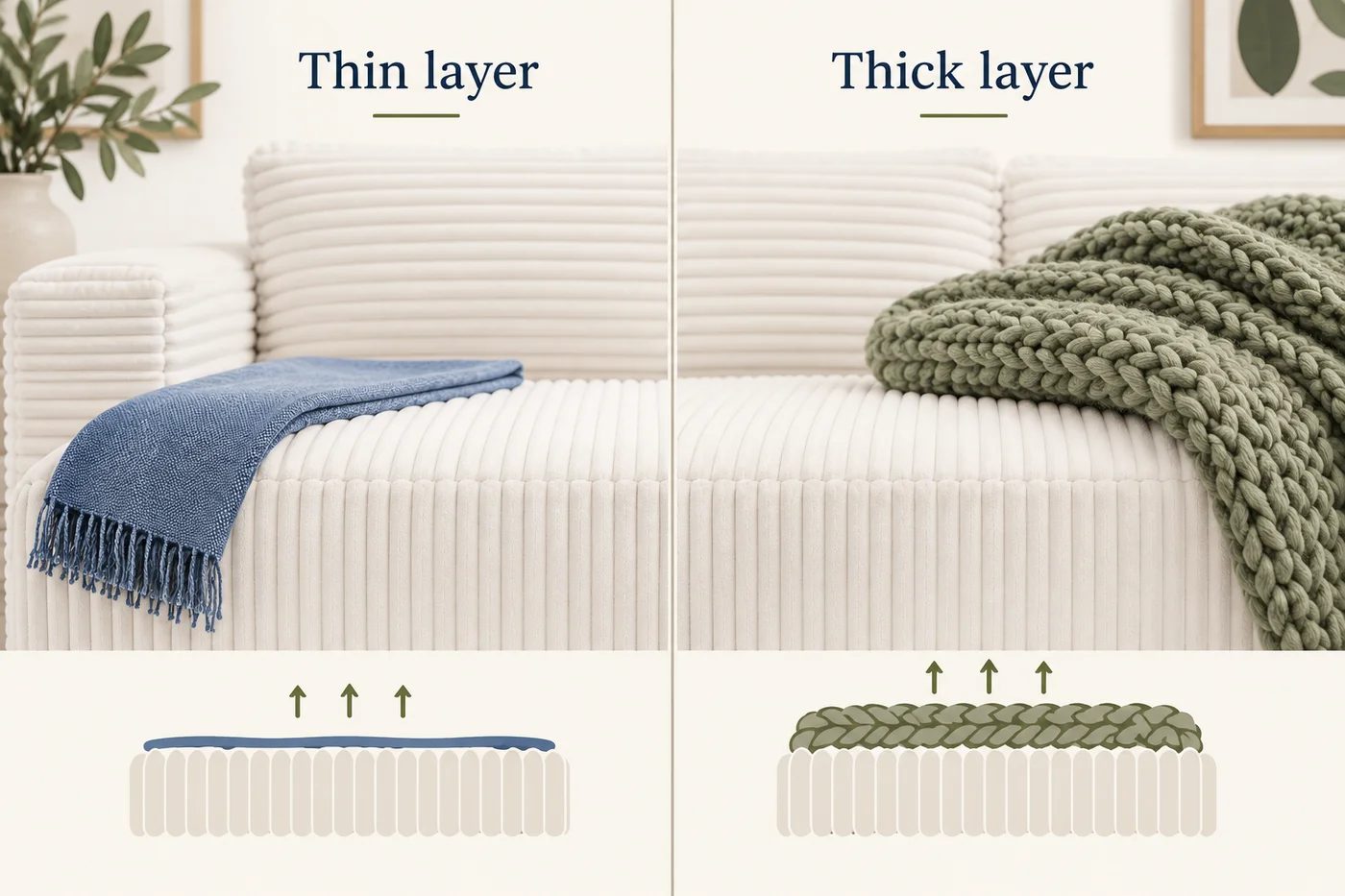
Start with the seat as supplied. On another comparable occasion, use your usual throw and keep the other conditions similar. Note whether the extra layer improves the feel you wanted or makes the sitting experience less pleasant. Change one thing at a time so the result means something to you.
Keep cleaning practicality in the decision too. A separately washable throw can be convenient for a favorite resting spot, but it still has to feel good during the way you use the sofa. A heavy cover chosen only to protect the seat may undermine the light contact you wanted in a warm room.
Your room can change the result more than a fabric label suggests
The UC Berkeley CBE Thermal Comfort Tool includes air temperature, surrounding radiant temperature, air speed, humidity, clothing and activity among its inputs. The relevant lesson for sofa shopping is that comfort is a person-in-a-room question as well as a material question.
Consider a window-side seat. Direct sun can make that location feel different from the shaded part of the same room. If the sofa receives a strong afternoon beam, compare it with the shade in its normal position. If you usually use a fan, include that normal air movement rather than evaluating the seat in an unusually still room.
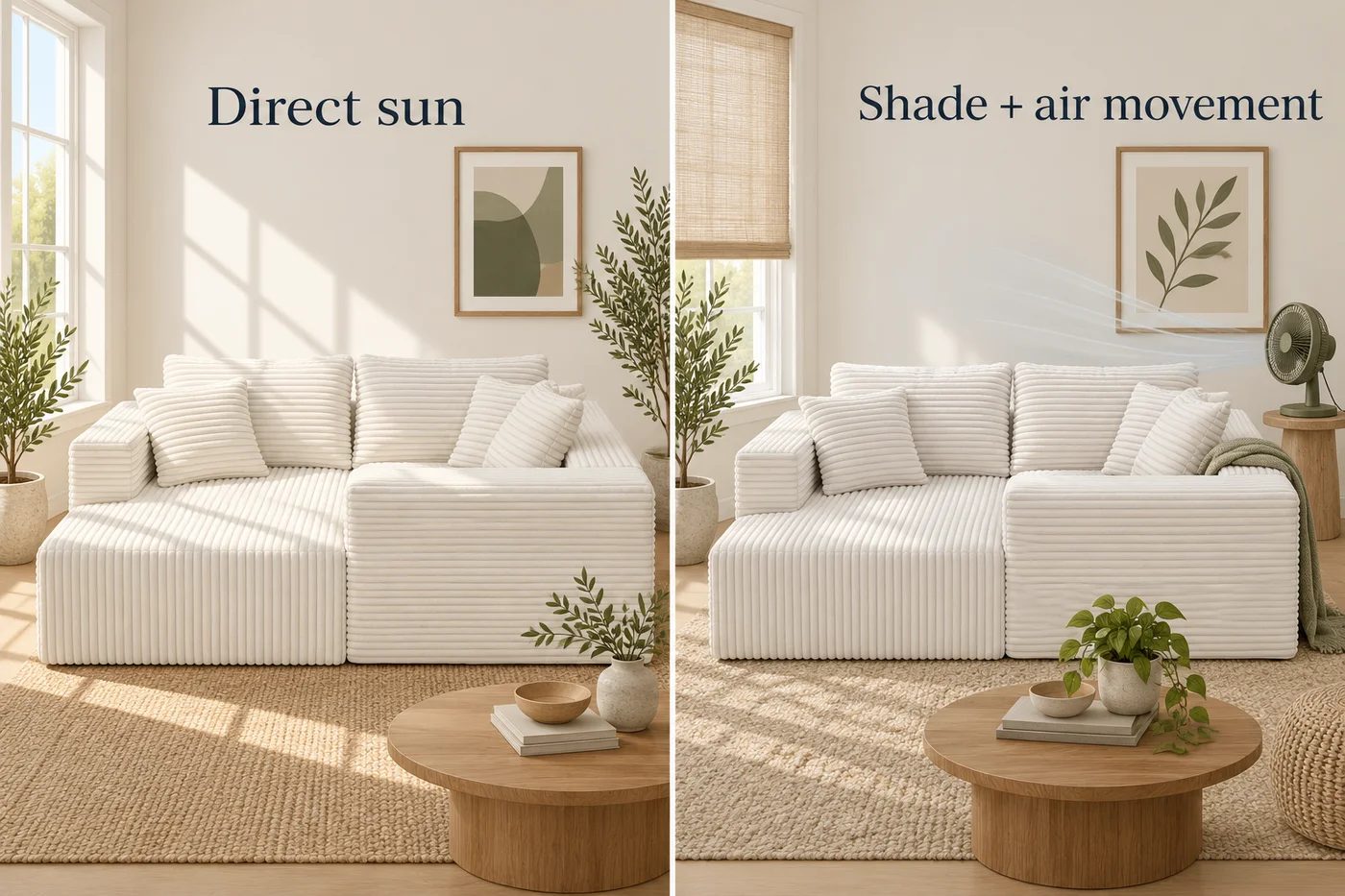
In a U.S. or Canadian home, the same lounge can have very different seasonal conditions: air conditioning in summer, heating in winter, and changing sunlight through the windows. Choose for the room you use most often. A cozy surface can be exactly what you want for an evening reading spot while a strongly sunlit corner needs attention to placement and shading.
For the appearance of a bright window-side seat, our fabric-fading guide covers light exposure. That is a separate decision from how warm the seat feels during today's sit.
Use a simple, repeatable comfort check
You can learn more from a consistent ordinary sit than from collecting unrelated fabric numbers. Choose a normal activity, such as reading a chapter, and keep the comparison focused. Record the cover, clothing, throw, sunlight and air movement. Then describe what you actually noticed.
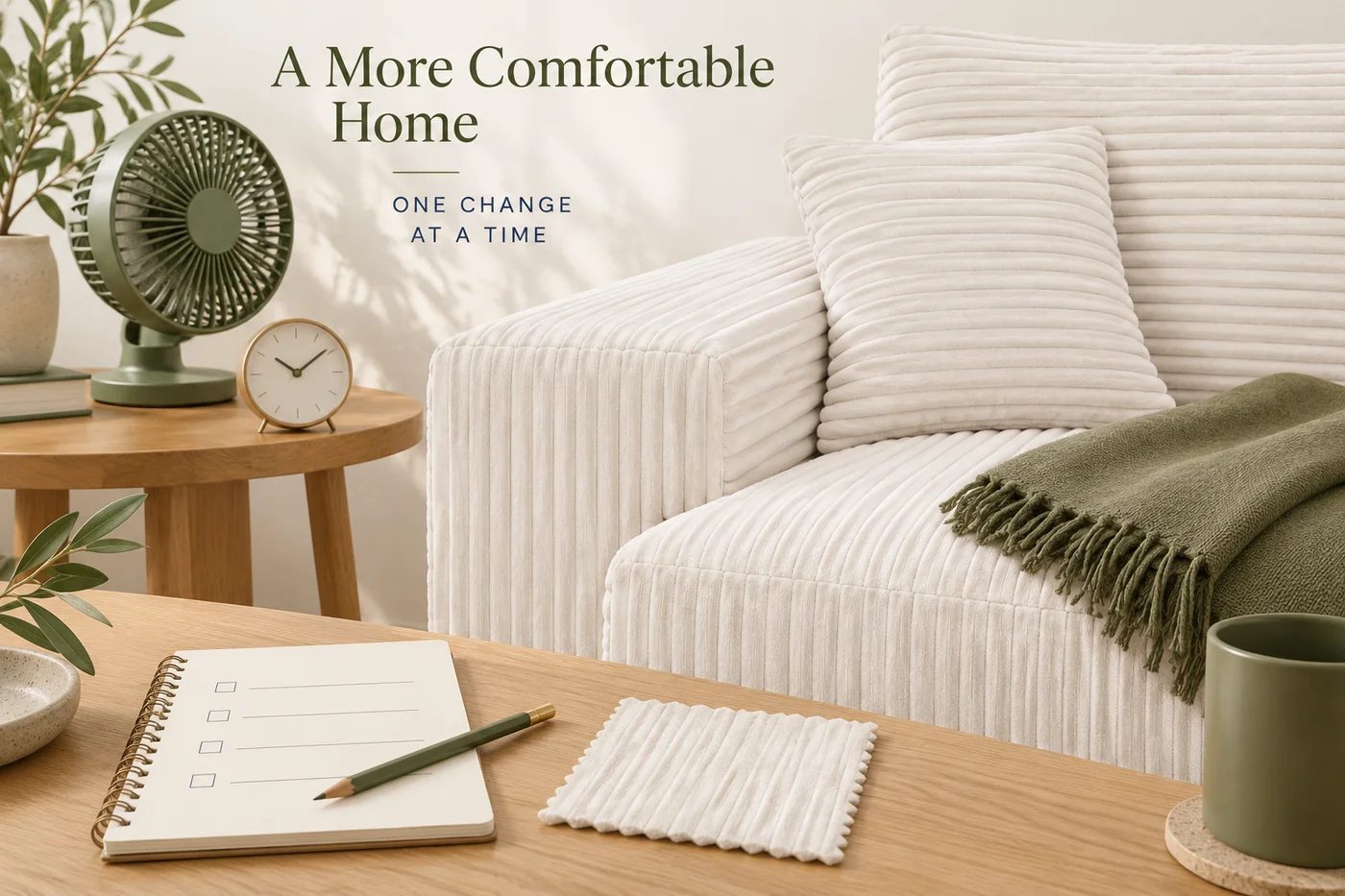
Try this sequence when comparing a seat or a fabric candidate:
- Begin with the surface. Note whether the pile feels pleasant against your forearm and through your ordinary clothing.
- Use your real position. Sit upright, recline or use the chaise as you normally would.
- Keep the room ordinary. Record direct sun, shade and your normal fan or cooling setup.
- Compare an extra layer separately. Add the usual throw on a comparable occasion, rather than changing the blanket, clothing and sunlight together.
- Write down the decision. Identify whether you disliked the contact texture, the extra layer or the location during a longer sit.
For example, if you like the bare upholstery but become uncomfortable only under a bulky blanket, start by changing the blanket. If both versions feel unpleasant in strong sun, compare the shaded location. Those are actionable observations, unlike deciding that every ribbed fabric must feel the same.
Who is likely to enjoy a corduroy sofa?
Shortlist corduroy when you want a plush, visibly textured place to relax and enjoy the feel of raised ribs. Compare a smoother surface when your strongest preference is crisp contact with as little pile as possible. Use the actual upholstery rather than assigning one comfort ranking to every corduroy or chenille fabric.
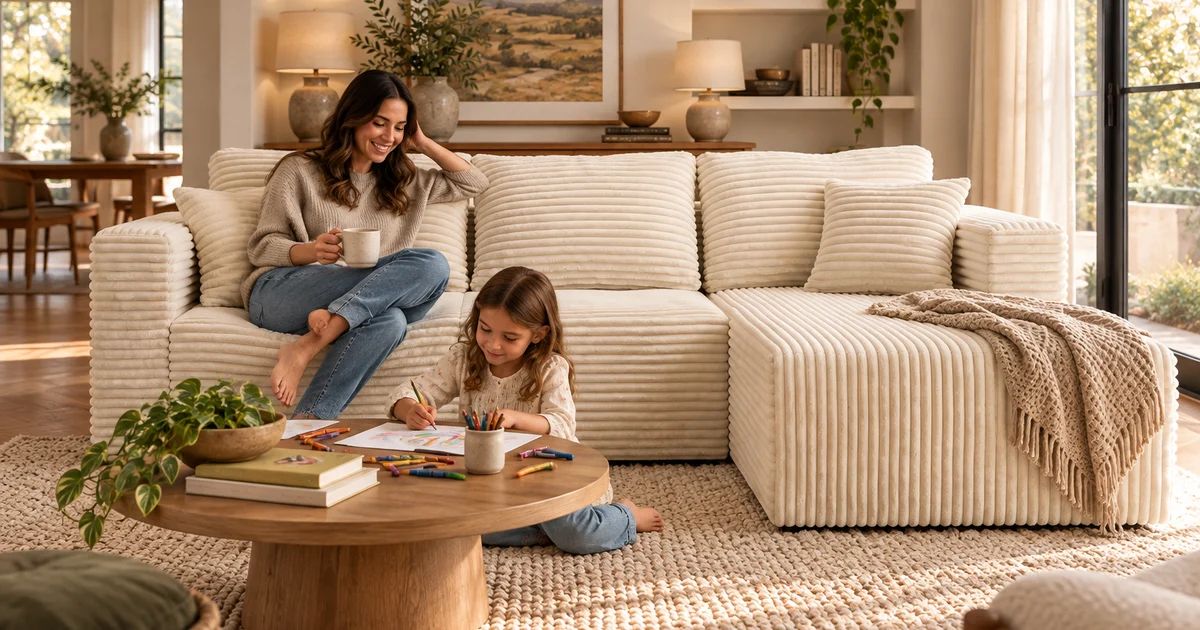
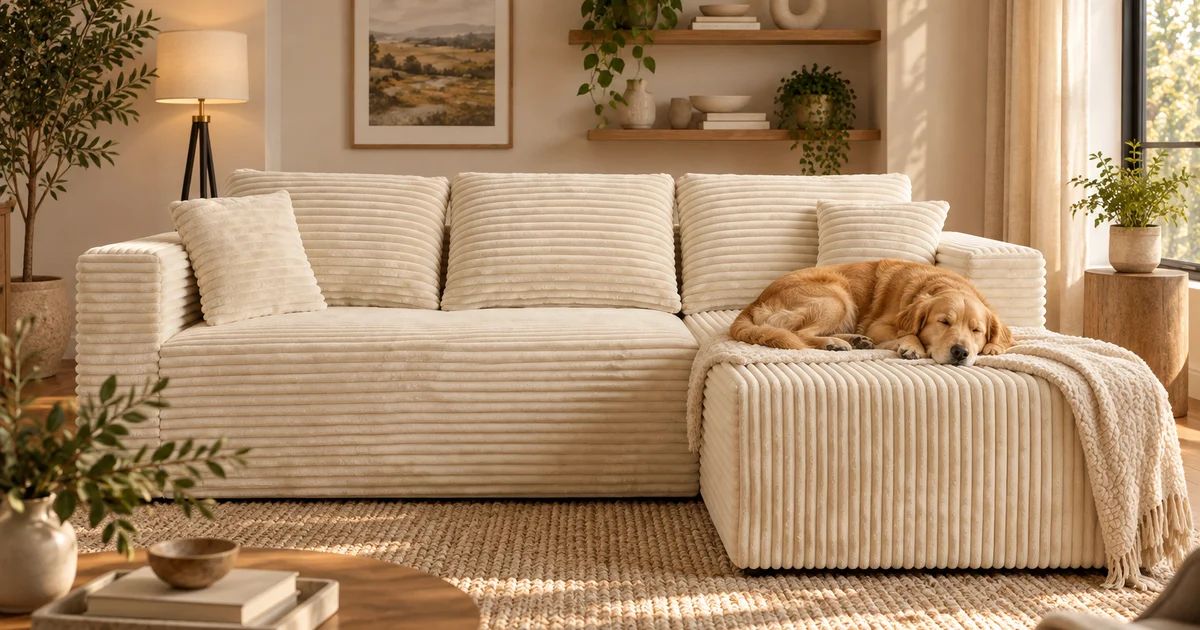
On THE L corduroy compressed sectional, the broad ribs are part of the design, alongside the low block arms and short chaise. Examine the close-up gallery, picture the clothing and throw you normally use, and choose the orientation for your resting position. If that combination matches the way you like to relax, compare THE L's configurations and pick the layout for your favorite sitting position.
 THE L corduroy compressed sectional
If plush corduroy sounds like your kind of comfort, come browse ULTI ONE's compressed sofas. Find a style for your reading, movie or do-absolutely-nothing corner. That last one deserves a good seat, too.