Ultione / Journal
Compressed Sofa Guides
Is a Corduroy Couch Good for Dogs?
See why ULTI ONE's corduroy compressed sofa suits a home with dogs: a plush resting surface, room to stretch out and practical care for a shared couch.
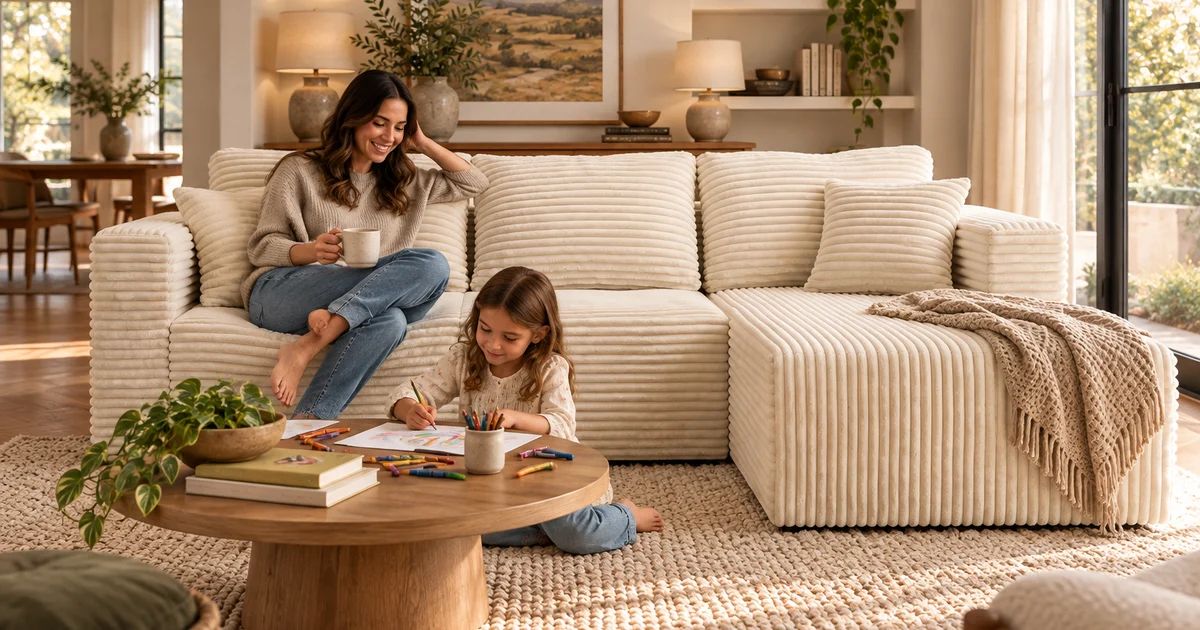
Yes. ULTI ONE's corduroy compressed sofa is a good choice for a home with dogs. Its plush, wide-ribbed fabric gives you and your dog a soft place to settle, while a chaise layout such as THE L creates room for a curled-up companion or an afternoon stretch beside you.
That is the reason to consider it: a comfortable couch you can share. Picture reading with your dog nearby, watching a movie together, or coming home from a walk and taking your usual places. The fabric brings the soft texture; the sectional's shape gives everyone somewhere to lounge.
Here is how those benefits work in everyday life, what the material's wear data tells you, and how to keep that favorite spot inviting.
Quick answer
ULTI ONE's corduroy compressed sofa is a good pick for sofa-sharing dog owners: soft upholstery for resting, a chaise option for stretching out, and a welcoming place to spend time together. Start by choosing a layout with room for both of you, then match the color and care routine to your dog's coat and habits.
Why ULTI ONE corduroy works for a dog-sharing home
A plush surface for curling up
The appeal starts where your dog lies down. ULTI ONE's wide-wale corduroy has soft, raised ribs, giving the resting surface a plush feel. It is an inviting texture for a dog that already enjoys settling beside you, and just as pleasant for your own bare arms and legs on a relaxed evening.
Comfort and company are both reasons dogs seek out a sofa, as Dogs Trust explains in its furniture guidance. A soft shared seat puts those two things in the same place. If your dog is your usual movie-night companion, that is a concrete reason to choose this kind of upholstery.
Space to curl up, stretch out and stay close
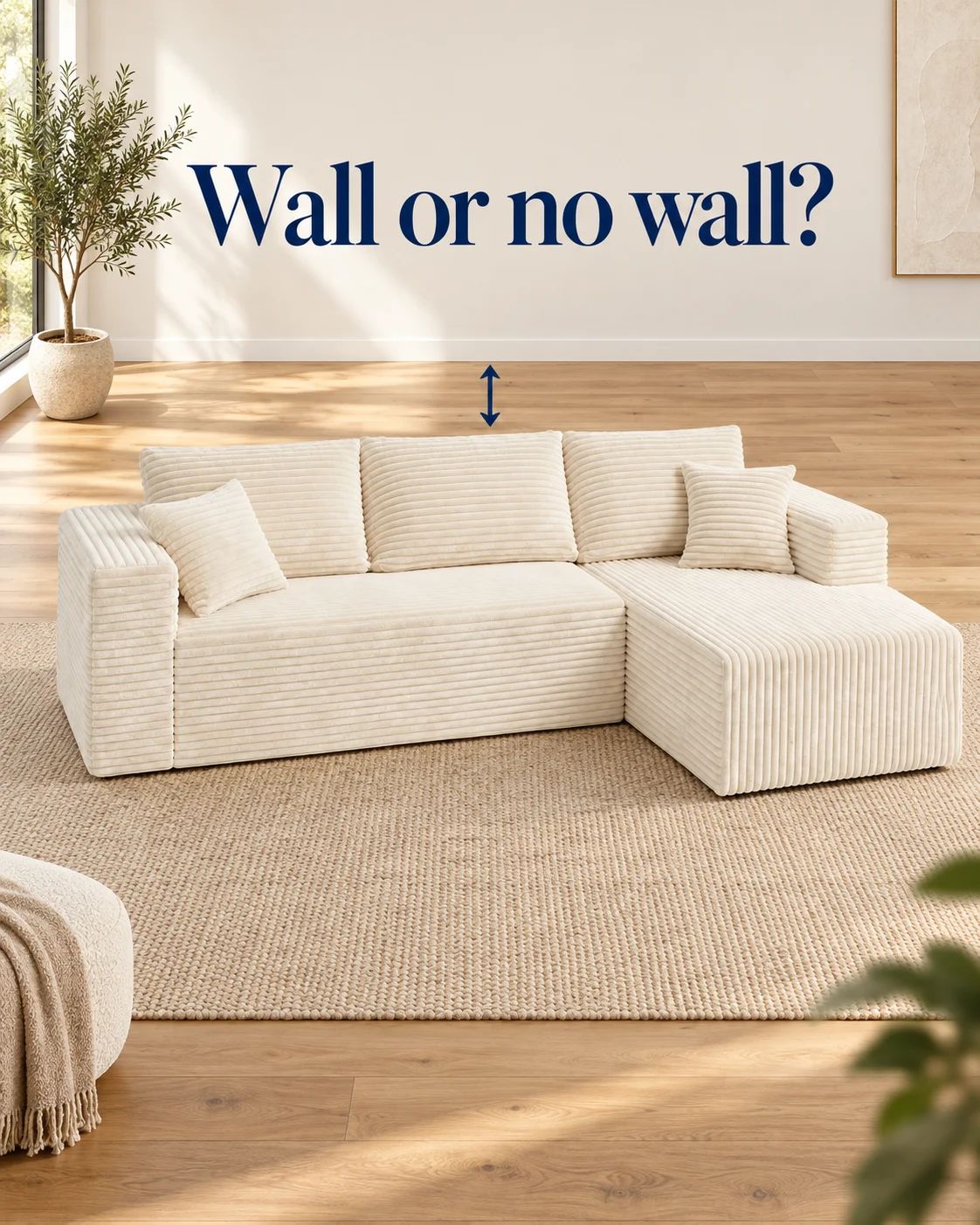
A chaise gives you another way to share the seating area. You can sit on the main section while your dog settles along the chaise, or leave an open spot beside you for a smaller companion. Choose the side that keeps the dog's usual resting place close to you and clear of the room's busy route.
The RSPCA's resting-space guidance recommends enough room for dogs to curl up and stretch into their natural resting positions. Apply that size check to your shared couch: compare your dog's relaxed, stretched-out length with the clear seat space left after you sit down. THE L's chaise is worth considering when your dog likes to sprawl rather than stay in a tight curl.
A shared couch that still feels like your living room
You get the textured look and soft feel of corduroy, with a place for the dog who wants to be part of the evening. A washable throw over their favorite spot gives you a small layer to freshen after walks while leaving the rest of the sofa available to enjoy.
Start with the comfort and space you want to share. Then use the checks below to choose the color, understand everyday wear and set up an easy care routine.
Start with how your dog uses the couch
Watch the moments immediately before your dog lies down. A dog that circles once and sleeps presents a different upholstery challenge from one that claws at the same corner every evening. Body size alone tells you much less about the likely maintenance than these repeated actions.
Write down the main job your current couch needs after the dog uses it. Is it a quick hair pickup, muddy paw marks, a damp patch, or a snagged thread? Start with the problem you already see. A new fabric is easiest to choose when you know which part of the routine you want to improve.
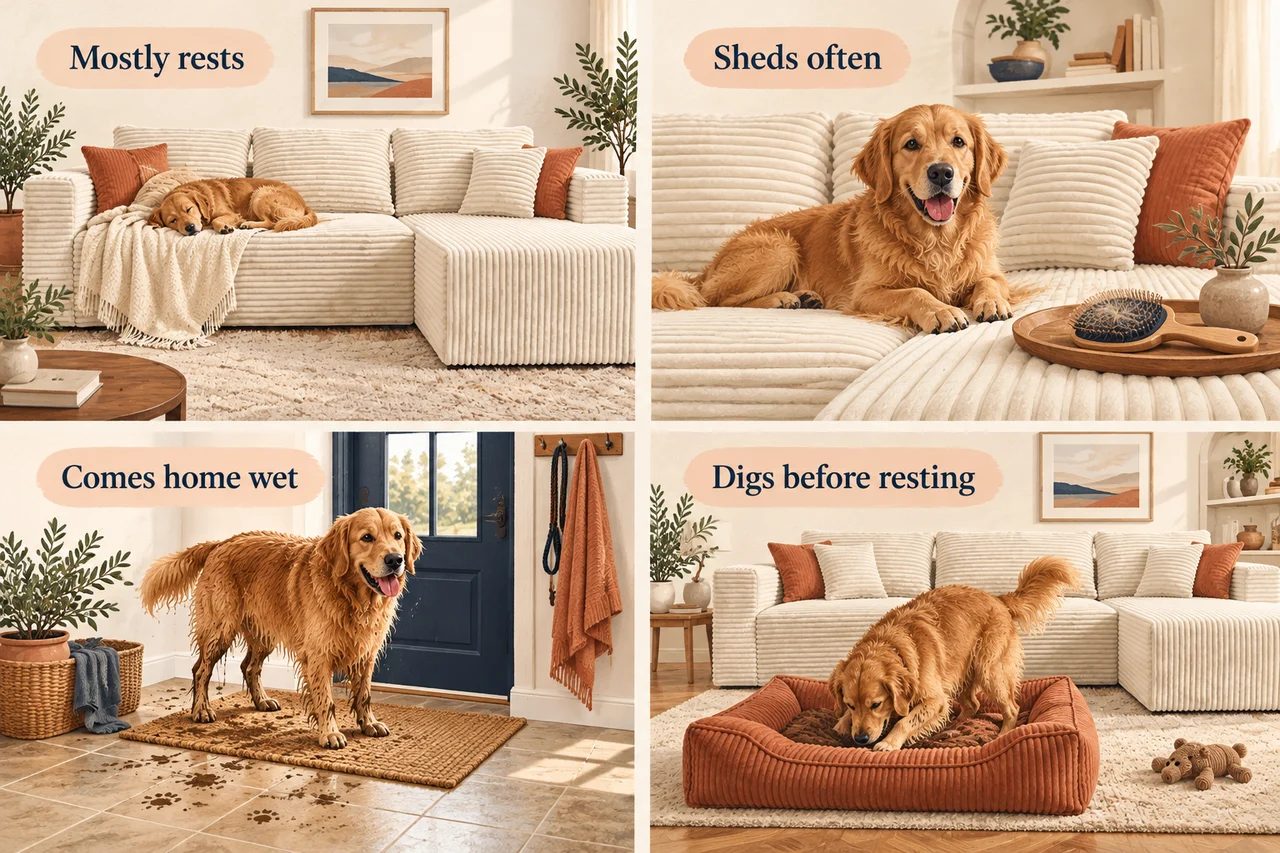
| What your dog does | What to prioritize before buying | A practical setup |
|---|---|---|
| Mostly naps in one place | Surface feel and an accessible hair-cleaning route | A throw over that resting spot |
| Sheds across several seats | Hair visibility, grooves and cleaning-tool access | A color comparison plus an upholstery tool kept nearby |
| Digs or paws repeatedly | Protection at the point of contact and the dog's settling routine | A separate bed or protected resting area |
| Returns with wet fur or muddy paws | Entryway cleanup and a layer you can remove promptly | A paw towel, floor mat and washable throw |
This is also a useful way to divide responsibility in a busy US or Canadian household. Someone may happily vacuum the seat but dislike removing a large cover. Another person may prefer washing a small throw. Choose the routine someone will actually do on a normal weekday.
If you share the couch with both cats and dogs, keep the behaviors separate when making the decision. Our corduroy guide for homes with cats covers the cat-specific side.
Choose a color for the hair you will see
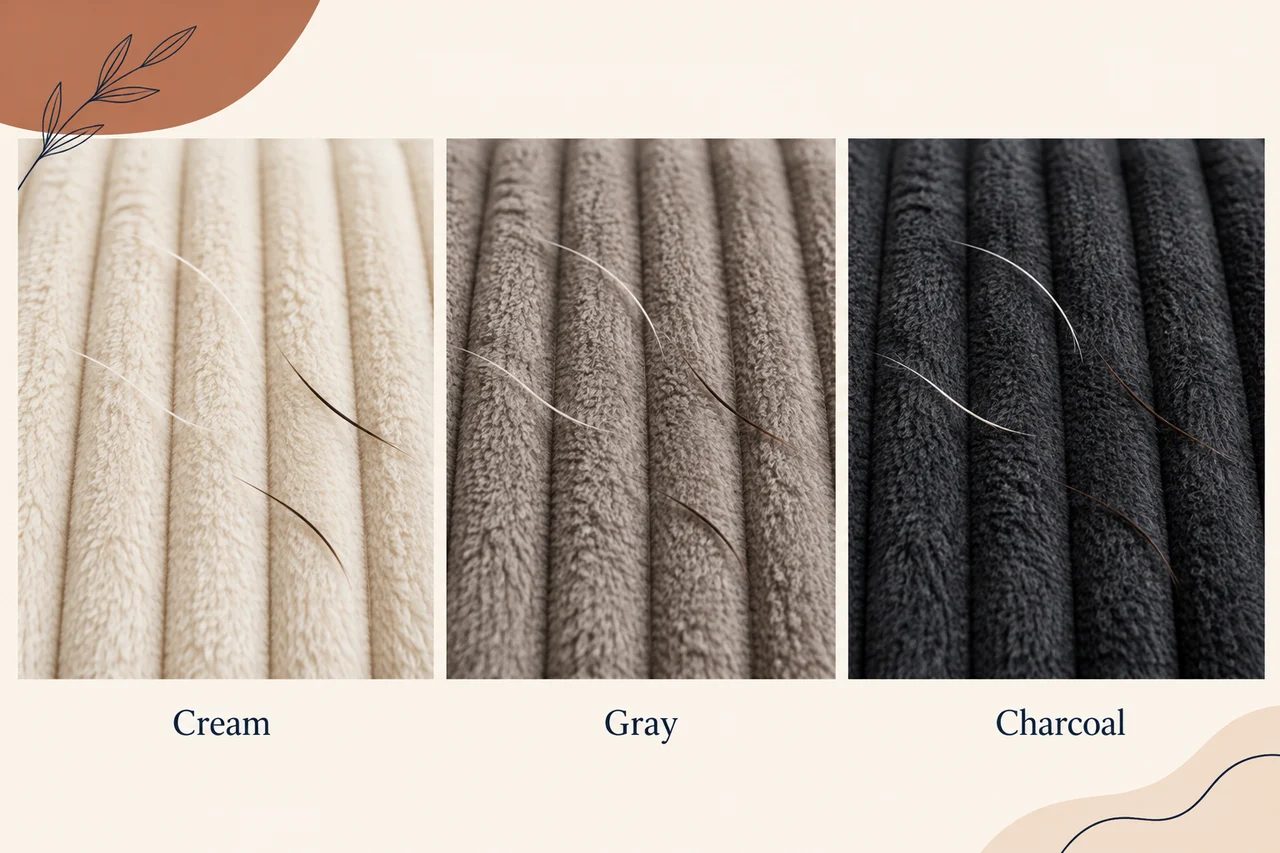
Pale hair stands out against a very dark seat; dark hair stands out against a pale one. With a mixed-color coat, look at both the lighter undercoat and the darker hairs your dog leaves behind. A middle shade is worth considering when you want less contrast, although you will still need the same hair-removal routine.
Wide-wale corduroy has raised ribs with recessed grooves between them. When checking a swatch or a close-up photo, look into those grooves as well as at the tops of the ribs. That is where you need to be able to reach loose hair and small debris with a suitable upholstery attachment.
If a sample is available, put a few hairs from your dog's brush on it and lift them using the tool you expect to use. Look for two things: whether the hair comes away with light passes, and whether the fabric's pile stays tidy afterward. This simple check is more useful for your household than choosing from a distant room photograph alone.
Keep the lighting realistic. Examine the color near the window where the couch will sit and under the room's evening light. A shade you love only in a bright product photo can be harder to judge at home. Our online sofa color guide explains that part of the choice.
Choose a color you enjoy living with after the hair is removed, too. Matching the dog's coat is useful, but the sofa still has to suit the rest of your room.
Read wear data for the dog's favorite seat
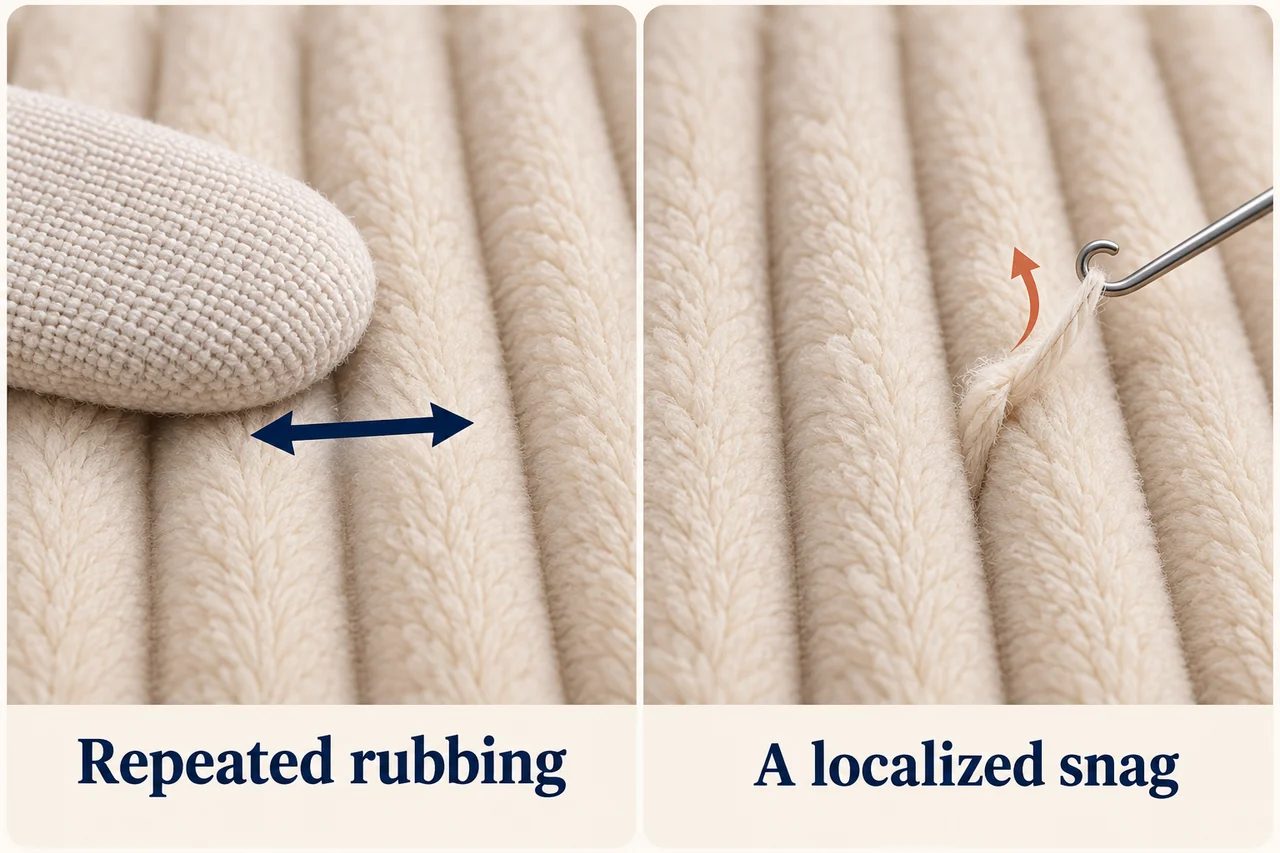
Repeated contact is the relevant starting point for a dog that mostly rests on the couch. The seat is rubbed as the dog shifts, climbs on and settles against the surface. Abrasion information gives you a way to compare this part of fabric performance using a named test method.
The upholstery material record supplied by our factory lists more than 40,000 Martindale revolutions under ISO 12947-2. That is a measured repeated-rubbing result for the fabric sample. When comparing upholstery, put the method, count and test conditions together so you are comparing the same kind of result. For your home, use it to assess the wear demands on a frequently occupied seat.
Surface appearance has its own result. The same material record lists a pilling grade of 4 after 5,000 revolutions. On the five-grade scale, the higher grade indicates less visible pilling. This helps answer a second buying question: how the surface looks under that rubbing stage, alongside whether the fabric remains intact.
The Association for Contract Textiles' woven-fabric guidelines likewise treat abrasion and pilling as separate properties. Read those two pieces of information together when an often-used seat needs to remain both serviceable and presentable.
A claw catching a yarn concentrates the force in a small area. For a dog that paws repeatedly, the useful next step is protecting that contact point and changing where the dog does its settling routine. A broad throw can cover the resting area; a separate bed gives the dog another place to turn and arrange its space. Deal with a loose thread gently rather than pulling it farther from the fabric.
For help identifying a specific surface change, our pilling, matting and snags guide shows what to examine.
Make muddy paws and damp fur an entryway job
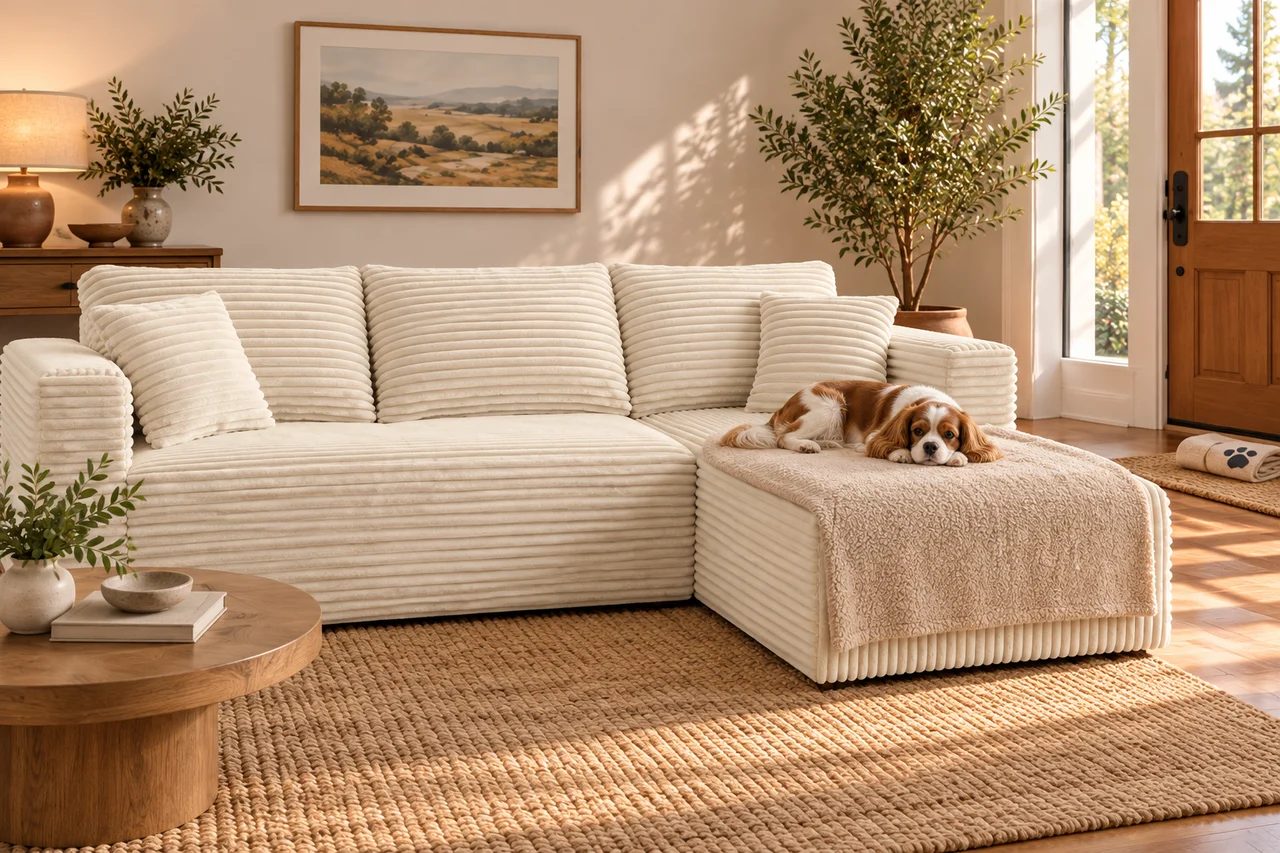
A towel and a mat near the entrance reduce the amount of wet soil that reaches the couch. This is particularly useful during rainy walks or the snow-and-slush season: deal with paws and damp fur before the dog settles on upholstery.
Choose a throw that covers the area the dog actually uses, including the edge where it climbs up. A tiny decorative square may leave the usual contact points exposed. At the same time, the throw should be manageable enough to remove, clean according to its label and put back without making the couch a project.
For drool or a recent liquid spill, begin by absorbing the moisture with a clean white cloth. The American Cleaning Institute's upholstery spill advice favors dabbing over scrubbing and following the cleaner's instructions. Continue with the method specified for the particular upholstery, then let the area dry before replacing the throw.
Separate the throw's instructions from the sofa's instructions. A machine-washable throw makes that small layer convenient to maintain. The sofa cover and inner cushioning have their own care requirements. Before buying, find out which parts come off and how each is meant to be cleaned.
For a puppy still having frequent accidents, a separate resting area is a practical first setup. Introduce shared sofa access as the routine becomes predictable, with the same easy-to-remove protective layer in place.
Keep the cleanup short enough to repeat
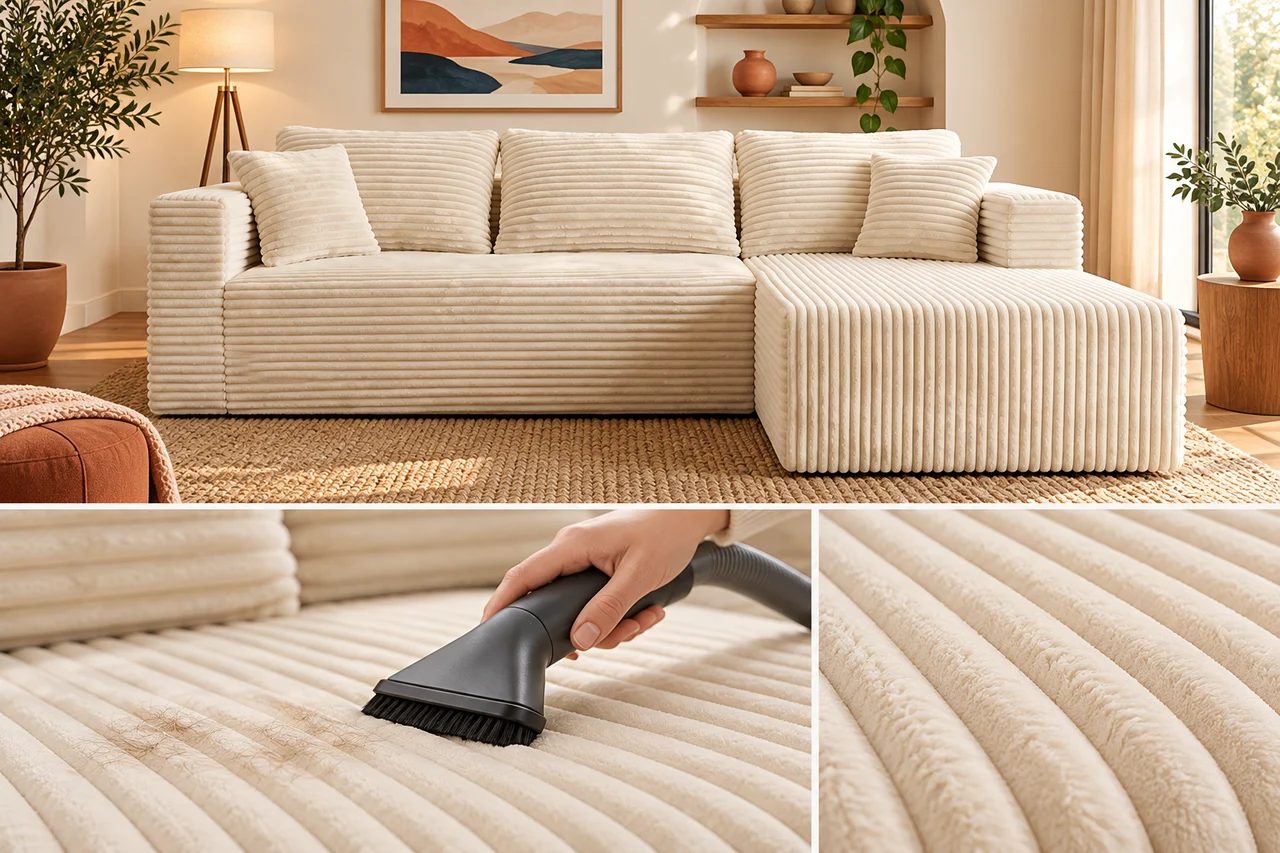
Build the routine around the favorite spot. Lift the throw, remove loose hair, reach the grooves and seams with a suitable upholstery attachment, and replace the layer once everything is dry. Use light passes; extra pressure and repeated scrubbing add work to the surface you are trying to maintain.
Check how the fabric looks after cleaning. If the ribs lie in different directions, compare the area from another angle before treating it as a stain. If you find a loose yarn, keep the vacuum head from catching it and address that small area separately.
The American Cleaning Institute's home-cleaning routine recommends dealing promptly with spills and crumbs and following fabric care labels. For a dog household, the useful habit is doing the small recurring job before hair and soil spread across every seat.
Store the tool where it is easy to reach. If cleanup requires bringing a large machine from another floor, the routine becomes less appealing. A nearby upholstery attachment and a spare clean throw make the everyday task simpler to start.
Our corduroy cleaning guide covers the care sequence in more detail. For the purchase decision, you should already be able to picture yourself carrying out the routine above.
Decide whether corduroy suits your household
Choose ULTI ONE's corduroy compressed sofa when you want a soft, textured place to relax with your dog. The benefit is easy to picture: you have your reading or movie spot, and your companion has room to curl up or stretch out close by.
Build the setup around that shared routine. Choose a color you love, allow enough clear seating space for the way your dog rests, and keep a removable throw at their favorite spot. For repeated digging or puppy accidents, use the separate resting-area plan above while that habit is being addressed.
Take a look at THE L corduroy compressed sectional for a chaise layout you can share. Compare the chaise side, seat space and available colors with the corner where you both like to settle.
 THE L corduroy compressed sectional
Prefer to browse shapes and colors first? Explore ULTI ONE's compressed sofas and find a cozy place for your next night in. You choose the sofa. Your dog will probably choose the best seat.