Ultione / Journal
Compressed Sofa Guides
Is a White Couch a Bad Idea with Kids?
Choose a white or cream family couch with a realistic care plan. Compare visible mess, cover care, everyday habits and the maintenance you want to do.
A white or cream compressed sofa can work in a home with kids when the care routine fits how your family uses the room. It is a good choice for parents who love the look, can respond to spills, and are comfortable keeping the busiest seat protected. A darker color is a better choice when you want less visual attention on everyday marks and would rather spend less time checking the upholstery.
The decision becomes easier once you picture a normal afternoon. Where does the snack go? Where do the crayons live? Who notices a spill, and what can that person clean without taking the whole couch apart?
This guide is about the full-size family couch everyone uses for reading, conversation and movie nights. Start with the amount of upkeep you want, then choose the shade and fabric. That order helps you keep the light-colored room you like while making its daily use practical.
A useful decision rule
Choose white or cream when you enjoy the color enough to maintain it and have a clear plan for spills, loose debris and the favorite seat. Choose a darker shade when visible marks would keep you from relaxing. For either choice, check the exact upholstery care instructions before buying.
Decide what easy to live with means in your family
A family couch needs to fit the habits already happening around it. If snacks are usually eaten at a table and art supplies stay in a separate spot, a light seat has fewer messy activities to absorb. If the sofa is also the daily dining spot and craft surface, expect a more active care routine.
Think about the three messes you deal with most often. Cracker crumbs, a spilled drink and a marker stroke call for different responses. A color choice changes how clearly you see the mess. The material and its care instructions determine how you handle it.
| Your usual afternoon | What matters most | A sensible starting choice |
|---|---|---|
| Reading, conversation and supervised snacks | Loose-debris removal and prompt spill care | White or cream with an accessible cleaning routine |
| Drinks and food on the couch every day | A manageable protected eating spot | A washable throw over the busiest area, or a darker shade |
| Frequent painting, markers or sticky crafts | An activity surface separate from upholstery | A dedicated table before choosing the sofa color |
| Several children using the room while adults are busy | Easy detection and a routine someone can carry out | A shade and care path that tolerate your actual response time |
Consider your own reaction as well. Some parents are happy to straighten a throw and remove crumbs at the end of the day. Others find a small mark distracting every time they enter the room. Both preferences are useful information for the purchase.
For a US or Canadian family ordering online, this is worth deciding before a delivery arrives. A beautiful photograph can help you choose a style; your weekday routine tells you whether you will enjoy living with that style.
Compare white, cream and darker upholstery by what shows
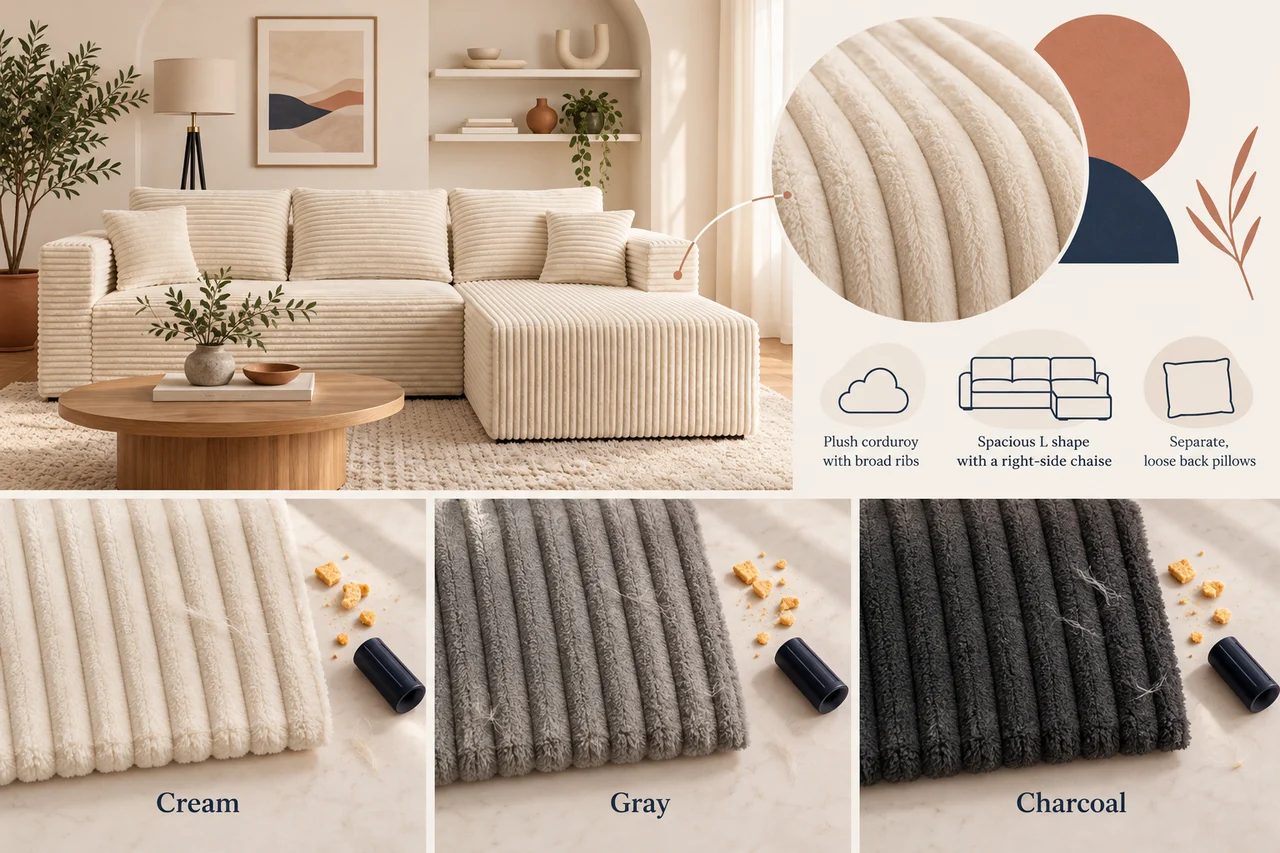
White and cream make dark marks easy to notice. Darker upholstery can make pale lint, light pet hair and some crumbs stand out more clearly. Use those contrasts when comparing colors, rather than assuming one shade will hide every kind of family mess.
Cream is a visual option for a warmer-looking room. It can sit comfortably beside wood, books and textured rugs, but the care decision still belongs to the actual fabric. Check the light shade you intend to buy, not the cleaning claim attached to a different fabric or color elsewhere in a collection.
If you have a swatch, place it beside the things that leave ordinary loose debris in your home, such as crumbs or a pet's brushed-out hair. You can compare visibility without deliberately staining it. Then look at the clean sample in daylight and under your evening lighting to decide whether you like the shade itself.
New dark denim deserves its own attention around light upholstery. AATCC's colorfastness-to-crocking method assesses color transferred from a tested textile to a white cloth by rubbing. That explains the mechanism behind dye transfer. If clothing is still transferring color, keep it from rubbing directly against a light seat while you follow the garment's care instructions.
Our guide to choosing a sofa color online covers screen color, room light and texture direction. Here, the buying decision is whether you want the upkeep associated with the marks you will see most clearly.
Choose the care route before choosing the shade
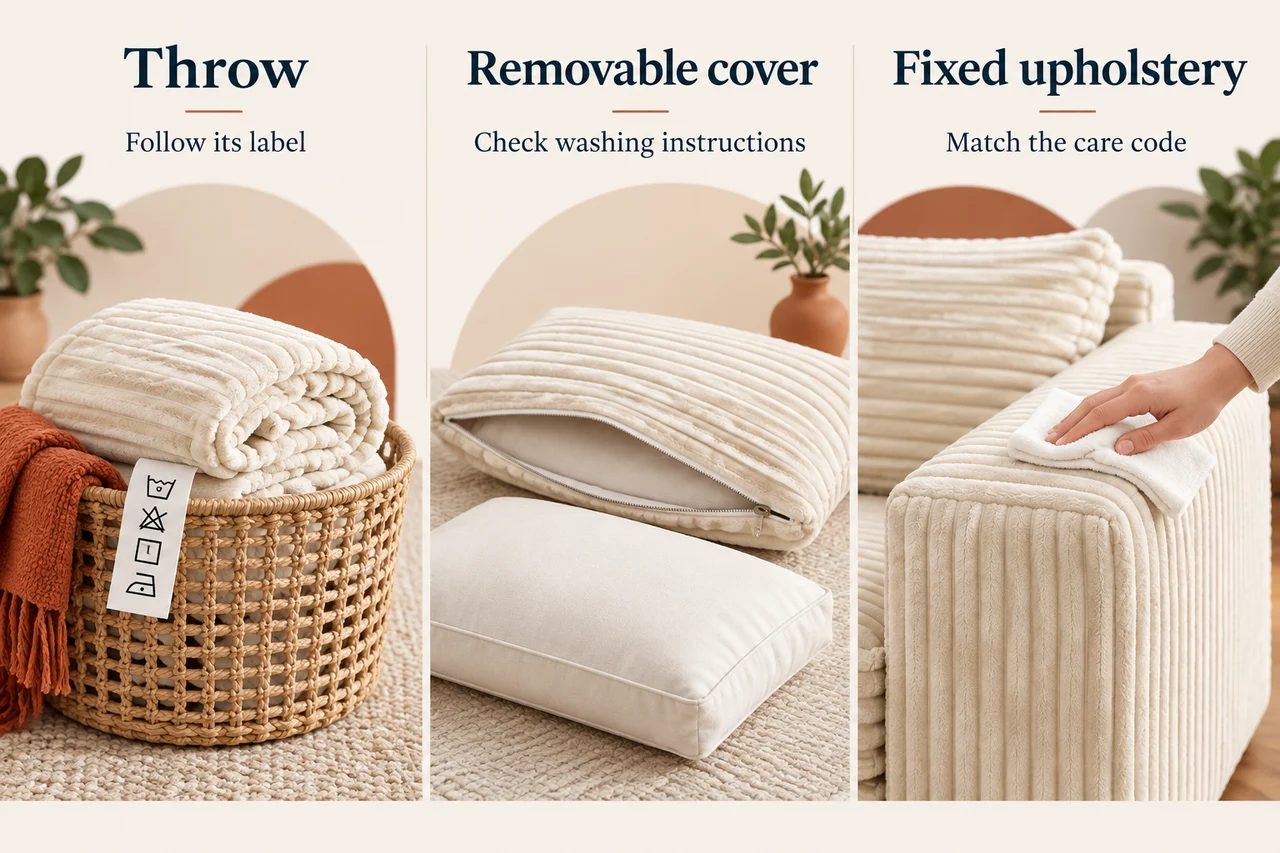
Choose a couch whose routine you can explain before you buy it. You should know which parts are removable, which treatment is allowed, and how the cleaned part returns to use. That makes a light-colored sofa a planned purchase rather than a surprise laundry job.
A small throw is a convenient first layer when the busiest seat gets most of the contact. It can be removed independently and cleaned according to its own label. Choose one you can manage with the laundry equipment and drying space you already have.
For a removable sofa cover, check the washing and drying instructions as well as how it comes off. Find out whether the instruction applies to a loose pillow cover, a seat cover or the main sofa body. A zipper is useful access; the care label supplies the cleaning method.
Wash-approved covers also need to fit again after laundering. AATCC TM135 measures changes in fabric length and width after specified home-laundering procedures. As a worked example, a 2% change across a 100-inch length is 2 inches. That gives a practical reason to follow the specified wash and drying process on a fitted cover: small percentage changes can affect how easily it goes back on.
For fixed upholstery, make sure the local-care method fits the messes your family expects. A sofa maintained by spot treatment can suit a household willing to address small spills promptly. A family expecting to wash the entire outer surface regularly should choose a model with explicit instructions for doing that.
Before ordering, collect three answers in one place: the parts you can remove, the permitted process, and the drying or refitting requirements. The information is useful regardless of whether the final shade is cream, gray or charcoal.
Have a simple response ready for crumbs and spills
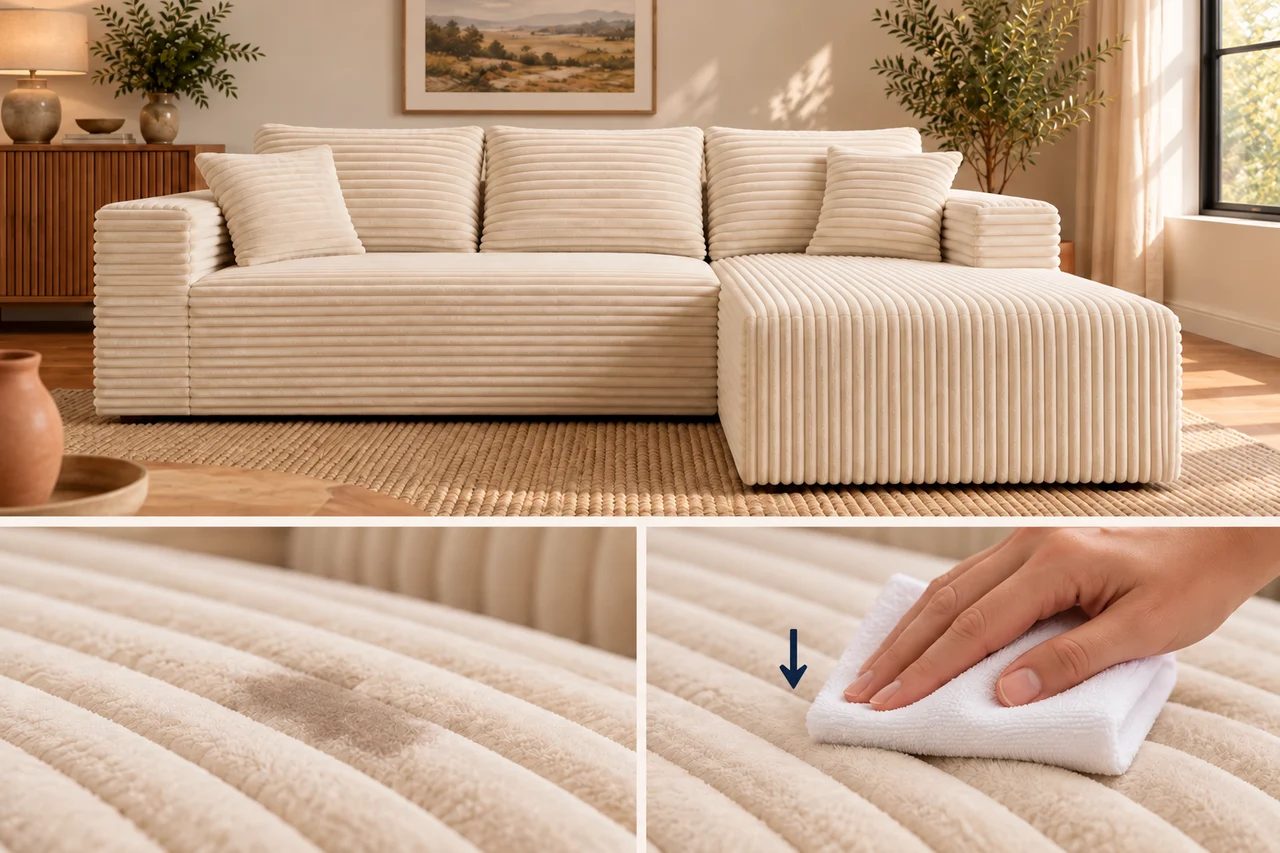
Keep the first response easy. Lift loose food without spreading it, remove crumbs with a suitable upholstery attachment, and absorb fresh liquid with a clean white cloth. Then use the treatment specified for the upholstery and the particular spill.
The American Cleaning Institute's fabric-spill advice recommends dabbing rather than scrubbing and following the product instructions. On a textured seat, gentle handling also lets you see the area clearly without repeatedly pushing the pile in different directions.
A useful small care kit contains clean white cloths, the suitable upholstery attachment and the care instructions. Store cleaning products securely away from children. The advantage of a kit is that the correct tool is available when a spill happens, without improvising a treatment from whatever is closest.
Let treated upholstery dry fully before replacing a throw or sitting on that spot. Then compare it in consistent light. Wide-wale corduroy has raised ribs, so a change in pile direction can alter the appearance from one angle. Check the area before repeatedly applying more cleaner.
For the complete cleaning sequence, use our corduroy sofa care guide. For choosing a family couch, the important question is whether this small, repeatable response fits the way you live.
Make the favorite seat easy to maintain
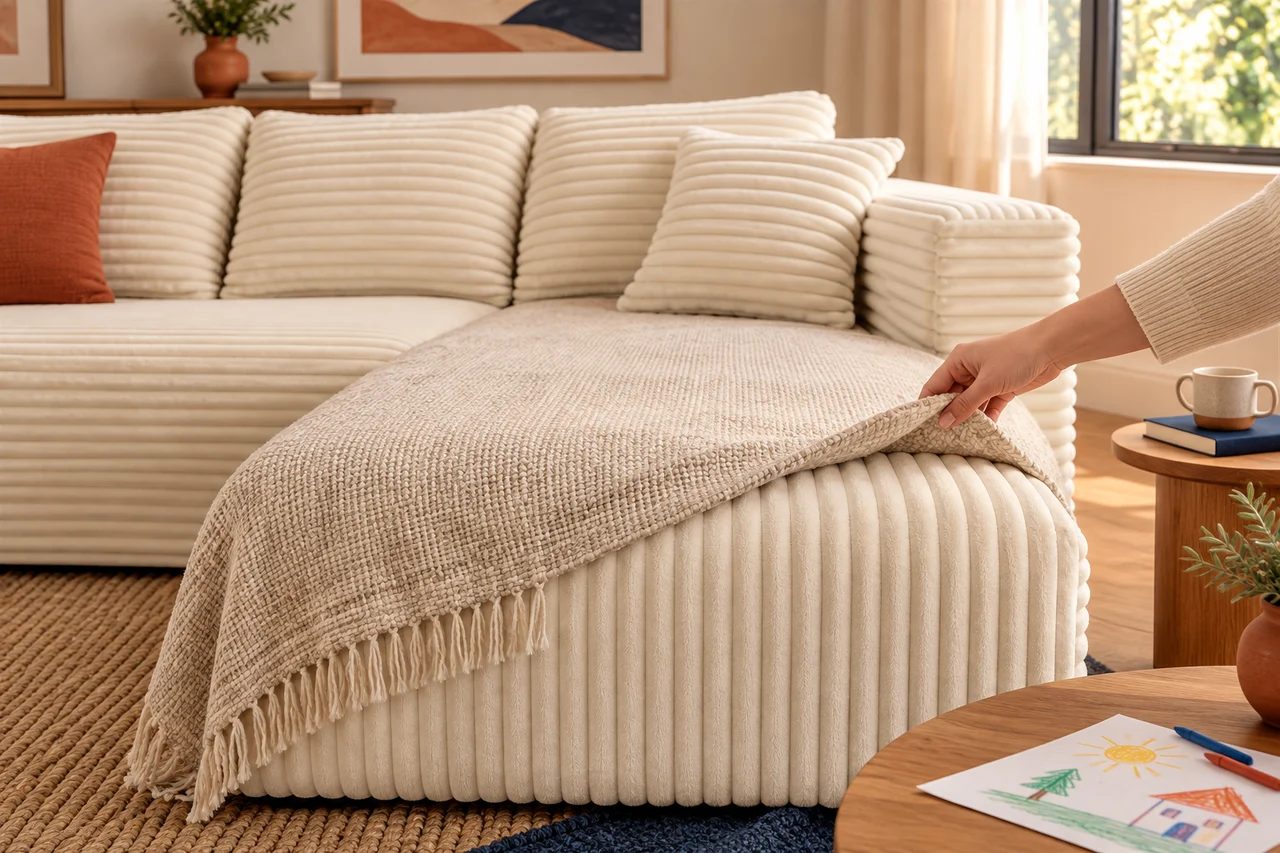
Protect the area that gets the most use. A child may always curl up on one chaise with a book, or the family may share one end during movie night. Covering that specific area can be simpler to maintain than draping every surface.
Choose a throw that lies flat over the contact area and is easy to lift for crumbs underneath. Keep the cleaning instructions with it, and consider a second clean one if the seat is used while the first dries. The sofa remains available without rushing the laundry cycle.
Give drinks and art materials a nearby surface. A tray at a table, a closed cup and a drawing pad provide a clear place for the activity. The aim is a usable family room with fewer messy tasks happening directly on upholstery.
The American Cleaning Institute's home routine includes prompt spill and crumb cleanup. A short end-of-day pass over the favorite seat is a practical way to fold that advice into family life. Look under the throw, clear loose debris and leave the area ready for the next day.
If you are planning the whole room, our family playroom sofa guide addresses the separate layout question. This color decision can stay focused on the contact areas and maintenance you expect.
Choose the version of a light room you will enjoy
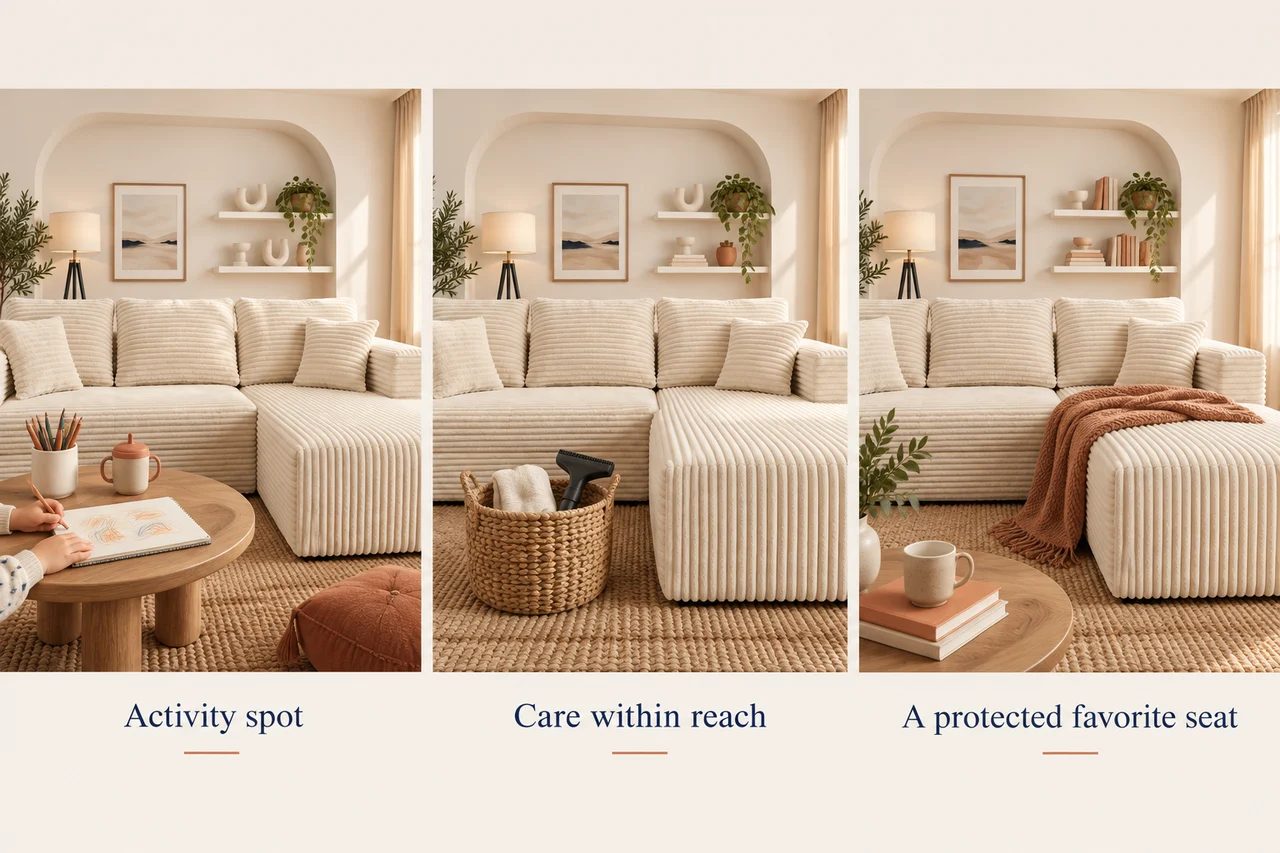
Choose white or cream if you enjoy the look, accept visible everyday marks, and are willing to give the main contact areas regular attention. A protected favorite seat and a clear spill response can make that choice workable without covering the entire room in throws.
Choose a darker shade if a light seat would make you watch the furniture more than enjoy the room. You can still keep a lighter palette through walls, lighting, rugs and accessories while choosing a couch color that asks less of your attention.
For a textured light option, browse THE L's corduroy colors and compare cream-white with the care routine you have just planned. Its chaise gives you a defined area to protect if that becomes the family's most-used seat. Review the exact configuration and current care instructions before ordering.
 THE L's corduroy colors
You can also browse ULTI ONE's compressed sofa collection to compare shapes and colors. Pick the couch you want to come home to, including on an ordinary afternoon when the homework and half-finished books are still out.