Ultione / Journal
Compressed Sofa Guides
Compressed Sofa Fabric Rub Counts: Martindale vs Wyzenbeek Explained
Understand sofa fabric rub counts, compare Martindale and Wyzenbeek correctly, and use abrasion, pilling and strength results to choose upholstery.
A sofa fabric rub count measures resistance to repeated rubbing in a laboratory. For a compressed sofa, it helps answer a practical question: how well does the upholstery handle the friction of sitting, getting up and shifting your weight? Read the number with its test name. Martindale cycles and Wyzenbeek double rubs use different methods, so compare like with like.
You don't need to become a textile buyer to use this information. Start with enough abrasion resistance for the room, then consider the surface you want to touch, how it handles pilling and how you will clean it. That gives you a more useful shortlist than picking whichever listing prints the biggest number.
What is a rub test actually doing?
The tester repeatedly rubs a fabric sample under controlled conditions. Martindale uses a changing rubbing path across the specimen and commonly reports cycles. Wyzenbeek moves back and forth; a complete out-and-back movement is one double rub. These are different exercises for the fabric, not two ways of counting the same exercise.
For example, a sofa advertised at 40,000 Martindale cycles and one at 30,000 Wyzenbeek double rubs cannot be ranked by subtracting their counts. Keep the method next to each result. If two fabrics both have Martindale results, you have a more useful starting point for comparing abrasion.
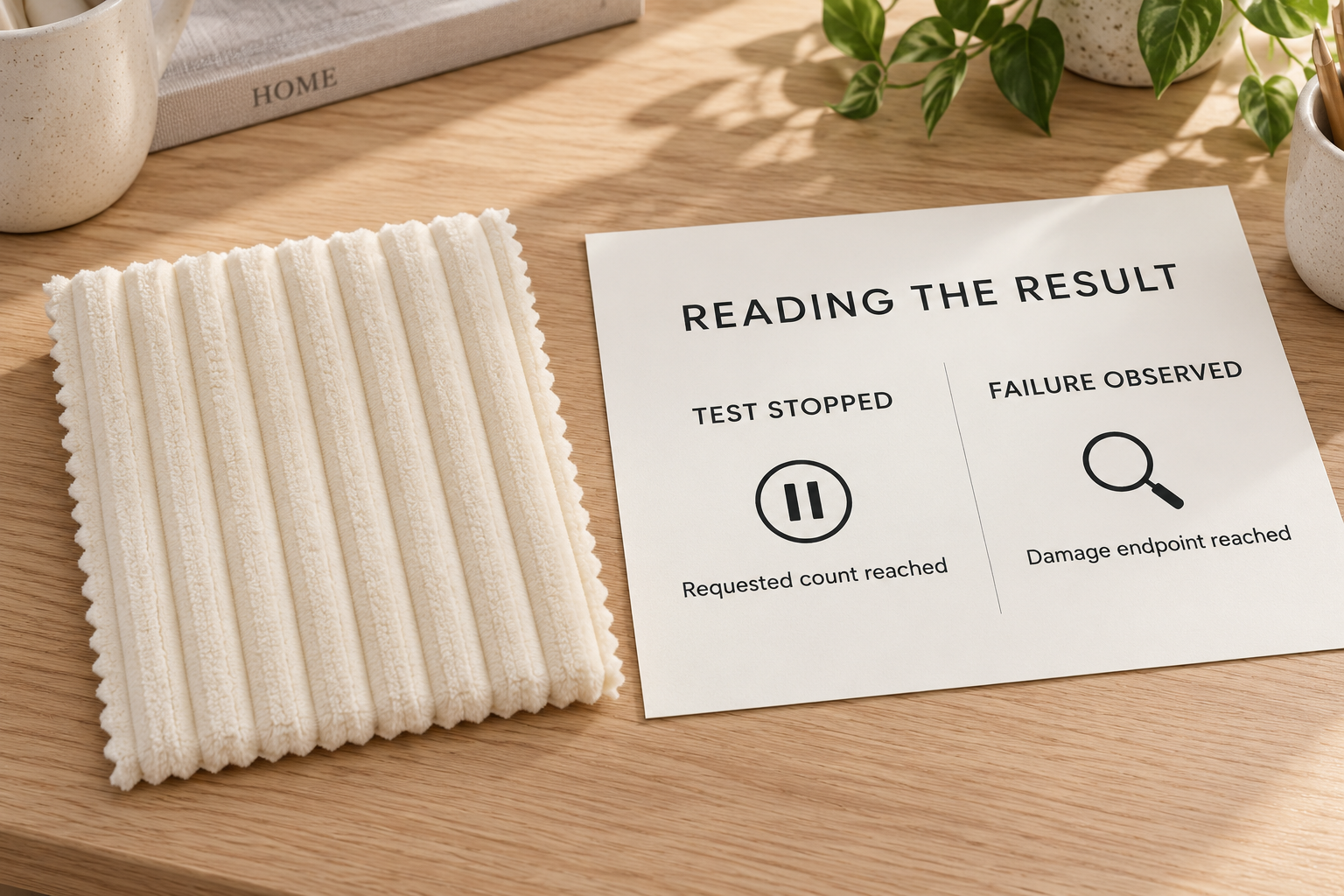
There is also a difference between a test stopping at a requested count and a fabric failing at that count. A result reported as more than 40,000 cycles means the sample passed beyond that assessment point. It isn't the same as saying the fabric failed at exactly 40,000.
Is 40,000 Martindale a useful result for a sofa?
Yes. The Association for Contract Textiles lists 20,000 Martindale cycles for commercial low-traffic/private spaces and 40,000 for high-traffic/public spaces. Its corresponding Wyzenbeek figures are 15,000 and 30,000 double rubs. These voluntary commercial guidelines give a home shopper a useful reference for the level of rubbing resistance being discussed.
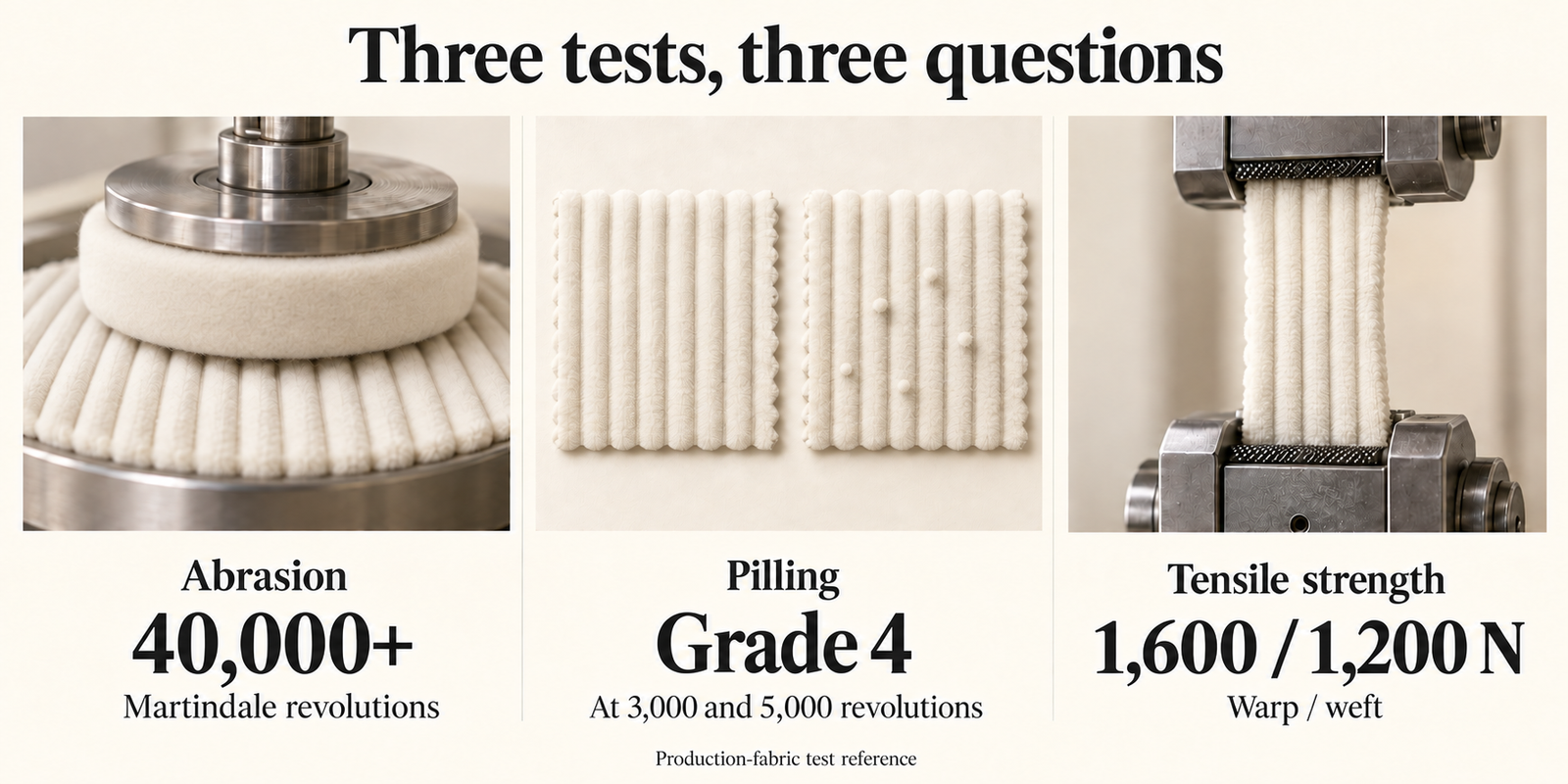
The production fabric records more than 40,000 Martindale revolutions under ISO 12947-2. That puts its abrasion result above the 40,000-cycle reference. For a sofa used nightly, it is a meaningful material detail to consider alongside touch, appearance and care.
Think about the places that see repeated contact: the favorite end seat, the front edge you slide across and the arm where you rest your elbow. Abrasion testing addresses rubbing on a flat specimen. On the finished sofa, the upholstery also bends around edges and meets at seams. Look at those areas in close product photographs as well as reading the count.
Once abrasion is at an appropriate level, another increase in the count needn't decide the purchase. ACT explains that doubling a test count does not double fabric service life. For your household, a texture you enjoy and can maintain may be more useful than paying attention only to an ever-higher score.
What do the other fabric numbers tell you?
Pilling is the formation of small fiber balls on the surface. It affects how tidy the seat looks even when the fabric is still intact. The recorded production-fabric results include Grade 4 after 3,000 and 5,000 revolutions, and Grade 3–4 after 7,000. On the usual five-grade appearance scale, the higher grade means less visible change. Read those grades separately from the abrasion count.
ACT's pilling reference sets a Class 3 minimum for woven upholstery tested under ASTM D3511 or ASTM D4970. Use the method and assessment stage when comparing appearance grades. A higher grade at the same stage means a cleaner-looking surface under that test. For your shortlist, note three things together: test method, grade and the point when it was assessed. This makes a pilling result useful for judging surface appearance alongside the separate rubbing-wear result.
Strength tests answer another question. The recorded tensile results are 1,600 N along the warp and 1,200 N along the weft, approximately 360 and 270 pounds-force. Tensile testing pulls a strip until it breaks. Warp and weft are the two directions of the weave. The result describes a tested strip, not a sofa's seating weight capacity.
For a separate reference, ACT's indoor woven-fabric guideline uses 50 pounds-force, about 222 N, in both weave directions under ASTM D5034 grab testing. Grab and strip tests hold the specimen differently, so keep the method beside the number when comparing tensile results. In your notes, use a simple three-column record: property, method, result. A 40,000-cycle abrasion score, a tensile force and a seam-slippage force then stay attached to the specific question each test answers.
Tear strength measures resistance to continuing a tear, with recorded results of 160 and 120 N in the two directions, approximately 36 and 27 pounds-force. For upholstery, abrasion, surface appearance and strength give you different pieces of the picture. A fabric may resist everyday rubbing while a snag still damages a small area.
Seam slippage is another separate check: the weave can pull apart beside intact stitches. ACT’s woven-upholstery guideline uses a 25-pound minimum in both weave directions under ASTM D4034. Abrasion tests rubbing; seam slippage tests movement at a sewn join. If a seam looks open, check whether the stitches broke or the fabric yarns shifted around them. Those observations point to different repair questions and explain why a large rub count alone does not describe the entire cover.
Bring those results back to your household
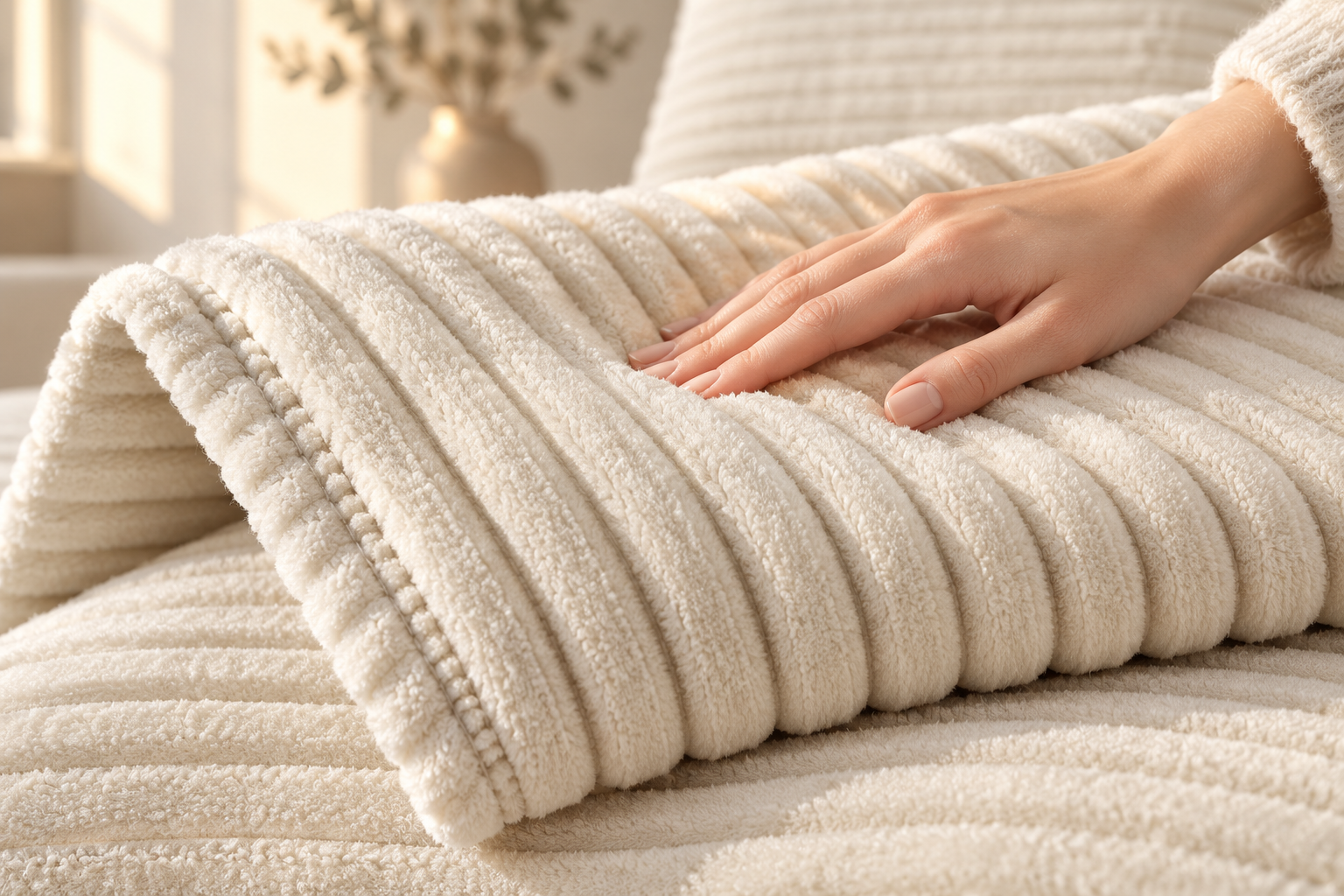
For a family movie room, focus on rubbing resistance, pilling and a routine you can keep up after snacks. Loose crumbs and grit should come out before they spend another evening being rubbed into the seat. Use a clean upholstery attachment on gentle suction, following corduroy's rib channels.
For a pet household, add snagging to the decision. A rub tester uses controlled contact; a claw catches the fabric locally. Look closely at the actual surface and give pets a separate washable resting layer if that suits your routine. A high rub count answers the friction question, while claws call for a different kind of protection.
For a sofa beside a bright window, color retention deserves its own check. Light exposure and rubbing are different stresses. Compare the color in the room's daytime light and consider where direct sun falls. Our sunlight and fabric guide covers placement in more detail; the abrasion score itself is about rubbing.
After a spill, blot with a clean white cloth rather than scrubbing across the pile. Choose further cleaning from the sewn-in care instructions for that cover. A removable cover makes access easier, but its permitted cleaning method still determines whether it can be washed. The corduroy cleaning guide gives the full sequence once the immediate spill is absorbed.
Why corduroy is worth considering here
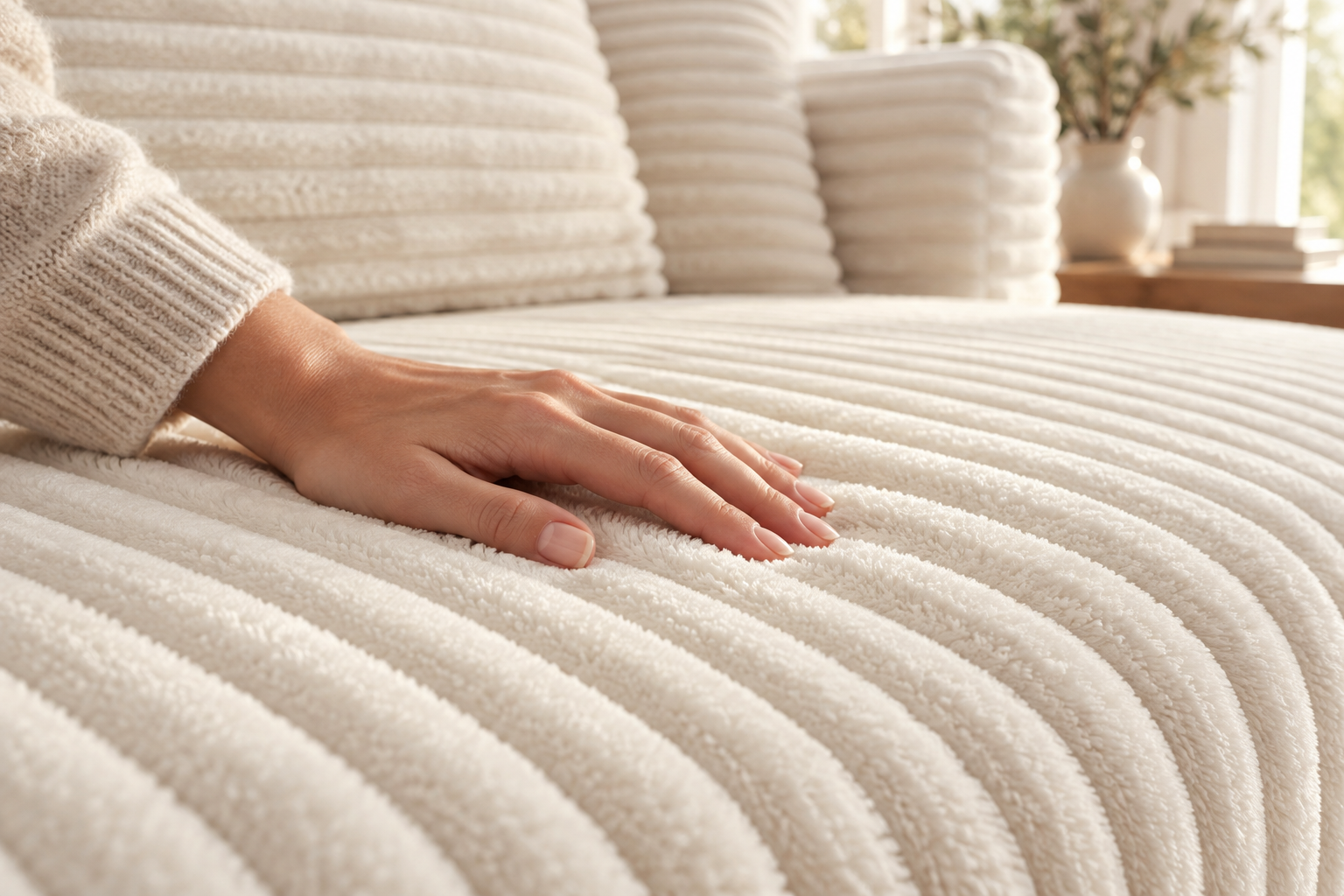
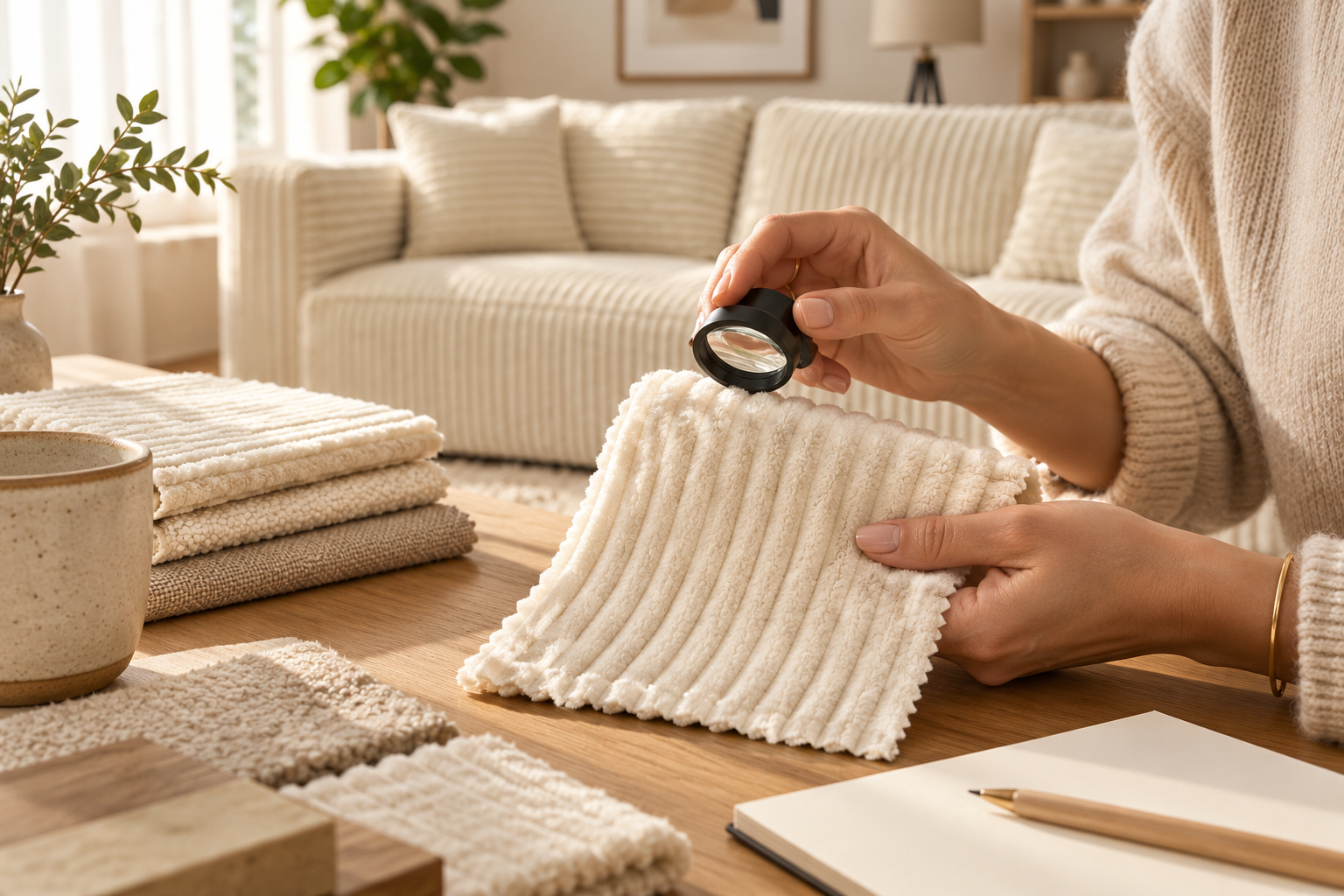
ULTI ONE's upholstery is wide-wale corduroy, with broad raised ribs across the seat and cushions. It gives a sofa visible texture without needing a busy printed pattern. Run your hand along the ribs, then across them: direction is part of the surface feel. In a room with plain walls and a simple rug, that texture can supply the detail you want from the sofa itself.
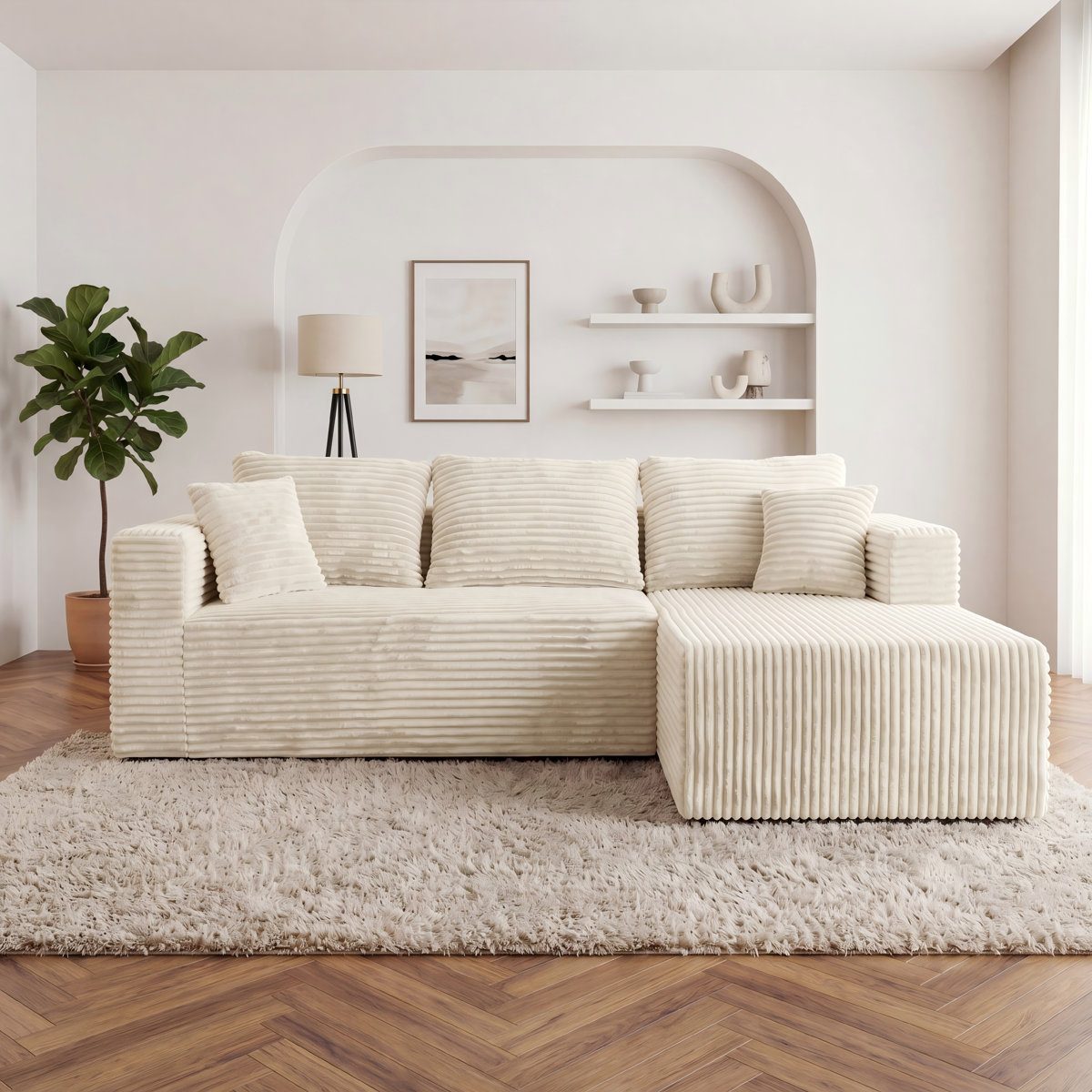
On The L compressed sectional, look at the seat, back cushion and arm close-ups, not just the full-room scene. You should be able to picture where your forearm rests, how the ribs look under a lamp and how you will reach the channels with your vacuum attachment. The material data becomes useful when it supports a surface you actually want to live with.
 The L compressed sectional
For U.S. and Canadian shoppers comparing online upholstery specifications, keep three things together: the exact fabric, the named test and the intended room. Choose the touch and look you like from the ULTI ONE compressed sofa collection, with abrasion and the other material results helping you judge everyday suitability. The test count should support that decision, not replace it.