Ultione / Journal
Compressed Sofa Guides
Is a Corduroy Sofa a Good Choice for Homes With Cats?
Choose a corduroy sofa for a cat household by comparing hair visibility, gentle cleanup, snagging, scratching habits and the fabric you actually want.
The short answer
What you need to know
A corduroy compressed sofa can be a good choice for a home with cats when you like the ribbed texture, can maintain its channels, and give your cat a suitable place to scratch. Make the decision around three separate jobs: seeing loose hair, removing it, and managing catches or scratching. A fabric can do well at one job while asking more of you at another.
A corduroy compressed sofa can be a good choice for a home with cats when you like the ribbed texture, can maintain its channels, and give your cat a suitable place to scratch. Make the decision around three separate jobs: seeing loose hair, removing it, and managing catches or scratching. A fabric can do well at one job while asking more of you at another.
Start with the cat you already live with. A cat that naps on a throw presents a different furniture problem from one that repeatedly scratches an outer arm. Your current sofa, scratching post and favorite sleeping spot give you more useful buying clues than a generic “pet-friendly” badge.
Use the actual fabric, your normal cleanup tools and your cat's existing habits to make the choice.
Separate the three questions before comparing sofas
“Good with cats” sounds like one requirement. In practice, it combines appearance, cleaning and behavior. Write down which of these is your biggest concern before looking at colors.
| Your main concern | What to compare | What a useful answer looks like |
|---|---|---|
| Hair shows immediately | Actual hair against the candidate color | You know how the seat will look between cleanups |
| Hair stays in the ribs | Permitted dry-cleaning tool on the actual sample | You can remove loose hair without dragging the pile |
| Claws catch the surface | Surface yarns, open loops and your cat's habits | You understand where catches are likely to occur |
| The cat scratches one arm | Scratching location and an appealing nearby alternative | The sofa choice is paired with a workable room setup |
| Food or drink spills | Upholstery care instructions | The allowed cleaning method suits your household |
This makes comparisons fairer. A smooth-looking photo tells you little about hair removal. A large abrasion number tells you little about a cat choosing the arm as a scratching surface. Check the property that answers your own problem.
Choose color with your cat's hair beside it
Hair visibility is largely a contrast question. Pale hair stands out against a dark surface; dark hair is easier to see against cream. A mixed-color coat can leave visible strands on several colors, so the goal is finding an appearance you can live with between routine cleanups.
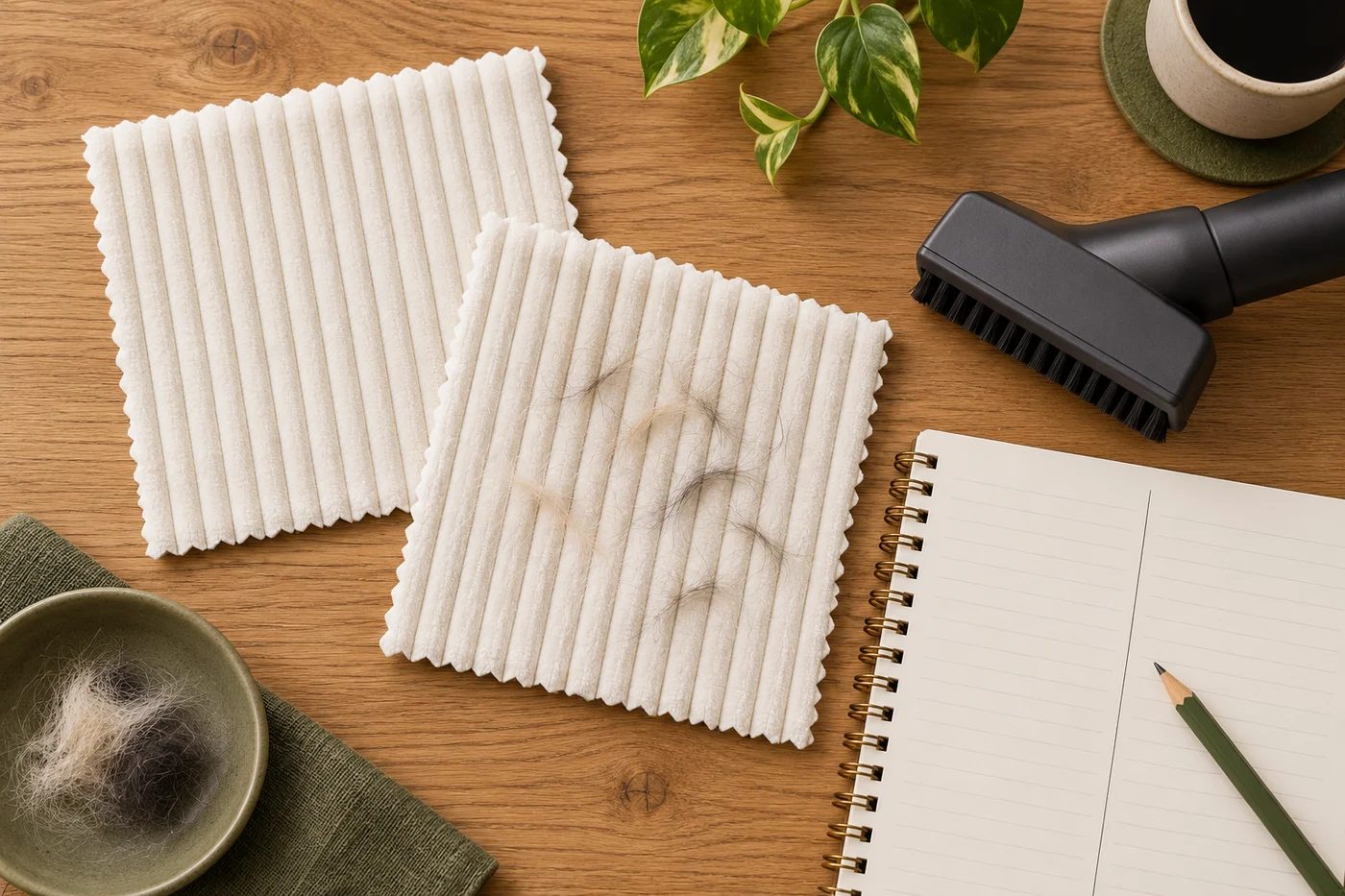
If a fabric sample is available, place a few loose hairs collected during ordinary grooming on it. Look in the daylight and evening light you normally use. Step back to the distance from which you see the sofa when entering the room, then look closely into the channels.
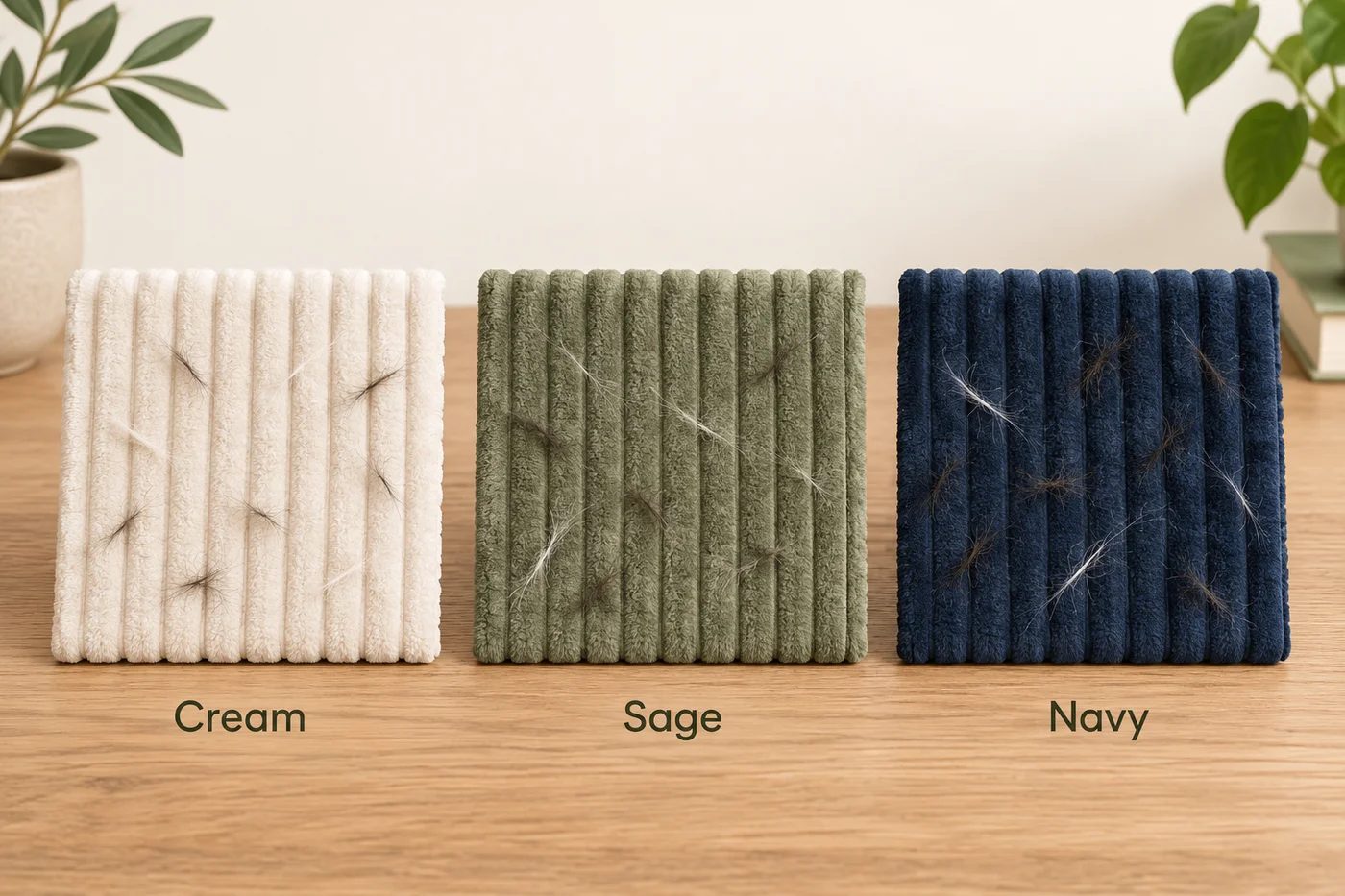
Make two notes: how quickly you notice the hair, and how easily the permitted dry method removes it. Keep them separate. A color that conceals hair can still need cleaning; a color that reveals it can make the cleanup spots easier to find.
For a U.S. apartment or Canadian family room, think about the real setting too: a sunlit seat may show fine strands that disappear under a shaded lamp. The useful comparison is the sofa in your room, not the brightest image on your phone.
Try the cleanup routine, not an aggressive challenge
Corduroy's channels give loose debris places to settle. A clean upholstery attachment with gentle suction lets you work along those channels. Inspect the attachment for rough edges, start on a less visible part of the sample, and keep the cloth from being pulled strongly into the opening.
Make a light pass along the ribs, lift the tool, and inspect what remains. Turn the tool as the panel direction changes. The seat, arm and back pillow can have different rib orientations, so one sweeping direction across the whole sofa is less useful than following each panel.
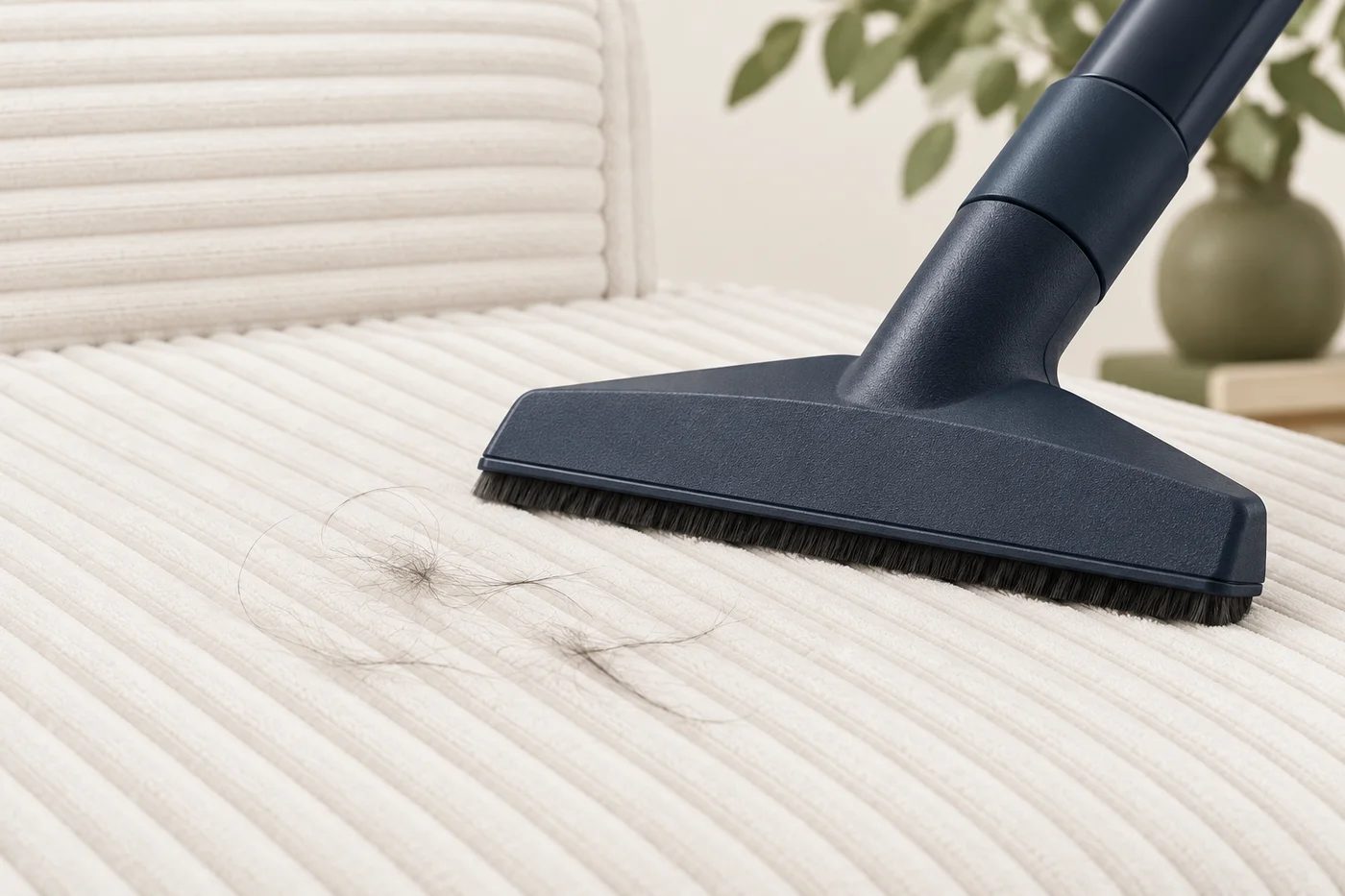
Pay attention to effort as well as the immediate result. Would you happily give the favorite nap spot this attention during your normal cleaning routine? Is the tool already part of your vacuum setup? An appealing fabric becomes a better purchase when its ordinary maintenance feels manageable.
Keep adhesive rollers, rough brushes and powered brush heads out of the trial unless they are approved for that upholstery. A successful test removes loose hair while leaving the texture intact. It does not need heavy pressure, repeated scraping or an artificially large pile of hair.
For spills and treatment codes, use our corduroy sofa cleaning guide. The everyday hair decision can usually be made separately from the liquid-cleaning decision.
Hair removal and claw catches are different fabric problems
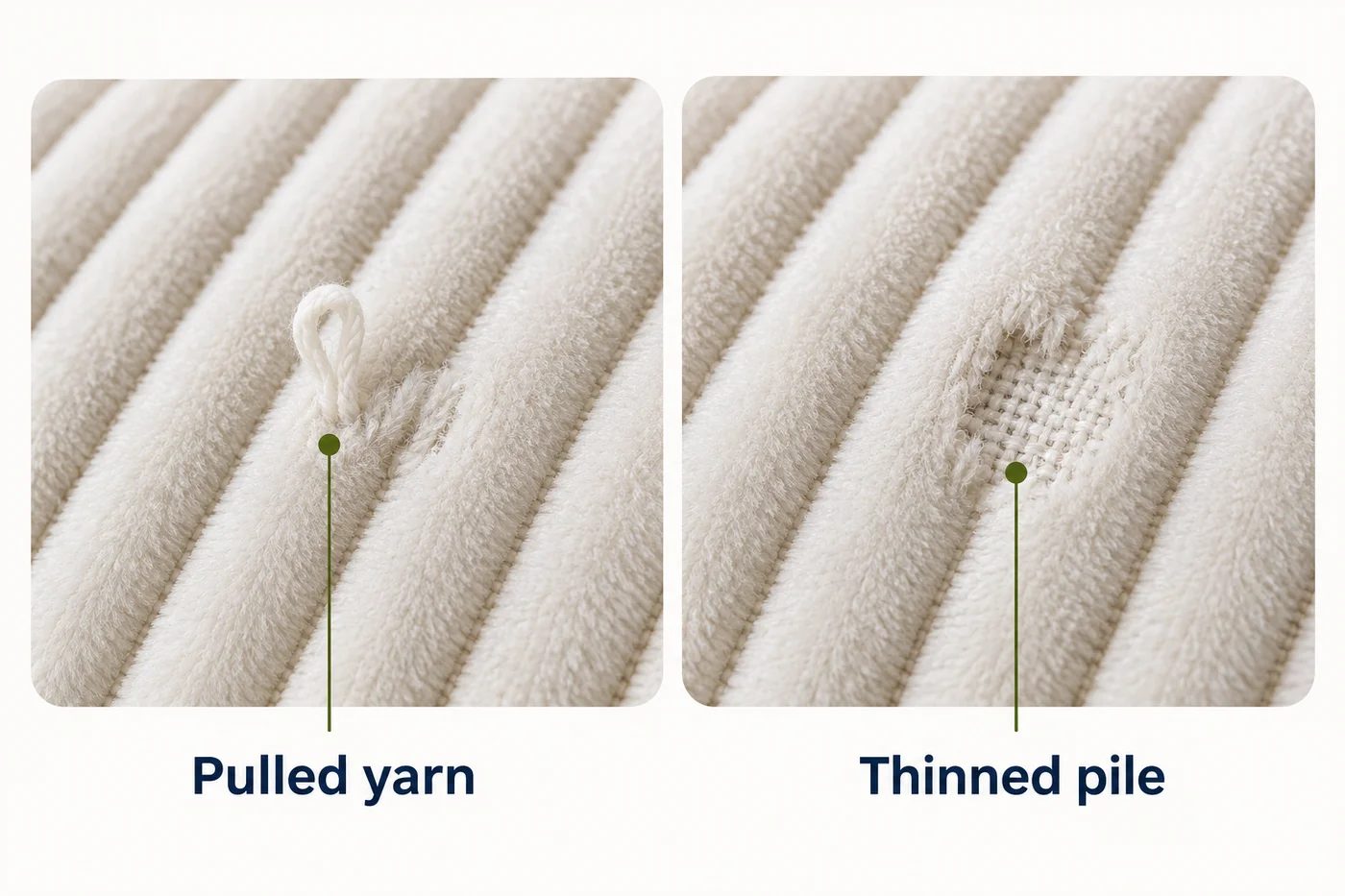
A strand of hair lies on the surface. A snag is a yarn drawn out of the textile. Removing the first is a maintenance task; avoiding or assessing the second involves the structure of the cloth and what catches it.
Look closely at the actual upholstery. Inspect the raised surface, the spaces between ribs and the joins around the arm. You are looking for accessible yarns and surface features, rather than deciding that every fabric called corduroy behaves alike. Rib width, pile and the underlying construction can differ between covers.
ASTM's snagging-method summary treats visible protrusions and distortion as part of snag appearance. That is a useful distinction at home: a small pulled yarn can be more conspicuous than loose hair, and pulling it harder can draw more yarn out of position.
If you find a catch, photograph it and leave it unpulled. Do not use the cat to test a sample or encourage scratching to see what happens. Your existing observations of where the cat climbs, kneads and scratches are the relevant starting point.
Read fabric numbers for the job they measure
Fabric reports can help you choose a sofa, provided you connect the result to the right concern. Abrasion concerns repeated rubbing. Pilling concerns attached fiber balls and surface appearance. Tear strength concerns resistance to extending a tear under the specified method. None of those results is a count of how many claw strokes a sofa will tolerate.
The Association for Contract Textiles lists pilling, breaking strength and seam slippage as separate physical properties. Treat them as different pieces of information rather than adding them into one durability score.
| Report item | Useful buying question |
|---|---|
| Abrasion method and cycles | How did this textile perform under repeated rubbing? |
| Pilling method and grade | How was the surface appearance assessed? |
| Seam or yarn-slippage result | How did the material behave around a loaded join? |
| Care instructions | Which tools and cleaning treatments belong on this cover? |
Ask for the result associated with the offered upholstery. Comparing the actual material is more helpful than assuming a broad fabric category has one universal performance level. Our fabric rub-count guide explains how to read the numbers without mixing the test methods.
Give scratching its own place in the room
Scratching is normal cat behavior. Cat Friendly Homes, created by feline veterinarians, recommends suitable scratching surfaces and positioning them where cats use them, including near sleeping or existing scratching areas. A sturdy vertical post and a horizontal scratcher offer different options; the cat's preference matters.
For a sofa purchase, translate that into a room decision. If your cat scratches after waking on the chaise, place the alternative near that resting area rather than across the house. If the current post wobbles or is too short for a stretch, solve that problem before expecting a new upholstery choice to change the routine.
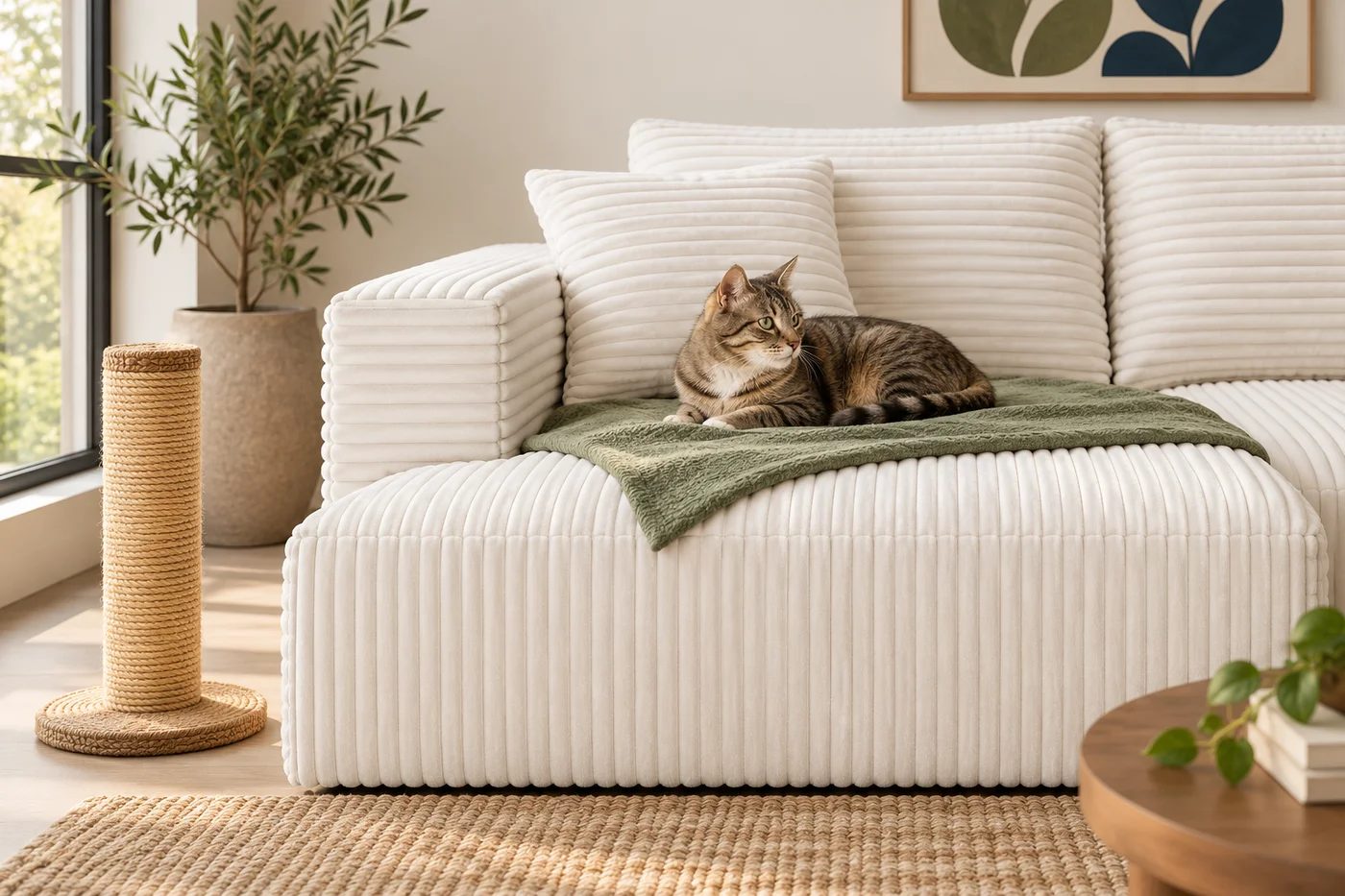
Keep the sofa's normal access route clear so the cat can reach the preferred resting place without repeatedly hauling itself over an outer arm. A flat, securely placed throw can provide a familiar resting surface. Choose a throw without loose fringe or dangling yarn, and maintain it according to its own care instructions.
Wash the throw according to its own instructions. If a spill reaches the upholstery underneath, use the sofa's cleaning method. Keeping those two care routines clear makes a removable resting layer useful without adding unnecessary wet treatment to the seat.
Make the decision with a small sample worksheet
A short comparison is more reliable than trying to remember several product pages. Use one row for each candidate and record the same observations. Keep the amount of loose hair, light and cleaning tool similar so you are comparing fabrics rather than different test conditions.
Record these five points:
- Do I like the texture with my hand and forearm resting on it?
- How visible is my cat's loose hair in ordinary light?
- Does the permitted dry tool remove that hair with a gentle pass?
- Where does my cat already scratch, climb and sleep?
- What nearby scratcher or resting layer will I provide?
Then choose the trade-off you actually prefer. A household that loves broad ribs and already does a quick upholstery pass may find corduroy an easy addition. A household seeking a completely smooth appearance with almost no surface maintenance should compare a smoother candidate before ordering.
When a corduroy compressed sectional makes sense
Corduroy is worth shortlisting when the texture is part of what you want from the sofa: visible ribs, soft contact and a relaxed place to sit together. The compressed delivery format then solves a separate access problem, such as getting a normal sofa into a downstairs lounge or through an apartment route.
Once the fabric routine feels manageable, compare the model and orientation you will live with. Picture where the cat will rest and where you want to stretch out. The right configuration gives both of you a comfortable place in the shared room, with the scratching alternative close to the cat's usual spot.
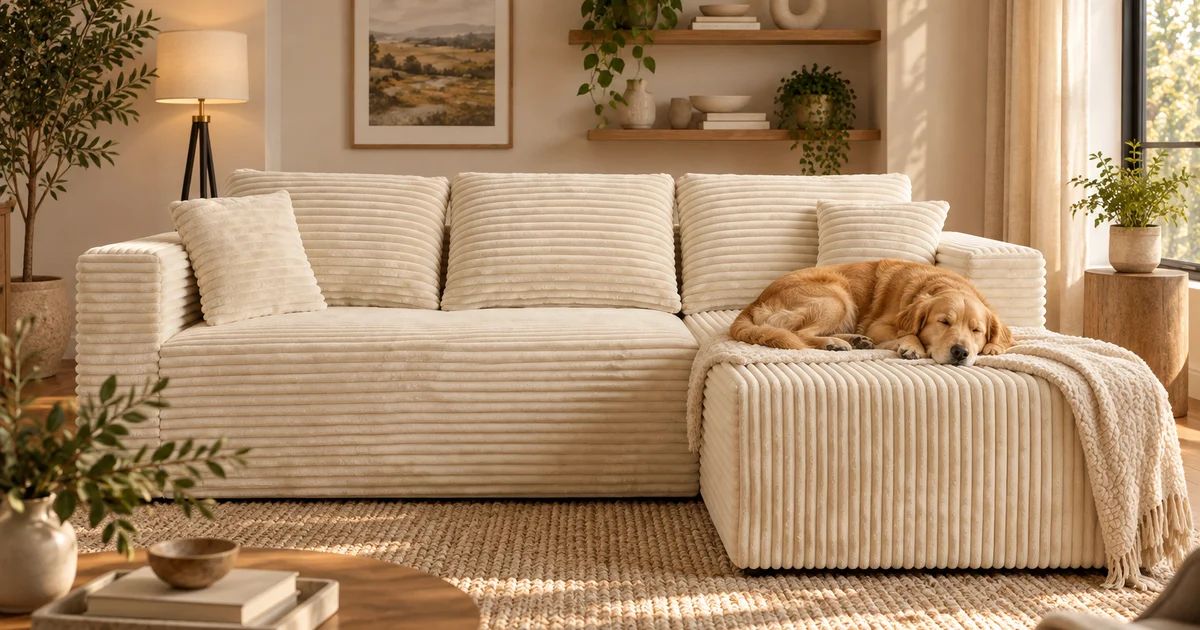
For THE L corduroy compressed sofa, examine the close-up gallery alongside the full chaise view. Picture the favorite nap spot, the gentle cleaning route through the ribs and the scratcher beside it. If that setup suits your cat and the way you keep your home, you have a concrete reason to move from researching corduroy to comparing THE L's configurations.
 THE L corduroy compressed sofa
Your cat gets a favorite spot, and you deserve one too. Browse ULTI ONE's corduroy compressed sofas for a comfortable place to settle in together. Just don't be surprised if the cat claims the chaise first.