Ultione / Journal
Compressed Sofa Guides
Corduroy Sofa Pilling, Matting and Snags Explained
Identify pills, flattened ribs, pulled yarn and pile loss on a corduroy sofa, then choose the right next step without making the surface worse.
The short answer
What you need to know
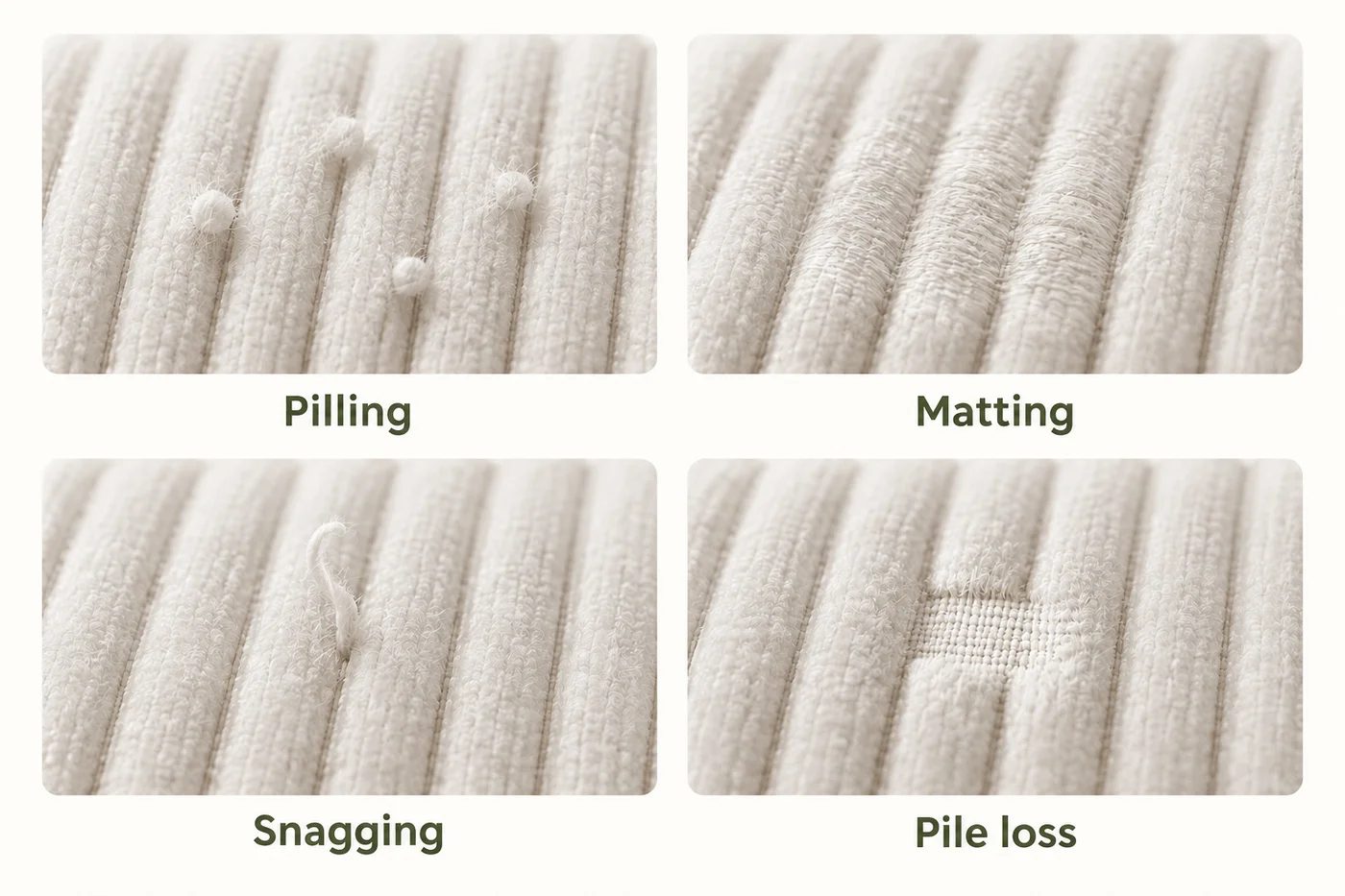
A corduroy compressed sofa can look different after someone gets up without having damaged fabric. Flattened pile changes the light on the ribs; pilling creates attached fiber balls; a snag lifts a yarn; pile loss exposes more of the fabric underneath. Identify which change you are seeing before choosing a cleaning tool.
A corduroy compressed sofa can look different after someone gets up without having damaged fabric. Flattened pile changes the light on the ribs; pilling creates attached fiber balls; a snag lifts a yarn; pile loss exposes more of the fabric underneath. Identify which change you are seeing before choosing a cleaning tool.
That distinction saves effort. A vacuum can lift loose hair, while a pulled yarn needs its own assessment. A light-looking patch may need a second viewing angle before any stain treatment. Identify the physical change first, then choose the action that fits it.
This guide gives you a visual check, explains the relevant fabric tests, and helps you decide what to do next. The examples apply to the broad-rib upholstery many shoppers choose for a family room, apartment or basement lounge.
Start with the shape of the change
Look at a dry surface in ordinary light. Take one close photograph and one wider photograph before working on it. The wider view shows location and pattern; the close view shows whether fibers are sitting on top, lying down, pulling out or missing.
| What you see | What to inspect | Useful next step |
|---|---|---|
| Small attached balls | Fibers gathered into rounded pills | Check the approved pilling-care method before using a removal tool |
| A smooth, darker or lighter patch | Pile lying in a different direction | View it from both ends of the sofa and compare rib fullness |
| A long raised thread or loop | Yarn drawn above the surface | Leave it unpulled and photograph its connection to the fabric |
| A thin or bare-looking area | Reduced pile with more ground fabric showing | Compare with a nearby intact area in the same light |
| Loose strands resting across several ribs | Pet hair, clothing lint or other debris | Try a gentle pass with the permitted dry upholstery attachment |
Use this table to describe the observation, rather than naming every pale patch “fading” or every raised fiber “pilling.” Several changes can occur in the same place, so inspect again after loose debris has been removed.
Pilling and loose lint need different attention
Pills are small tangles of fibers attached to the textile. Loose lint can come from clothing, a throw or another surface. On pale corduroy, a dark speck of lint is especially noticeable because of the color contrast. Its visibility tells you where it is, not where it came from.
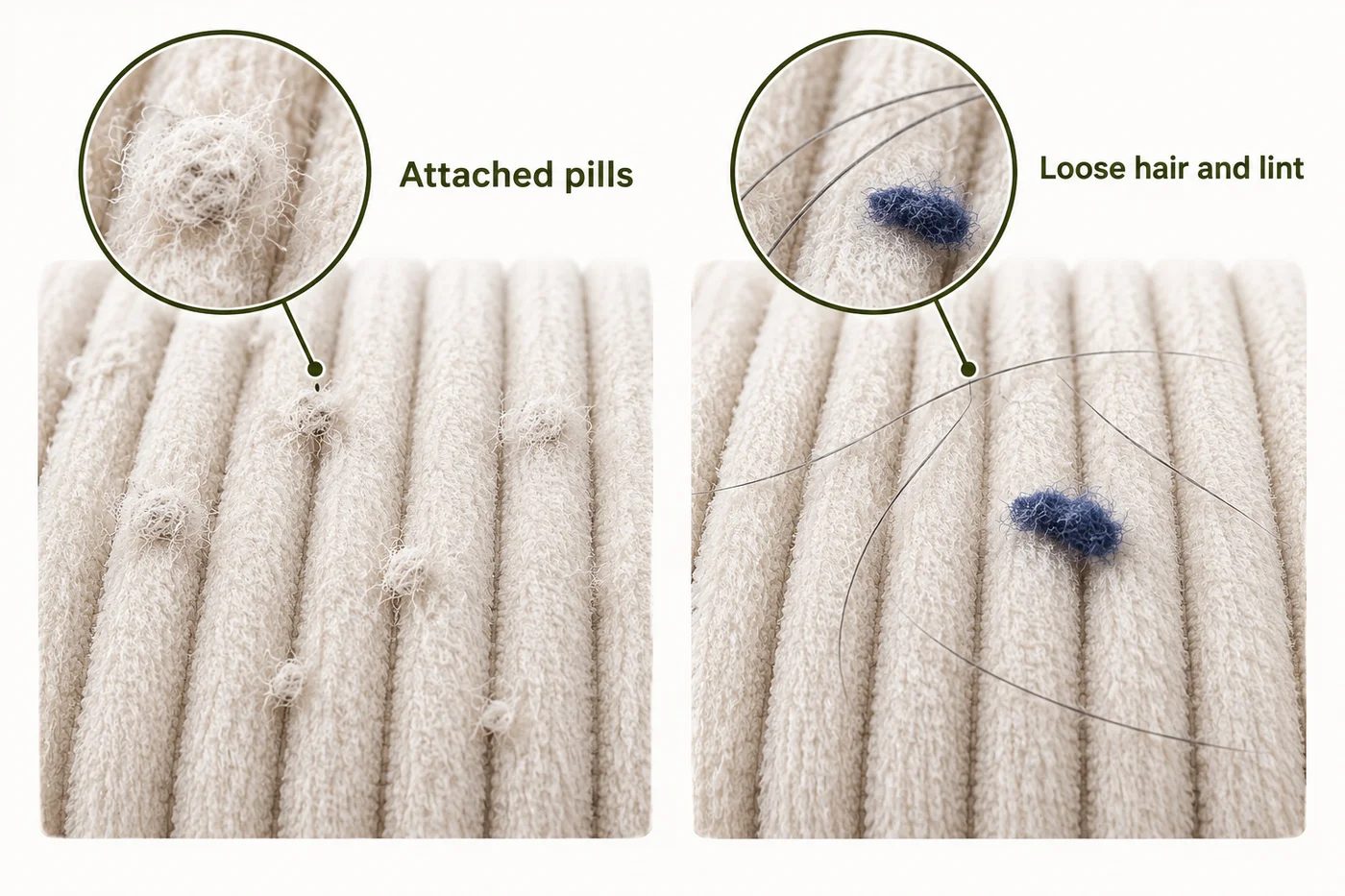
Begin with the least disruptive observation: does the material lift away with the allowed dry-maintenance method, or does it stay attached? Use a clean upholstery head with gentle suction on a less visible area first. Work along the channels within that panel. Stop a pass if the cloth is being drawn strongly into the nozzle.
If balls remain attached, avoid increasing suction or scraping the raised ribs. A blade or aggressive shaver can reach the pile underneath the pill, especially across a rounded rib. Get the appropriate removal method for the exact upholstery before treating a visible section.
Pilling results help when comparing fabrics before purchase. The Association for Contract Textiles physical-property guidelines list pilling separately from other performance properties and use Class 3 as the woven-upholstery reference for their listed methods. Ask for the method and assessment stage with the grade: the grade describes an appearance assessment under that procedure.
Matting changes the pile; light changes how you see it
Corduroy's raised surface has a direction. When the pile lies differently, the patch can reflect light differently from the surrounding ribs. First walk to the opposite side of the seat. Then look from a lower angle, keeping the room lighting unchanged. Notice whether the apparent boundary shifts or the light and dark relationship reverses.
Next, compare the actual rib shape. A patch with full ribs but a different sheen is a different observation from a patch where the pile looks sparse and the woven ground is visible. Look between the ribs as well as at their tops. The channels are naturally lower, so compare like with like rather than treating every visible channel as missing pile.
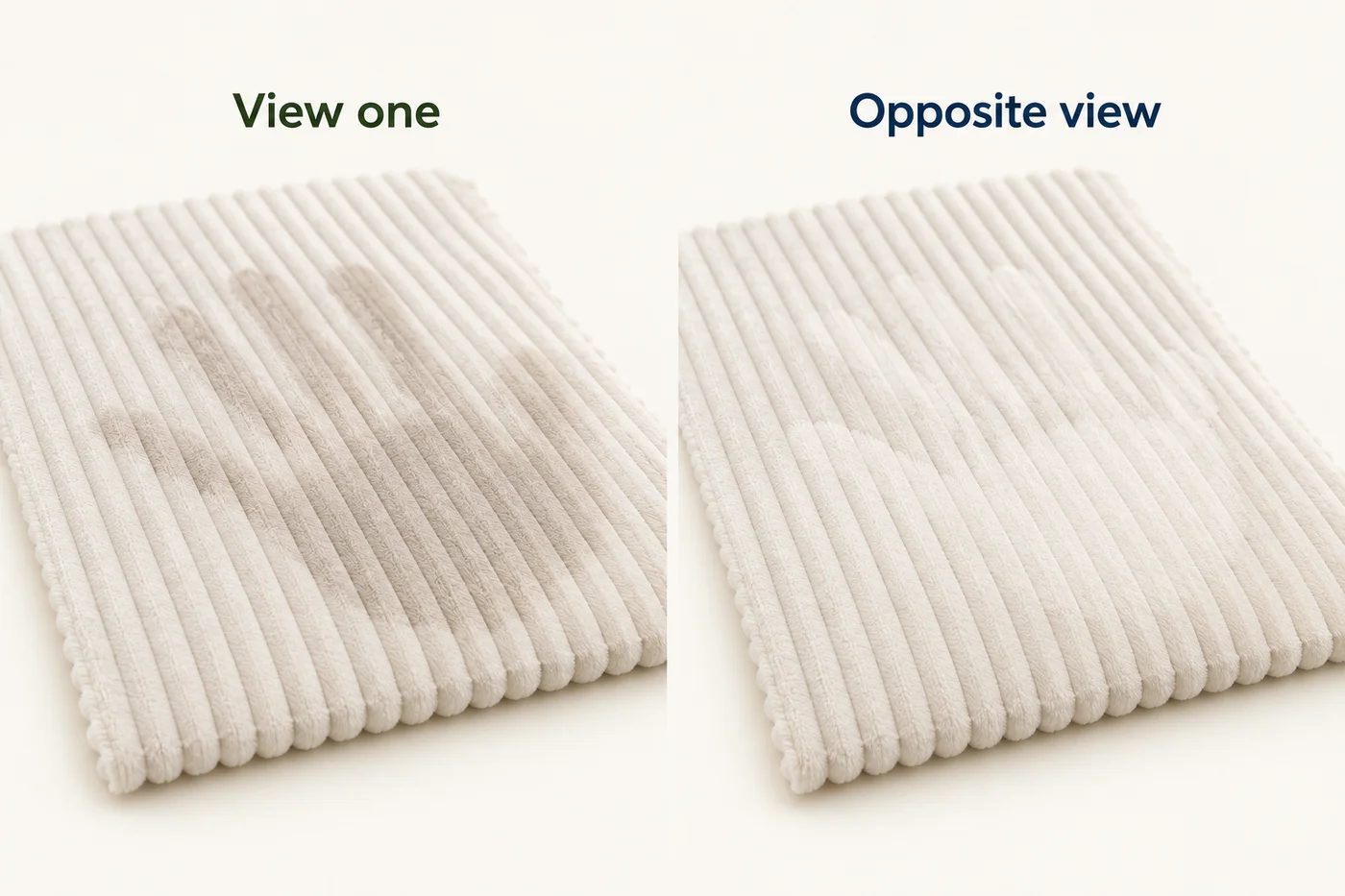
For example, suppose the favorite seat looks darker after an evening of television. If the patch changes strongly when viewed from the opposite end and the ribs remain full, record that directional change before adding cleaner. If the patch stays visibly thin from both ends, document the reduced coverage instead. Those observations lead to different next steps.
After a spill treatment, wait until the area is fully dry before making this comparison. Moisture and dried residue can also alter appearance. Our corduroy sofa cleaning guide explains how to handle the spill itself; the task here is identifying the surface left afterward.
A snag is a pulled yarn, not a loose pill
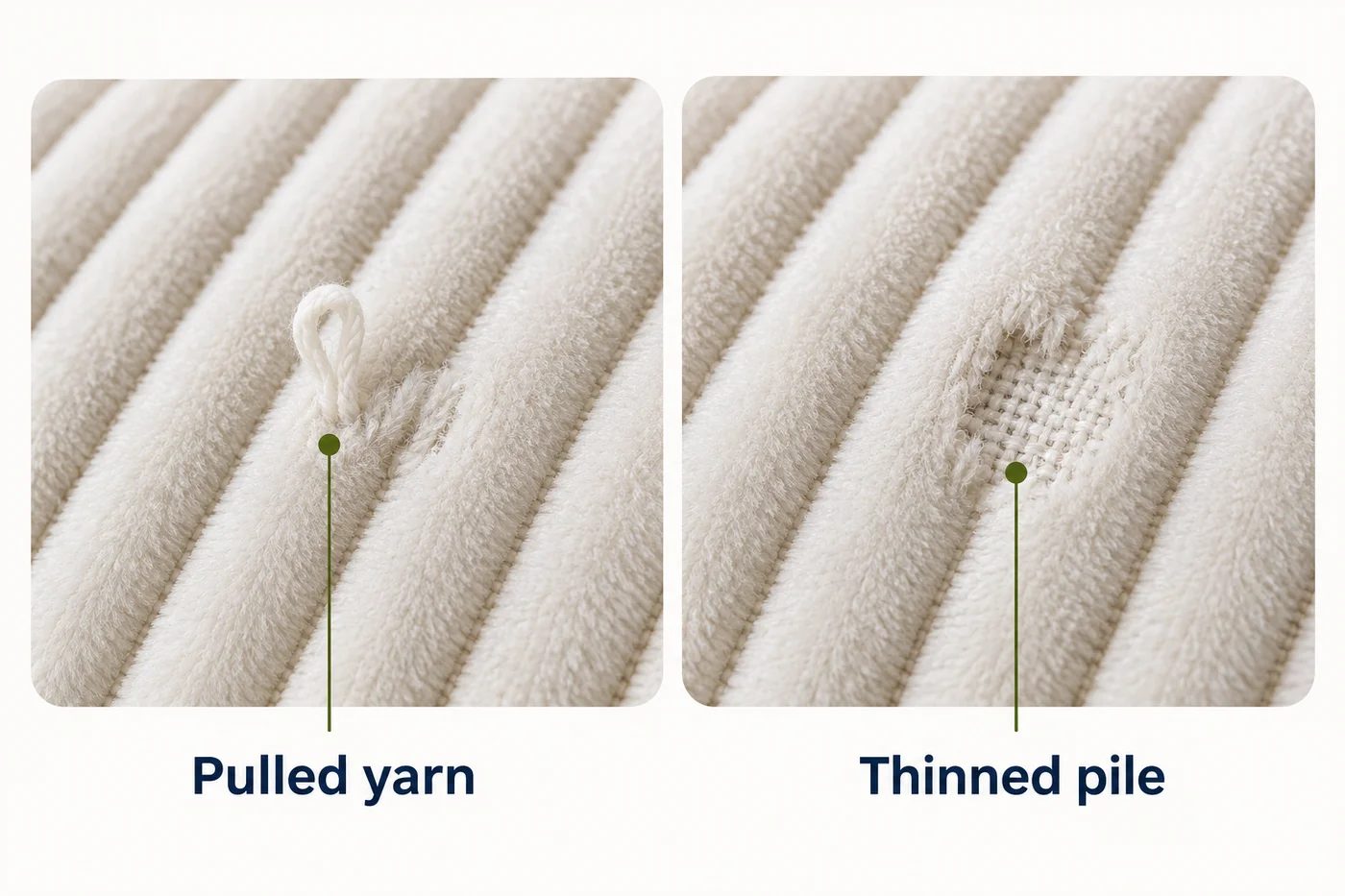
A snag often looks like a longer thread, loop or local distortion. Examine where it joins the surrounding fabric. Does a line of yarn appear drawn out of position? Are nearby ribs gathered toward it? Those details matter more than the number of visible threads.
ASTM D3939's snagging-method summary recognizes that appearance depends on features such as protrusion and distortion, as well as contrast. In plain language, one conspicuous pull can change the look of a panel more than several tiny catches.
Do not tug the raised yarn to see whether it comes free. Keep pointed jewelry, rough hardware and vacuum edges away from the area while you document it. A clear close-up lets a repair professional or support team distinguish a pulled surface yarn from an opening seam. Cutting first removes information and may leave a short end that is harder to assess.
An opening along the join between two panels deserves its own description. Photograph the seam and the adjoining cloth. A seam gap is about the join or yarn movement around it; a surface snag is about a yarn caught above the face. Calling both “fabric wear” makes a useful inspection less precise.
Pile loss is about what remains attached
Pile loss means some of the raised surface is no longer retained. The key visual clue is reduced coverage compared with an intact area of the same panel. Photograph both areas from the same distance, rather than comparing a bright close-up with a shaded room photograph.
The ASTM D4685 pile-abrasion summary treats pile retention as a specific property of woven pile fabrics, including corduroy. It distinguishes face and back abrasion and notes that finishing and cleaning can affect retention. That gives a buyer a useful question beyond the headline rub count: how well does the pile stay attached under the relevant treatment?
For daily ownership, this means checking texture after a permitted cleaning treatment as well as checking whether the stain disappeared. Let the area dry, compare rib coverage and avoid repeating the treatment if fibers are coming away. A successful clean should leave a usable surface, not just a lighter-colored mark.
Why a high rub count does not answer every appearance question
Abrasion, pilling, snagging and pile retention describe different changes. A rub count concerns performance through a defined rubbing procedure. A pilling grade concerns surface appearance at an assessment point. A snagging assessment considers pulled yarns and distortion. Choose the result that matches your concern.
One 2025 upholstery-textile study illustrates the distinction: its two tested ribbed fabrics reached the 50,000-cycle abrasion stopping point without breakdown and retained a pilling grade of 4 through 7,000 cycles. These paired results describe the study's materials; the useful buying lesson is to compare both wear and appearance results for the fabric being offered.
When reading a sofa listing, put the fabric name, test method, result and assessment stage together. “40,000 rubs” and “Grade 4” are incomplete as a pair until you know what each number measures. Our Martindale and Wyzenbeek guide explains those reports in more detail.
Make a record that helps you choose the next step
Use a short, repeatable inspection rather than repeatedly trying new cleaners. Remove loose debris with the permitted dry method, photograph the dry surface, then describe what remains. Include the panel and location: “front of the right seat” is more useful than “the sofa fabric.”
Keep these details together:
- A wider photograph showing the affected panel.
- A close photograph showing the fibers, with a ruler placed beside the area for scale.
- A comparison photograph from the opposite direction under the same light.
- The cleaning product and tool used, if there was a treatment.
- Whether the area is stable, spreading, or changing mainly with viewing angle.
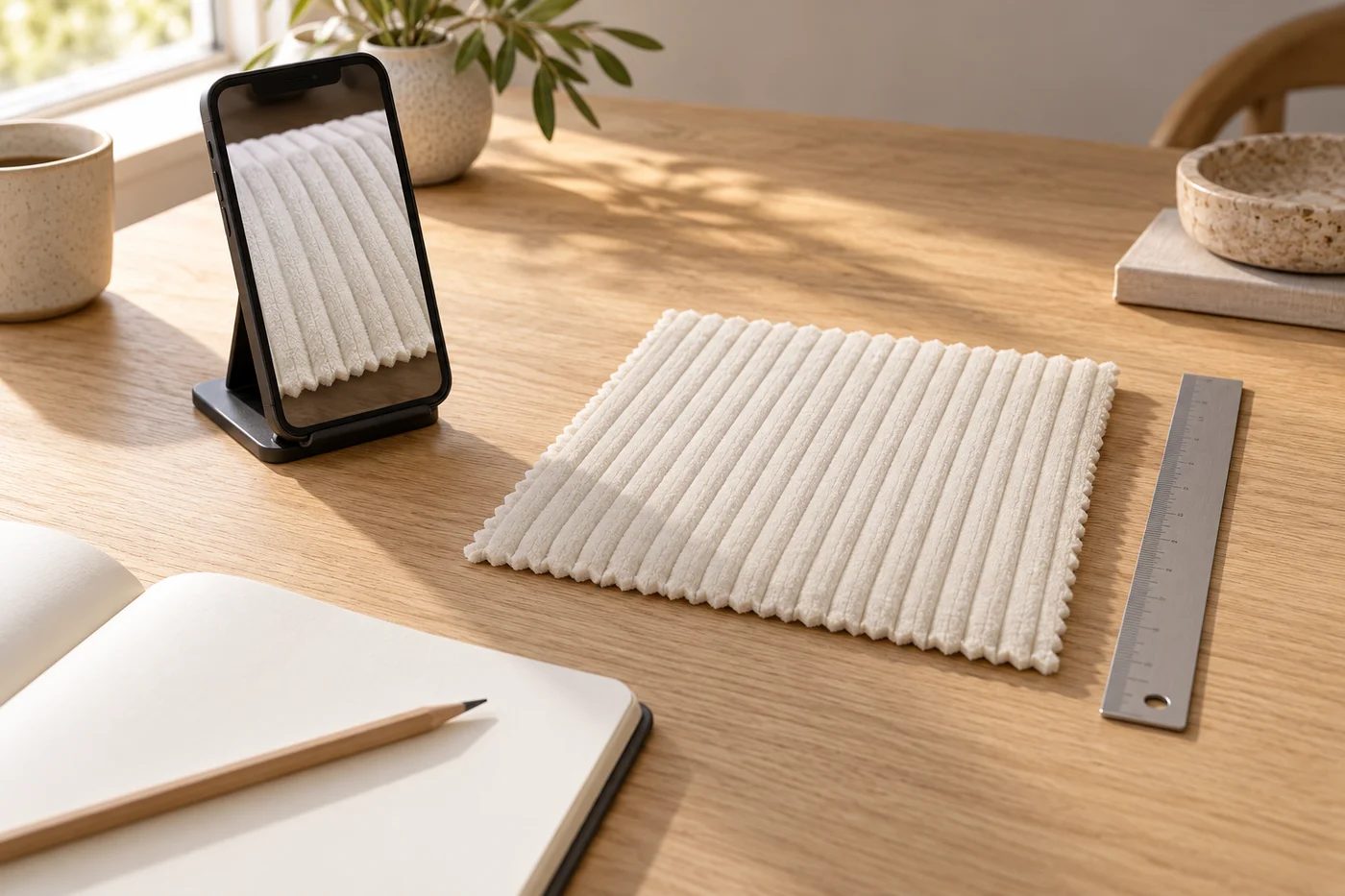
This record also prevents a common loop: treating a texture change as a stain, judging it while damp, and adding another treatment because the shade still looks uneven. Work from the observed change to the appropriate method. If a yarn is pulled or coverage is thinning, preserve the area for assessment instead of trying to scrub it back into place.
Choose corduroy for a texture you actually enjoy
Wide-wale corduroy is a visible, tactile choice. Its ribs give a compressed sectional a soft, substantial surface and make the direction of the pile part of the room's appearance. It suits someone who enjoys that texture and is comfortable giving the channels a gentle routine clean.
Before ordering, compare close-up fabric photographs with a full view of the sofa. Look at panel direction, the arm faces and the places where your household will sit most. If you use throws, choose them alongside the upholstery rather than assuming the sofa will always be completely covered.
On THE L corduroy compressed sectional, the product gallery lets you examine the broad ribs, separate back pillows and chaise shape together. Start with the surface you want to live with, then check the size and orientation that fit your room. Knowing the difference between loose hair, flattened pile and actual yarn damage makes both the purchase and the care routine easier to judge.
 THE L corduroy compressed sectional
Have a soft spot for those corduroy ribs? Take a look around ULTI ONE's compressed sofa collection and find a shape and color for your cozy corner. The sofa can handle the lounging; choosing the next movie is still your job.